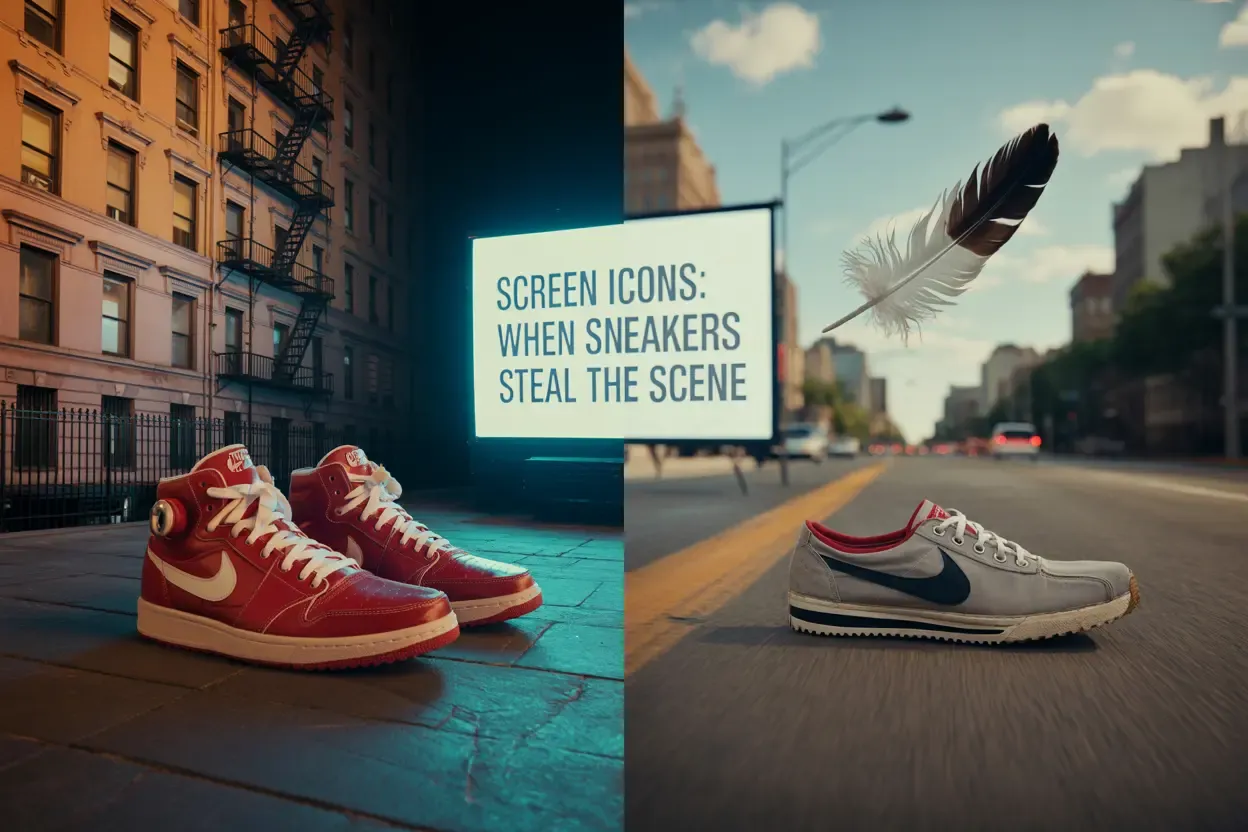
Honestly, it feels like forever ago when sneakers were just shoes you wore for sports. Today? They're cultural icons, status symbols, and a whole lot more. That shift—from simple athletic gear to real cultural signifiers—didn't happen by accident. And one of the biggest drivers has been movies. Cinema has been lacing up sneaker culture for decades.
Sneakers in films are rarely just part of an outfit. They do a job: they tell you who a character is, what world they move through, and sometimes where they're headed. Movies have their own visual language, and a character's kicks are part of that vocabulary. A specific pair—or even one memorable scene—can take a shoe from niche to global. This interplay really took off in the 1980s, right alongside hip-hop, basketball's global rise, and booming youth subcultures. Films didn't just reflect those trends; they amplified and shaped them.
If you want to follow the on-screen moment all the way to real-world value, connect this with museum-worthy kicks (how institutions canonize iconic pairs) and sneakerhead slang explained (the terminology that powers collecting and resale culture).
When filmmakers highlight sneakers—through a close-up, a plot-relevant moment, or by putting them on a character we connect with—it's a deliberate signal. It's saying: look closer, these aren't just shoes. They can stand in for aspirations, social tensions, or crucial plot points. Sometimes what looks like product placement plays more like cultural storytelling, turning the sneaker into a memorable part of the film's world. Let's look at how that plays out, from iconic scenes to real-world impact on the shoes themselves and on youth identity.
A Cinematic Sneaker Showcase: Stepping Through Film History
Over the past four decades, the silver screen has basically been a runway for sneakers, turning regular footwear into legendary cultural artifacts. Plenty of films use sneakers as more than wardrobe—they're key visual elements that add depth, create lasting memories, and help certain models become iconic.
The 80s really paved the way. Jeff Spicoli lounging in his Vans Checkerboard Slip-Ons in Fast Times at Ridgemont High (1982)? Instant symbol of laid-back SoCal cool. Fun fact: Sean Penn actually brought his own Vans to set! Talk about authentic. Then there's Kyle Reese grabbing those black and silver Nike Vandals in The Terminator (1984) – practical survivor gear that became unexpectedly cool (much like some military-inspired sneakers). Nike even recreated them for a later Terminator movie. But for pure futuristic fantasy, nothing beats Marty McFly's self-lacing Nike MAGs in Back to the Future Part II (1989), designed by the legend Tinker Hatfield. They instantly became sneaker folklore.
Also in '89, Spike Lee's Do the Right Thing gave us a profoundly significant sneaker moment with Buggin' Out's pristine Air Jordan IVs, which became a flashpoint for social tension. Even Michael Keaton's Bruce Wayne got in on the action, rocking modified Nikes and Air Jordan 6s in Batman (1989) and Batman Returns (1992).
The 90s built heavily on this. White Men Can't Jump (1992) was a showcase of early 90s basketball footwear, with memorable appearances by Nike Air Command Force and Air Flight Lite. Tom Hanks as Forrest Gump running across America in those classic white, red, and blue Nike Cortez (1994) turned a simple running shoe into a symbol of endurance and Americana. Michael Jordan himself wore the Air Jordan XI "Space Jam" in Space Jam (1996), launching that shoe into global pop culture. And Denzel Washington's character memorably buying the Air Jordan XIII in Spike Lee's He Got Game (1998) felt like a cinematic unboxing.
The 2000s saw distinct sneaker choices continue. Uma Thurman's striking yellow Onitsuka Tiger Tai Chi LE (similar to Mexico 66s) in Quentin Tarantino's Kill Bill: Volume 1 (2003) was a direct, stylish homage to Bruce Lee, making the shoe a symbol of deadly grace. Bill Murray wore the niche HTM x Nike Air Woven in Lost in Translation (2003), suggesting a certain insider fashion sense.
Into the 2010s, the cinematic legacy influenced real releases. The mythical Nike MAG from 1989 saw limited, functional releases in 2011 and 2016, keeping the dream alive. Miles Morales's Air Jordan 1s in Spider-Man: Into the Spider-Verse (2018) became central to his character and modern identity, similar to how anime-inspired sneakers can define a fan's style. For a style-first, wearable example of film mood translating into outfits, see our Studio Ghibli cottagecore sneakers guide (NB 574 outfits). And just recently, Ryan Gosling's Ken sported distinct adidas boxing boots in Barbie (2023). The movie Air (2023), about Nike signing Michael Jordan, naturally featured many early Nike models. Looking ahead, the animated film Sneaks (2025) shows sneaker culture itself is now a subject for cinematic exploration.
The sheer number and variety of these appearances—especially Nike and Jordan Brand's dominance—shows how effectively film can embed a product in pop culture. It's not just showing a shoe; it's attaching it to unforgettable characters and moments. A lot of the "iconic" status comes from context: Forrest Gump's run, the futuristic fantasy, the social tension. The film's cultural weight transfers onto the sneaker, lifting it beyond a commodity into a piece of the movie's world and emotions. This was especially strong in the late 80s and 90s, when many foundational "sneaker myths" formed—right in step with the rise of hip-hop, basketball, and youth subcultures that used sneakers as identity markers.
Deep Dive: When Sneakers Tell the Story
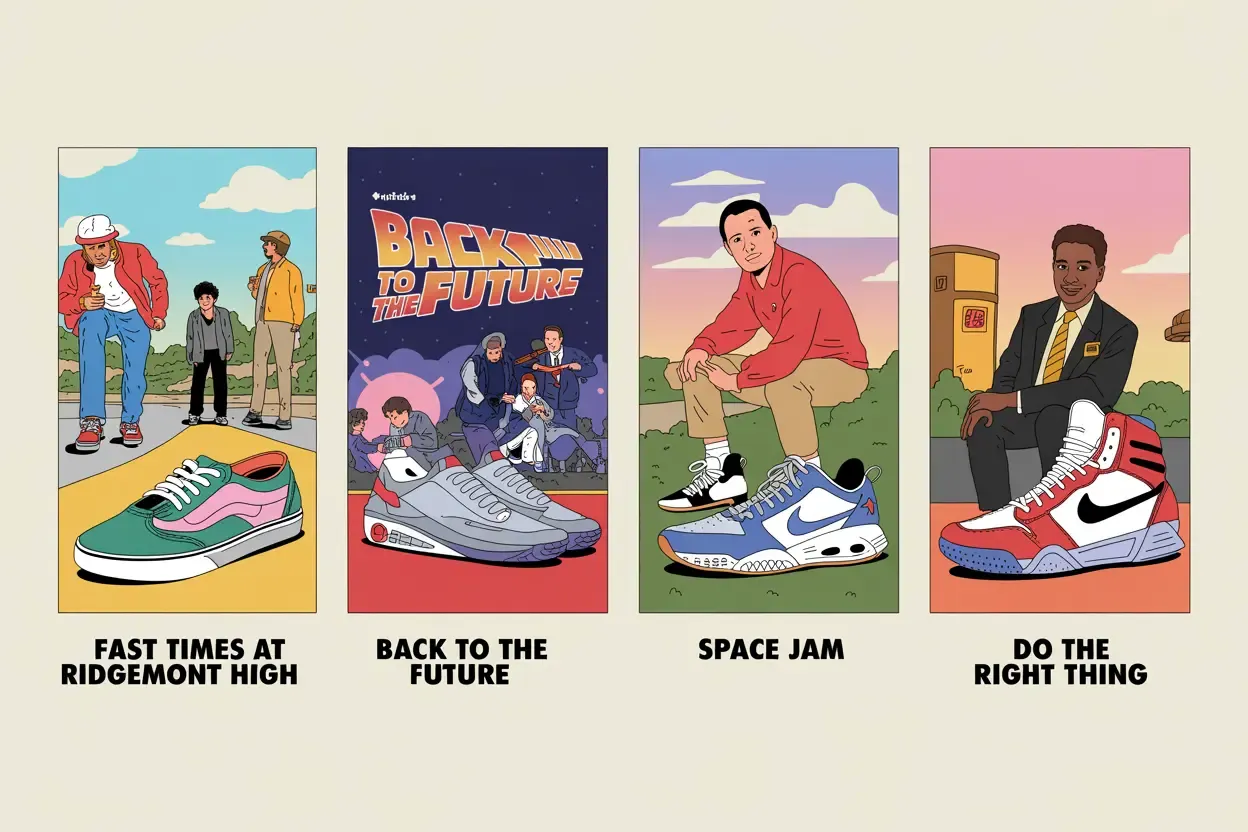
Spotting famous shoes is fun. But the real story is how certain pairs turn symbolic.
Do the Right Thing (1989) and the Air Jordan IV: Identity, Status, and Tension
Spike Lee's Do the Right Thing is a landmark film, and Buggin' Out's brand-new "Cement" Air Jordan IVs do real narrative work. They're not just stylish kicks; they stand for his identity, aspiration, and pride in his community. The pivotal scene—where a cyclist accidentally scuffs them—sparks a furious confrontation. What looks like a small incident escalates fast, embodying the film's themes of racial tension, gentrification, and community frustration. The sneakers become a tangible symbol of what Buggin' Out values and feels is under threat. In the late 80s, Jordans were high-status, symbolizing economic empowerment and cultural expression, especially for young African Americans. So the scuff reads as profound disrespect, like a violation of identity. Lee uses that conflict to show how material possessions can carry personal and political meaning in marginalized communities. The film's influence on sneaker culture is huge, cementing the Air Jordan IV's place in socio-cultural history by linking sneakers to critical social issues.
Forrest Gump (1994) and the Nike Cortez: Running Through Americana
In Forrest Gump, Forrest's Nike Cortez (a gift from Jenny) are tied directly to his journey. As he runs across America, the classic white, red, and blue Cortez becomes a symbol of his endurance, innocent determination, and accidental trip through America's history. The shoe's simple design mirrors Forrest, and the patriotic colors subtly reinforce the film's exploration of American identity. Running in them becomes a metaphor for how he processes life. The film's popularity propelled the Cortez to global icon status, boosting sales and linking it to perseverance, simplicity, and nostalgia. The "Forrest Gump" Cortez remains a beloved, often re-released model—a testament to that cinematic moment.
Back to the Future Part II (1989) and the Nike MAG: Futuristic Dreams
Few sneakers have captured the imagination like the Nike MAG from Back to the Future Part II. Marty McFly dons these self-lacing, light-up sneakers in future 2015. Designed by Tinker Hatfield, they were a stunning piece of futuristic design. Their cultural impact was immediate, making them a mythical, desired shoe. Nike later released limited real versions in 2011 and 2016, with proceeds benefiting the Michael J. Fox Foundation. These releases amplified their legendary status, with pairs selling for astronomical prices on the resale market. The Nike MAG represents the intersection of cinematic fantasy, technological aspiration, and real-world innovation, becoming an unparalleled icon of sneaker culture.
Space Jam (1996) and the Air Jordan XI "Space Jam": Pop Culture Icon
Space Jam gave the Air Jordan XI "Space Jam" its legendary name. Michael Jordan wore these sleek, black patent leather shoes in the climactic game against the Monstars. They became more than just basketball shoes; they symbolized sports heroism, cinematic fantasy, and 90s pop culture. The film's broad appeal introduced Jordans to a wider audience. The shoe's revolutionary design blurred lines between performance and fashion. Its cultural impact was immense, driving huge demand for original and retro releases. The "Space Jam" XIs show how a product tied to a global icon and hit film can achieve legendary status, symbolizing status and a connection to Jordan's legacy.
Fast Times at Ridgemont High (1982) and the Vans Checkerboard Slip-On: SoCal Cool
Fast Times at Ridgemont High captured early 80s SoCal youth culture, with Jeff Spicoli famously wearing Vans Checkerboard Slip-Ons. Before the film, Vans were niche skate/surf shoes, but Spicoli's portrayal made them mainstream. Sean Penn organically brought his own Vans to set, lending authenticity. They quickly became synonymous with the film, embodying a laid-back, rebellious West Coast youth identity. The film solidified Vans as an emblem of counter-culture, proving authentic integration can have a profound cultural impact.
Spider-Man: Into the Spider-Verse (2018) and the Air Jordan 1: Modern Identity
Spider-Man: Into the Spider-Verse introduced Miles Morales, and his Air Jordan 1s were central to his character. Resembling the classic "Chicago" (released as "Origin Story"), these sneakers visually represent his identity as a young, Afro-Latino teen from Brooklyn. The choice of the Air Jordan 1 was deliberate, linking him to contemporary Black youth culture. The film subtly highlights the shoes, showing how Miles wears them as a choice, an act of individuality. As he becomes Spider-Man, he incorporates them into his early suit, symbolizing his journey of integrating his personal identity with his hero persona. The film's success generated buzz for the associated AJ1 release, showing how animation can authentically weave sneaker culture into modern storytelling.
Kill Bill: Vol. 1 (2003) and the Onitsuka Tiger: Stylistic Homage

In Kill Bill: Vol. 1, The Bride's yellow tracksuit and matching Onitsuka Tiger Tai Chi LE (similar to Mexico 66) are a striking homage to Bruce Lee. This footwear choice is deliberate, linking her deadly skill to Lee's legend. The Onitsuka Tigers are integral to her visual identity, especially during fight scenes, contributing to the film's unique aesthetic. The cinematic spotlight boosted the brand's visibility and made that yellow and black colorway a pop culture hit. This shows how film can revive classic designs by tapping into existing cultural iconography and recontextualizing it.
Across these cases, the pattern is clear: sneakers hit harder on screen when they connect to existing cultural narratives (Bruce Lee, American history, Black culture). The film's story layers onto that meaning and creates an even richer symbol. These sneakers aren't passive props—they're tied to character identity, journeys, or conflict. That deep narrative integration is what makes them "iconic," acting as cinematic shorthand for themes or character essence. And when the inclusion feels authentic, audiences connect even more, especially sneaker enthusiasts.
The Market Impact: From Screen to Store and Resale
Beyond cultural moments, film appearances often mean real economic impact, boosting initial sales, prompting re-releases, and fueling the huge sneaker resale market. When a shoe is iconic on screen, it becomes a coveted collectible.
The Nike Cortez is a clear example. Forrest Gump led to a massive popularity surge and subsequent Nike re-releases. Decades later, demand remains strong, with consistent sales and listings on platforms like StockX and eBay.
The Air Jordan IV, especially colorways linked to Do the Right Thing, sees high anticipation for re-releases. Anniversaries drive significant pre-release sales on StockX, boosted by its cinematic connection.
The Nike MAG from Back to the Future Part II illustrates extreme market value. Its limited real releases, tied to charity, saw pairs auction for millions and list for astronomical sums on resale markets, proving a fictional product can become a highly valuable collectible.
The Air Jordan XI "Space Jam" is another powerhouse. Retro releases are major events, commanding significant price premiums on StockX and high demand on eBay.
Even sneakers from niche films see boosts. The Onitsuka Tiger Mexico 66 "Kill Bill" colorway saw a recent re-release with strong demand and resale activity on StockX and eBay, driven by the film's cult status. The Air Jordan 1 "Next Chapter" from Spider-Man: Into the Spider-Verse, while sometimes reselling near retail, still sees substantial transaction volume.
The Vans Checkerboard Slip-On, made mainstream by Fast Times, shows how a film can create enduring cultural relevance and sales for decades.
This pattern of heightened demand and resale value shows cinematic immortality creates long-term market value. These shoes become collectibles, their worth exceeding retail or function. Consumers buy a piece of cinematic history, nostalgia, or a symbol. This emotional and cultural value drives high prices in secondary markets.
None of this is accidental. Film nostalgia, character association, and strategic brand scarcity amplify the effect. Brands like Nike lean into film heritage for anticipated retros and marketing. Creating the Vandal for a later Terminator film or special colorways for Spider-Man shows brands curate these moments and time releases to maximize demand and cultural resonance. Resale data even puts numbers on a film's impact. In practice, the resale market is a real-time barometer of cultural relevance, and on-screen appearances can be a serious driver of value.
Lacing Up Identity: Film, Sneakers, and Youth Culture
Cinematic sneaker portrayals significantly influence how urban youth build and express identities. Films often imbue sneakers with symbolic meanings resonating deeply with young audiences, making them markers of status, rebellion, aspiration, and cultural affiliation.
Films show cool characters, and their sneakers become aspirational. The idea that specific footwear signifies hope and status is seen with Miles Morales's Air Jordans, linked to greatness in Black youth culture. Aspiration isn't just about owning expensive items but embodying the wearer's perceived traits – talent, coolness. Social pressure to own "cool" sneakers, shown in media, affects standing among peers.
Conversely, film sneakers can symbolize rebellion. Jeff Spicoli's Vans epitomize anti-establishment cool. Films like Kids authentically portray skate subculture where sneakers like Vans were key to a distinct identity. These portrayals solidify sneakers as emblems of youth subcultures defining themselves outside mainstream expectations.
Sneakers in cinema often signify belonging. Basketball films like White Men Can't Jump or He Got Game use specific shoes to show immersion in that world. Hip-hop culture films like Juice use footwear choices for character identity and street style. Miles Morales's Air Jordan 1s explicitly link him to his background and Black youth culture, a deliberate filmmaker choice for authenticity. The upcoming Sneaks film will further explore sneakers as identity symbols.
Cinematic appearances ignite trends, leading to widespread adoption of styles and brands. A charismatic character or impactful film creates desire for emulation. Repeated positive portrayals of brands like Nike foster early loyalty. The "it's gotta be the shoes" tagline (from Spike Lee's character) shows film and marketing synergy building loyalty.
The link between sneakers, film, and race is complex. Air Jordans cinematically signify Black identity, tapping into their history. The authenticity of these portrayals varies; Spider-Verse is lauded, while others risk stereotypes. The scuffed AJIVs in Do the Right Thing highlight sneakers as focal points for social tension. Research notes that sneakers remain intertwined with racial divides, sometimes becoming platforms for political statements or problematic appropriation. Sneaker-related violence, affecting Black youth, is a stark reality films can explore.
Films don't just reflect youth trends; they actively shape what sneakers mean for youth identity, especially in urban settings. When a story links meaning to a specific pair, it resonates with young viewers who use sneakers for self-expression. Cinema is a powerful socializing force, teaching people about the symbolic capital of consumer goods and how they play into status and belonging. That influence comes with responsibility: authentic portrayals can empower, while shallow ones can slide into stereotypes. And the aspiration tied to film sneakers often goes deeper than "looking cool"—it can tap into real desires for success or mobility, especially for youth in marginalized communities.
Conclusion: The Lasting Footprints on Celluloid
The rise of sneakers as cultural icons has been shaped in a big way by film. Over the past four decades, cinema hasn't just shown sneaker culture; it's helped build its stories, myths, and economy. Iconic moments have elevated specific pairs, turning them into cultural artifacts loaded with meaning from the narrative and the characters who wore them.
The consumer impact is real. Films boost demand, drive sales, prompt brand re-releases, and fuel the resale market where cinematic "grails" can command premium prices. That economic effect shows the tangible value film can add, turning products into collectibles.
Crucially, cinematic sneakers influence youth identity in a real way. On-screen portrayals offer potent symbols youth use to navigate status, rebellion, aspiration, and cultural affiliation. Films provide a visual language for identity, with sneakers as key signifiers. And it's a two-way street: film uses sneaker trends for authenticity, then cinema amplifies those trends and gives the footwear legendary status.
This relationship keeps evolving. Early inclusions were sometimes organic; now, more strategic integration occurs. Sneaker culture itself is becoming a film subject. This indicates growing awareness of the cultural power at this intersection and sneaker culture's maturation into a global phenomenon.
The cultural impact of a film-featured sneaker often outlives the movie itself. Through nostalgia, retro releases, and new generations, those moments become enduring touchstones. The Nike MAG and "Forrest Gump" Cortez are perfect examples. Film has a unique ability to lock products into cultural memory and keep them relevant across decades.
As sneaker culture and filmmaking evolve, their interplay will continue. Future narratives may feature new tech and comment on social issues like sustainability or identity. The sustained interest in this link shows the footprints left by sneakers on celluloid will remain fascinating for years.