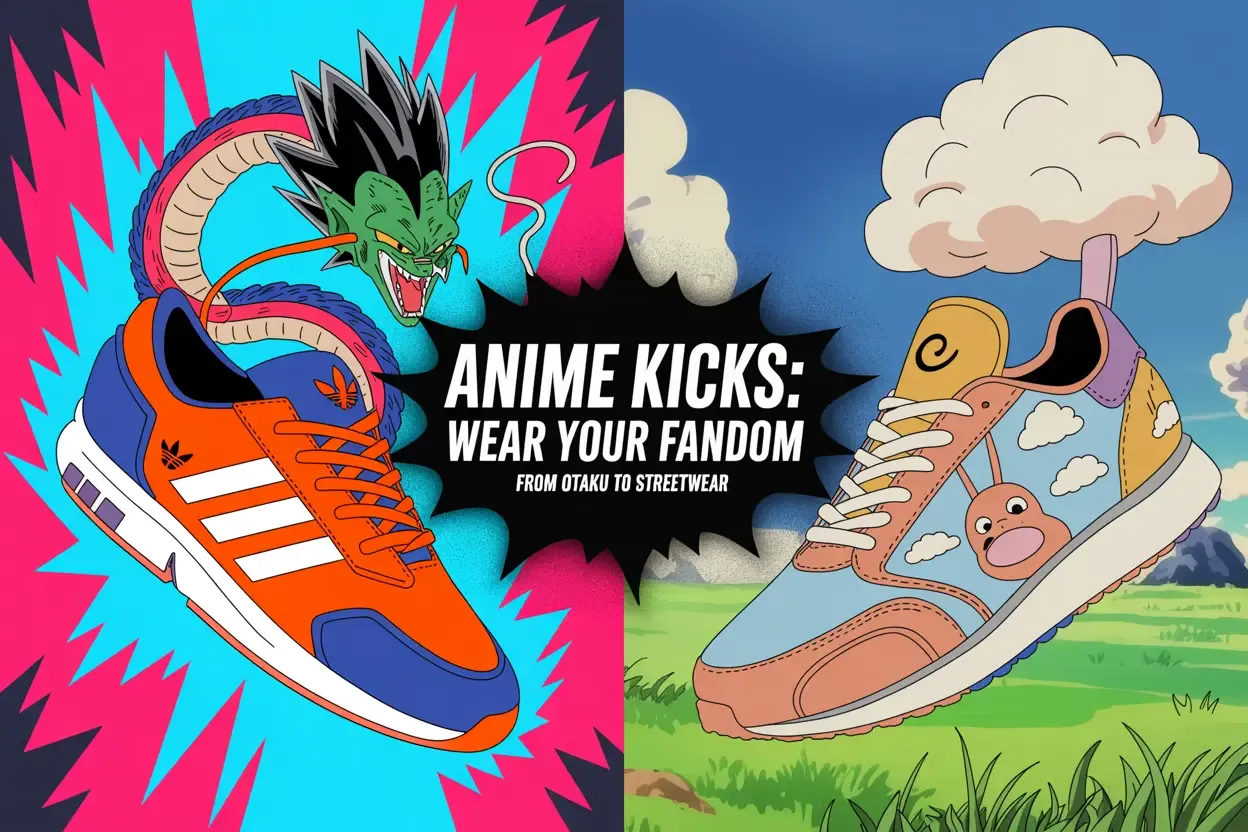
Sometimes two worlds collide and something genuinely special comes out of it. Think peanut butter and jelly. Or, in this case, sneakers and anime. It sounds a little unexpected at first, but the crossover between Japanese animation and iconic footwear has grown into a huge and fascinating niche. And it's no longer just a couple of themed pairs. We're talking about limited drops that trigger chaos, feed a massive resale scene, and spark intense debates among fans.
So why does this category draw so much attention? Part of it is simple: sneakers are no longer just for athletes, and anime is now a global cultural force with millions of dedicated fans. Add that passion to the hype-driven mechanics of limited-release footwear, and you get a space that is exciting, messy, and sometimes honestly a little absurd.
If you like the "pop culture → sneaker demand" chain reaction, the same pattern shows up in music fandoms too—our deep dive on K‑Pop as a sneaker hype engine is basically the idol-version of this story. And for the "sneakers as collectibles / art objects" angle (which anime collabs lean into hard), see museum-worthy kicks.
The Hype is Real: When Sneakers Meet Soul (and Shonen)
Why are people willing to spend real money and real energy on sneakers covered in anime references? A few things are driving it. First, these aren't random graphics slapped onto shoes. They're often collaborations with huge franchises people already love, including Dragon Ball Z, Naruto, Demon Slayer, and Studio Ghibli. If you're more into the everyday styling side than limited-edition drops, our Studio Ghibli outfits guide with cottagecore sneakers (New Balance 574) shows how to translate that same Miyazaki mood into wearable, nature-ready looks.
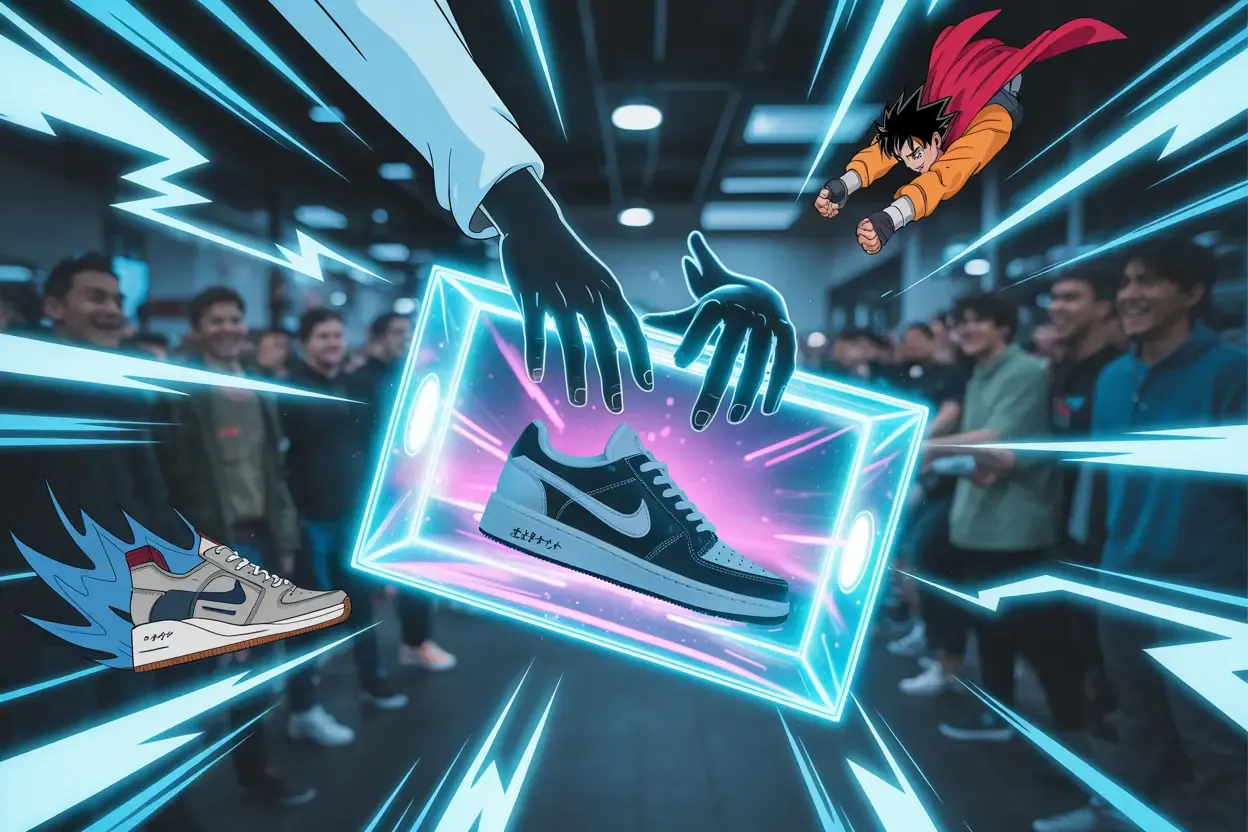
Think about the emotional side of it. Fans have spent years with these stories and characters. They've watched Goku power up, rooted for Naruto through every setback, and gotten lost in Miyazaki's worlds. Those characters can feel personal. So when a brand like Adidas or Nike turns that connection into something wearable, the shoe becomes more than merchandise. It becomes a visible extension of identity, a way to carry part of that fictional world into everyday life.
Then there's the sneakerhead angle. Sneaker culture runs on exclusivity, rarity, and the thrill of the chase, and anime drops check every one of those boxes. These releases usually come in smaller quantities, arrive with heavy promotion, and disappear in seconds online. Scarcity pushes demand up fast, and resale prices follow right behind it.
Some major brands have already shown how strong this lane can be. Adidas and its Dragon Ball Z collection is the obvious example. The brand released multiple shoes, each tied to a different character, with packaging that combined into a larger image if you collected the set. Nike, through both its core label and Converse, has also tapped into the Naruto universe, including a collaboration with NBA star Zion Williamson, who is openly a Naruto fan. When the person tied to the project genuinely loves the series, fans notice. It feels less like a company cashing in and more like someone inside the culture helping shape the release.
Of course, once a drop sells out, the next stop is usually resale. And that is where things get much more complicated.
The Authenticity Tightrope: Walking the Line in the Resale Wild West
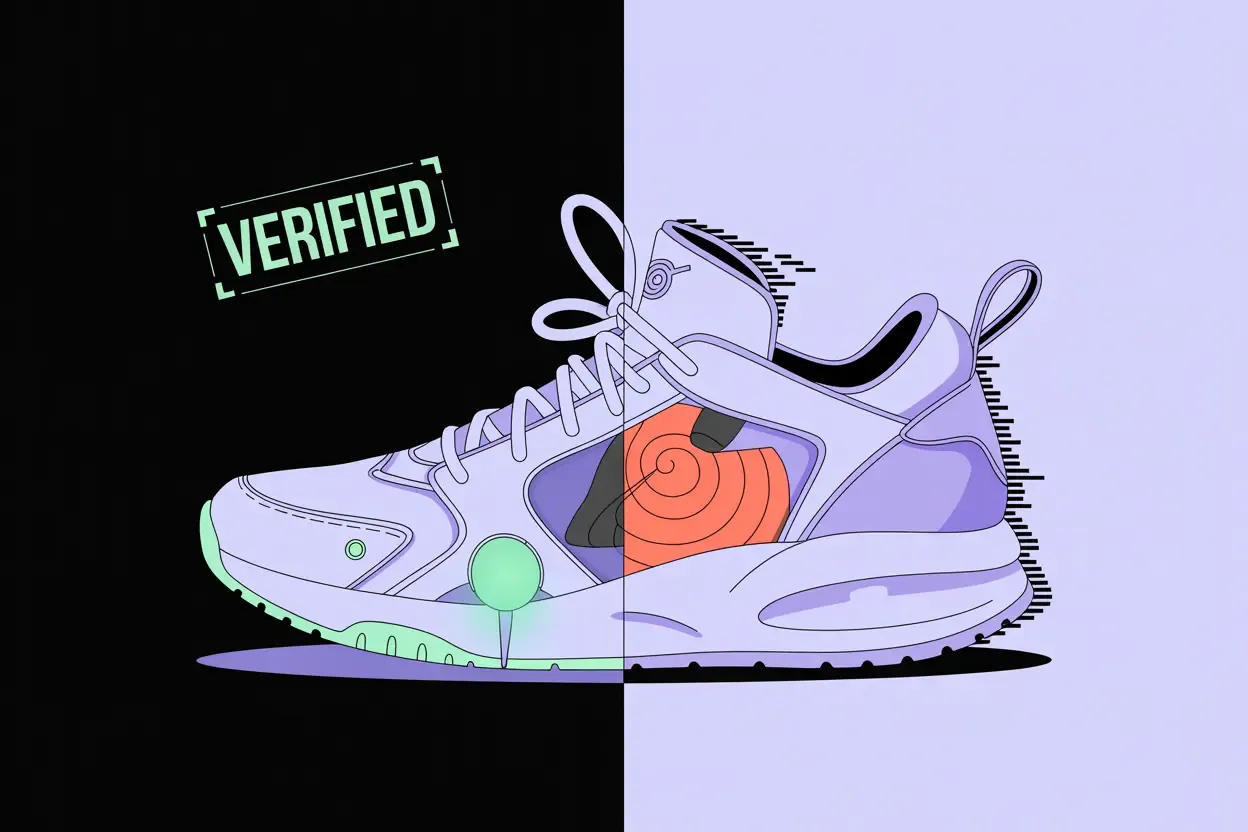
Missed the release? It happens. That usually means heading to a resale platform next. This market is enormous, with platforms like StockX, GOAT, and SNKRDUNK moving huge volumes of sneakers around the world. At their core, these are digital marketplaces for shoes that have already hit retail.
The biggest problem in this space, especially with high-demand limited pairs, is counterfeits. Fake sneakers are incredibly convincing now, and anime collabs are an obvious target. Buying a well-made fake is a legitimate fear, and it can quickly erode trust in the market.
Platforms like StockX and GOAT try to fight that through strict authentication. They rely on teams of experts, and sometimes machine learning, to verify whether a pair is legitimate before it reaches the buyer. StockX, for example, has rejected over a million items worth hundreds of millions of dollars because of authenticity concerns. That process costs money, but it also creates trust, and many buyers are happy to pay extra for that peace of mind.
Then you have platforms like Mercari, especially in Japan, where users have reported a significant number of fakes. It can look like a place to score a bargain, but the risk rises because the same level of platform-enforced authentication usually is not there before the transaction.
But authenticity in this category isn't only about whether the shoe itself is physically real. Fans also care about whether the collaboration feels authentic. Does it actually reflect the spirit of the anime? Does it show real understanding of the characters and the story? Or does it just feel like a lazy cash grab built around a famous logo?
The Adidas x Dragon Ball Z collection is a good example. Some fans loved the idea and went all in on collecting the whole set. Others felt the designs were undercooked and didn't really represent the characters well enough. They wanted pairs that looked like they came from the Dragon Ball universe, not shoes that just borrowed a few references. That reaction says a lot about the audience. Fans are paying attention, and they know the difference between thoughtful tribute and surface-level branding.
That scrutiny gets even sharper when the anime is closely tied to Japanese history or cultural imagery, like Demon Slayer with its links to folklore and the Taisho period. Studio Ghibli sits in a similar category because of its artistic reputation. Collaborations there, including Loewe's, are often judged by how well they respect and translate that visual world. It's a tricky line to walk. Brands have to honor the source without making it feel flattened, appropriated, or cheapened.
Fan Voices: More Than Just Collectors, They're Critics
Fans don't just buy these sneakers. They analyze them, argue about them, and pick apart every detail online. Reddit forums, MyAnimeList, and dedicated Discord servers are full of conversation. People celebrate their cops, compare notes, and just as often call out what they think a brand got wrong.
There's an ongoing debate around "cultural homage" versus "exploitation." Is a collaboration really celebrating the anime, or is a major Western brand simply using a popular Japanese IP to sell product? Those discussions get nuanced fast, especially once you factor in the different perspectives of Western and Japanese fans. What reads as appropriation in one market does not always carry the same meaning in another. Brands need to understand that context if they want the release to land well.
You also see a clear divide based on how deep someone is in anime culture. A casual fan may just like the design because a favorite character is on it. A more dedicated otaku, someone with an intense interest in anime or manga, is usually looking for deeper references, lore accuracy, and proof that the brand really understands the source material. These are often the voices that shape critical opinion and hold collaborations to a higher standard.
The Resale Landscape: Navigating the Global Marketplace
So where do these anime-themed pairs actually change hands once retail is over? The answer is global, but a few regional hubs matter more than others. Japan, as the birthplace of anime, has its own distinct ecosystem. Platforms like Mandarake, a long-running anime collectibles retailer, and SNKRDUNK, a Japanese sneaker resale platform, are major players. So are consumer-to-consumer platforms like Mercari Japan.
In Western markets, StockX and GOAT tend to dominate the broader resale conversation, anime collabs included. North America accounts for the biggest share of the global sneaker resale market.
Interestingly, Japanese fans are often less likely on average to buy general anime merchandise than fans in places like the U.S. or Thailand, but Japan is still where many exclusives and early releases happen. That creates a kind of collector's arbitrage. Sneakers get purchased locally in Japan and then resold at higher prices in the West, where demand can be intense. Proxy buying services help international fans access those releases, but they also add cost and complexity.
The fake problem on some Japanese consumer-to-consumer platforms like Mercari Japan also changes buyer behavior. People who want legitimate pairs may prefer paying more through SNKRDUNK or using a proxy to buy from a trusted retailer like Mandarake, simply because the confidence level is higher.
Limited-edition drops are naturally volatile. The Adidas x Dragon Ball Z collection showed that clearly, with pairs that retailed around $130-$150 quickly reselling for $500 or more on the stronger models. The Naruto Converse drop was also expected to move fast because of its limited supply. When sneaker hype meets dedicated anime fandom, resale prices rise quickly and often stay far above retail.
Beyond the Drop: Fans Taking Control
Fans are not just reacting to this market. They're shaping it, and sometimes they're doing that by bypassing brands altogether. One of the clearest examples is the rise of custom anime sneakers. Spend a little time on Etsy or social media and you'll find artists hand-painting popular sneaker models with detailed scenes and characters from all kinds of series.
These customs are not just cool art. They also act as a form of expression and, in some cases, a quiet critique. They show what fans actually want, especially when official collaborations feel too generic or too cautious. When someone paints a niche character or a very specific moment from a series onto a pair, it sets a high standard. It also shows brands what real commitment to the culture can look like.
We have not seen large-scale organized boycotts aimed specifically at anime sneakers so far, but the possibility is clearly there. Fan activism has already worked in adjacent spaces like K-pop, where online campaigns and boycotts have pushed companies to respond. If an anime sneaker collaboration comes across as disrespectful, exploitative, or just plain weak, backlash can spread quickly through connected fan communities and damage a brand's standing within that fandom. Worth noting: upsetting the most engaged fans, the otaku who are often the loudest and most influential, can create longer-term problems than brands expect.
Conclusion: Passion, Profit, and Finding the Authentic Kick
The anime-inspired sneaker market is energetic, chaotic, and constantly shifting. It sits right at the intersection of passionate fandom and the hype-driven machinery of modern sneaker resale. That mix has created enormous demand, driven by limited releases and by fans wanting new ways to connect with the stories they love.
But the space has real friction points too. Counterfeit products remain a major issue, which makes trusted authentication essential. And then there's the bigger question of authenticity itself: not just whether the shoe is real, but whether the collaboration feels respectful, informed, and true to the anime behind it.
The future of anime sneaker collaborations depends on getting that balance right. Brands need to understand the anime, the audience, and the cultural context before they release anything. Resale platforms need to keep investing in serious authentication. And fans will keep doing what they've already been doing: championing the collaborations that hit, criticizing the ones that don't, and creating their own customs when official products fall short. At the center of all of it is the same thing, stories and characters that matter deeply to people, translated into something they can actually wear.