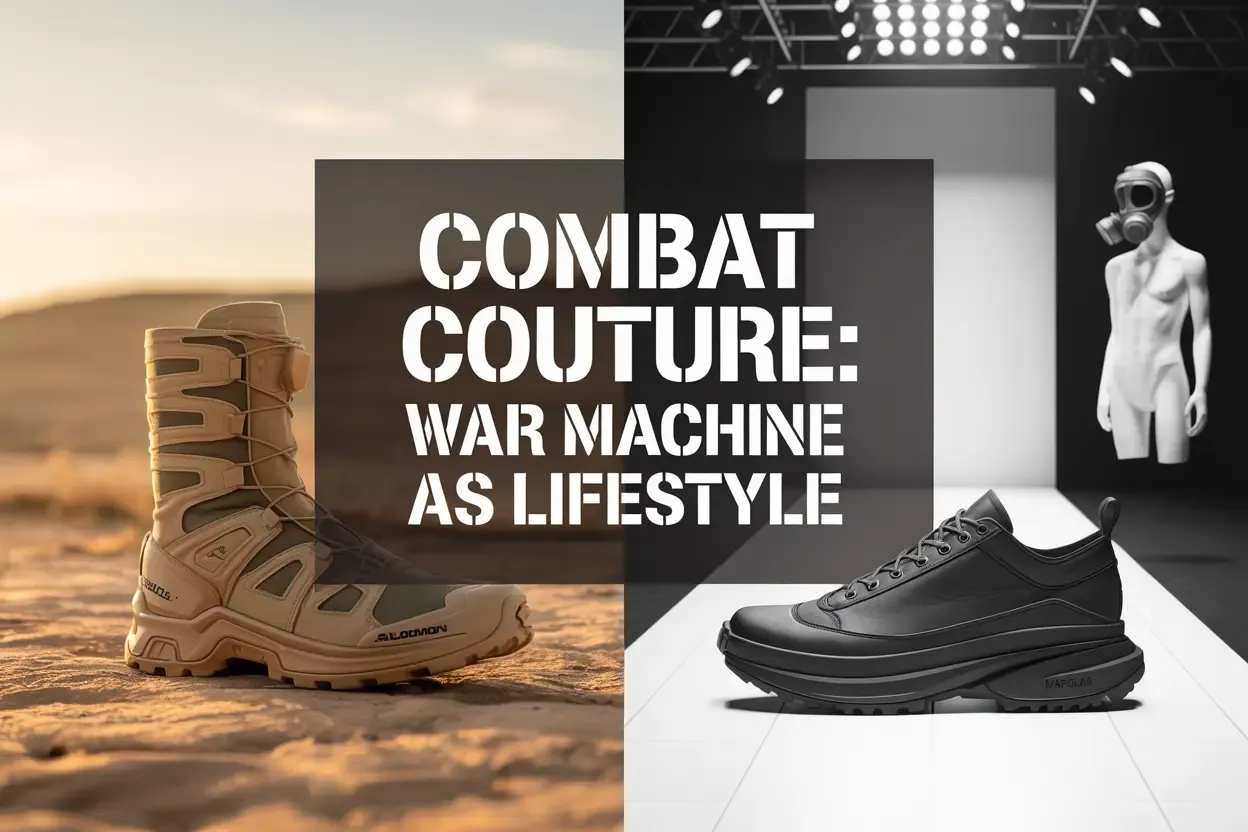
Ever notice how military style keeps showing up in fashion, especially in sneakers? It's not just camo. Think rugged soles, hard-wearing materials, and no-nonsense color palettes. The link between military utility and civilian footwear runs deep, and it's been evolving for a long time. It also leans on big ideas like strength, readiness, and even rebellion, which is why these symbols get complicated fast.
Turning gear made for combat into a style object is a major cultural shift. You take something built for function, drop it into everyday life, and suddenly it signals something else. Real talk: that kind of remix says a lot about who gets to decide what things mean, and why.
This article breaks down the design, marketing, and real-world wear experience of popular military-inspired sneakers. Then we'll zoom out and look at the cultural politics of camouflage in fashion.
If you're interested in how "anti-establishment" style cultures reinterpret footwear (and why some aesthetics become symbols), you'll probably enjoy the counterpoint piece on punk anti-sneaker sneakerheads. And for a broader lens on how sneakers move from function → culture → collectible object, our museum-worthy kicks article complements the "tactical-to-runway" story.
Deconstructing the Design: Military DNA in Modern Sneakers
Brands that pull military cues into civilian footwear have to balance real utility with daily wearability. A few lines do this especially well, and most of them have genuine military or tactical roots.
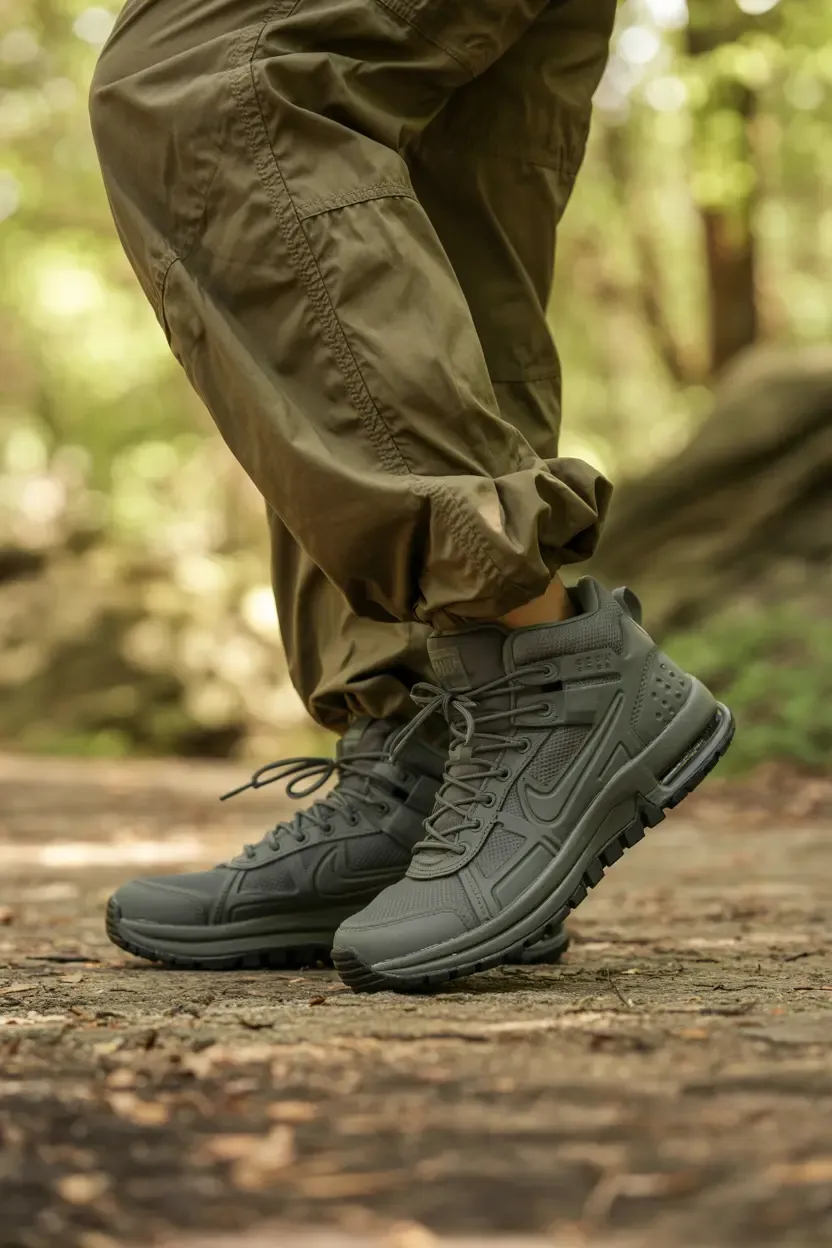
Take Nike's Special Field Boot (SFB) Series. Built for military and first responders, it brings real hardware: waterproof GORE-TEX fabric, durable synthetic leather, aggressive tread for traction, internal rock shields, and specialized lacing. Details like sawtooth designs for rope climbing make the intent pretty clear. Nike ties the SFB to co-founder Bill Bowerman's WWII service, framing wearers as "tactical athletes"—a concept that blurs lines and also pulls in civilians chasing that resilience vibe.
The Adidas GSG9 boot has a direct origin story: it was developed for German counter-terrorism teams after the 1972 Munich Olympics. Over time, it moved from a functional urban boot into something with additions like antistatic tech and specialized elements for rappelling. Marketing leans hard on specs like water resistance and oil/gasoline resistance, which speaks to professional users. But the GSG9 also crossed into high fashion via collaborations, especially with Yohji Yamamoto's Y-3 line. Those fashion versions keep the rugged look, but shift materials for everyday feel and styling, showing how tactical gear gets reinterpreted.
Other brands share this military heritage. Salomon FORCES is designed explicitly for professionals, emphasizing stability and durability in tough conditions. The Palladium Pampa boot has a direct link to the French Foreign Legion from 1947, designed to be tough, comfortable, and quick-drying (using canvas). The Converse Chuck Taylor All-Star, now a global icon, served as the official US military athletic training shoe in WWII due to its flexibility.
The materials—GORE-TEX, leather, canvas—aren't just about performance. They also signal military heritage. For consumers, those choices read as quality and “authentic inspiration,” even if the high-performance side isn't something you actually need for a normal day.
Marketing the Military: Narratives of Toughness, Heritage, and Style
These sneakers get sold through stories that hit a mix of wants: durability, performance, heritage, and the look. Brands blend tactical functionality with lifestyle appeal, and the messaging does a lot of the work.
Nike's SFB marketing cleverly weaves Bowerman's heritage with performance specs that meet military regulations, targeting both active personnel and civilians who value those attributes. The "tactical athlete" idea connects the line to Nike's broader aspirational brand ethos.
Adidas uses a dual strategy for the GSG9, highlighting its special forces origins and technical features for professionals, while simultaneously elevating it through collaborations like Y-3 and 032c for fashion appeal. This allows the GSG9 to live in both the tactical and lifestyle spaces.
Other brands follow suit. Under Armour emphasizes "gritty fabrics" and durability for "the toughest jobs," aiming at military and first responders. Salomon FORCES marketing focuses on "mission-proven models" for demanding users. Palladium leverages its French Foreign Legion history and "Hero Heritage Program" for service members, while its broader appeal positions the boots as symbols of resilience for a wider audience.
Military heritage is a powerful lever, connecting brands to narratives of innovation, toughness, and significance. Those stories also flex easily, so they can speak to professionals chasing performance and civilians chasing the symbolism.
High-profile collaborations are key to amplifying the appeal and exclusivity. The Undefeated x Air Jordan 4, with its military-inspired colors and details, gained "grail" status through its exclusivity. The Maharishi x Nike By You collab merged Nike styles with Maharishi's utilitarian expertise and unique camouflage, validating the aesthetic within fashion circles and adding cultural layers. Brands face an "authenticity paradox," needing to evoke genuine heritage while making products desirable for fashion, which can lead to tactical features becoming more aesthetic than purely functional for many.
The User Verdict: Practicality Meets (or Clashes with) Aesthetics
User reviews are where the marketing story meets reality. They often show a messy balance between “tactical” claims and pure style appeal. Perceived value usually comes down to whether the day-to-day experience matches the look and the price.
Nike SFB users praise the lightweight, easy-on-foot feel for casual wear, but they often criticize poor durability and slip resistance for demanding use. Plenty of people treat them as more aesthetic, or for light tasks like Airsoft. The big pro is that initial feel; the big con is durability.
Original Adidas GSG9 boots were liked for performance but had sole issues. Newer versions are praised for specific uses like swift water rescue due to grip and quick-drying nature, but some find them uncomfortable or report outsole peeling. Original models are often collector's items, while fashion interpretations prioritize aesthetics.
Salomon FORCES generally get positive feedback for cushioned support, agility, and performance on rough terrain. Common complaints include sole wear on hard surfaces and potential quality control issues. They're still mainly treated as practical gear, even with the sleek look.
Palladium Pampa boots are liked for their forgiving feel, breathability, and distinctive look, but they often need an insole swap for arch support. Durability is decent for streetwear and light hikes, but not heavy-duty. Big aesthetic appeal, practical for casual use.
Under Armour tactical boots (like the Valsetz) feel sneaker-like and easy to wear, but durability is a major issue. Users report quick wear-out and sole problems, which raises questions about value for sustained professional use. The practical upside is that wear feel; the big drawback is how long they last.
Standard Converse Chuck Taylor All-Stars aren't tactical today, though historically used for training. They hold aesthetic value. Modern "tactical Chucks" like the Altama Maritime Mid or Converse Chuck Taylor All Star Cx Explore Military Workwear blend the classic look with enhanced features, attempting to add practicality back to the style.
The common theme is a trade-off between cushioned wear feel and durability. People love that initial sneaker-like feel, then get frustrated when the shoe can't hang under rigorous conditions. Practicality is also personal: a boot that's a bad choice for heavy-duty work can still be perfect for light use or niche activities. Utility gets judged against individual needs, not just the most extreme “mission-ready” claims. Some high-fashion or hyped releases carry an "aesthetic tax," while genuine tactical boots have a "tactical premium."
Camouflage in Civilian Wardrobes: Cultural Politics
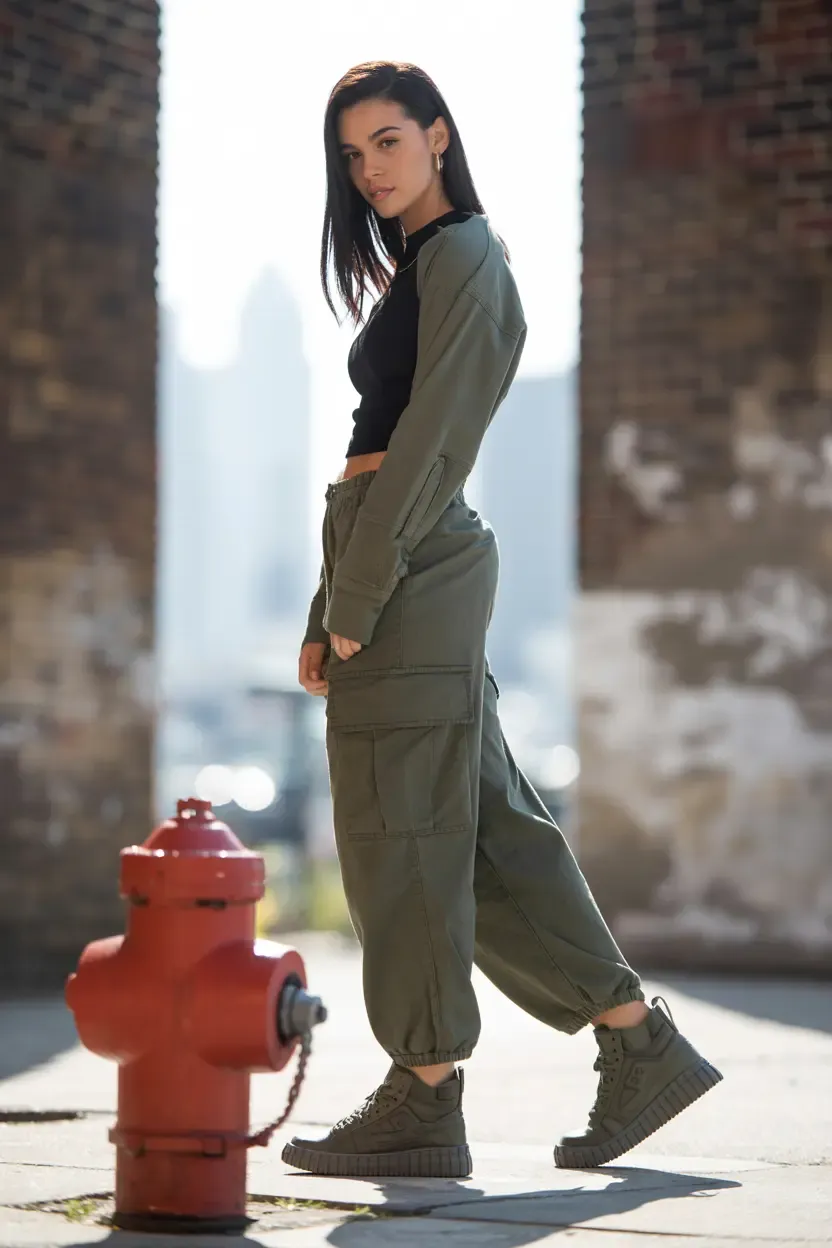
Camouflage started as military concealment, then turned into a full-on civilian fashion motif, loaded with cultural negotiation. Formal military camouflage developed in the 20th century, notably in WWI with artists ("camoufleurs"), and it was standardized by WWII.
Its jump to civilian wardrobes was catalyzed by post-WWII military surplus. By the 1960s and 70s, during the Vietnam War, camouflage was adopted by anti-war protesters, becoming a symbol of rebellion. From the 80s, it hit the mainstream through pop culture, hip-hop, and streetwear.
Fashion theory helps explain camouflage's cultural politics. It can be seen as a "cultural technique" that stretches beyond military use. Semiotically, it's "polysemic"—it carries multiple, often contradictory meanings (strength vs. rebellion). A pattern made for hiding gets used to "stand out." Its meaning becomes a "floating signifier," constantly reshaped by context.
The commodification of military aesthetics might normalize militarism, diluting its connection to conflict. However, fashion can also resist this, using camouflage for critique. Specific patterns like DPM (recontextualized by Maharishi with nature/peace symbols) and Tiger Stripe (Vietnam War origins, iconic status) have distinct fashion journeys.
Camouflage's meaning is sensitive to war and post-war contexts. During World Wars, influence was utilitarian. The Vietnam era saw it as dissent. Post-9/11 America saw shifting views, initially seen as distasteful, later linked to "military chic" or sexualized power. It acts as a cultural barometer.
Today, camouflage is a streetwear staple, tied to trends like "gorpcore" and "apocalypse chic." In the "meme age," it's used in political fashion with potential dual readings. Its meaning can also differ in societies with mandatory military service.
Conclusion: The Complex Interplay of Military, Fashion, and Culture
The story of military-inspired sneakers and camouflage shows how utility, aesthetics, and cultural meaning get tangled together. Sneakers that start as functional gear get marketed through toughness and heritage, which appeals to both professionals and civilians looking for a symbolic connection.
However, user experiences reveal potential compromises in durability for style or broader wearability. Camouflage's path is even more nuanced, shifting from concealment to a fluid symbol of protest, identity, or style, often inverting its original purpose. The "performance" narrative—literal and symbolic—is central to this appeal. This involves a cycle of authenticity, appropriation, and re-authentication, keeping military aesthetics relevant.
While commodifying military symbols raises ethical questions about normalizing militarism, fashion can also serve as a platform for critique. Future trends, like techwear, may further blend function and style. Ultimately, the ongoing presence of military styles in fashion reflects a persistent fascination with symbols of military life, constantly reinterpreted to reflect and shape contemporary culture.