Hey, have you ever looked at someone's shoes and thought, "Whoa, what happened there?" Not in a judgmental way, more like pure curiosity. Like… how are they even staying on? We've all seen those pairs: scuffed, maybe a hole or two, held together with sheer willpower and, yes, sometimes duct tape. You know the ones.
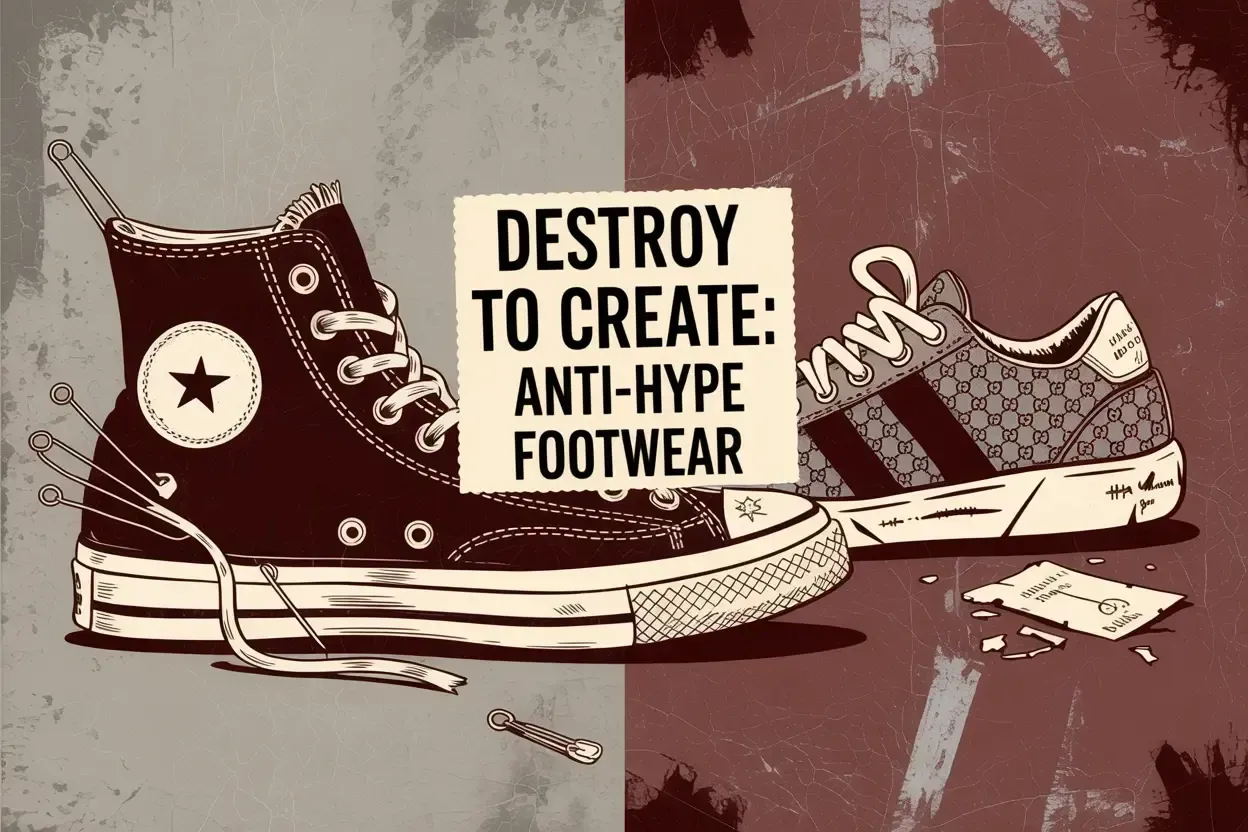
For most people, a beat-up shoe is just... a beat-up shoe. Time for a new pair, right? But in certain corners of the world, specifically the gritty, loud, fiercely independent world of punk rock, those worn-out kicks aren't just footwear; they're a statement. A badge of honor, even. And yeah, it's a bit of a head-scratcher. People line up and pay a fortune for pristine limited-edition sneakers, while others take perfectly good shoes and wear them like they're trying to finish the job. It makes you wonder if there's a whole movement of "anti-sneaker sneakerheads" out there.
If you want to zoom out from punk and see how other "power aesthetics" get re-used in sneaker culture, the case study on military-inspired sneakers is a strong contrast (tactical heritage → runway). And for another angle on how stories turn shoes into cultural objects, read sneakers in cinema.
So, What's Punk Really About Anyway? (Hint: It's Not About Being Tidy)
To really get why a trashed shoe has cultural currency in punk, you have to zoom out and look at what punk was (and still is) about. It wasn't just a music genre with three chords and a wall of feedback. Not even close. Punk was a full-blown cultural reset button: question everything, tear down the established order, then build something raw and real in its place.

At its heart, punk is all about DIY: Do It Yourself. Couldn't get a record deal? Start your own label. Couldn't book a gig? Play in a basement or a squat. Couldn't afford fancy clothes? Rip up what you had, draw on it, stitch it back together wrong. This ethos wasn't just practical; it was ideological. It was a giant middle finger to the polished, corporate, consumer-driven machine. Why buy into their perfect, pre-packaged world when you could make your own messy, authentic one?
And that brings us to the anti-establishment and, crucially, the anti-capitalist stance. Punk came up during times of economic hardship and social unrest. There was deep distrust of authority, plus a hard rejection of the idea that your worth comes from what you own or how perfectly you present yourself. Authenticity, experience, and resistance beat material wealth and conformity every single time.
Why Beat-Up Chucks Became the Unofficial Uniform
So, against this backdrop of DIY and defiance, what kind of footwear makes sense? Not something fancy, expensive, or delicate. You needed something affordable, easy to find, and tough enough to survive stage dives, mosh pits, and long nights on less-than-clean streets.
Enter the humble canvas shoe, specifically the Converse Chuck Taylor All-Star. These weren't made for rebellion; they started as basketball shoes. But they were cheap, you could find them anywhere, and crucially, they were a blank slate. The simple design made them perfect for personalization, or just taking a beating. They didn't scream "luxury" or "status." They whispered (or maybe mumbled from under a layer of grime), "I'm just a shoe."

Beyond Converse, other practical, durable options made it onto punk feet. Doc Martens boots, for instance, with their air-cushioned soles and tough leather, were adopted from working-class skinhead culture and became another iconic, hard-wearing choice. Still, the canvas sneaker often stayed the go-to because it was cheap and basically disposable. Docs had their place, but the canvas shoe, especially the Chuck Taylor, hit that sweet spot of affordability and malleability for peak DIY treatment.
The Beauty of the Beat-Up: Scuffs, Holes, and Statements
Here's the thing: the worn aesthetic in punk wasn't an accident. Sure, the shoes went through a lot, but the scene also embraced the breakdown. Why would you want a shoe that looks like it's been through a war? Because it had. Every scuff, every tear, every faded spot told a story. It was proof of shows attended, miles walked, and struggles endured.
In a society that loves newness and perfection, the punk scene found beauty in the opposite. A pristine shoe could signal you weren't really living in it, or that you were too precious about appearances. A beat-up shoe did the reverse: it read as authenticity. It said, "I'm not afraid to get my hands (or my feet) dirty. I'm out there doing things, living life on my own terms." That's rebellion on your feet. Deliberately wearing out your shoes pushed back against the relentless consumer cycle that insists you always need the next new thing. The art wasn't only in the creation; it lived in the destruction and the character that came after.
The DIY Toolkit: Tape, Markers, and Pure Attitude
And when those well-loved Chucks started falling apart, what did you do? You didn't just toss them. You patched them up. But "patching up" in punk wasn't about making them look new again. It was about adding another layer to the story.
Duct tape became an essential accessory. Not just for holding soles on (though it absolutely did that), but as a visible repair, a statement of improvisation and resilience. It looked raw, functional, and totally unconcerned with mainstream ideas of neatness.
Beyond tape, Sharpies were the go-to for band names, political slogans, or random doodles. Patches from bands or political causes were sewn on, or even safety-pinned. Laces might be mismatched or swapped for brightly colored ribbon or chains. Every tweak was personal, a way to make a mass-produced item feel uniquely yours and show what you were about. It was footwear as a personal manifesto.
Sneakerheads vs. Anti-Sneakerheads: A Tale of Two Worlds
It's genuinely fascinating to compare this punk approach to footwear with modern, mainstream sneakerhead culture. On one side, you have people meticulously cleaning their shoes, storing them in climate-controlled rooms, hunting down limited releases with fervor, and talking about "resale value." The focus is often on hype, exclusivity, and keeping a shoe's original condition as a form of value.
On the other side, you have the punk aesthetic, which actively embraces scuffs, tears, and decay. The value isn't in the shoe's pristine state or its potential market price. It's in the stories it tells, the experiences it represents, and the defiant act of wearing something until it's practically falling apart. The value is lived, not traded.
It almost creates a weird, inverted kind of connoisseurship. A mainstream sneakerhead might admire a deadstock pair of rare Jordans; an "anti-sneaker sneakerhead" from the punk scene might admire well-worn Chucks held together with layers of duct tape, clocking the history and rebellion baked into the material. It's the same passion for footwear, just expressed through completely opposite values.
It Wasn't Only Chucks (But Let's Be Real, They Were King)
While the canvas sneaker, especially the Converse Chuck Taylor, held a special place due to its affordability and canvas surface perfect for customization and destruction, other shoes fit the punk mold. As mentioned, Dr. Martens were a staple, offering durability and a chunky, utilitarian look. Creepers also made appearances. But the canvas shoe offered that unique blend of disposability and DIY potential that truly embodied the punk spirit of making do and making a statement with very little. They were the perfect foundation for controlled chaos.
Punk's Kinda Scruffy Footprint on Fashion
This deliberate embrace of the worn and imperfect in punk didn't stay confined to the mosh pit. Like plenty of subcultural styles, it eventually seeped into the mainstream. Think about grunge in the 90s, with ripped jeans, faded band tees, and yes, often beat-up Converse. Even now, you see deliberately distressed clothing sold at high-fashion prices, a bizarre echo of punk's anti-fashion statement. It shows how powerful that early rejection of perfection was, shaping aesthetics long after the first punk explosion.
More Than Just Shoes: A Philosophy on Your Feet
So, in the end, those duct-taped, scuffed-up sneakers in punk culture were way more than just shoes. They were symbols of a movement that rejected consumerism, embraced imperfection, and found power in authenticity and defiance. They were DIY made visible, a canvas for personal expression, and a walking history of gigs, protests, and everyday rebellion.
While the mainstream sneaker world obsesses over what's new and limited, the punk "anti-sneaker sneakerheads" found value in what was old, worn, and personalized. It pushes you to think about what we really value in the things we own. Is it pristine condition, or the stories they'd tell if they could talk? Maybe it's worth looking down at your own feet and asking: what do your shoes say about you?