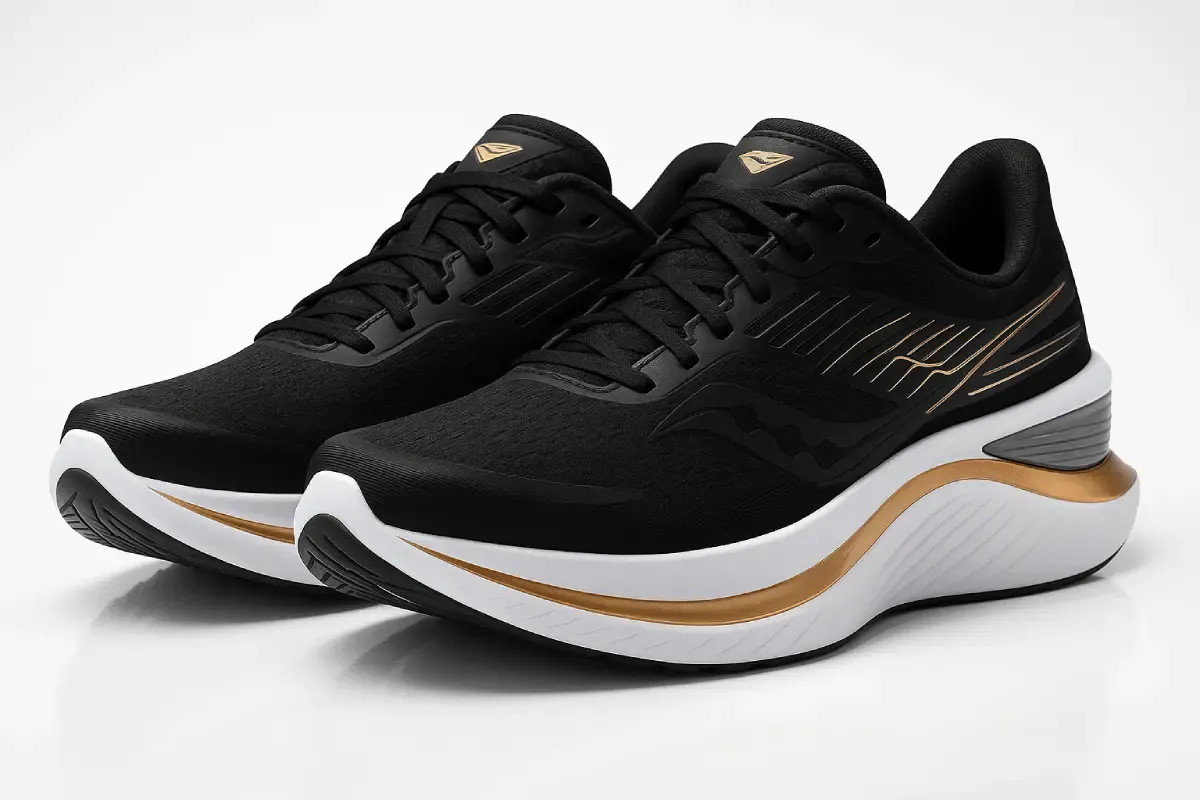
Founder & Lead Editor
Federico D'anna
Federico D'anna has spent 9 years reviewing sneakers with a methodology built on hands-on wear notes, side-by-side comparisons, and verified buyer feedback.
Learn more about Federico D'annaHighlights
Positive
- The 'Speedroll' rocker geometry makes long, slow miles feel surprisingly effortless by propelling you forward.
- Deep sidewalls provide excellent stability for mild overpronators without using intrusive plastic posts.
Negative
- The fit is notoriously narrow in the toe box, which can cause numbness for runners with average-to-wide feet.
Saucony Endorphin Shift 3 Sizing & Fit Guide
The Saucony Endorphin Shift 3 occupies a unique space in the maximalist running market, combining a high stack height with a highly structured, stable ride. However, achieving optimal fit requires a nuanced understanding of its upper geometry, as the standard D-width configuration fits significantly more snug than a traditional daily trainer. Because of a highly tapered forefoot and low vertical volume, finding immediate lateral relief across the metatarsals is a primary concern for runners transitioning into this model. To avoid severe toe box constriction and protect against friction-related injuries, most runners with standard to wide foot profiles will need to adjust away from their typical true to size (TTS) baseline.
Compare your current pair to find the best size match.
| Reference Shoe | Your Usual US | Buy in US | Your Usual EU | Buy in EU | Fit Notes |
|---|---|---|---|---|---|
| Hoka Clifton 9 | 10.0 | 10.5 | 44 | 44.5 | The Hoka Clifton 9 features a significantly more generous, rounded toe box and a longer overall footprint. Because the Saucony Endorphin Shift 3's widest part of the toe box measures 94.2 mm—which is 4.0 mm narrower than average—Clifton users must size up by a half-size (0.5 US) to secure comparable forefoot width and avoid toe contact with the front mesh. |
| Saucony Triumph 20 / 21 | 10.0 | 10.5 | 44 | 44.5 | Although the Saucony Triumph series is characterized by a narrow midfoot, its toe box provides standard structural volume and width. The Endorphin Shift 3 possesses a much lower vertical volume and a more aggressive taper at the front. Moving up a half-size ensures adequate room for the lateral toes without compromising the midfoot lockdown. |
| Saucony Tempus | 10.0 | 10.5 | 44 | 44.5 | The Saucony Tempus operates on a standard daily training last that runs truer to standard length with a normal toe box. Due to the Shift 3's highly tapered, 94.2 mm narrow forefoot, a half-size adjustment is required to mitigate a claustrophobic fit. If you previously sized up in the Tempus solely as a compensation factor to gain width, return to your true baseline length before adding the half-size for the Shift 3 to prevent severe heel slippage over its minimal plastic heel clip. |
| Nike Pegasus 41 | 10.0 | 10.0 / 10.5 | 44 | 44 / 44.5 | The Nike Pegasus 41 delivers a classic, snug performance hold that fits true to size. Runners with narrow-to-medium foot shapes can safely maintain their identical size when moving to the Endorphin Shift 3. However, standard or wide-footed runners who routinely purchase a half-size larger in the Pegasus series strictly to obtain lateral relief must size up to a 10.5 or seek out the dedicated Wide (2E) variant. |
Does the Saucony Endorphin Shift 3 run true to size?
For runners with narrow-to-medium foot shapes, the Saucony Endorphin Shift 3 runs true to size in overall length, providing a highly secure, race-like hold through the heel and midfoot. However, because the toe box is highly tapered and measures 4.0 mm narrower than the road running shoe average, the forefoot fits exceptionally tight. Runners who prefer a traditional daily trainer fit with a thumb's width of space at the toes, or those whose feet swell during long efforts, are strongly advised to purchase a half-size larger than their standard size.
Is the Saucony Endorphin Shift 3 suitable for wide feet?
The standard medium (D) width of the Saucony Endorphin Shift 3 is highly unsuitable for wide feet. Due to its narrow 94.2 mm toe box and low vertical volume, standard pairs will exert severe lateral pressure on the first and fifth metatarsals, leading to extreme friction, blisters, and potential toenail loss. Wide-footed runners must opt for the dedicated Wide (2E) version, which provides the necessary upper volume while leveraging the wide 110.8 mm midsole platform for an inherently stable, centered ride.
How is the arch support on the Saucony Endorphin Shift 3?
The Saucony Endorphin Shift 3 provides moderate, balanced arch support that avoids using a hard, intrusive medial post. Instead, it functions as a 'stable neutral' trainer, delivering support through geometric design features including a wide platform base, tall foam sidewalls that cup the foot, and a supportive plastic heel clip. This setup is highly comfortable for both neutral runners and mild overpronators, though its dense PWRRUN foam requires a mandatory break-in period of approximately 30 miles to soften up and deliver its signature rolling transition.
Ready to experience the Saucony Endorphin Shift 3 Review?
Get yours today with fast shipping from Amazon
It's easy to get distracted by the “next big thing” in running shoes: carbon plates, super foams, and anything that promises free speed. But most miles aren't run at breakneck pace. They're done on tired legs, early mornings, or after a long day on your feet. That's where the Saucony Endorphin Shift 3 fits. It's a workhorse. And even though the line has technically been discontinued to make room for newer naming and models, the Shift 3 is still one of the more interesting “stable neutral” shoes you can buy, usually at a great price.
Quick Take
Overall Rating: 4.2/5
Best For: Daily Training, Recovery Runs, Long Distance Cruising, Walking
Key Strengths: Exceptional Stability for a Neutral Shoe, Durable Outsole, Smooth "Rocker" Ride, Value (at current prices)
Notable Limitations: Runs Narrow, Firm Ride (not plush), Exposed Foam Durability
Visual Snapshot Summary
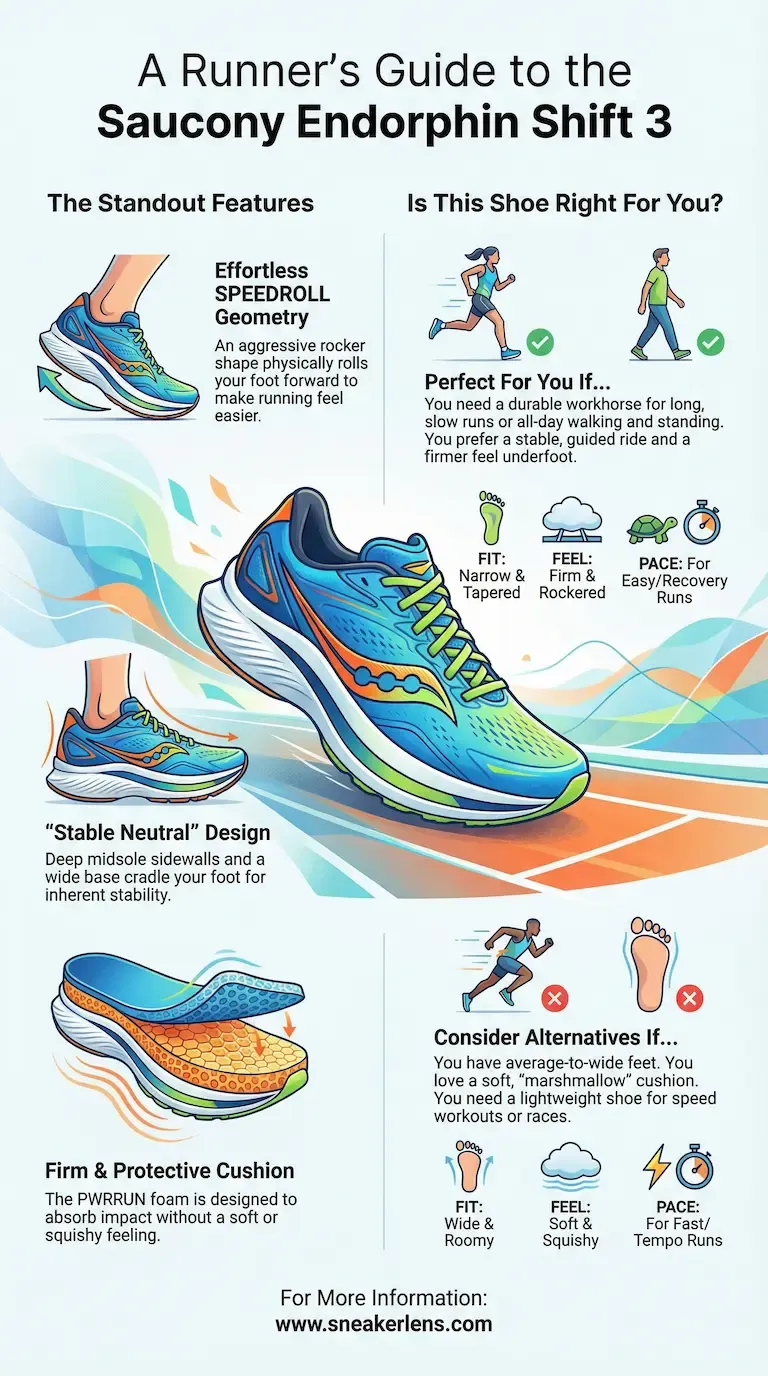
What Makes Saucony Endorphin Shift 3 Stand Out?
Here's the thing about the Endorphin Shift 3: it's a bit of a paradox. It's technically a neutral shoe (no old-school hard medial post forcing your foot outward), but it's still incredibly stable. Saucony calls it “Structured Cushioning,” and it works.
It stands out because it uses massive stack heights (39mm in the heel!) without feeling like you're balancing on a stilt. The platform is wider than the Shift 2, and the sidewalls are deeper, so your foot sits inside the midsole instead of perching on top. It's more bucket seat than bar stool.
Pair that with Saucony's SPEEDROLL technology (basically: the shoe is curved like a rocking chair) and it rolls you forward with very little effort. It's not an explosive “pop” like a carbon-plated racer. It's more of a steady nudge. On low-energy days, that matters. And they kept the weight around 9.4 oz (for a men's US9), which is impressive for how chunky it looks.
As one runner put it perfectly:
"These are my perfect shoe. They cradle my heel, they're cushiony yet supportive enough to wear for long hours... Plush cushion enough for ultra comfort yet they don't make my knee/ankles out of alignment."
Real Customer Experiences
After you comb through enough reviews (Zappos, Reddit, the usual spots), a few patterns show up fast. People love this shoe for chewing through miles, but the fit is polarizing.
- The "Cloud" Factor: A huge chunk of users call it “walking on a cloud,” mostly because their legs feel fresher after long efforts.
- The "Tight Squeeze": There is a very vocal minority—mostly those with wider feet—who find the toe box surprisingly restrictive.
- Durability Praise: Long-term users are reporting 400+ miles of use, which is becoming rare in the era of fragile super-foams.
What Users Are Saying:
"I really like these shoes, which help to decrease the impact on joints when walking or standing for long periods of time. They are perfect for my volunteering position at a local hospital."
"I don't [know] what they did differently with this shoe, but both my big toes feel like they are being squeezed (top and bottom) so much that they go numb. I keep wearing them hoping to maybe break them in. But it's not changing."
Design and Build Quality
The construction is what dictates the ride, so here are the nuts and bolts.
The Upper The upper is a lightweight, breathable mesh. It's straightforward. It uses Saucony's “FormFit” concept, which is meant to hug the foot, and it does. The heel clip is trimmed down from earlier versions to save weight, but it's still substantial enough to hold the heel. Heel slip generally isn't a big issue here.
The Midsole This is where the magic—or the dealbreaker, depending on your preference—happens. The Shift 3 uses PWRRUN foam. Don't confuse it with PWRRUN PB (the beaded stuff in their Pro racers) or PWRRUN+ (the TPU in the Triumph). This is EVA-based foam, and it's firm. If you want that squishy, sink-in feel like a Hoka Clifton or a New Balance More v4, you may be surprised. It's protective, and there's a lot of it (39mm heel / 35mm forefoot), but it doesn't collapse under you. It shields you from the pavement and keeps its shape.
The Outsole Saucony uses XT-900 rubber in the high-wear areas, and it's tough. To save weight, there's also a lot of exposed midsole foam in the center. Some users say that exposed foam gets chewed up quickly on gravel, but on roads it holds up fine.
Special Tech The standout tech is SPEEDROLL geometry. It's an aggressive rocker. Because the foam is stiff, the shoe doesn't flex much at the toe. Instead, the curved shape rolls you through the gait cycle and takes load off the calves and ankles.
Common Durability Issues While the rubber is great, that exposed foam belly I mentioned? It's a weak point if you run on anything other than smooth asphalt. Also, because the toe box is shallow, some runners wear holes in the mesh above the big toe earlier than expected.
Comfort and Fit
Okay, let's talk about how these actually feel on foot, because specs only tell half the story.
Sizing Advice This shoe runs short and narrow. Forefoot volume is low. If you have a standard-width foot (D), you might be okay True to Size (TTS), but if you're on the fence or wear thicker socks, go up a half size.
Width Profile It is narrow. I can't stress this enough. If you have wide feet (2E or 4E), you absolutely need to hunt down the Wide version of this shoe or skip it entirely. The "taper" at the toes is quite aggressive.
The Break-in Because the PWRRUN foam is dense, this shoe requires a break-in period. Out of the box, it might feel stiff, almost blocky. Give it about 20 to 30 miles. The foam doesn't exactly "soften," but the shoe gains a little flexibility and conforms to your foot better.
"The Endorphin Shift 3 was good to go from the second I put it on with virtually no lace adjustment — a true-to-size fit on all accounts. ... A lightweight, breathable mesh kept things cool and comfortable through the forefoot."
Style and Versatility
Let's be honest: the “dad shoe” trend is still lingering, and the Shift 3 fits right in. It's chunky and tall, with a massive silhouette that screams “maximalist.”
Aesthetic Notes Saucony released some great colorways for this—from the loud "Vizipro" neon options to sleek all-black or white/gum options. It doesn't look fast, but it looks modern. The giant "SAUCONY" logo along the side gives it a bit of a racing stripe vibe.
Ideal Scenarios This is a versatile beast. It's a running shoe first, and it shines on slow, plodding recovery runs where you want to zone out. But it's also an excellent walking shoe. The rocker helps you move efficiently, and the stability makes it a favorite for nurses, doctors, and retail workers who stand all day. People do lift in these, though squatting isn't ideal because of the rocker!
Quality and Durability
On build quality, Saucony usually delivers, and the Shift 3 is no exception. It feels solid, and loose glue or stitching errors aren't a common theme with this model.
Praise vs. Issues About 85% of the feedback on durability is positive. The XT-900 rubber is a standout. Plenty of shoes lose tread texture after 100 miles; these often look new at that stage.
However, we have to address the exposed foam again.
"I cannot wear these as they do not have enough side support which alters my stability!" (While this quote references stability, it hints at the structural integrity issues some heavy pronators find as the foam compresses over time).
Another snag is the “gravel catcher” groove. There's a deep decoupling line down the center of the heel. If you run on crushed stone paths, you will come home with rocks stuck in the sole. It's minor, but it gets old.
Decision Matrix
Let's break this down visually. I know sometimes it's easier to just look at a chart.
| Scenario ↓ / Criterion → | Comfort | Breathability | Rain/Grip | Style |
|---|---|---|---|---|
| Daily Training | ✓ | ✓ | ✓ | ○ |
| Recovery Runs | ✓ | ✓ | ✓ | ○ |
| Speed Work | ✕ | ✓ | ✓ | ✕ |
Legend: ✓ = Good ○ = Average ✕ = Poor
Further Reading
Who Should Buy
Perfect For
- The Mileage Junkie: If you are training for a marathon and need a shoe to eat up those 15-20 mile runs without beating up your legs, this is it. The impact protection is top-tier.
- The Mild Overpronator: You don't need a stiff stability shoe, but you notice your ankles caving in slightly when you get tired? The high sidewalls here will keep you honest without forcing your gait.
- The Walker/Worker: If you are on your feet for 8 to 12 hours a day on concrete floors, the firm support and rocker shape will save your lower back.
- The Budget Conscious: Seriously, if you want a top-tier shoe but only have $80 to spend, stop looking and buy this.
Consider Alternatives If
- The Wide-Footed Runner: Unless you can find the 2E version, stay away. The toe box taper will cramp your toes and likely cause numbness.
- The "Soft & Squishy" Lover: If you want that marshmallow feeling where your foot sinks into the foam (like a Hoka Bondi or Nike Invincible), you will hate the firmness of the Shift 3.
- The Speed Demon: This shoe is 9.4 oz and bulky. It is not designed for track intervals or 5K PRs. It feels heavy when you try to pick up the pace significantly.
- The Gravel Runner: The outsole cutout catches rocks. If your daily route is crushed limestone or gravel, you'll be stopping to pick stones out of your soles constantly.
Final Verdict
The Saucony Endorphin Shift 3 is the definition of a "reliable friend." It's not the flashiest, it's not the softest, and it's certainly not the fastest. But it shows up. It protects your legs, it guides your stride, and it lasts a long time.
It occupies a rare space in the running world: a neutral shoe that offers genuine stability without being intrusive. While the fit can be tricky for those with wider feet, the ride is smooth, protective, and surprisingly efficient thanks to that SPEEDROLL geometry.
Given that it's currently sitting in the "clearance" phase of its lifecycle, the value for money is off the charts. If you fit the profile—narrow-ish feet, preference for firm cushion, need for stability—grab a pair before they disappear from shelves forever.
Browse our full Saucony collection to find your perfect pair.
As an Amazon Associate we earn from qualifying purchases. This helps support our site so we can keep bringing you the best content!
Frequently Asked Questions
Is the Saucony Endorphin Shift 3 soft or firm underfoot?
Is the Saucony Endorphin Shift 3 good for overpronation?
What is the difference between Saucony Endorphin Shift 3 and Speed 3?
Related Reviews
Saucony Endorphin Speed 5 Review
Saucony Endorphin Speed 5 Review: A versatile, durable performance trainer with a carbon plate. Discover why it's the top choice for daily speed.
Saucony Triumph 22 Review
Read our in-depth Saucony Triumph 22 review. We analyze the new PWRRUN PB midsole, durability, and fit. Is this max-cushion trainer right for you?
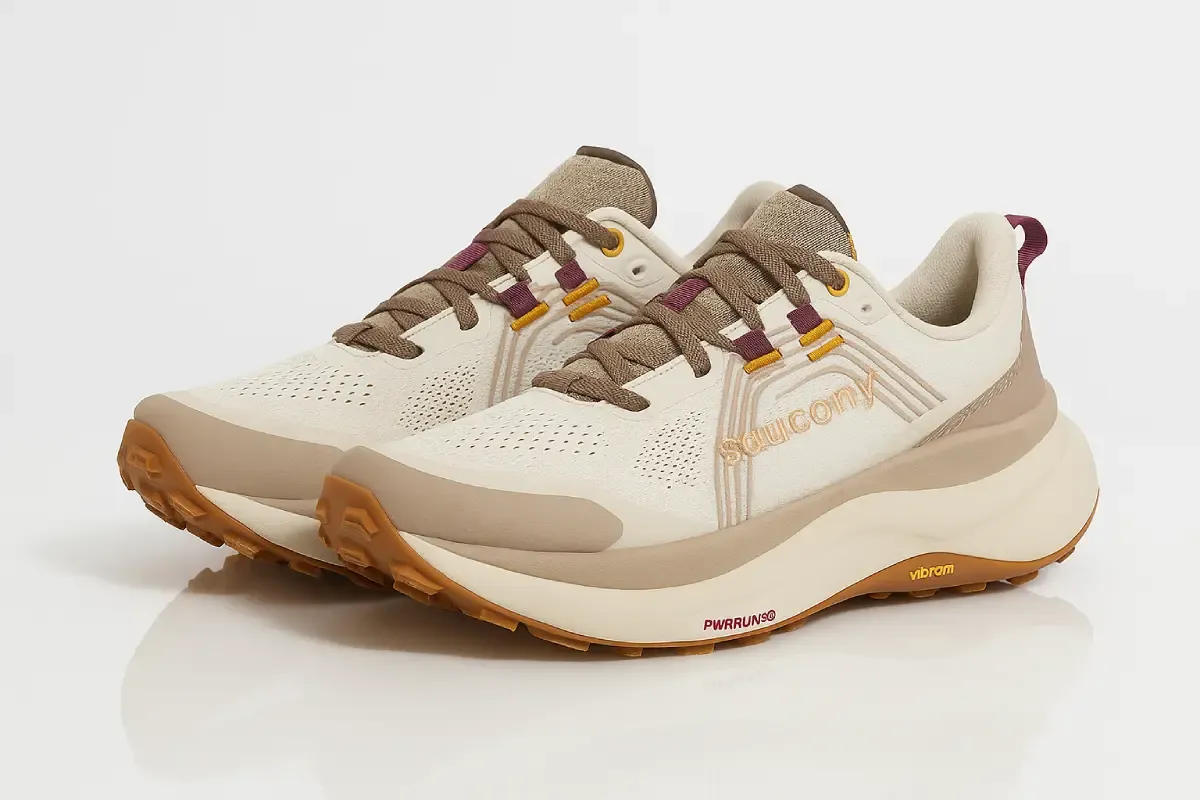
Saucony Xodus Ultra 4 Review
A detailed review of the Saucony Xodus Ultra 4. Is this the ultimate long-distance trail shoe? We test the grip, cushioning, and durability.
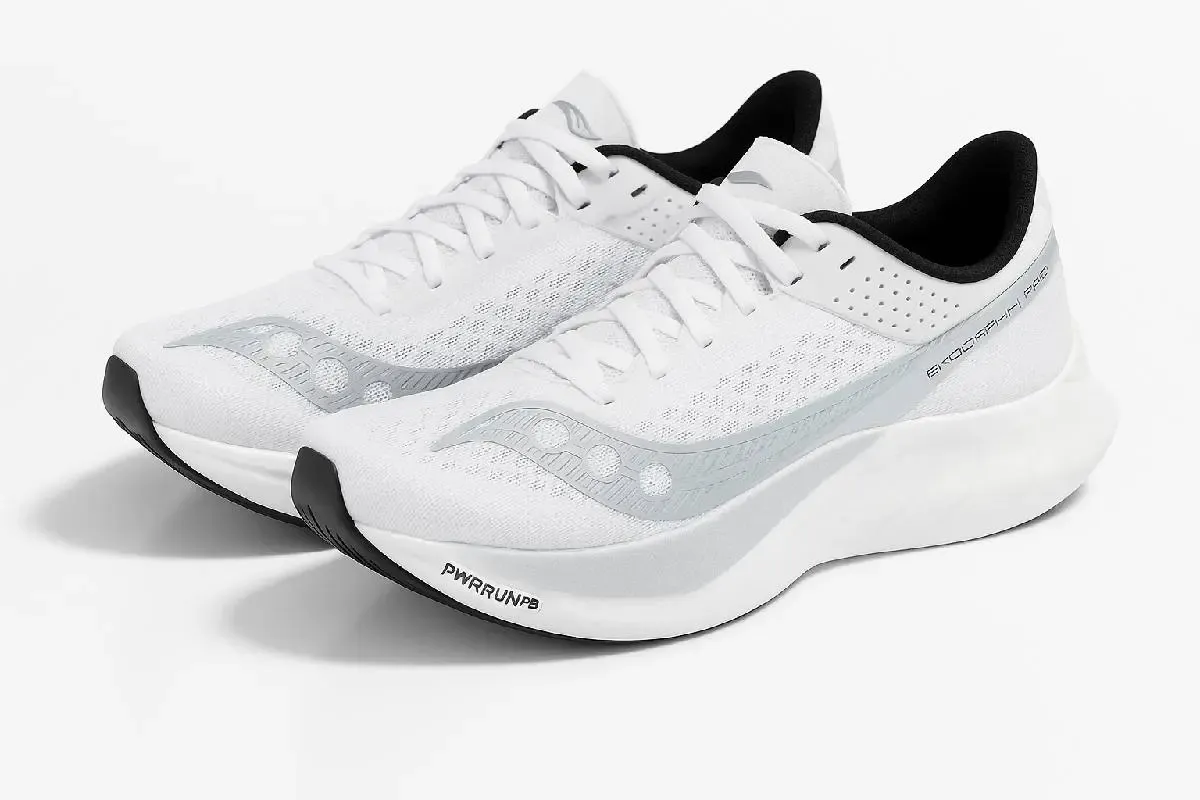
Saucony Endorphin Pro 4 Review
Get an in-depth review of the Saucony Endorphin Pro 4. Is this durable, comfortable, and versatile carbon-plated racer the right supershoe for you?
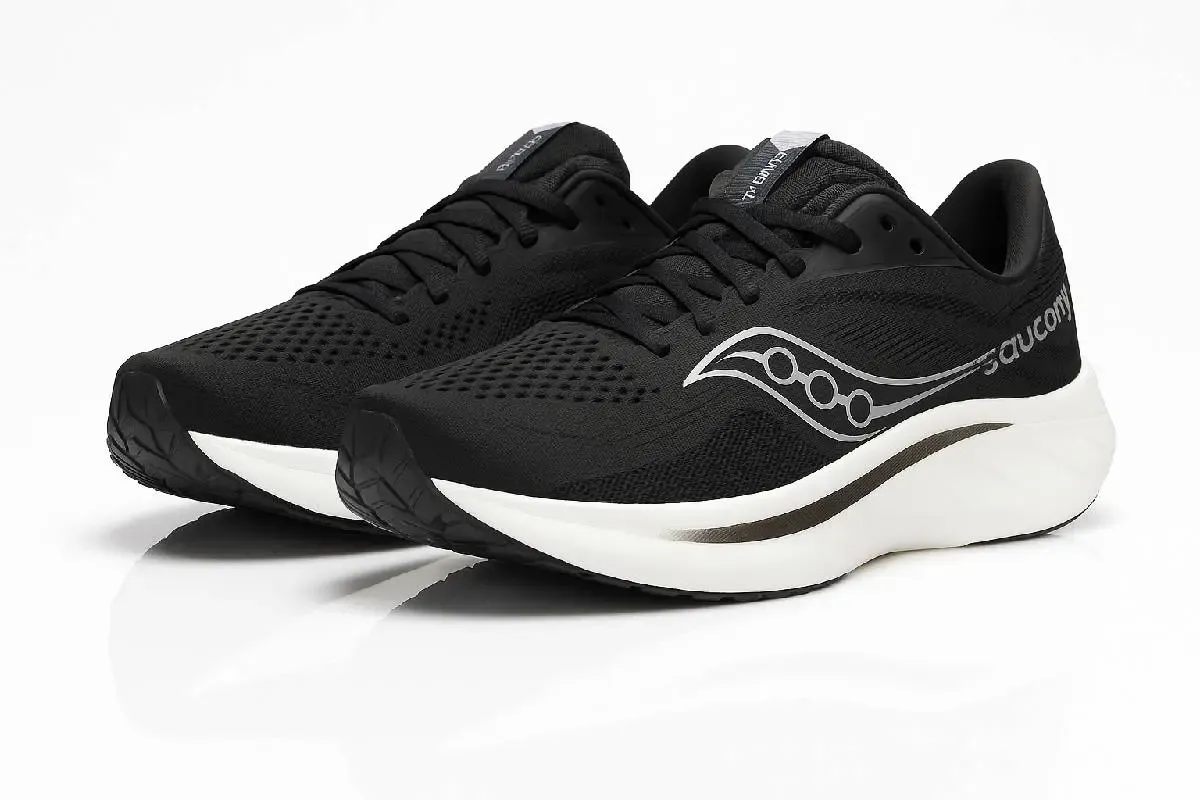
Saucony Ride 18 Review
An in-depth review of the Saucony Ride 18 running shoe. Learn about its new PWRRUN+ midsole, upgraded upper, performance, and who it's best for.
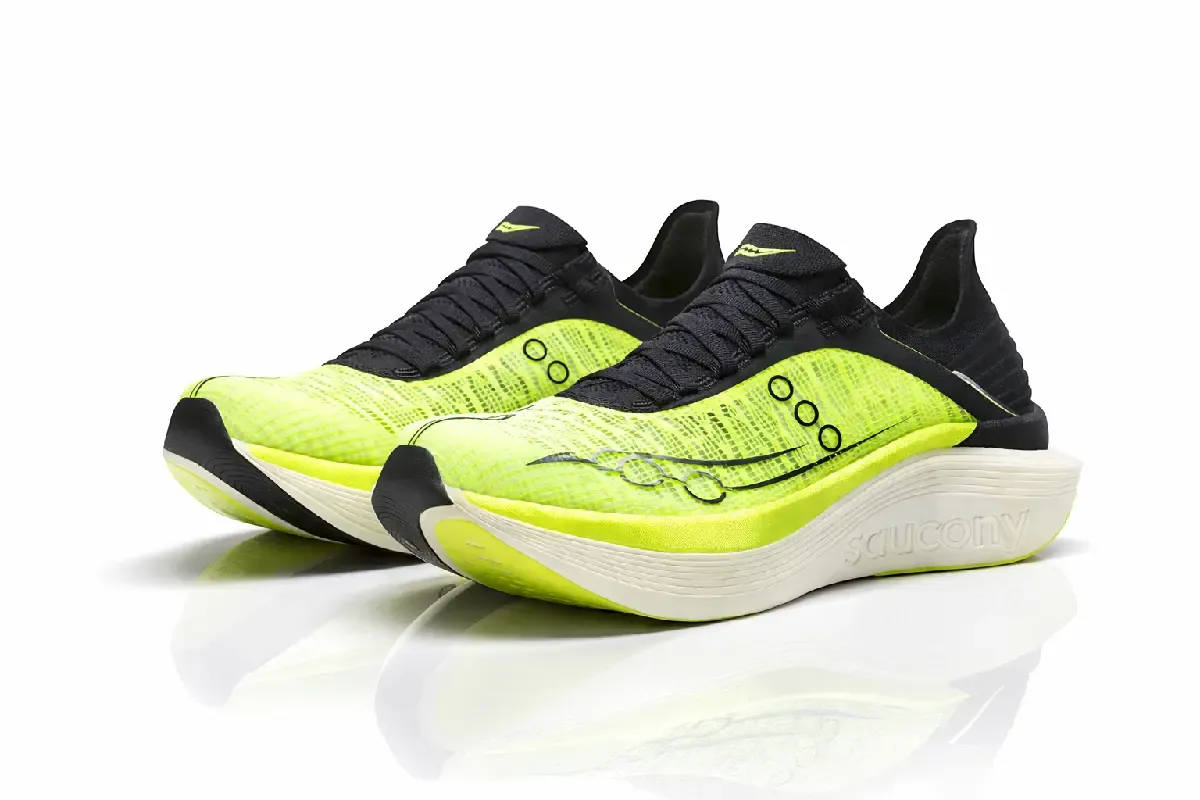
Saucony Endorphin Elite 2 Review
Saucony Endorphin Elite 2. A detailed look at the plush, carbon-plated racer. See how it stacks up against Nike & Adidas for marathon speed.