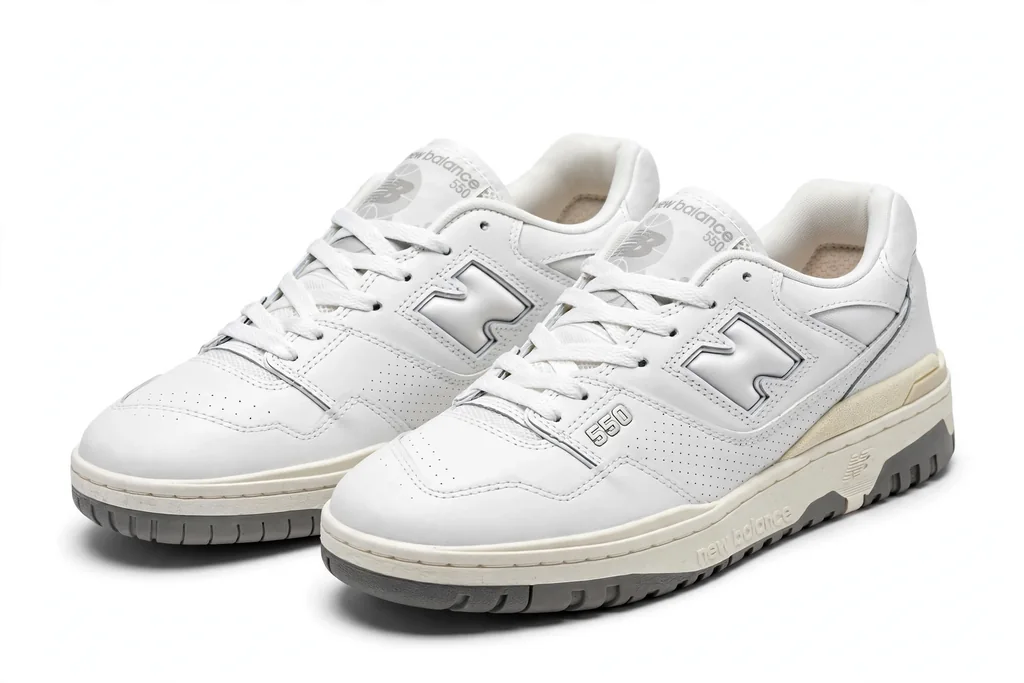
Short answer
The New Balance 550 is the 1989 Oxford that Aimé Leon Dore dragged back in 2020: clean leather, a rubber cupsole, and classic lines at a $120 list price. Launch coverage pegs pairs at $120, and buyers praise the comfort and crisp look. The snag is the fit, since the narrow last pinches wide feet and the sole needs hours.…
Who should buy
Clean-Court Style Fans: If your uniform is white leather, straight denim, and simple layers, the 550 is the archetype. The 1989 P550 lines revived with Aimé Leon Dore read crisp and preppy without trying, and the shoe pairs with nearly everything casual you own.
Who should skip
Wide-Footed Shoppers: The midfoot and toe box run narrow and tight, and New Balance offers no wide version of the 550. Wide-footed owners report pinching at the base of the big toe and usually return them.
Founder & Lead Editor
Federico D'anna
Federico D'anna has spent 9 years reviewing sneakers with a methodology built on hands-on wear notes, side-by-side comparisons, and verified buyer feedback.
Learn more about Federico D'annaHighlights
Positive
- Crisp 1989 court silhouette with clean leather style that pairs with nearly everything casual.
- Real broken-in comfort with a molded fit that owners praise after the stiff phase passes.
Negative
- Narrow, tight midfoot and toe box with a stiff sole that makes the first hour painful.
Convinced by the pros? Check today's price.
New Balance 550 Sizing summary
The New Balance 550 runs snug, so most buyers should start by considering a half size up. The brand's own guidance splits by gender: the men's page says the shoe fits as expected for most people, while the women's page says most people go down half a UK size.
Fit note: Snug and narrow; average feet often size up half
Full sizing guide →Know your size? Buy it in your width.
Few sneakers have ridden a single collaboration as far as the 550 rode Aimé Leon Dore. Before 2020 it was a forgotten eighties basketball shoe that even New Balance barely remembered. After Teddy Santis dug it out of a vintage catalogue, it became the white-leather sneaker of the decade. This New Balance 550 review covers the shoe as it stands today: a $120 retro court classic with clean leather, a rubber cupsole, and vintage lines. It rewards patience with genuinely good broken-in comfort and punishes haste with a stiff first hour. If your feet run narrow to average and you love the crisp court look, this is your shoe.
Quick Take
Overall Rating: 4.2/5
Best For: Clean white-leather outfits, campus and city days, preppy and retro fits, and narrow to average feet that break shoes in properly.
Key Strengths: Iconic 1989 court style, real broken-in comfort, versatile leather build, and a $120 price well under designer collabs.
Notable Limitations: Narrow and tight fit with no wide option, stiff opening act, and little modern cushioning technology.
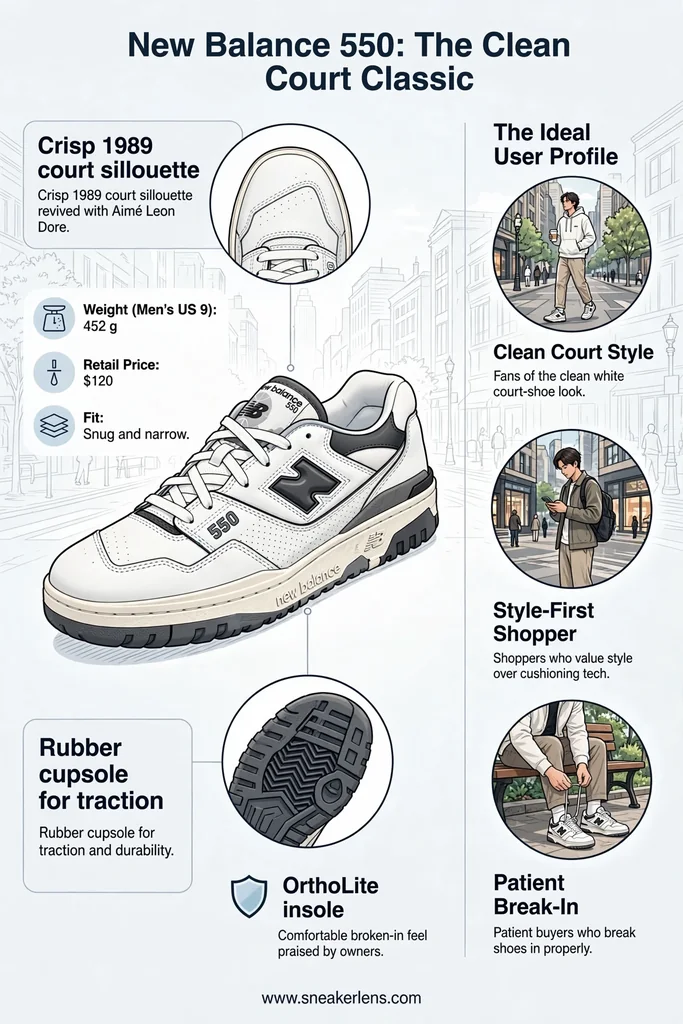
Visual Snapshot Summary
Specs & Sizing
| Weight | 452 g |
|---|---|
| Retail price | $120 |
| Release year | 2020 |
| Upper | Leather upper with perforated detailing and lace-up closure |
| Midsole | Not published by the brand; exposed EVA on the medial side with OrthoLite insole |
| Outsole | Rubber cupsole for traction and durability |
| Technologies | Rubber cupsole, OrthoLite insole, Perforated leather upper |
| Fit & sizing | Snug and narrow; average feet often size up half |
What Makes New Balance 550 Stand Out?
Start with the archive story, because it explains the design. The 550 launched in 1989 as the P550 Basketball Oxford, designed by Steven Smith as a low-top companion to the Pride 650. It was, by most accounts, a budget shoe meant to improve on the 480 with a more perforated, breathable upper and a molded heel. Its career was brief: an all-too-short run in the late eighties before it vanished for three decades.
The revival is the miracle. Teddy Santis spotted the silhouette in a vintage catalogue and pushed New Balance to bring it back, telling press it had remained largely intact since 1989 even though the design was almost impossible to research. Aimé Leon Dore teased the collaboration in late September 2020, released its pairs on October 9, 2020, and followed with a wider release of the red pair in mid-October. New Balance's own first general-release pairs landed that December, and the widely covered white-and-green in-line colorway arrived in June 2021. Launch coverage lists general-release pairs at $120, with the early ALD pairs at $130 and the first basic pairs at $110. At $120 today, the shoe keeps its original promise: premium looks at a working price.
The design itself is restraint. A leather upper with perforated detailing, a simple lace-up closure, a rubber cupsole with exposed EVA on the medial side, and an OrthoLite insole with extra arch support. New Balance names no midsole technology on the brand pages, and that honesty is refreshing: this is a cupsole shoe, not a foam story. The tradeoff is cushioning. The build protects and supports but never feels plush, which is exactly what court shoes of the era felt like.
Real Customer Experiences
Buyer feedback on the 550 follows a clear arc: pain first, love later, with fit complaints concentrated among wide feet.
- Broken-in comfort wins the most praise: owners call the shoe very comfortable once broken in, with a molded fit that feels custom after the stiff phase. Daily campus and city wear earns the strongest reviews.
- The clean, versatile look earns love: crisp white leather that pairs with everything, from jeans to preppy fits. Owners say the shoe looks sharper in person than in photos.
- Daily durability satisfies most: pairs that survive break-in hold up well to regular city wear, with the leather and cupsole aging gracefully rather than falling apart.
- The narrow, tight fit is the top complaint: pinching through the midfoot and toe box, especially at the base of the big toe, with wide-footed buyers reporting the most trouble. No wide version exists.
- The stiff, hard sole draws fire: a heavier-than-expected feel and a painful first hour come up again and again. A minority says the shoe fits big and goes down half a size, so the fit is not identical for everyone.
The pattern is clear. Narrow to average feet that survive break-in become loyalists. Wide feet and shoppers wanting instant softness end up returning them.
Design and Build Quality
The upper carries the shoe. New Balance specs a leather upper on the women's version and a synthetic leather build on the men's, both with perforated detailing that nods to the breathable upgrade over the 480. A lace-up closure locks the midfoot, and the leather contains real cowhide content. The look is minimal in the best way: clean panels, a sculpted N, and nothing extraneous.
Underfoot, the formula is vintage honest. A rubber cupsole delivers traction and durability, with exposed EVA on the medial side and an OrthoLite insole adding arch support and step-in softness. There is no named foam compound and no energy story. A running lab measured 452 grams in a men's US 9, while the brand's UK page lists 512 grams without naming a size, so expect a solid, substantial shoe rather than a light one. The same lab measured a tall, flat profile, but New Balance publishes no drop or stack figures, so treat third-party geometry as context rather than spec.
The weak spot is the opening stiffness. The leather starts board-like and the sole feels hard underfoot, which is why first impressions skew negative. Conditioning the leather and wearing the shoe for short days first shortens the process considerably.
Comfort and Fit
Comfort arrives on installment. The first hour can be genuinely painful: stiff leather presses the toes, the hard sole slaps pavement, and the narrow last squeezes the midfoot. Then the leather gives, the OrthoLite insole settles, and the shoe molds into something owners describe as very comfortable. Few retros transform this dramatically, and the transformation is the whole value proposition.
Fit runs narrow. The midfoot and toe box are tight with little lateral room, and standard width is the only option. Narrow feet generally fit true to size and enjoy the secure wrap. Average feet most often need the half size up for toe room. The women's page suggests going down half a UK size, while a minority of all buyers agrees the shoe can fit big, so slim-footed shoppers should try true to size first.
New Balance 550 Fit Profile
| Heel | Midfoot | Toe box |
|---|---|---|
| Padded Collar, Average Heel | Tight Midfoot, Standard Only | Narrow Toe Box, Needs Break-In |
Heel hold is average: secure once the length is right, with minor slip reported by narrow heels during the stiff phase. Lacing firmly through the top eyelets settles most of it. Break-in is the real adjustment period here, not sizing tricks. Buy the size that fits nearly right on day one, wear them for short days first, and let the leather do the rest.
Style and Versatility
The 550 is the default answer to the white-sneaker question. Crisp leather, slim court lines, and a low profile that slides under straight denim, chinos, cargos, shorts, and even unstructured tailoring. The white-and-green and white-and-red colorways add just enough contrast, while triple-white pairs disappear into any outfit. Preppy, old-money, and minimalist wardrobes all claim it, and streetwear fits borrow it just as easily.
The comparison shoppers ask about most is the 530, New Balance's other retro staple. Our New Balance 530 review covers it in full, but the short version is this: the 530 is a mesh-and-suede nineties runner with a softer, cushioned ride, while the 550 is a leather eighties court shoe with a stiffer, crisper feel. Pick the 530 for comfort-first daily wear and the 550 for the sharper court look. Both run snug, so the sizing logic transfers.
Against the wider white-leather world, the 550 sits between the Nike Dunk Low and the Nike Air Force 1: sleeker than the AF1, dressier than the Dunk, and cheaper feeling than neither. It also shares preppy shelf space with our New Balance 574 Core review crowd, though the 550 reads cleaner and more court-specific.
Limits are few. Full formal wear is out, heavy rain wants a beater instead, and gym sessions deserve real trainers. For everything casual from campus to dinner, the 550 is brutally effective.
Quality and Durability
Set expectations by the build. The leather upper and rubber cupsole handle daily city wear well once broken in, and owners report pairs holding up nicely through regular rotation. The materials feel honest for $120: real leather content, solid stitching, and a cupsole that resists the edge wear that kills cheaper vulcanized shoes.
The honest wear story centers on the break-in, not on failure. The stiff sole and tight toe box cause the early pain, but they do not generally cause early breakdowns. The OrthoLite insole compresses gradually with heavy use and is replaceable, which extends the shoe's life. Rotating with a second pair keeps the leather fresh and the sole responsive far longer.
550 Durability Breakdown
| Component | What we found | Lifespan |
|---|---|---|
| Leather Upper | Molds well, ages gracefully with care | Moderate Lifespan |
| Rubber Cupsole | Street-tough, resists edge wear | Moderate Lifespan |
| OrthoLite Insole | Compresses gradually, replaceable | Watch the Mileage |
Is the 550 worth $120? For narrow to average feet with patience, yes. Launch coverage lists general-release pairs at exactly that price, and the cost per wear drops fast once break-in ends. Compare the softer sibling in our New Balance 530 review, study the court-shoe landscape in our Samba OG vs Dunk Low comparison, and watch for markdowns in our Black Friday New Balance deals roundup.
Decision Matrix
| Scenario ↓ / Criterion → | Comfort | Breathability | Rain/Grip | Style |
|---|---|---|---|---|
| Daily Urban | ✓ | ○ | ○ | ✓ |
| Office Casual | ✓ | ○ | ○ | ✓ |
| Light Sport / Gym | ✕ | ○ | ○ | ○ |
✓ = Good ○ = Average ✕ = Poor
Who Should Buy
Perfect For
- Clean-Court Style Fans: If your uniform is white leather, straight denim, and simple layers, the 550 is the archetype. The 1989 P550 lines revived with Aimé Leon Dore read crisp and preppy without trying, and the shoe pairs with nearly everything casual you own.
- Patient Breaker-Inners: Owners say the 550 turns genuinely comfortable once broken in, with a molded fit that feels custom after the stiff phase. If you bond with shoes over weeks rather than minutes, the payoff here is real.
- Retro Basketball Romantics: Designed by Steven Smith as a low-top companion to the 650, the 550 carries real eighties court DNA. Fans of the era get the perforated detailing and cupsole shape that defined it.
- Narrow to Average Feet: The last favors slim feet, and standard-width buyers report the best experience. If D is your width and snug leather does not scare you, the fit works with minimal fuss.
Consider Alternatives If
- Wide-Footed Shoppers: The midfoot and toe box run narrow and tight, and New Balance offers no wide version of the 550. Wide-footed owners report pinching at the base of the big toe and usually return them.
- Instant-Comfort Seekers: The first hour can be genuinely painful, with a stiff, hard sole that punishes impatient feet. If you judge shoes in the store aisle, the 550 will lose to softer retros.
- Cushioning-First Buyers: There is no named midsole technology here, just EVA, a cupsole, and an OrthoLite insole. If you want plush landings, a modern cushioned retro will treat you far better.
- Gym and Court Users: The silhouette looks athletic but plays vintage. The flat, stiff build gives little support for lifting or lateral movement, so athletes should pick function over form.
Where to buy
| Store | Details | Link |
|---|---|---|
| Amazon | Free returns on most sizes |
Final Verdict
The New Balance 550 is the 1989 Oxford that Aimé Leon Dore dragged back in 2020: clean leather, a rubber cupsole, and classic lines at a $120 list price. Launch coverage pegs pairs at $120, and buyers praise the comfort and crisp look. The snag is the fit, since the narrow last pinches wide feet and the sole needs hours.
Give it those hours and the 550 becomes one of the easiest shoes to wear in any rotation. Owners describe real comfort once broken in, a versatile look that dresses up or down, and daily durability that holds up. The honest costs are the stiff opening act and the D-only width that shuts out wide feet.
Browse our full New Balance collection to compare it with the rest of the retro lineup.
As an Amazon Associate we earn from qualifying purchases. This helps support our site so we can keep bringing you the best content!
Frequently Asked Questions
Are New Balance 550 good for walking all day?
What is the difference between the 550 and the 530?
Do New Balance 550 run small?
Are New Balance 550 worth $120?
Related Reviews
New Balance Fuelcell Supercomp Elite V5 Review
New Balance FuelCell Supercomp Elite V5 Review: A top-tier hybrid racer blending elite propulsion with lifestyle versatility. Does it live up to the hype?
New Balance 1906r Review
The New Balance 1906R combines retro design with modern comfort, offering cloud-like cushioning and distinctive style despite some quality control concerns.
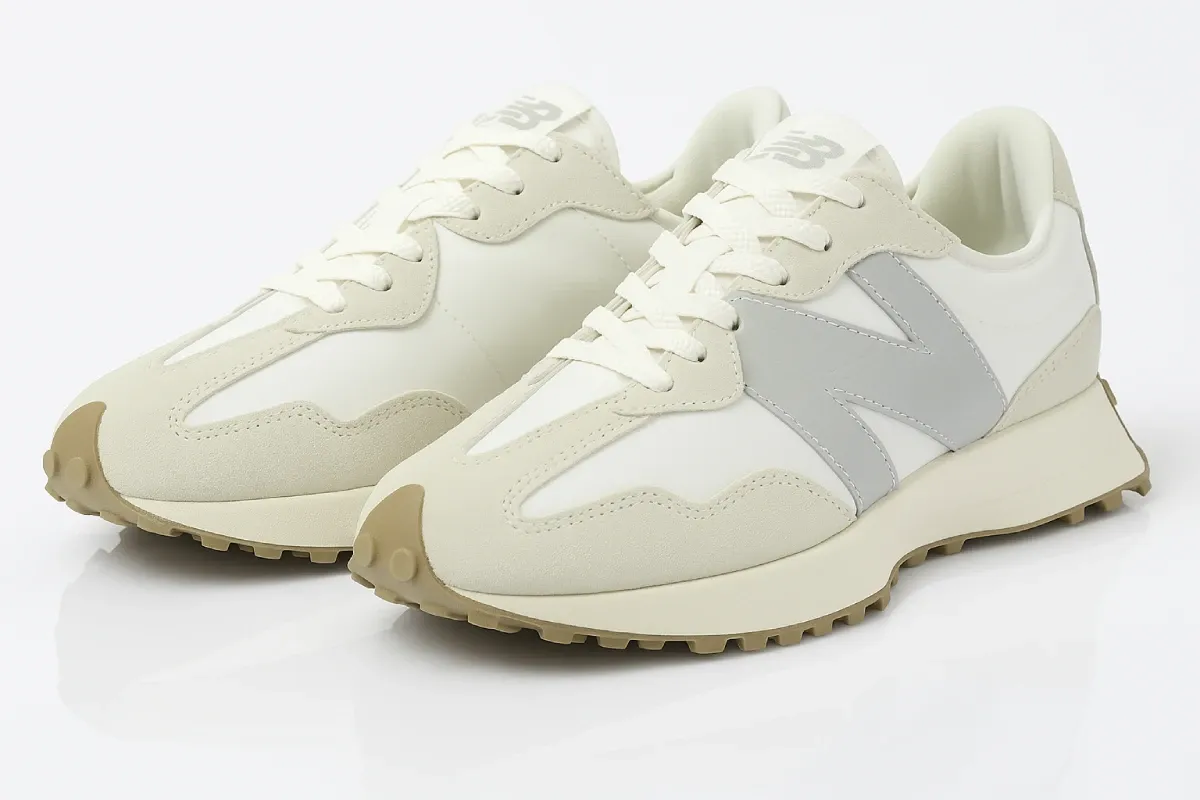
New Balance 327 Review
In-depth New Balance 327 review. Explore comfort, style, and sizing issues before you buy. Is this retro-inspired sneaker worth the hype?
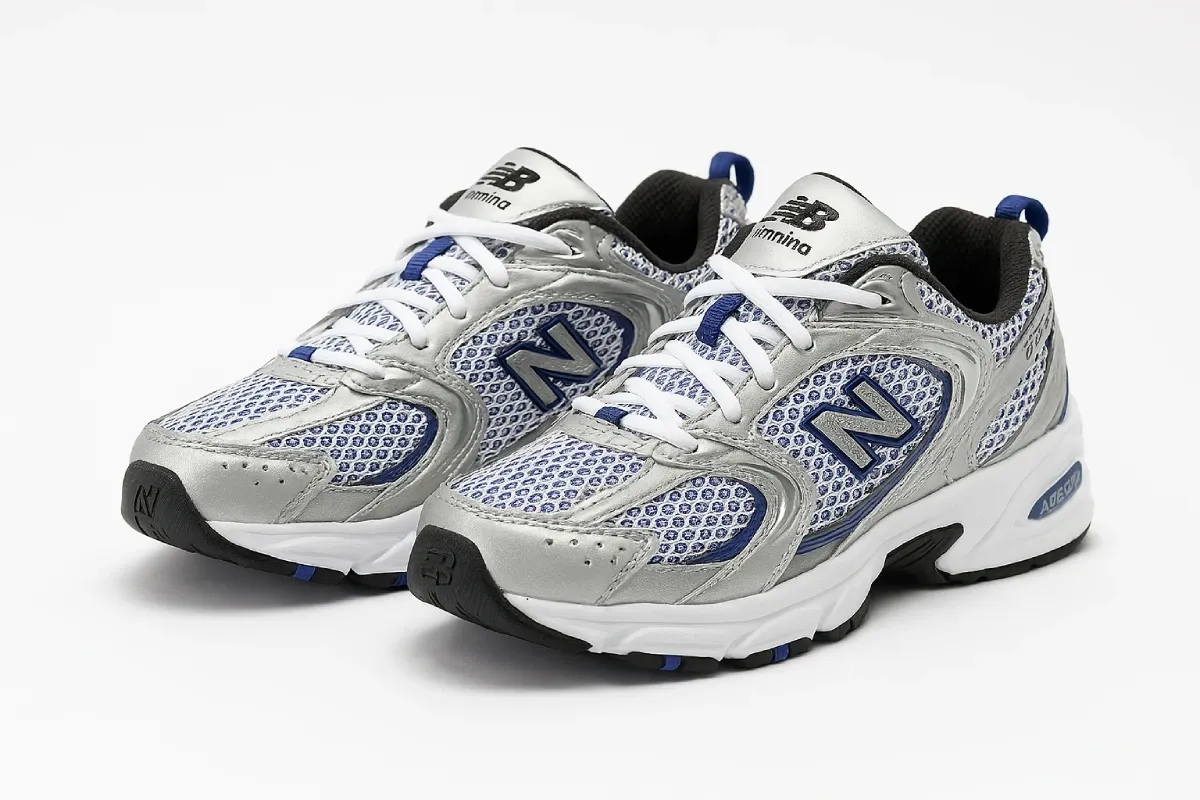
New Balance 530 Review
Review of the New Balance 530: A deep dive into the comfort, sizing, and durability of this trending retro "Dad Shoe." Is it worth the hype?
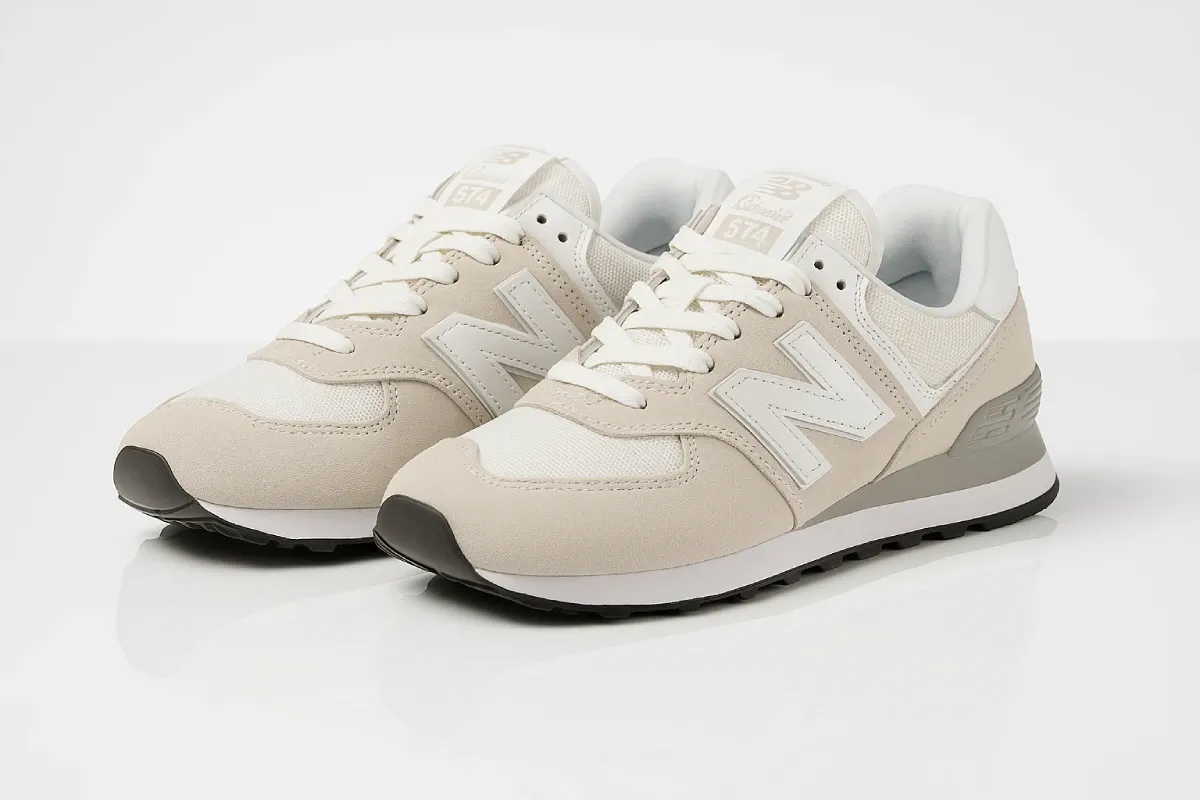
New Balance 574 Core Review
Get an honest review of the iconic New Balance 574 Core. We dive deep into its comfort, style, durability, and value to see if it's worth the hype.
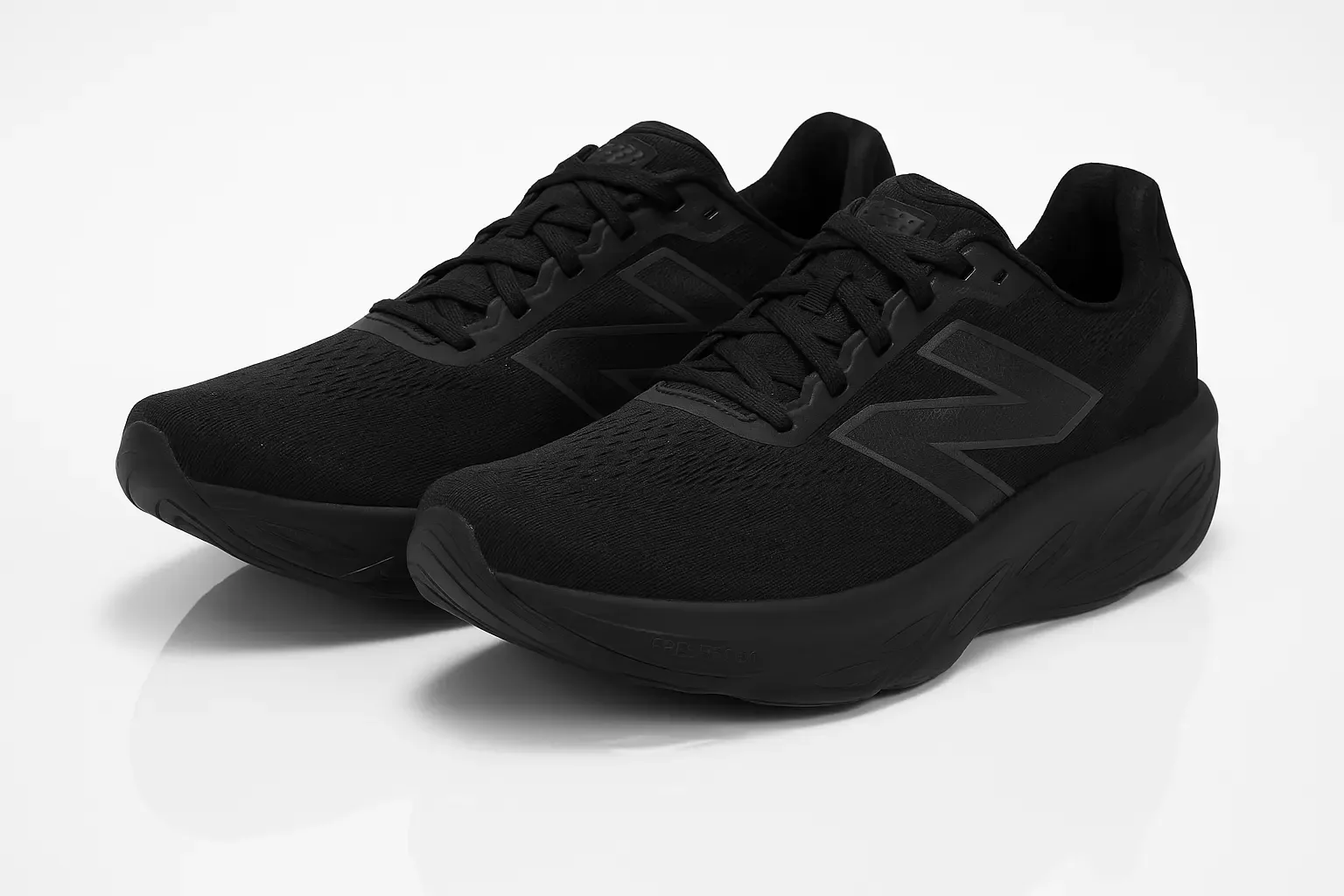
New Balance Fresh Foam X 1080 v14 Review
Experience exceptional cushioning with the New Balance Fresh Foam X 1080 v14, offering plush support for runners and anyone spending long hours on their feet.