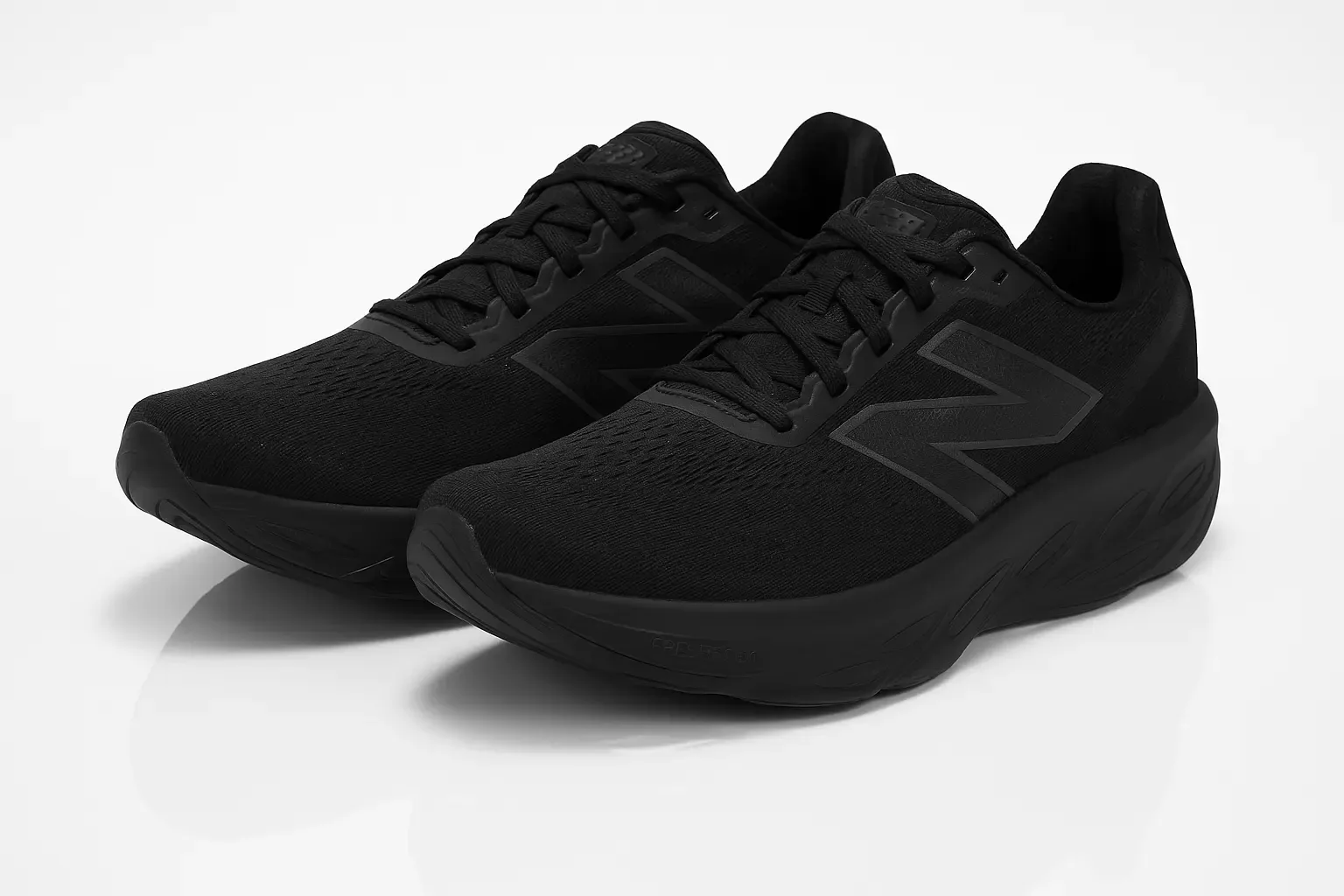
Founder & Lead Editor
Federico D'anna
Federico D'anna has spent 9 years reviewing sneakers with a methodology built on hands-on wear notes, side-by-side comparisons, and verified buyer feedback.
Learn more about Federico D'annaHighlights
Positive
- The plush cushioning provides immediate comfort directly out of the box, with no break-in period required.
- The wide toe box is particularly appreciated by those with broader feet or who suffer from conditions like bunions or hammertoes.
Negative
- Some users find the shoes too bulky for their liking, with the chunky profile making feet appear larger than they are.
New Balance Fresh Foam X 1080 v14 Sizing & Fit Guide
The New Balance Fresh Foam X 1080 v14 introduces a significant architectural update to the brand's signature high-cushion daily trainer, maintaining a true to size (TTS) linear length while substantially reconfiguring its volumetric profile. The newly integrated triple jacquard mesh upper provides a remarkably snug and secure midfoot lockdown that reliably eliminates heel slippage. However, this enhanced structural hold results in a highly tapered toe box that constricts sharply at the distal tip. This modified forefoot geometry reduces lateral relief compared to previous models, making a precise evaluation of foot width and toe splay preferences critical for achieving an optimal fit.
Compare your current pair to find the best size match.
| Reference Shoe | Your Usual US | Buy in US | Your Usual EU | Buy in EU | Fit Notes |
|---|---|---|---|---|---|
| Nike Air Force 1 (AF1) | 10.0 | 10.5 | 44 | 44.5 | The Nike Air Force 1 lifestyle baseline is notorious for running large and offering an inherently roomy toe box. Because the 1080 v14 features a performance-oriented, snug midfoot hold and an aggressively tapered toe box, you must size up a half-size from your casual AF1 size to prevent terminal forefoot constriction and protect the toes from hitting the front tip. |
| ASICS Gel Nimbus 27 | 10.0 | 10.0 (Standard) or 10.0 (2E) | 44 | 44 (Standard) or 44 (2E) | Both models track closely on true-to-length linear sizing, meaning your base size remains identical. However, the Gel Nimbus 27 is built with a more flexible upper that naturally allows for greater toe-box volume. If you have wide feet or prioritize natural toe splay, you should avoid sizing up in length—which ruins sole alignment—and instead select the dedicated 2E width variant in the 1080 v14. |
| Brooks Glycerin 21 | 10.0 | 10.0 | 44 | 44 | Linear lengths match up almost perfectly between these two competitors. The differentiating factor is volumetric shape: the Glycerin 21 delivers a slightly firmer underfoot sensation paired with a wider standard toe box, whereas the 1080 v14 yields a much softer ride underfoot but implements a significantly tighter distal toe taper that restricts lateral forefoot expansion. |
| HOKA Clifton 9 | 10.0 | 10.0 | 44 | 44 | Standard HOKA models are traditionally engineered around narrow lasts with limited width profiles, often forcing runners to size up in length purely as a compensation factor to get more width. When transitioning to the 1080 v14, the linear lengths are a direct match, but the New Balance standard variant offers a slightly more accommodating midfoot and provides specialized standalone width options (up to Extra-Wide), allowing you to stick to your true linear length. |
Does the New Balance Fresh Foam X 1080 v14 run true to size?
Yes, the general consensus from extensive testing confirms that the 1080 v14 runs true to size in terms of linear length. However, the internal volume has been heavily restructured to be much snugger and more locked-down than its predecessors. Because of the non-stretching triple jacquard mesh upper and a highly tapered toe box, runners with high arches or high-volume feet may experience localized pressure across the instep and should consider adjusting their width selection or sizing up a half-size.
Is the New Balance Fresh Foam X 1080 v14 good for wide feet?
The 1080 v14 is an excellent option for wide feet, but only if you bypass the standard D-width and purchase its dedicated wide (2E) or extra-wide (4E) configurations. The standard width features an aggressive forefoot taper that constricts significantly at the big toe, causing a cramped feeling during terminal toe-off. Rather than sizing up in length—which elongates the shoe inappropriately and misaligns the rockered sole mechanics—choosing the correct wide width variant preserves natural footstrike geometry while granting ample toe room.
How is the arch support on the New Balance Fresh Foam X 1080 v14?
The arch support on the 1080 v14 is highly pronounced and structurally supportive. New Balance transitioned to a slightly firmer and more responsive Fresh Foam X formulation that resists collapsing under body weight, ensuring excellent anatomical alignment for neutral runners and individuals with high arches. Conversely, runners with flat feet may find this rigid arch contour overly aggressive, which can lead to localized friction blisters or pressure along the medial border. Flat-footed runners should expect a distinct break-in period or utilize alternative lacing techniques to mitigate midfoot tension.
Ready to experience the New Balance Fresh Foam X 1080 v14 Review?
Get yours today with fast shipping from Amazon
The line between “serious daily trainer” and “nice-looking everyday sneaker” keeps getting blurrier, and the New Balance Fresh Foam X 1080 v14 leans right into that. It’s basically saying, “Why not both?” This series has helped define the premium daily trainer category for years, and the v14 feels like New Balance tightening the whole formula up.
Quick Take
Overall Rating: 4.5/5
Best For: Easy daily mileage, recovery runs, long walks, all-day casual wear
Key Strengths: Exceptional "cloud-soft" cushioning, significantly improved stability over the v13, outstanding outsole durability, versatile aesthetic
Notable Limitations: Heavier than its predecessor, lacks energy return for speed work, toe box can feel tapered for some foot shapes
Visual Snapshot Summary
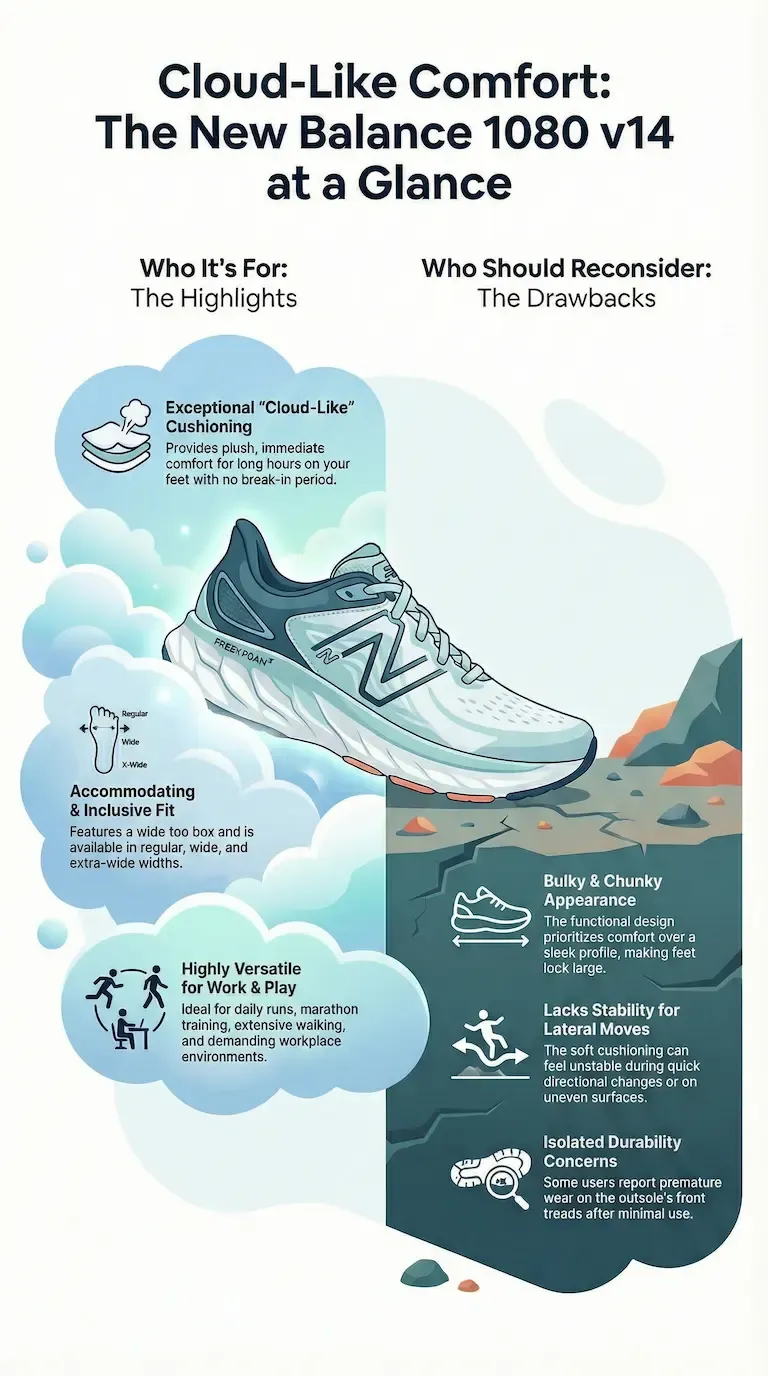
What Makes New Balance Fresh Foam X 1080 v14 Stand Out?
Most updates are small: swap the upper, tweak the laces, call it a day. New Balance actually went under the hood here. The main story in the v14 is how they tuned the Fresh Foam X midsole. If you ran in the v13, you probably remember that marshmallow-soft feel, sometimes to the point of feeling a little unstable.
With the v14, the engineers went slightly firmer on the durometer (hardness). It’s still very plush, but it doesn’t bottom out as easily. They also paired that with higher sidewalls and a wider base, so the ride feels more secure while keeping that signature squish. It’s a tough balancing act. Think luxury-car suspension: soft, but it doesn’t flop around in corners.
It is this specific combination of upgraded stability and retained plushness that separates it from competitors that are either too brick-like or too wobbly.
As one enthusiastic runner put it:
"These shoes are like walking on clouds! The cushioning is incredible for my long runs."
Real Customer Experiences
Dig into feedback from runners and casual wearers and the sentiment is largely positive, with a few consistent nitpicks. Here’s what keeps coming up:
- Comfort is King: The vast majority of users are buying this shoe for one reason—comfort. Whether they are training for a marathon or standing on concrete floors for an eight-hour shift, the cushioning is the headline act.
- Stability Win: A lot of runners who skipped the v13 because it felt "too mushy" are coming back for the v14. The improved structure is a massive hit with neutral runners who get tired form late in a run.
- Weight Weenies Beware: The weight increase is the most common gripe. It is not a dealbreaker for most, but if you are coming from a super-light trainer, you are going to feel the difference.
Here is what real people are saying:
"The v14 feels much more stable than the v13. I feel more confident on my runs."
"Not the shoe for speed work. It feels a bit sluggish when I try to pick up the pace."
Design and Build Quality
Let’s break it down, because New Balance made a few choices here that actually matter.
The Upper The shoe uses a triple jacquard mesh. It’s basically a multi-layer engineered mesh meant to stay breathable while still feeling structured. It has a premium, plush, sock-like feel. New Balance added larger perforations in key heat zones, which helps, though some runners still say it runs a bit warm in peak summer. The tongue is semi-gusseted and padded just right, so lace bite isn’t really a thing here.
The Midsole This is the heart of the shoe. We are talking about pure EVA-based Fresh Foam X. It is fascinating because, unlike the nitrogen-infused foams taking over the racing world, this is old-school chemistry done right. The rocker geometry is prominent, designed to roll you through your stride. It is not aggressive like a carbon-plated racer, but it is smooth.
The Outsole This might be the most underrated improvement. The v14 uses a new outsole layout with noticeably more blown rubber coverage in high-wear areas (heel and forefoot). New Balance calls it "NDurance" rubber. It’s stiffer than the previous version, which can add a touch more pop at toe-off, but its main job is simple: keep the shoe alive longer.
Weight Okay, we need to address the elephant in the room. The v14 has gained weight. We are looking at approximately 10.5 oz (298g) for a men's size 9.5. That is a solid 30-gram jump from the previous version. It is the trade-off you pay for that extra rubber and stability. Does it feel like a brick? No. But does it feel snappy? Also no.
Special Tech The shoe also carries the APMA (American Podiatric Medical Association) Seal of Acceptance. That isn’t just marketing fluff; it means the design has been reviewed for promoting foot health, which is reassuring if you deal with plantar fasciitis or other foot gremlins.
Comfort and Fit
If I had to describe the fit in one word, it would be “accommodating”… mostly.
Sizing Advice For 90% of people, this is a true-to-size situation. You can order your standard running shoe size and be fine. However—and this is a big however—the toe box has a slight taper to it. It is not narrow throughout, but the way it comes to a point might bug you if you have a square foot shape or really like to splay your toes.
Width Profile New Balance is one of the few brands that actually respects the fact that human feet come in different widths. The v14 is available in everything from Narrow (2A) to Extra-Wide (4E). If you have even a slight doubt about that tapered toe box, I'd highly recommend trying the Wide (2E) version. It opens up the volume significantly.
Break-in Period Some shoes need a painful break-in. This isn’t one of them. The break-in period is basically nonexistent. You can take these out of the box and run a 10K immediately; the materials feel soft and pliable from the start.
"Finally, a comfortable shoe that comes in a wide width that actually feels wide!"
Style and Versatility
The days of “dad shoes” being an insult are long gone. New Balance leans into the chunky look here, and it works. The 1080 v14 looks substantial but still modern, and the prominent "N" logo fits right in with current streetwear trends.
Aesthetic Notes They have released this in a massive array of colorways, from your safe "Sea Salt" and "Castlerock" grays (perfect for the office) to loud, neon screamers that ensure you are seen at 5 AM. It manages to look technical without looking like a science experiment.
Ideal Scenarios This is arguably the most versatile shoe in my rotation.
- Running: obviously. It eats up easy miles.
- The Office: If you work in a business-casual environment, the neutral colorways pair surprisingly well with chinos or dark denim.
- Travel: It is the ultimate airport shoe. Easy to slip on, comfortable for the mile-long walk to the gate, and cushioned enough for a day of sightseeing.
Quality and Durability
If you burned through the outsole on the v13 around 200 miles, good news: durability on the v14 is widely described as a big improvement.
The Praise I'm seeing reports of runners passing the 400 and even 500-mile mark with the outsole still having plenty of life. That increased rubber coverage is doing its job. The upper is also robust; tears and fraying are very rare.
Common Issues It is not all perfect, though. Some users have noted that the exposed foam on the midsole (the parts not covered by rubber) can get chewed up a bit if you run on gravel. Also, visible creasing on the midsole foam happens pretty early—like, within the first 50 miles. It is mostly cosmetic—the foam hasn't collapsed—but it can look a bit worn prematurely.
"While the v13 was criticized for outsole rubber burning off quickly, the v14's increased rubber coverage in high-wear areas has largely mitigated this."
However, one user noted the visual wear:
"While comfortable, the foam is almost too soft when I'm just standing around."
Decision Matrix
Here is a quick cheat sheet to see how it handles your daily life:
| Scenario ↓ / Criterion → | Comfort | Breathability | Rain/Grip | Style |
|---|---|---|---|---|
| Daily Urban | ✓ | ✓ | ✓ | ✓ |
| Office Casual | ✓ | ✓ | ○ | ✓ |
| Light Sport/Gym | ✓ | ✓ | ○ | ○ |
Legend: ✓ = Good ○ = Average ✕ = Poor
Who Should Buy
Perfect For
- The Mileage Hog: You run 20-40 miles a week, mostly at an easy pace, and you need a shoe that protects your legs from the pounding.
- The "One Shoe" Warrior: You want a single pair of sneakers that you can wear for your morning run, your commute, and your casual Friday office setup.
- The Stability seeker: You are a neutral runner, but your form falls apart at mile 10. The v14's wide base will keep you honest without forcing you into a stability shoe.
- The Wide-Footed Runner: You have struggled to find premium cool shoes that fit. The 2E and 4E options here are a godsend.
- The Healthcare Worker: You are on your feet for 12 hours a day. The APMA seal of acceptance is basically written for you.
Consider Alternatives If
- The Speed Demon: If you are looking for a shoe for track intervals or trying to PR your 5K, this is going to feel like running in sand. It's too heavy and absorbs too much energy.
- The Ground-Feel Purist: If you like to feel the pavement beneath your feet, the massive stack height of Fresh Foam X will drive you crazy. It is a disconnected ride.
- The Hot-Footed Runner: If you live in a tropical climate and your feet sweat profusely, the plush upper might be a bit too cozy for you.
Final Verdict
The New Balance Fresh Foam X 1080 v14 is the automotive equivalent of a luxury SUV. It is not the fastest thing on the road, and it's a little heavy in the corners, but the ride is so smooth and comfortable that you just don't care. New Balance has successfully addressed the stability and durability concerns of the previous version, resulting in a daily trainer that is arguably the most complete package on the market right now.
It is a reliable workhorse that treats your feet with kid gloves. If you can get past the weight increase and the price tag, you are looking at a shoe that will happily carry you through hundreds of miles of training—and probably a few trips to the grocery store, too.
Browse our full New Balance collection to find your perfect pair.
As an Amazon Associate we earn from qualifying purchases. This helps support our site so we can keep bringing you the best content!
Frequently Asked Questions
Who is the ideal user for the New Balance 1080 v14?
Is the New Balance 1080 v14 outsole more durable than the v13?
What are the main durability concerns for the 1080 v14?
Related Reviews
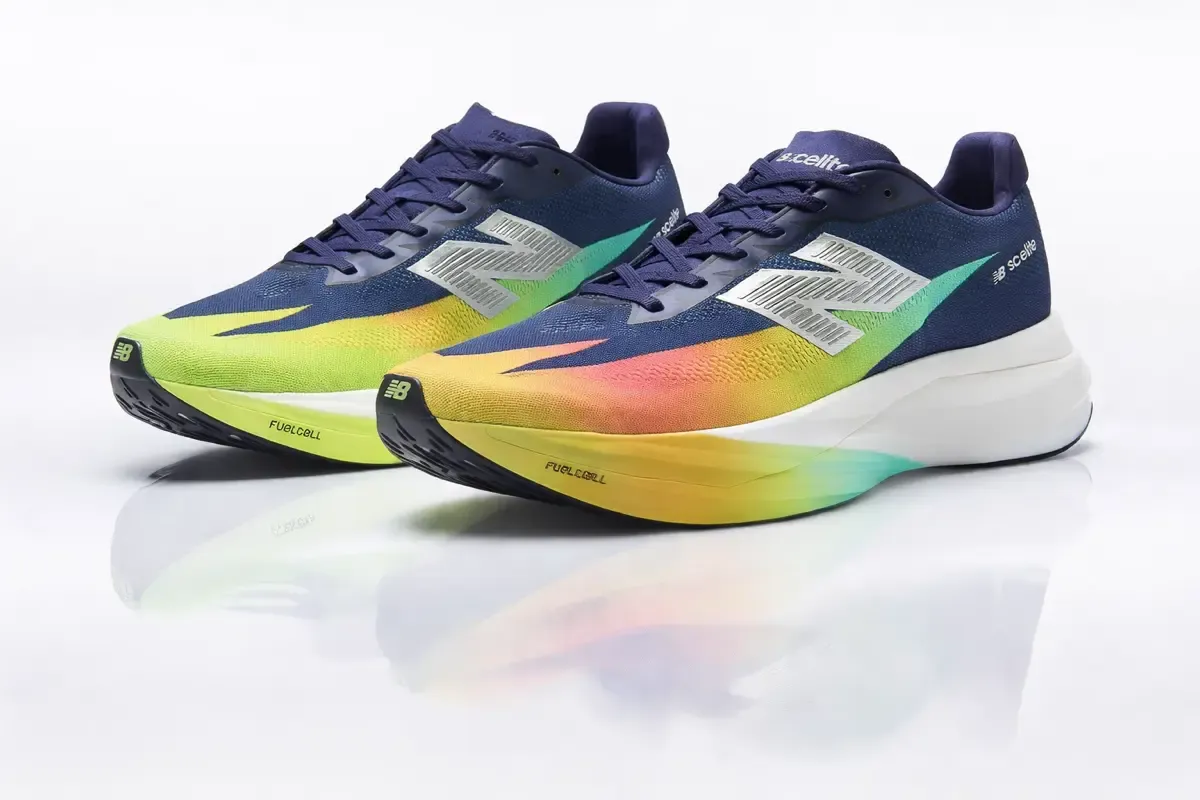
New Balance Fuelcell Supercomp Elite V5 Review
New Balance FuelCell Supercomp Elite V5 Review: A top-tier hybrid racer blending elite propulsion with lifestyle versatility. Does it live up to the hype?
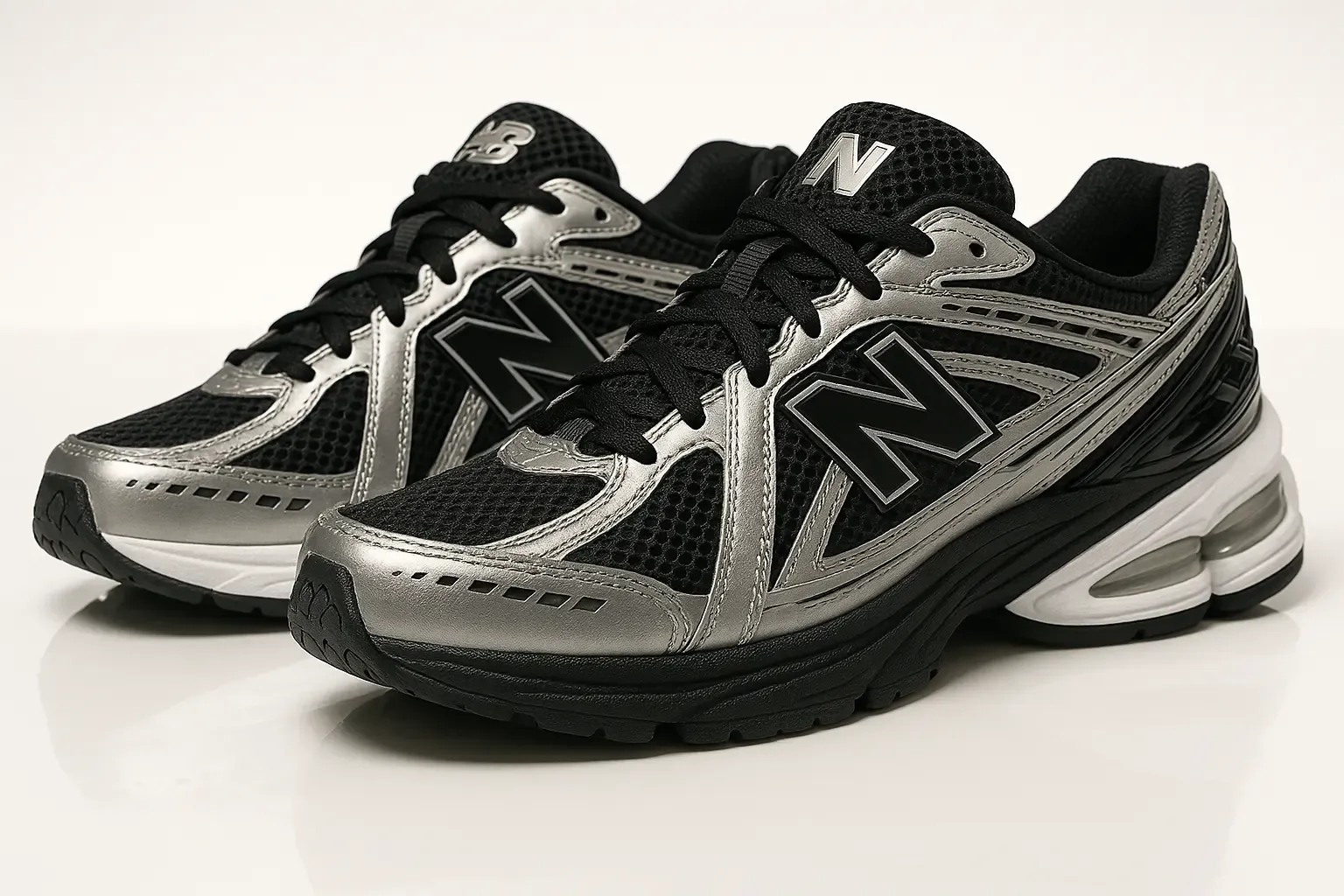
New Balance 1906r Review
The New Balance 1906R combines retro design with modern comfort, offering cloud-like cushioning and distinctive style despite some quality control concerns.
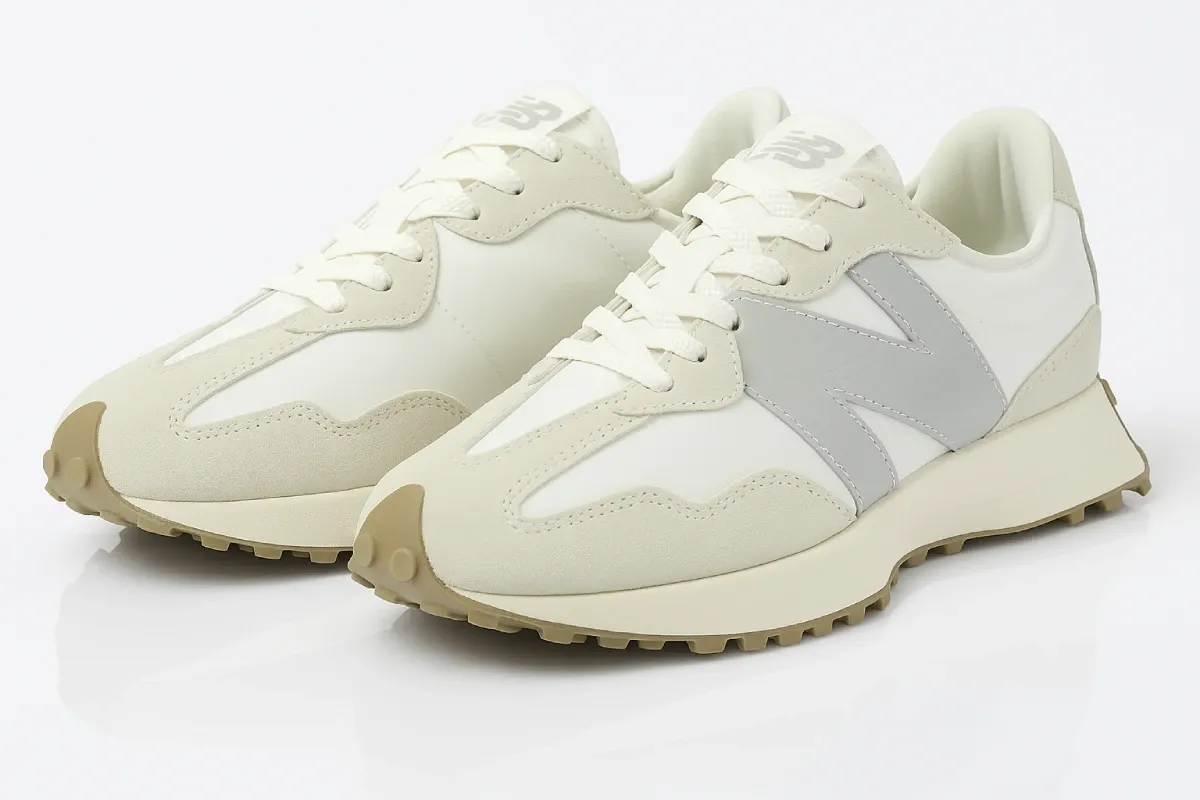
New Balance 327 Review
In-depth New Balance 327 review. Explore comfort, style, and sizing issues before you buy. Is this retro-inspired sneaker worth the hype?
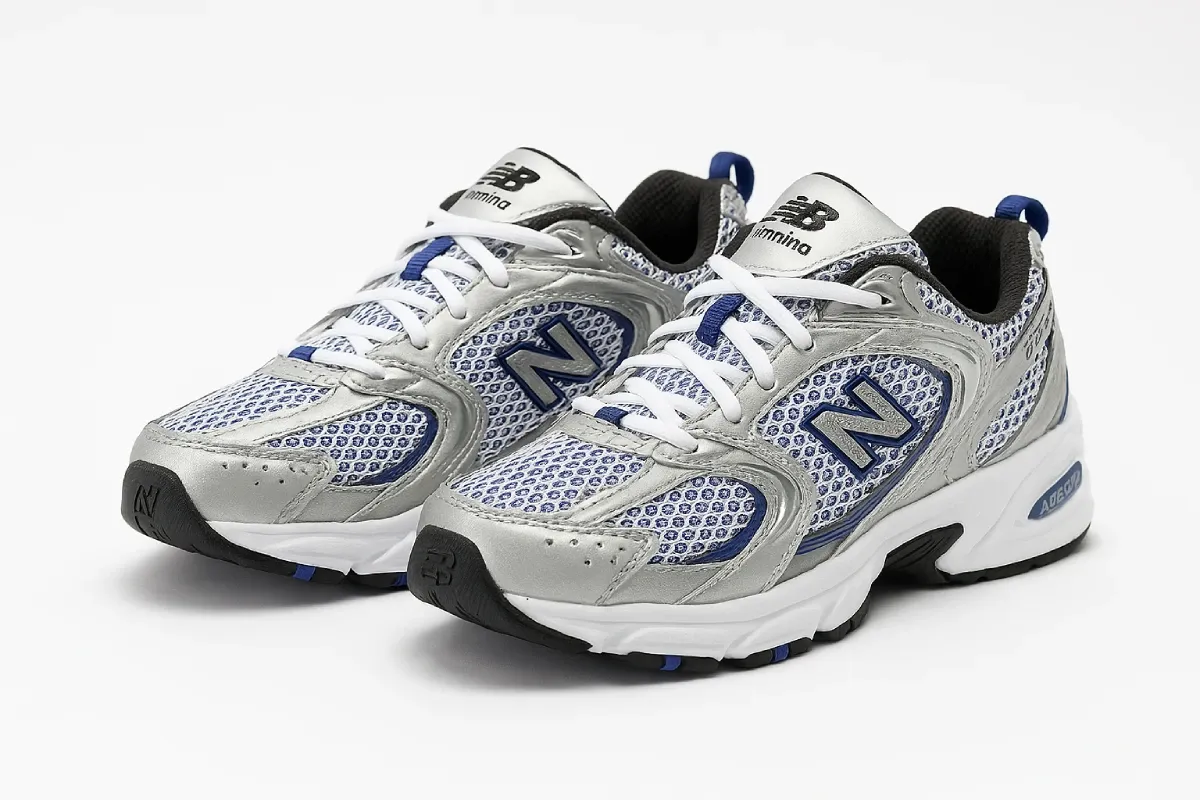
New Balance 530 Review
Review of the New Balance 530: A deep dive into the comfort, sizing, and durability of this trending retro "Dad Shoe." Is it worth the hype?
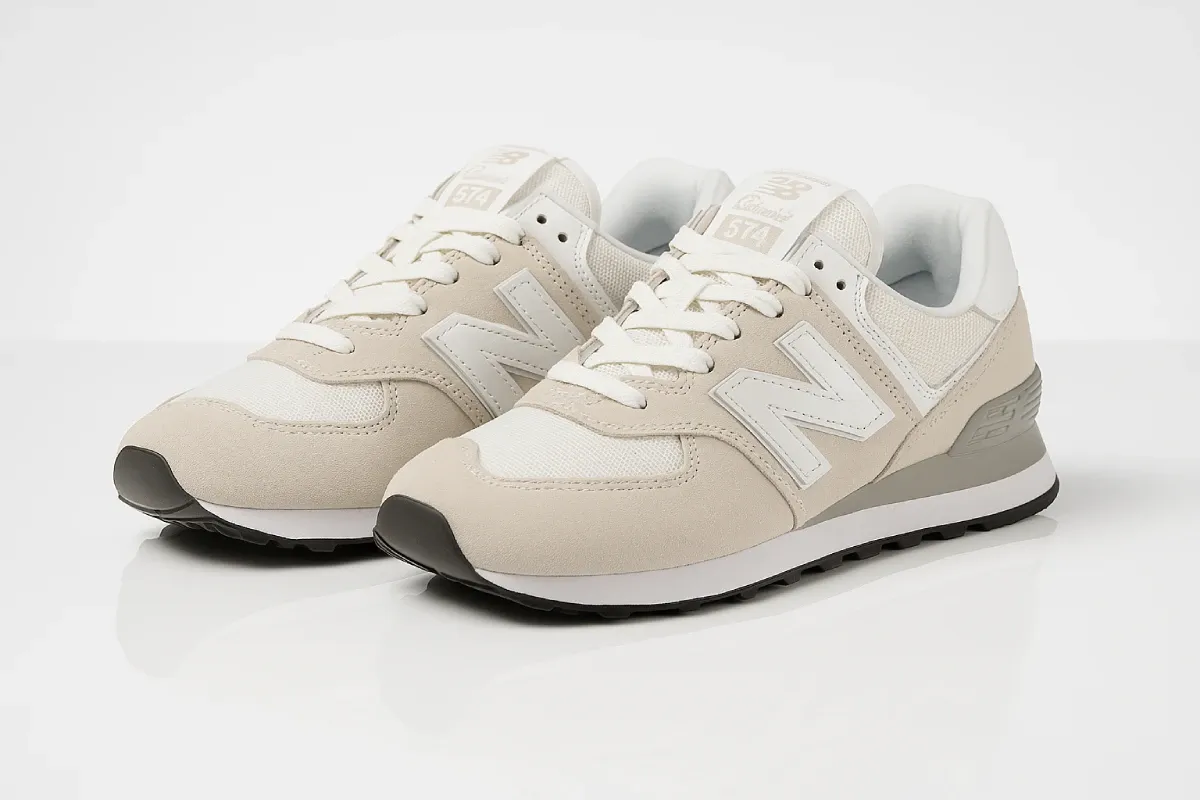
New Balance 574 Core Review
Get an honest review of the iconic New Balance 574 Core. We dive deep into its comfort, style, durability, and value to see if it's worth the hype.
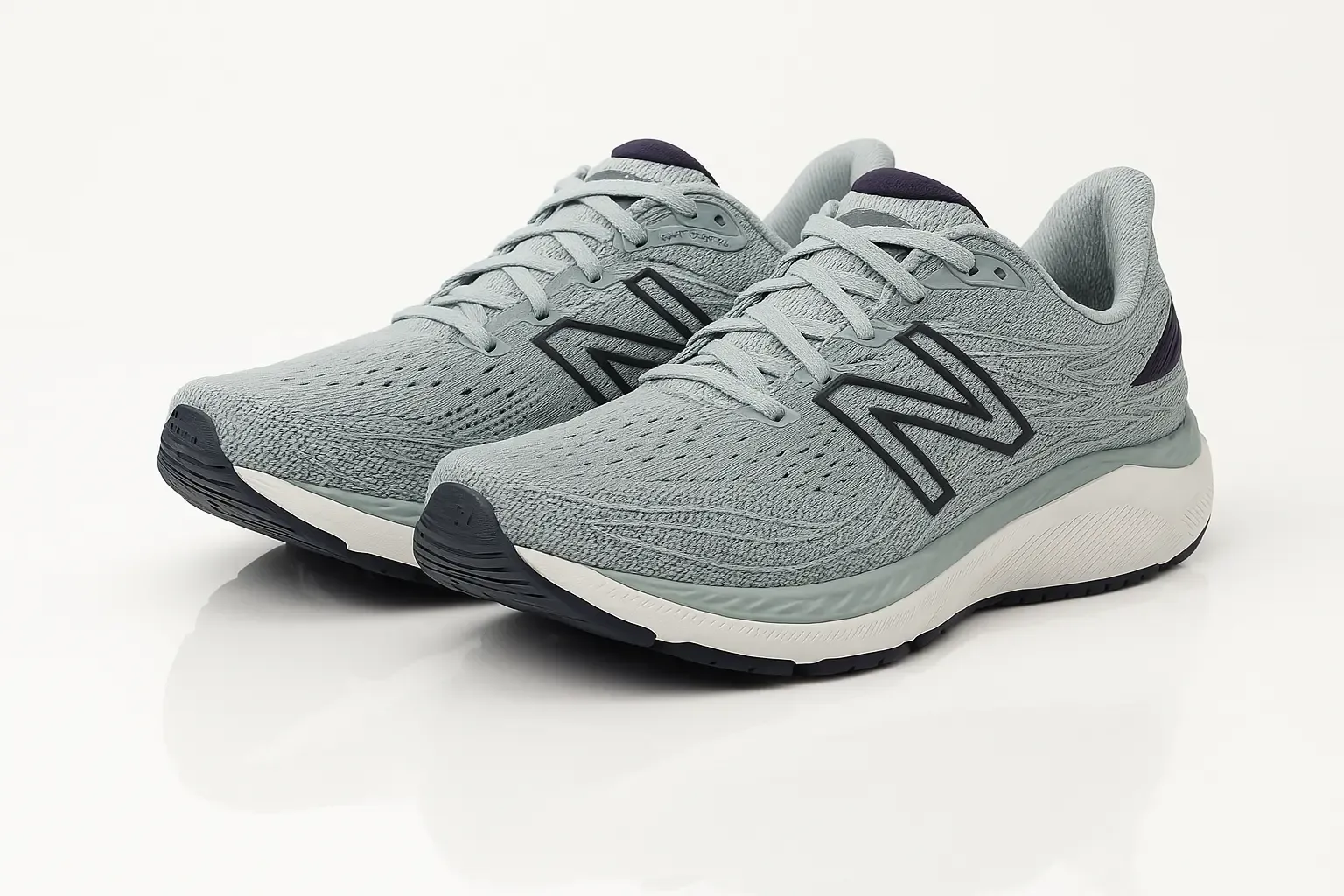
New Balance Fresh Foam X 860 V12 Review
New Balance Fresh Foam X 860v12 Review: A durable stability shoe perfect for overpronators. Discover why this older model is now an unbeatable value.