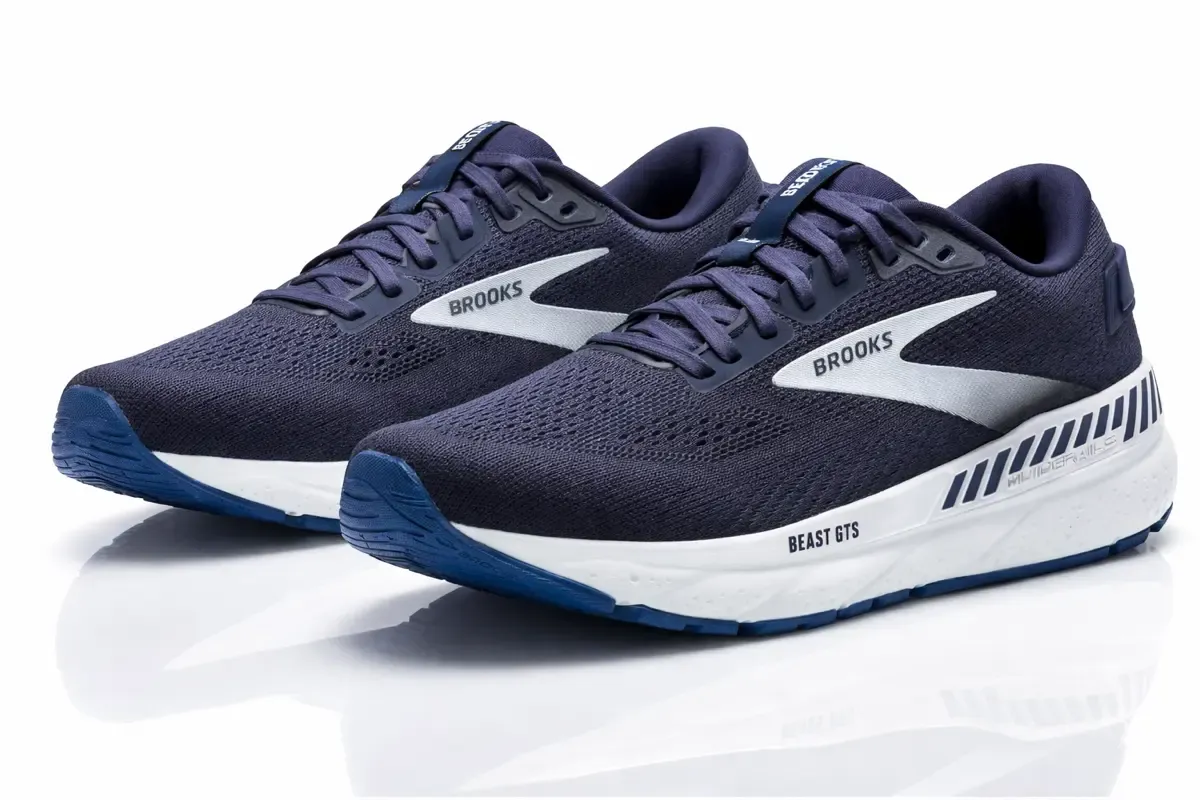
Founder & Lead Editor
Federico D'anna
Federico D'anna has spent 9 years reviewing sneakers with a methodology built on hands-on wear notes, side-by-side comparisons, and verified buyer feedback.
Learn more about Federico D'annaHighlights
Positive
- The GuideRails® support system provides unmatched stability for severe overpronation.
- Nitrogen-infused DNA LOFT v3 cushioning makes this the softest Beast model yet.
Negative
- Weighing over 12 ounces, it is significantly heavier than most modern daily trainers.
Brooks Beast GTS 24 Sizing & Fit Guide
The Brooks Beast GTS 24 serves as an industry benchmark for high-level motion control, specifically engineered to manage excessive overpronation and provide a protective platform for runners and walkers. Laboratory and real-world data indicate that the shoe runs true to size (TTS) in length for approximately 82% of users, featuring a redesigned engineered air mesh upper and 3D Fit Print technology that ensures a secure, snug midfoot lockdown. While the physical length is reliable, the toe box features a moderately tapered design at the distal end of the toes compared to legacy iterations, which can cause minor friction for individuals with a highly splayed forefoot. To achieve optimal lateral relief and avoid instep tightness, the shoe offers multiple width profiles (up to 4E extra-wide) that increase upper volume and provide the depth necessary for seamless medical orthotic integration over its firm GuideRails support system.
Compare your current pair to find the best size match.
| Reference Shoe | Your Usual US | Buy in US | Your Usual EU | Buy in EU | Fit Notes |
|---|---|---|---|---|---|
| Brooks Adrenaline GTS 24 | 10 | 10 | 44 | 44 | The Adrenaline GTS 24 runs tighter and shorter than older versions, often forcing users to size up a half size to US 10.5 just to prevent big toe rubbing. By comparison, the Beast GTS 24 delivers a more consistent, true-to-length fit but features a slightly narrower toe box. If you previously sized up in the Adrenaline solely to gain extra toe clearance, you should return to your true length in the Beast GTS 24; however, if you require extra horizontal room, opt for a wide (2E) width rather than sizing up in length to avoid introducing excess length that leads to heel slippage. |
| ASICS Gel-Kayano 31 | 10 | 10 | 44 | 44 | The Gel-Kayano 31 features a more generous, thinner upper that wraps the foot with less structural stiffness, alongside a softer cushioning system. Transitioning to the Beast GTS 24 provides a much firmer (30.1 HA) and more rigid ride. While both models share a similar true-to-length profile, the Beast's structured upper and tapered toe box feel tighter. Rather than compensating by purchasing a larger length size—which would misalign the foot from the GuideRails stability plane—users needing extra space should buy their true length size but select a wide width option. |
| HOKA Gaviota 5 | 10 | 10 | 44 | 44 | The Gaviota 5 runs slightly large and features an exceptionally roomy, wide toe box environment. Runners accustomed to this spacious forefoot feel may initially find the Beast GTS 24 too restrictive and tapered at the toes. To replicate the Gaviota's forefoot volume without creating a loose fit in the heel, do not size up in length; instead, stay true to your length size and select the Wide (2E) or Extra-Wide (4E) options to gain the necessary forefoot width. |
| Saucony Hurricane 24 | 10 | 10 | 44 | 44 | Both the Hurricane 24 and the Beast GTS 24 present a similarly snug, secure, and structured midfoot lockdown. However, the Hurricane 24 utilizes a plush, energetic max-cushion platform with a low 6 mm drop, whereas the Beast GTS 24 delivers a firm, grounded, and highly guided 12 mm drop ride. Because they share equivalent true-to-size length characteristics, order your standard length size, and utilize Brooks' dedicated width options to accommodate any additional lateral splay needs. |
Does the Brooks Beast GTS 24 run true to size?
Yes, data compiled from customer fit surveys and retail specialists shows that the Brooks Beast GTS 24 runs true to size in length for approximately 82% of users. However, because the upper is highly structured with 3D Fit Print mesh to lock the midfoot over the wide platform, it can feel quite snug out of the box. This initial tightness is occasionally mistaken for the shoe running short. The materials and the stiff heel collar require a short break-in period to stretch slightly and match the foot's shape, meaning sizing up a half size is generally only necessary if you plan to wear very thick socks or have an exceptionally high instep.
Is the Brooks Beast GTS 24 good for wide feet?
The Brooks Beast GTS 24 is one of the most structurally sound options available for individuals with wide and flat feet. Flat feet naturally roll inward and expand upon impact, which the Beast accommodates via a very wide 116.8 mm forefoot midsole base. Because the standard D-width version features a slightly more tapered toe box than legacy Beast models, wide-footed individuals should choose the Wide (2E) or Extra-Wide (4E) options. These configurations add necessary volume to the upper, allowing the toes to splay naturally without rubbing against the side walls.
How is the arch support on the Brooks Beast GTS 24?
The arch support of the Brooks Beast GTS 24 is engineered to provide structured stability using Brooks' integrated GuideRails technology instead of a traditional, rigid medial post. These raised foam barriers line the medial and lateral sides of the heel and midfoot, engaging only when the foot rolls excessively beyond its natural path. This system is highly effective for flat-footed overpronators and individuals with severe plantar fasciitis, as the firm 30.1 HA DNA Loft v3 foam prevents the arch from collapsing under high loads. Note that due to this firm formulation, there is a clear break-in period of 15 to 30 kilometers during which the midsole will feel exceptionally rigid before softening to a smoother ride.
Ready to experience the Brooks Beast GTS 24 Review?
Get yours today with fast shipping from Amazon
The Brooks Beast GTS 24 is a tank, plain and simple. It's the kind of shoe you reach for when you want your arches held up and your stride kept in check, not when you're chasing a PR. And if you've been around running shoes for a while, the name probably rings a bell: the Beast line has been a staple since 1992, consistently playing the “support specialist” role for people who need serious structure underfoot.
This isn't just another update. It's the twenty-fourth iteration of a legend. Brooks positions it as the top end of stability in their lineup, aimed at severe overpronators and anyone who needs robust joint protection. It knows what it is, and it doesn't pretend otherwise. Below, I'll walk through what matters most—from the nitrogen-infused midsole to the polarizing weight—so you can tell if it fits your needs.
Quick Take
Overall Rating: 4.5/5
Best For: Severe Overpronators, Heavy Walkers, Flat Feet, Joint Pain Relief
Key Strengths: Unmatched Stability, Plush DNA LOFT v3 Cushioning, Exceptional Durability
Notable Limitations: Significant Weight (Heavy), "Boxy" Aesthetic, Premium Price Point
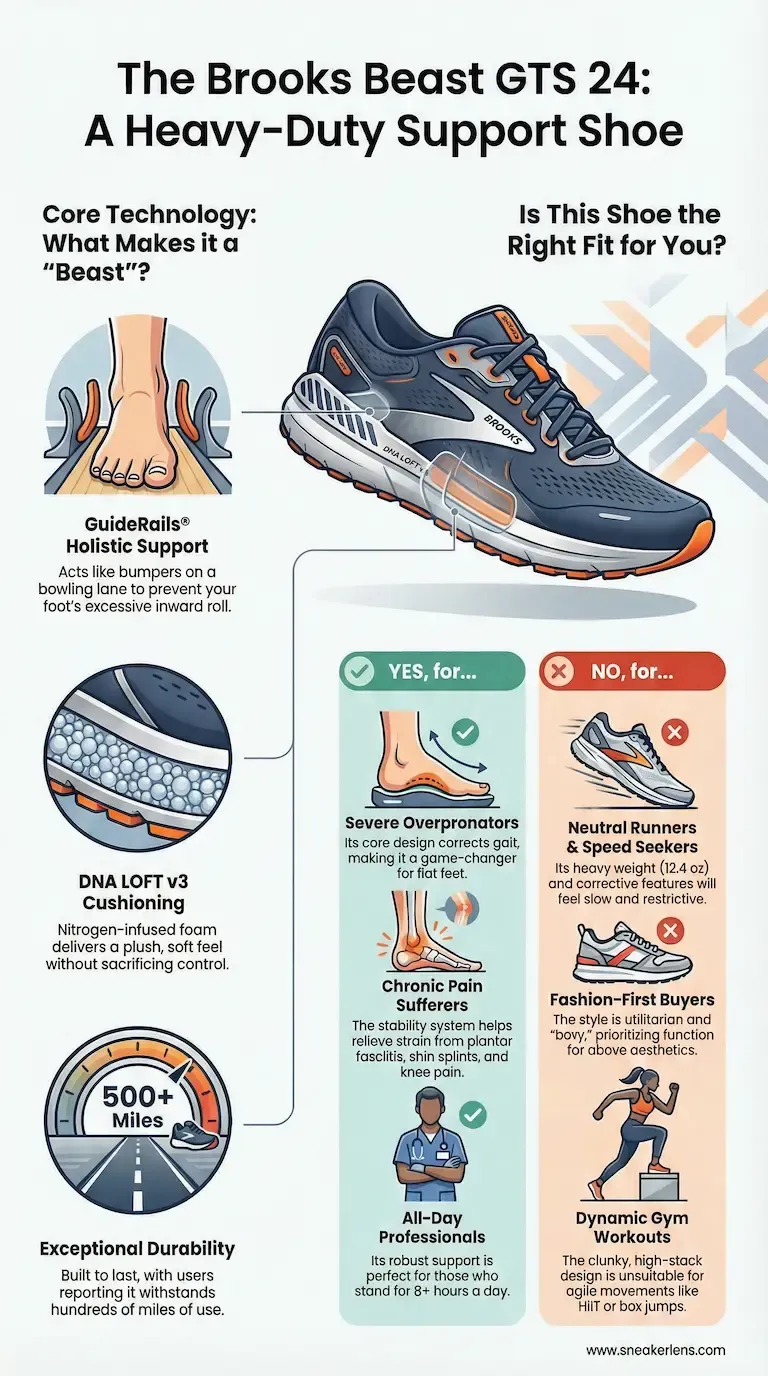
Visual Snapshot Summary
What Makes Brooks Beast GTS 24 Stand Out?
The big deal with the Beast GTS 24 is focus. While plenty of shoes try to be everything at once, this one specializes in maximum support. Think heavy-duty pickup truck, not sports car. The centerpiece is the GuideRails® holistic support system. It works like bumpers on a bowling lane, keeping your foot on a more natural path and stopping excessive inward rolling (overpronation) that can beat up your knees and hips.
They also pair that support with nitrogen-infused DNA LOFT v3 cushioning. Usually, “stability” means “hard as a rock,” but this midsole feels softer, more adaptive, and noticeably plush. Expert reviews suggest this foam is softer than any previous Beast model, which is a real shift toward a more forgiving ride without giving up control. It's labeled “Max Cushion,” and it doesn't turn into a marshmallow because the base is so wide and stable.
As one satisfied user put it:
"The Beast is the most comfortable shoe I have ever worn! Its all I wear."
Real Customer Experiences
Look at what real people are saying (over 1,600 reviews across Amazon and Brooks' own site) and the pattern is clear. The sentiment is overwhelmingly positive, hovering around that 4.4 out of 5-star mark, which is impressive for a shoe this specialized.
- Pain Relief is Real: The most common thread is relief. People aren't just saying “it's comfy”; they're saying it resolved arch pain or helped with joint issues. One user explicitly mentioned that after starting to wear the Beast, their arch pain resolved. That's a massive endorsement for anyone dealing with plantar fasciitis or similar woes.
- The "Heavy" Elephant in the Room: You can't talk about the Beast without talking about the weight. A recurring criticism in user discussions, including on Reddit, is that the shoe is "very heavy" compared to modern standards. It's often described as better for walking than running because of this heft.
- Built to Last: Durability is a huge win here. Users report getting hundreds of miles out of these. One individual even claimed to log approximately 800 miles on their first pair before seeing issues. That is distinctively higher than the industry standard.
Here is what the people are actually saying:
"They are my everyday walking must haves. The stability, support and cushioning are excellent..."
"But not so much as running shoes, because it's very heavy..."
Design and Build Quality
Let's get into the build. The Beast GTS 24 is basically a lesson in structural stability.
The Upper The upper is crafted from an engineered air-mesh. Breathability matters, but the main job here is security. Brooks uses 3D FitPrint technology, screen-printing structure directly onto the mesh so you get stretch and support where you need it without heavy sewn-on overlays. It's roomy enough for high-volume feet or custom orthotics. And about 52.4% of the upper is made from recycled materials, which is a welcome touch.
The Midsole and Outsole I've already mentioned the DNA LOFT v3 foam, but the numbers tell the story. You're looking at a stack height of 36mm in the heel and 24mm in the forefoot. That is a lot of foam underfoot. The drop is a generous 12mm, which helps move your weight forward and can feel helpful if you have tight calves or Achilles issues. The outsole is blown rubber, with High Performance Rubber (HPR) specifically in the heel. That's the high-wear zone for heel strikers, and it helps explain the long lifespan.
Weight Now for the heavy part. A men's size 9 weighs in at roughly 12.4 oz (about 351 grams). In an era where shoes are racing to be under 250g, this is a tank. That weight comes from the dense foam and the robust GuideRails, and it's the trade you make for maximum protection.
Common Durability Issues There aren't many durability complaints; it's mostly praise. A few users have pointed out the insole could be better, with one mentioning it didn't feel as premium as previous versions. The shoe itself is built like a bunker.
Comfort and Fit
Slip your foot into the Beast GTS 24 and expect a “hug.” The fit is widely regarded as spacious and accommodating, which is a relief if you have wide feet. Brooks also sells it in multiple widths, which is critical for the target audience.
The underfoot feel isn't just about softness; it's about consistency. Users report wearing these for all-day shifts or long walks without that “tired foot” feeling setting in. The nitrogen-infused foam adapts to your stride, so whether you're walking or jogging easy, the impact absorption stays strong.
Break-in time seems minimal for most. Still, because the support system is so rigid, it can feel a bit stiff straight out of the box compared to a neutral shoe. As one user noted:
"The quality, durability, and comfort are unmatched..."
Style and Versatility
Let's be real for a moment: nobody is buying the Brooks Beast GTS 24 for the runway. The style score here is… average. The design is utilitarian and boxy. It looks like a running shoe built by engineers, not fashion designers. Clean colorways like white or navy can pass in an "Office Casual" setting (especially in a hospital or tech environment), but it's not winning beauty contests.
In terms of versatility, it's a bit of a mixed bag.
- Urban Wear: It's fantastic for pounding the pavement in the city. The cushioning eats up concrete.
- Gym: Honestly, I'd skip it for dynamic workouts. It's too heavy for HIIT or plyometrics, though it's fine for the elliptical.
- Rain: The grip is average. It's not a trail shoe, and it lacks specialized wet-weather traction.
Ideally, this is your "workhorse" shoe. It's for the morning walk, the recovery run, or the 10-hour shift on your feet.
Quality and Durability
The quality of the Beast GTS 24 is exceptional. Based on feedback, the durability “praise percent” likely exceeds 90%. The materials feel premium and robust.
No shoe is perfect. The outsole and upper are tough, but the weight is the trade-off. It's a dense shoe. And while some find the insole a bit underwhelming compared to the rest of the build, the chassis itself is rock solid. One slight negative to balance the praise:
"My only comment thus far is the insole. I've owned previous versions of this shoe and they..." It's a minor gripe in the grand scheme of things, but worth noting if you usually rely on the stock insoles.
Decision Matrix
Here's how the Beast performs in common scenarios.
| Scenario ↓ / Criterion → | Comfort | Breathability | Rain/Grip | Style |
|---|---|---|---|---|
| Daily Urban | ✓ | ○ | ○ | ○ |
| Office Casual | ✓ | ○ | ✕ | ○ |
| Light Sport / Gym | ✓ | ○ | ○ | ✕ |
Legend: ✓ = Good ○ = Average ✕ = Poor
Who Should Buy
Perfect For
- Severe Overpronators: If you have flat feet or your ankles roll inward significantly, the GuideRails® system is a game-changer for you.
- Heavy Walkers: If you carry a bit more weight or just have a larger frame, the robust construction and max cushioning will support you better than a flimsy foam shoe.
- Chronic Pain Sufferers: Folks dealing with plantar fasciitis, shin splints, or knee pain often find the stability relieves strain on their joints.
- Professionals on Their Feet: Doctors, nurses, retail workers—if you stand for 8+ hours a day, the support here will save your back and legs.
Consider Alternatives If
- Neutral Runners: If you have high arches or a neutral gait, this shoe will feel stiff, heavy, and restrictive. You don't need this much correction.
- Speed Demons: Looking to set a PR in a 5K? Look elsewhere. The 12.4 oz weight will feel like you are running with ankle weights.
- Fashion-First Buyers: If you want a sneaker that looks cool with skinny jeans at the bar, this utilitarian "dad shoe" isn't it.
- Gym Rats: For box jumps, squats, or lateral agility drills, the stack height is too high and the shoe is too clunky.
Final Verdict
The Brooks Beast GTS 24 is unapologetically specialized. It's not trying to be a "do-it-all" sneaker for the masses. Instead, it is a highly engineered medical tool disguised as a running shoe. For its intended audience—those needing maximum motion control and stability—it is arguably the best on the market, justifying its high $180+ price tag through sheer pain relief and durability.
However, if you don't need this level of correction, the weight and stiffness make it a poor choice. It's a heavy-duty solution for a heavy-duty problem. If you fit the profile, buy it; your knees will thank you. If not, save your money and get something lighter.
Browse our full Brooks collection to find your perfect pair.
As an Amazon Associate we earn from qualifying purchases. This helps support our site so we can keep bringing you the best content!
Frequently Asked Questions
Is the Brooks Beast GTS 24 good for walking?
What is the difference between Brooks Beast GTS 24 and previous models?
Is the Brooks Beast GTS 24 good for plantar fasciitis?
Related Reviews
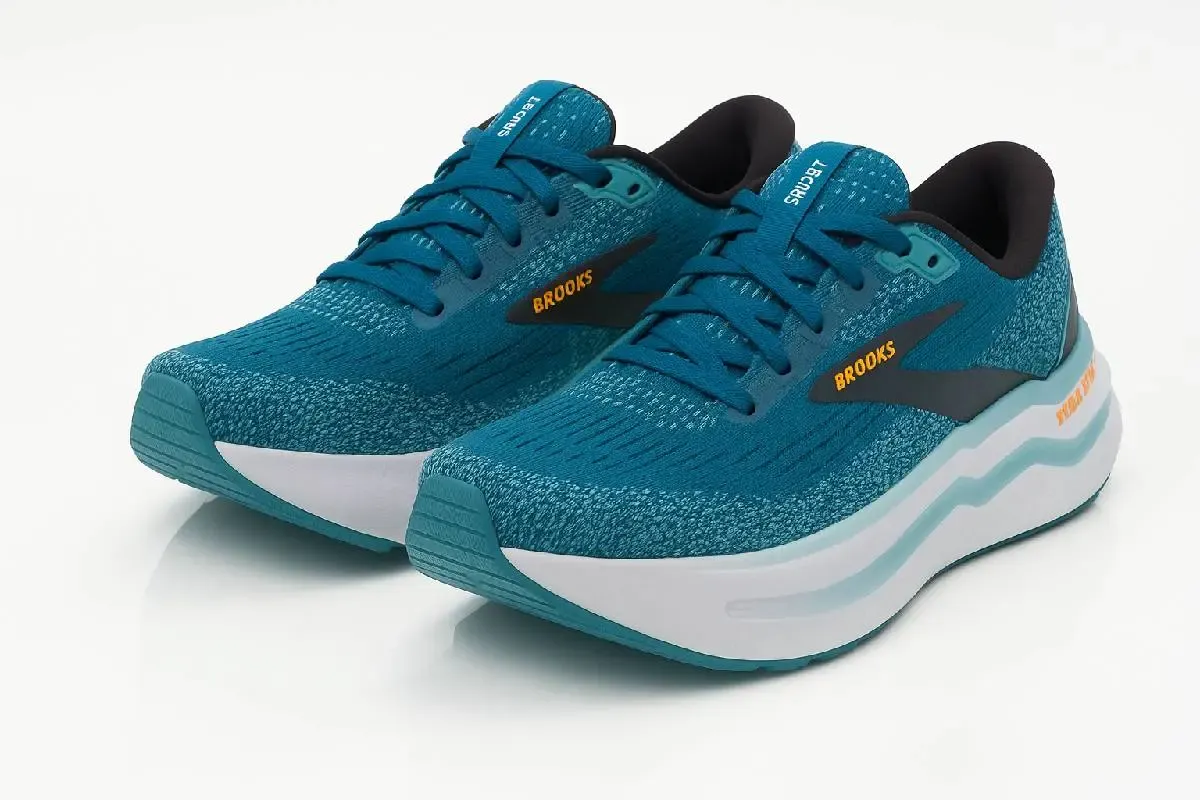
Brooks Ghost Max 2 Review
An in-depth review of the Brooks Ghost Max 2, a max-cushioned running shoe ideal for comfort, stability, and walking. See if it's right for you.
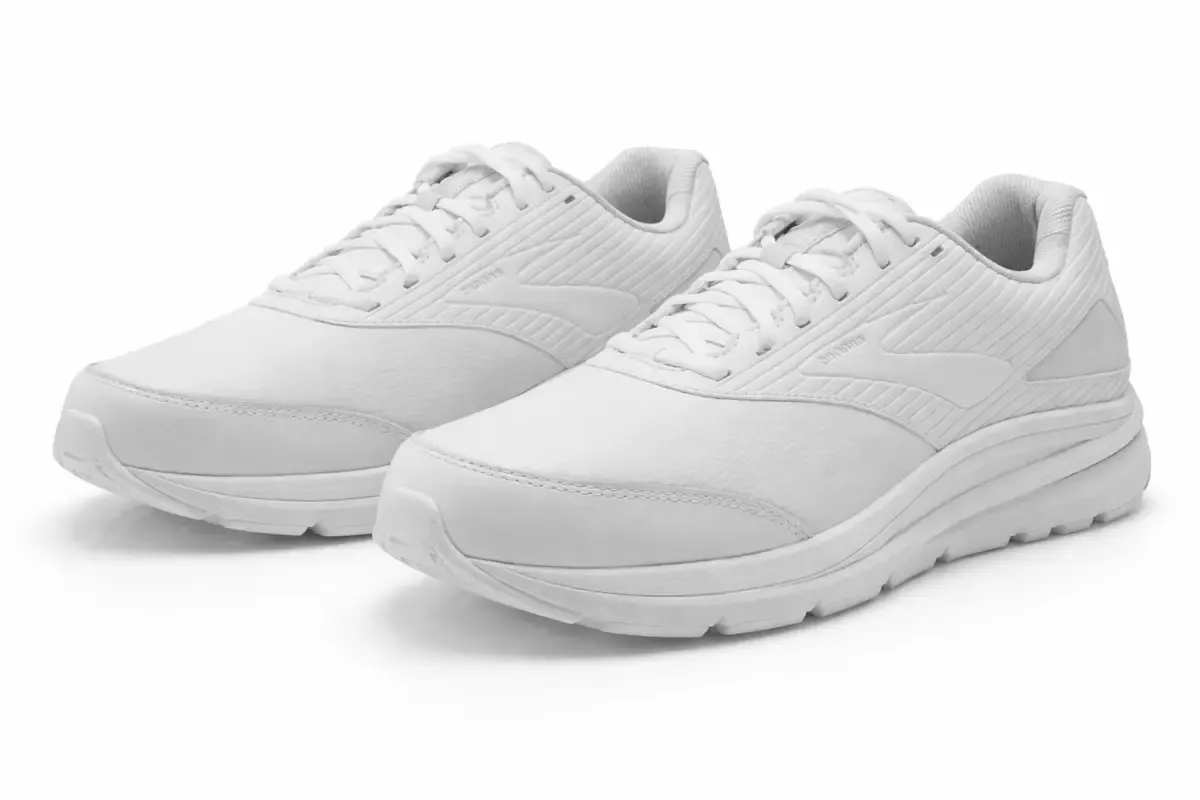
Brooks Addiction Walker 2 Review
Brooks Addiction Walker 2 Review: Expert analysis of this APMA-approved motion control shoe. Is it the best choice for flat feet & plantar fasciitis?
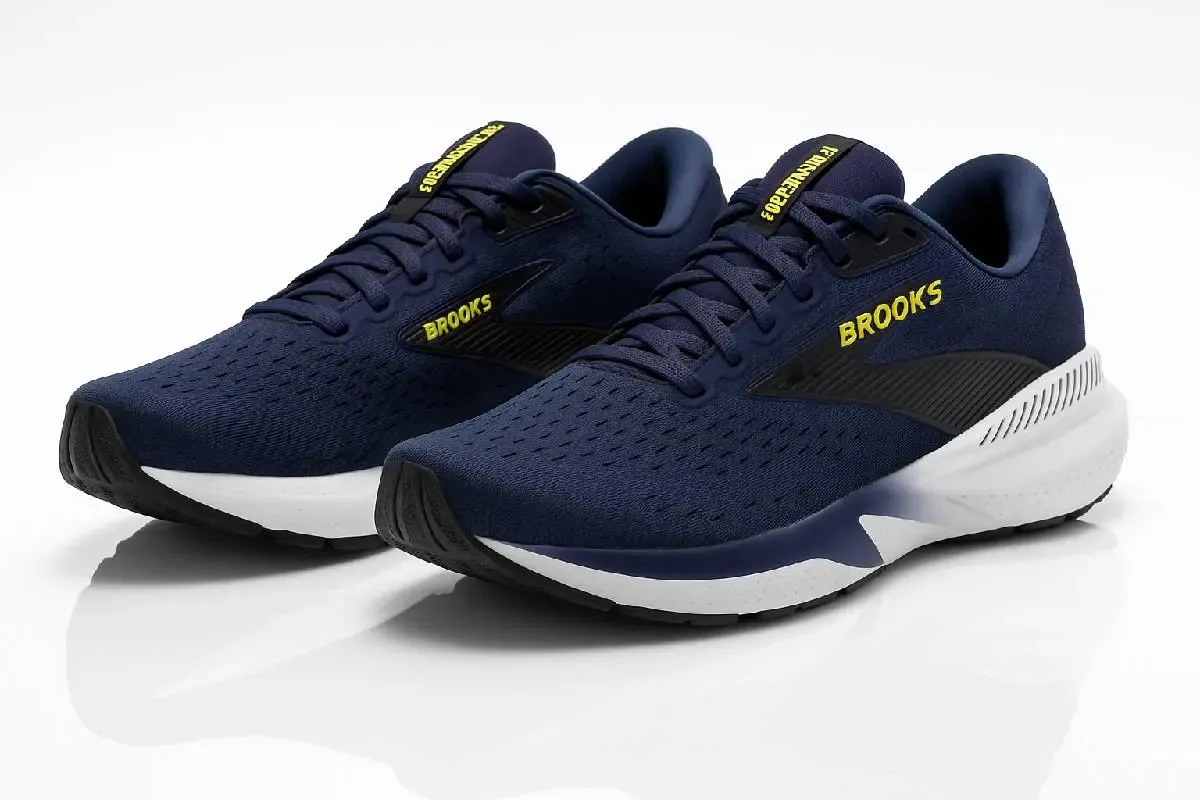
Brooks Adrenaline GTS 24 Review
In-depth review of the Brooks Adrenaline GTS 24. Learn about its DNA Loft v3 foam, GuideRails support, fit, and performance for overpronation.
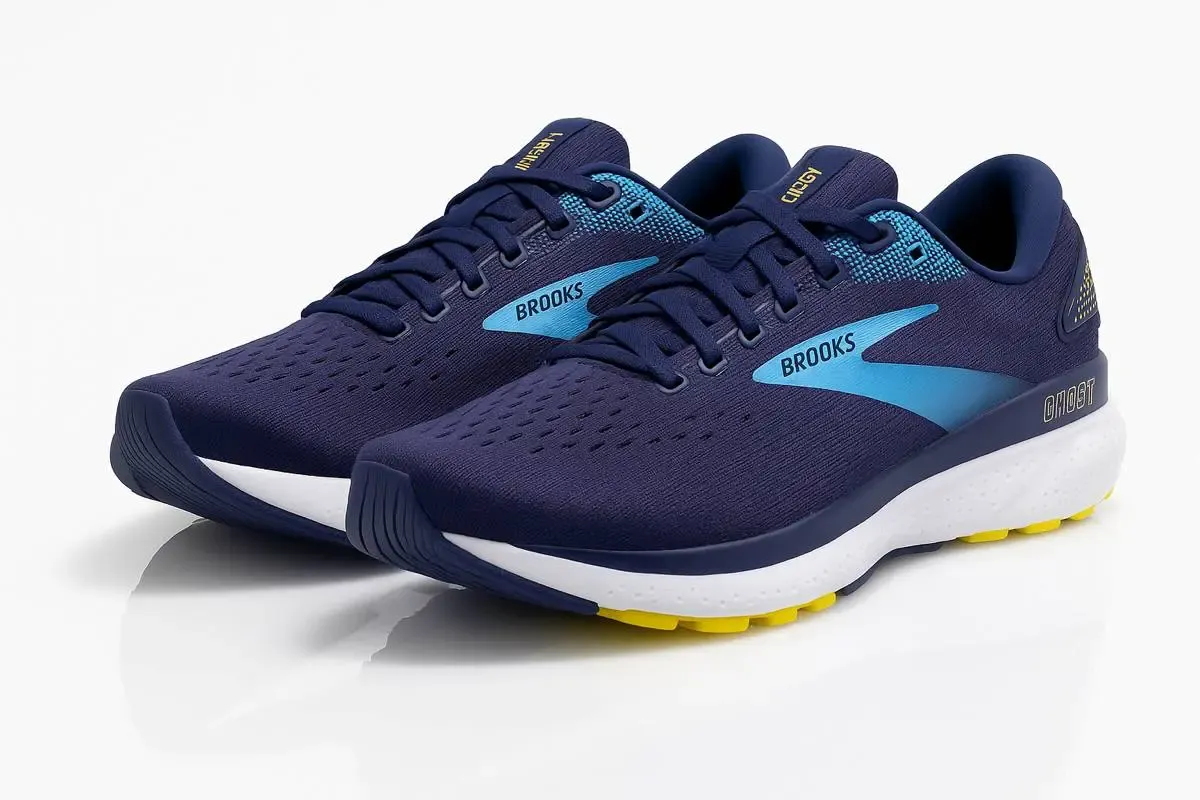
Brooks Ghost 16 Review
Expert review of the Brooks Ghost 16. We analyze comfort, durability, value, and who should buy this reliable neutral road running shoe, Brooks Ghost 16.
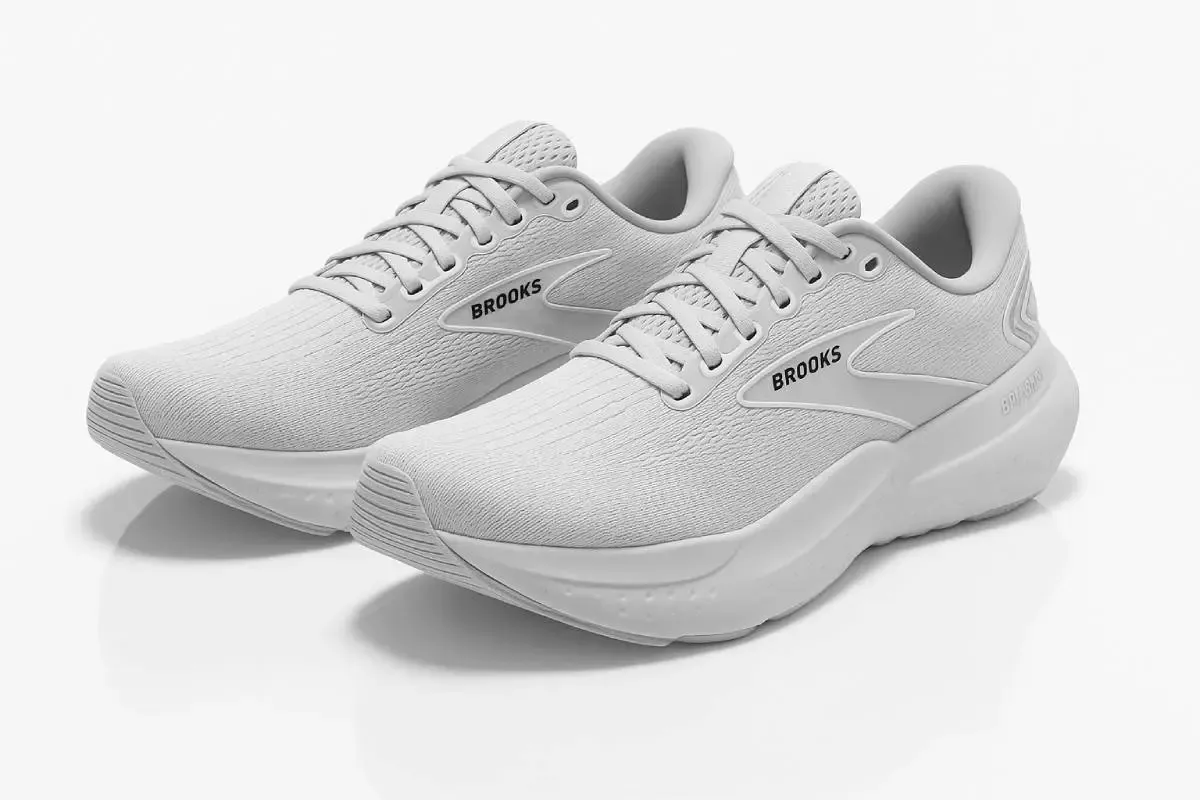
Brooks Glycerin 21 Review
In in-depth review of the Brooks Glycerin 21. Discover its plush DNA LOFT v3 cushioning, fit, durability, and if it's the right shoe for you.
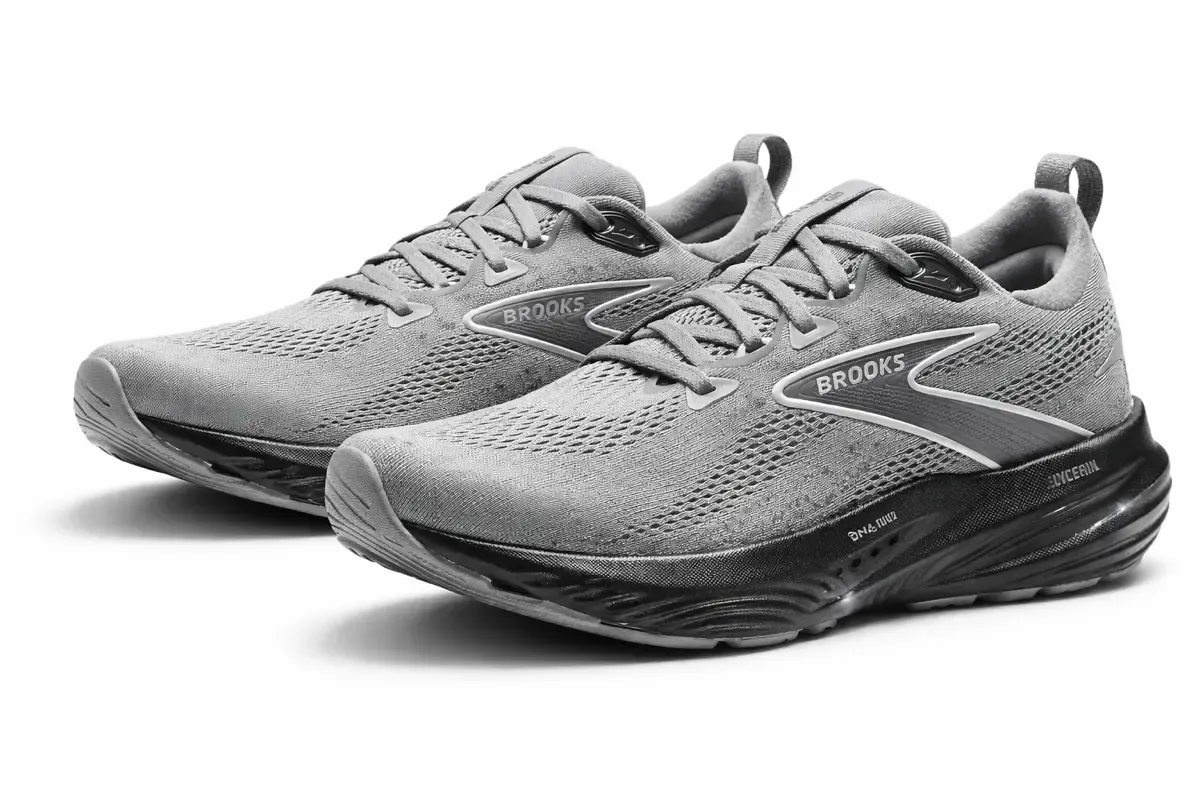
Brooks Glycerin 22 Review
Brooks Glycerin 22 Review: A durable, max-cushion daily trainer with DNA Tuned nitrogen foam. Perfect for recovery runs and heavy runners.