Let’s be honest: finding the perfect pair of running shoes can feel like dating. You try a few. Some are too stiff, some don’t have enough support, and others just don’t get you. If there’s one brand that keeps nailing that mix of cushion and biomechanics, it’s Brooks. Founded in Seattle, they don’t just make shoes. They obsess over the science of movement so you can focus on one goal: Run Happy.
And it’s not just marketing fluff. Between the cloud-like feel of DNA LOFT cushioning and the trusted support of the Brooks Adrenaline GTS, runners have leaned on this lineup for decades to help keep injuries at bay.
This guide cuts through the noise. Whether you’re a beginner looking for the best Brooks running shoes for daily miles or a seasoned marathoner hunting the fastest Brooks racing shoes to smash a PR, you’re in the right place. From the versatile Brooks Ghost to stability powerhouses, here are the top models for 2025 and how to pick the right one.
The Tech Behind the Best Brooks Running Shoes: DNA, GuideRails, and More
Before we get to the shoes, let’s talk about what’s going on underfoot. Brooks doesn’t just glue foam to rubber. They tune the ride around how you want to feel (Soft, Energized, Speed) and how your body naturally moves. If you’ve ever wondered why a Brooks Ghost feels different from a Brooks Hyperion, it usually comes down to two things: the DNA in the midsole and the rails along the sides.
Brooks DNA Cushioning Systems Explained
Brooks uses a non-Newtonian material they call “DNA,” and it adapts to your stride, weight, and speed. But not all DNA feels the same.
- DNA LOFT v3 (The Nitrogen Era): This is the crown jewel of comfort. By infusing nitrogen gas into the foam during the molding process, Brooks created a midsole that is lighter, softer, and bouncier than ever before. You’ll find this plush tech in top-tier cruisers like the Brooks Glycerin and the max-cushioned Ghost Max.
- BioMoGo DNA (The Reliable Standard): If you prefer a balanced feel—not too squishy, not too hard—this is your go-to. It’s an eco-friendly compound (it breaks down 50x faster in landfills) that provides a responsive, connected ride. It’s the workhorse cushioning found in standard models and entry-level trainers.
- DNA FLASH (The Speed Demon): Want to go fast? Look for this. It’s also nitrogen-infused but tuned for responsiveness and energy return rather than pure softness. Extremely lightweight and snappy, it powers the Hyperion racing series.
GuideRails Support System: Stability for Overpronators
Forget the old days of stiff “medial posts” that felt like running with a rock in your shoe. Brooks modernized stability with GuideRails® technology.
Think of GuideRails like bumpers in bowling. They don’t correct you aggressively. They step in only when you deviate, gently guiding your body back toward its natural motion path. By reducing excess rotation at the shin and heel, they help protect your knees, the most injury-prone part of a runner’s body.
- Who needs it? If your feet roll inward excessively (overpronation) or your knees wobble as you tire, look for models with “GTS” in the name (Go-To Support), like the Adrenaline GTS 24 or Glycerin GTS.
Finding Your Fit: Neutral vs. Support
- Neutral Brooks Running Shoes: Best for runners with high arches or those whose feet stay aligned (supinators/neutral runners). If the wear pattern on your old shoes is uniform or on the outside edge, stick to models like the Ghost or Glycerin.
- Support (GTS) Brooks Running Shoes: Essential for runners with flat feet or those dealing with plantar fasciitis who need structure. If you wear down the inside edge of your shoes, grab a GTS model.
Best Brooks Running Shoes for Daily Training: The Ghost Series
If you were to walk into any running store in the world and ask for “just a good, reliable shoe,” nine times out of ten, they’re handing you a box with a ghost on it. The Brooks Ghost series isn’t just popular; it’s practically an institution. For 2025, Brooks gives runners a choice between the classic reliability of the standard Ghost and the modern, protective ride of the Ghost Max.
Brooks Ghost 16 Review: The King of Reliability
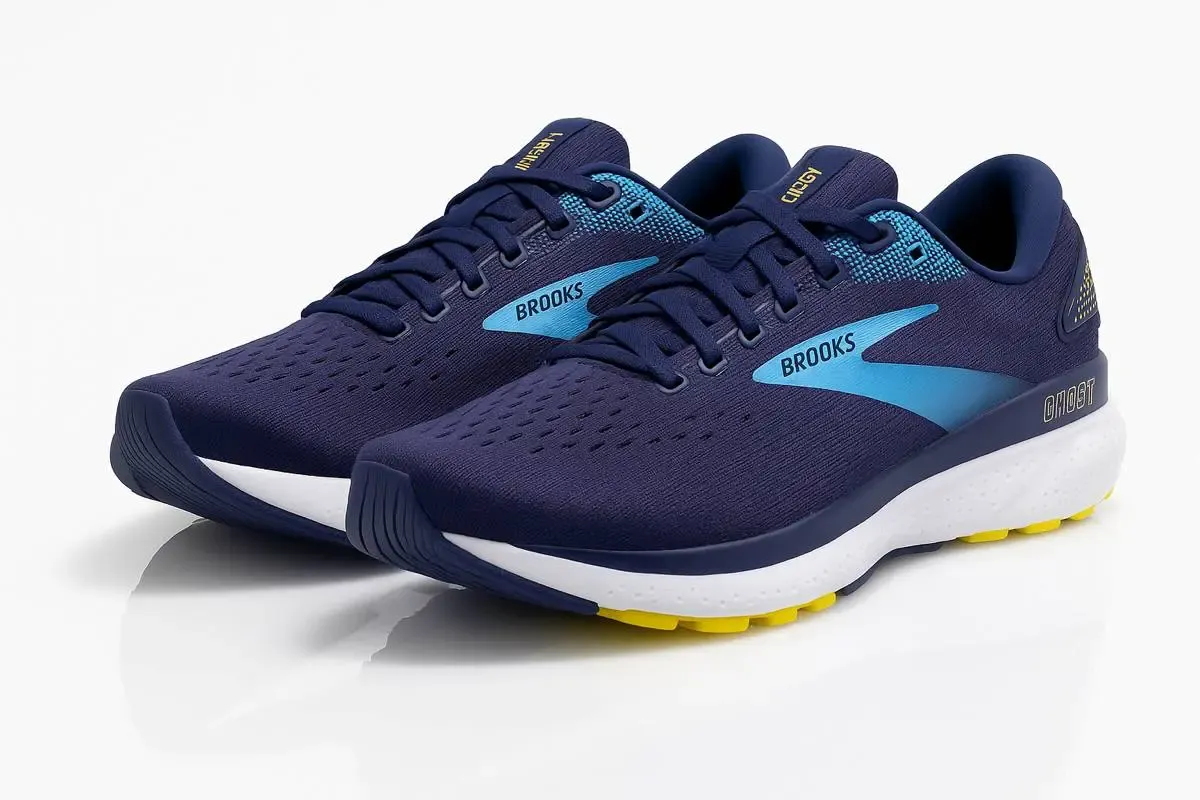
Ghost 16
For years, the Ghost has been the “Goldilocks” of running shoes: not too soft, not too firm, just right. The Brooks Ghost 16 keeps that legacy but gets a major upgrade underfoot. Brooks finally swapped the older foam for nitrogen-infused DNA LOFT v3.
Why it wins: It’s the ultimate “set it and forget it” shoe. The high 12mm drop is a dream for heel strikers because it packs plenty of foam right where you land, taking the stress off your Achilles. The updated Segmented Crash Pad works in harmony with the foam to create silky smooth transitions from landing to toe-off, making it perfect for beginners who haven’t refined their stride yet.
| Feature | Spec |
|---|---|
| Weight | ~9.8 oz (Men) / 8.5 oz (Women) |
| Drop | 12mm |
| Best For | Daily miles, gym sessions, walking, heel strikers |
Pros & Cons
- Pros: Nitrogen-infused cushioning feels lighter and softer than previous versions; extremely durable outsole; versatile enough for gym sessions and grocery runs.
- Cons: The high drop (12mm) isn’t for everyone (especially midfoot strikers); lacks the “pop” needed for speedwork.
Looking for a reliable partner for your first marathon?
Brooks Ghost Max 2: Maximum Protection for Daily Miles
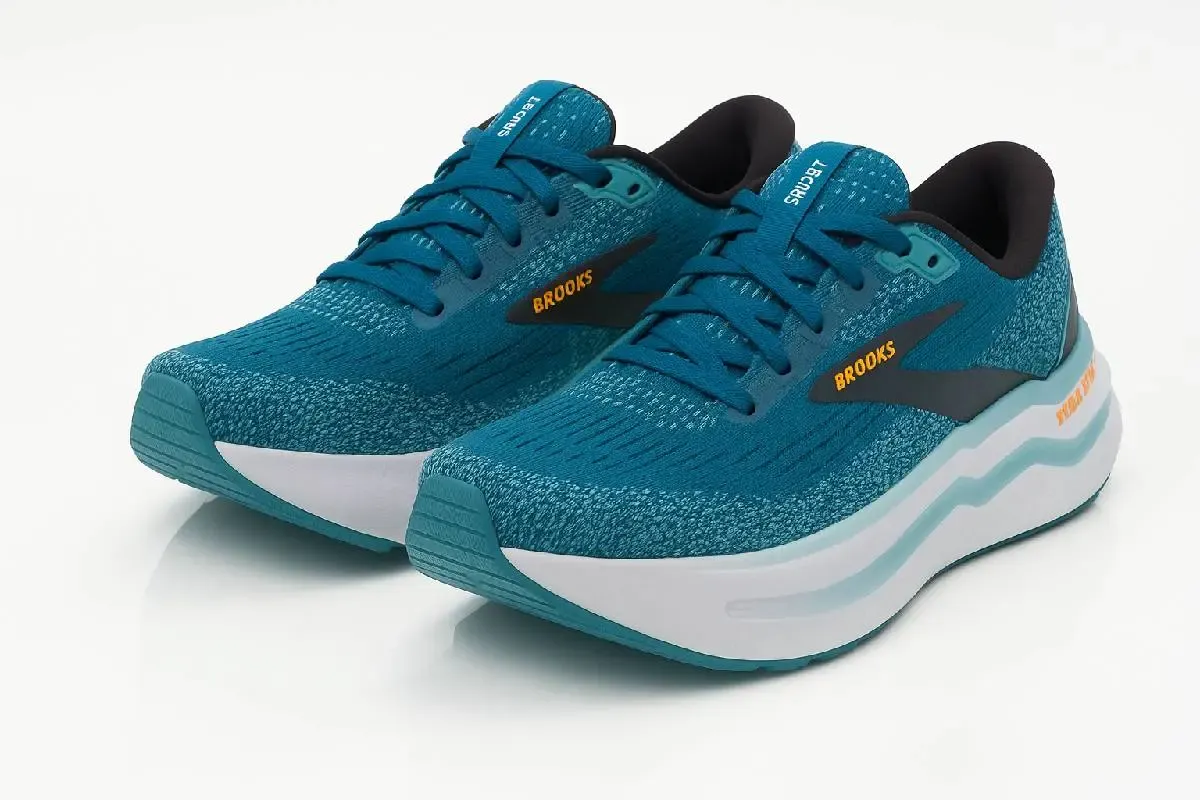
Ghost Max 2
If the Ghost 16 is a reliable sedan, the Ghost Max 2 is a luxury SUV. It takes everything you love about the Ghost—comfort and fit—and supercharges the protection.
Comparison: Ghost 16 vs. Ghost Max 2 The biggest difference here isn’t just the amount of foam; it’s the geometry. The Ghost Max 2 uses a lower 6mm drop (vs. 12mm) and a GlideRoll Rocker shape. Instead of slapping your foot down, the shoe actively rolls you forward. This rocker motion significantly reduces energy absorption in your foot tissues, making it a top choice for runners battling plantar fasciitis or stiff joints.
| Feature | Spec |
|---|---|
| Weight | ~10.9 oz (Men) / 9.6 oz (Women) |
| Drop | 6mm |
| Best For | Recovery runs, joint pain relief, heavier runners, plantar fasciitis |
Pros & Cons
- Pros: Massive stack of DNA LOFT v3 offers premium impact protection; wide base provides inherent stability without being intrusive; rocker shape eases strain on calves and ankles.
- Cons: Heavier than the standard Ghost; can feel a bit “clunky” if you try to run fast.
Need to give your joints a vacation while you run?
Best Cushioned Brooks Running Shoes: Plush Comfort for Long Runs
For some runners, “feeling the road” is overrated. Sometimes you just want that marshmallow ride. If you’re logging high mileage, recovering from a marathon, or carrying a bit more weight, max cushioning isn’t a luxury. It’s joint preservation. This year, Brooks leans hard into softness with two heavy hitters: the Glycerin 22 and the monster-stack Glycerin Max.
Brooks Glycerin 22 Review: The Ultimate Soft Ride
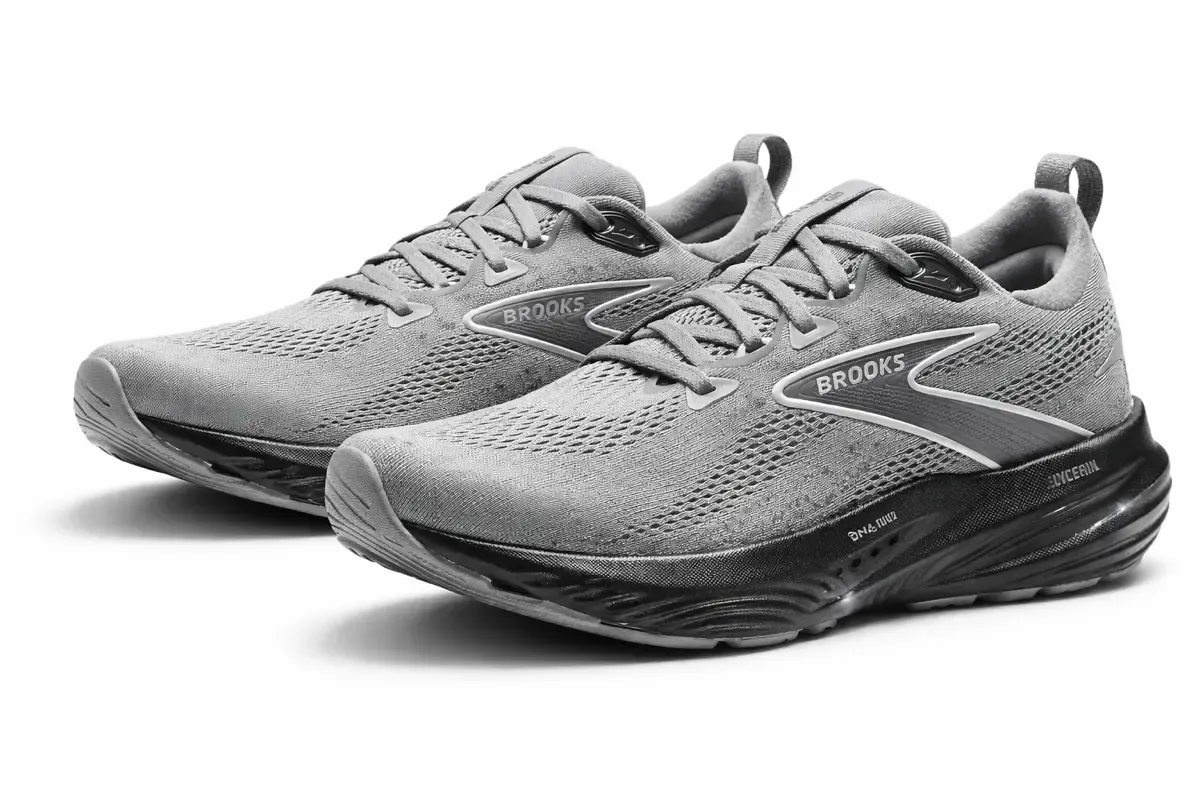
Glycerin 22
The Brooks Glycerin 22 is the luxury sedan of the running world. It’s built for one thing: an easy, forgiving ride over any distance. While previous versions relied on DNA LOFT v3, the 2025 model introduces nitrogen-infused DNA Tuned cushioning. It uses larger cells in the heel for a plush landing and smaller cells in the forefoot for a responsive toe-off, so it stays soft without feeling “mushy”.
Neutral vs. GTS:
- Glycerin 22 (Neutral): Ideal for runners with stable mechanics who just want premium cushioning.
- Glycerin GTS 22 (Support): If you need stability, the GTS version adds the GuideRails system we discussed earlier, keeping your knees aligned without sacrificing that soft underfoot feel.
Why it wins: It’s the best Brooks running shoe for long-distance efforts and heavier runners who need durable impact protection. The breathable engineered mesh upper feels broken-in fast, making it an easy pick for daily training where underfoot comfort matters.
| Feature | Spec |
|---|---|
| Weight | ~10.2 oz (289g) |
| Best For | Long runs, recovery days, heavy runners, walkers |
| Tech | DNA Tuned (Nitrogen-Infused) |
Pros & Cons
- Pros: “DNA Tuned” foam offers targeted cushioning (soft heel/snappy toe); highly breathable upper (5/5 score); extremely durable outsole.
- Cons: Heavier than average for a daily trainer; the high price point ($165) is an investment; some runners find the fit tighter than the previous version.
Ready to pamper your feet on those long Sunday runs?
Glycerin Max: Pushing the Boundaries of Cushion
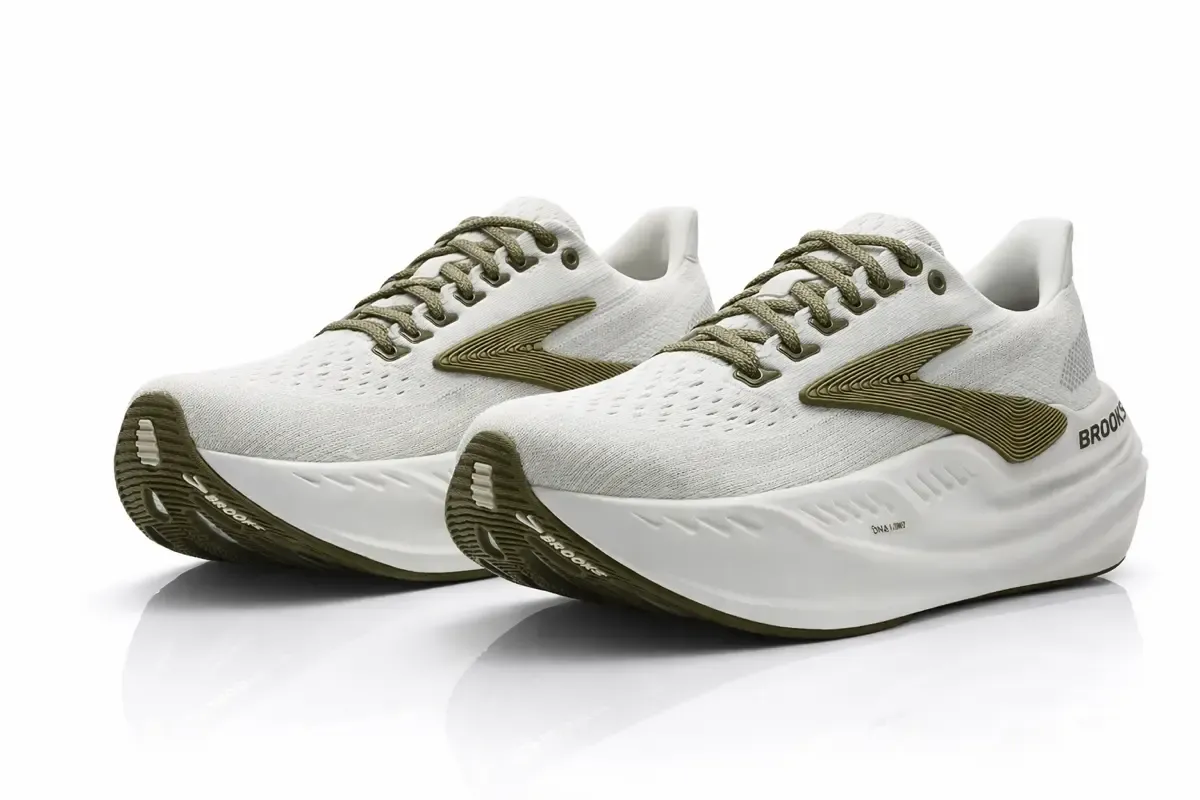
Glycerin Max
If the Glycerin 22 is a luxury sedan, the Brooks Glycerin Max is a hovercraft. This is a brand-new silhouette for 2025 that pushes stack heights to the absolute limit (45mm in the heel!).
The Secret Sauce: DNA Tuned Dual-Cell Foam This shoe uses the most advanced version of DNA Tuned technology. It’s a dual-density setup: a soft center for landing comfort and a firmer outer rim for stability, wrapped in GlideRoll Rocker geometry. That rocker shape matters because it rolls you through your stride and cuts down the work your ankles and calves have to do, which is a lifesaver for recovery runs or all-day standing.
| Feature | Spec |
|---|---|
| Weight | ~10.5 oz (298g) |
| Drop | 6mm |
| Best For | Recovery runs, runners >180 lbs, long-distance walking |
Pros & Cons
- Pros: Unmatched plushness (customers call it “walking on a cloud”); seamless transitions thanks to the rocker; APMA Seal of Acceptance for foot health.
- Cons: It is heavy and can feel sluggish on tempo runs; breathability is limited, so it runs warm in summer; premium price tag ($200).
Want to experience the most cushioned shoe Brooks has ever made?
Best Brooks Running Shoes for Overpronation and Flat Feet
If your ankles have a tendency to roll inward (overpronation) or your arches collapse when you land, running without support is a recipe for injury. Stability shoes used to be stiff and clunky, but Brooks changed the game. Instead of just forcing your foot straight, their modern stability lineup focuses on protecting your knees—the most injury-prone part of a runner’s body.
Brooks Adrenaline GTS 24: The Go-To Shoe for Stability
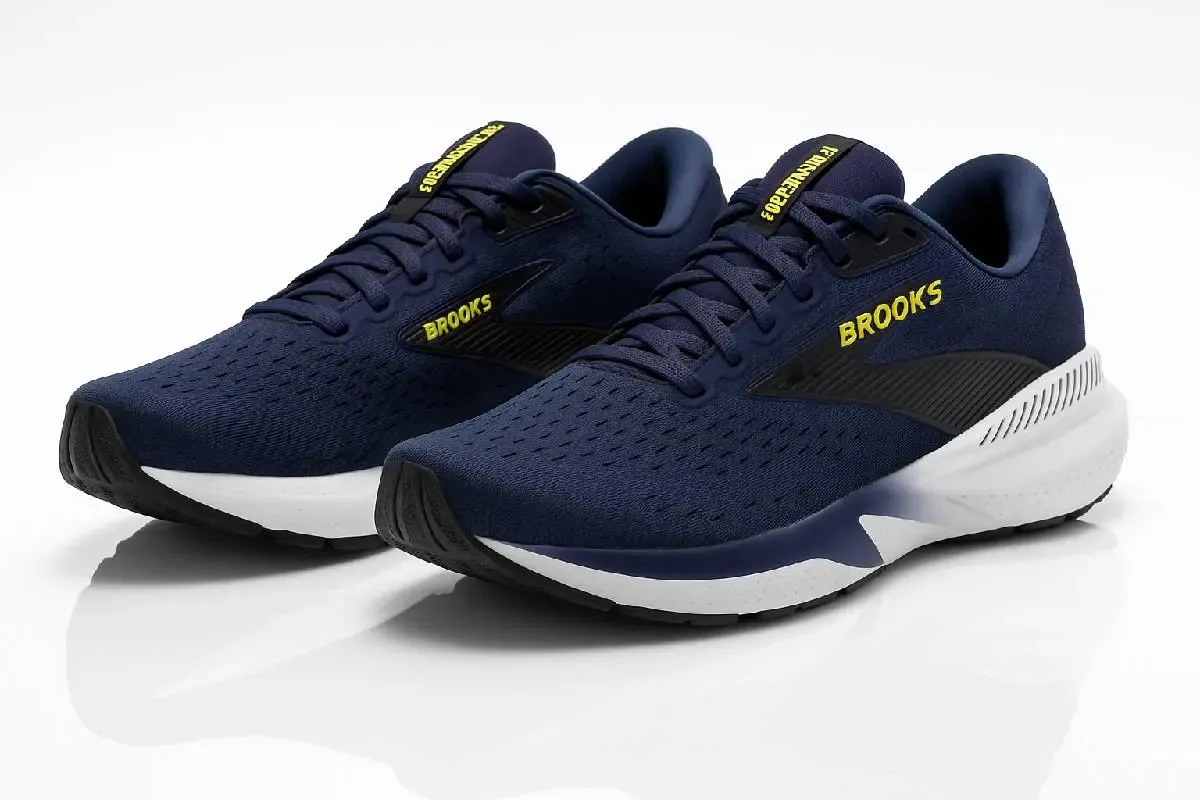
Adrenaline GTS 24
There is a reason the Brooks Adrenaline GTS has been a bestseller for over two decades. It is widely considered the best Brooks running shoe for flat feet because it offers support without feeling intrusive.
The Magic of GuideRails The secret weapon here is the GuideRails® holistic support system. Think of them like bumpers on a bowling lane. They don’t restrict your movement when you’re running efficiently, but the moment your form breaks down (usually as you get tired), they gently guide your body back into alignment. Combined with the new nitrogen-infused DNA LOFT v3 midsole, the Adrenaline GTS 24 feels surprisingly snappy and soft for a stability shoe.
| Feature | Spec |
|---|---|
| Weight | ~9.9 oz (283g) |
| Drop | 12mm |
| Best For | Flat feet, overpronators, knee pain relief |
Pros & Cons
- Pros: Adaptive GuideRails support kicks in only when you need it; available in four widths (Narrow to Extra Wide) to fit any foot shape; smoother heel-to-toe transitions than previous models.
- Cons: The high 12mm drop isn’t ideal for midfoot strikers; feels firmer than the neutral Ghost or Glycerin models.
Need a shoe that watches your back (and your knees)?
Brooks Beast GTS 24 and Ariel GTS 24: Maximum Motion Control
Sometimes, “stability” isn’t enough. If you are a severe overpronator or need maximum structure due to flat feet or higher body weight, you need a solid foundation. Enter the Brooks Beast GTS 24 (Men’s) and Brooks Ariel GTS 24 (Women’s).
These are the heavy-duty trucks of the Brooks lineup. They feature a significantly wider base and a straight last (shape) to prevent your foot from rolling at all. While they use the same DNA LOFT v3 foam as the lighter shoes, they pack it into a robust, structured frame designed for motion control.
| Feature | Spec |
|---|---|
| Weight | Beast: 12.4 oz / Ariel: 11.1 oz |
| Support Level | Maximum / Motion Control |
| Best For | Severe overpronation, heavy walkers, orthotic users |
Pros & Cons
- Pros: Unmatched stability for severe overpronators; extremely durable construction (often lasts 500+ miles); spacious toe box accommodates orthotics easily.
- Cons: Significantly heavier than other running shoes (feels like “wearing bricks” to some); bulky, utilitarian look; not suitable for speedwork.
Looking for the ultimate foundation for your feet?
Best Brooks Running Shoes for Speed: Tempo and Race Day
When you want to pick up the pace, you need shoes that work with you, not against you. For 2025, Brooks has refined its speed lineup to offer two distinct experiences: one for race day glory and one for the gritty training miles that get you there. Whether you are chasing a marathon PR or crushing intervals, these are the fastest Brooks racing shoes on the market.
Brooks Hyperion Elite 4: Carbon-Plated Performance
If you have a race number pinned to your chest, this is what you want on your feet. The Brooks Hyperion Elite 4 is built for pure speed. It uses the brand’s premier DNA Gold cushioning—a 100% PEBA foam that is ultra-light and incredibly bouncy.
The Secret Weapon: Carbon Fiber Plate Embedded within that super-foam is a full-length carbon fiber plate. This plate acts like a springboard, propelling you forward with every step while the GlideRoll Rocker geometry ensures snappy transitions. It’s designed to keep your legs fresh late in a marathon, making it the ultimate weapon for serious competitors.
| Feature | Spec |
|---|---|
| Weight | ~7.8 oz (221g) |
| Drop | 8mm |
| Best For | Marathons, Half-Marathons, 5K-10K Racing |
Pros & Cons
- Pros: DNA Gold PEBA foam delivers elite-level energy return; lightweight build disappears on foot; breathable upper designed for race-day heat.
- Cons: Durability is lower than daily trainers (typical for super shoes); premium price point ($250); outsole grip can wear down on rough surfaces.
Ready to smash your personal best?
Brooks Hyperion Max 3: The Fast Training Companion
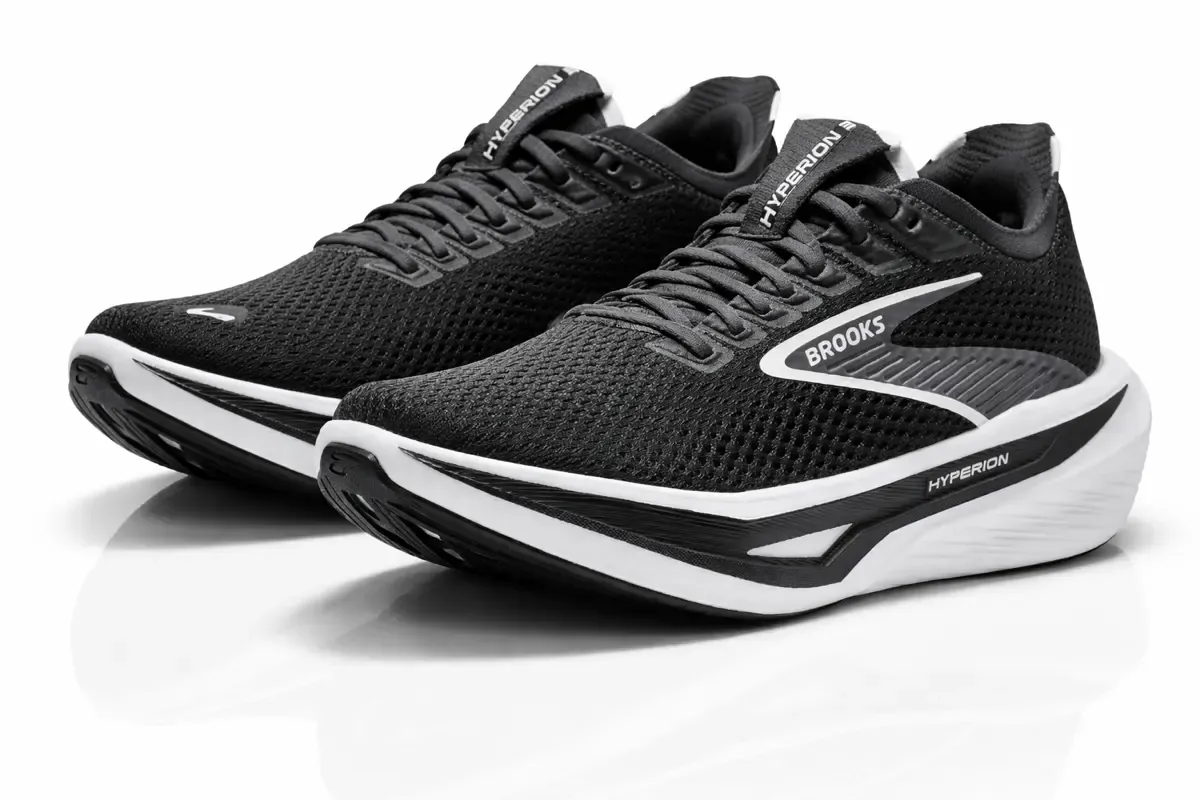
Hyperion Max 3
You can’t race every day, but you can train like it. The Brooks Hyperion Max 3 is the perfect “Super Trainer” to pair with the Elite. It’s built to handle high-mileage weeks while still feeling fast enough for tempo runs.
Dual-Foam Power This shoe uses a unique dual-layer midsole: a top layer of DNA Gold for plush comfort and a base layer of DNA Flash v2 for stability and durability. Sandwiched inside isn’t carbon, but a SpeedVault nylon plate that offers a snappy feel without the harsh stiffness of a pure racing shoe.
| Feature | Spec |
|---|---|
| Weight | ~9.9 oz (283g) |
| Drop | 6mm |
| Best For | Tempo runs, long fast runs, daily training |
Pros & Cons
- Pros: RapidRoll rocker encourages a quick turnover; DNA Gold layer provides a “super shoe” feel in a trainer; wide toe box allows for natural splay during long miles.
- Cons: Heavier than the Elite 4; stack height is high (46mm heel), which might feel unstable to some.
Need a shoe that can handle fast miles and long weekends?
Best Brooks Running Shoes for Trail and Walking
Not every run happens on perfectly paved roads. Sometimes the adventure takes you off-road, or your “marathon” is a 12-hour shift on concrete floors. Whether you are dodging roots on a technical trail or needing all-day support for work, Brooks has specialized tools for the job.
Brooks Cascadia 18: The Trailblazer
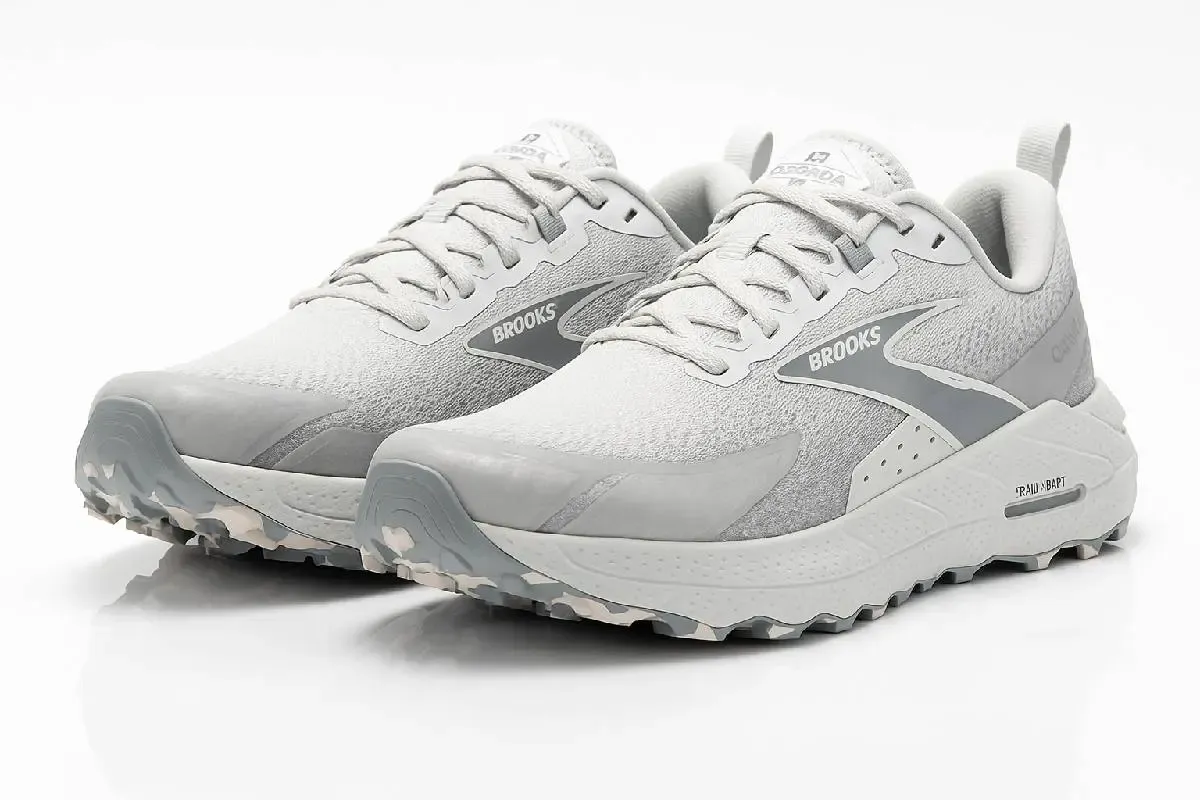
Cascadia 18
If the Ghost is the Toyota Camry of road running, the Brooks Cascadia 18 is the Land Rover of the trails. It is the gold standard for stability on uneven ground.
Why it wins: It uses the Trail Adapt System, which integrates a midsole, rock shield, and zonal outsole pods to give you control when the terrain gets sketchy. The EVA Articulated Ballistic Rock Shield protects your feet from sharp stones, while the TrailTack Green Rubber outsole (made with 25% recycled content) provides sticky grip on wet rocks.
| Feature | Spec |
|---|---|
| Weight | ~11.3 oz (320g) |
| Drop | 8mm |
| Best For | Technical trails, hiking, rocky terrain |
Pros & Cons
- Pros: Unmatched stability on technical terrain; rock shield offers superior protection; versatile enough for hiking and running.
- Cons: Heavier than many competitors; the ride is firm and lacks the “bounce” of softer shoes.
Heading into the wild?
Brooks Caldera 8: Max Cushion on the Dirt
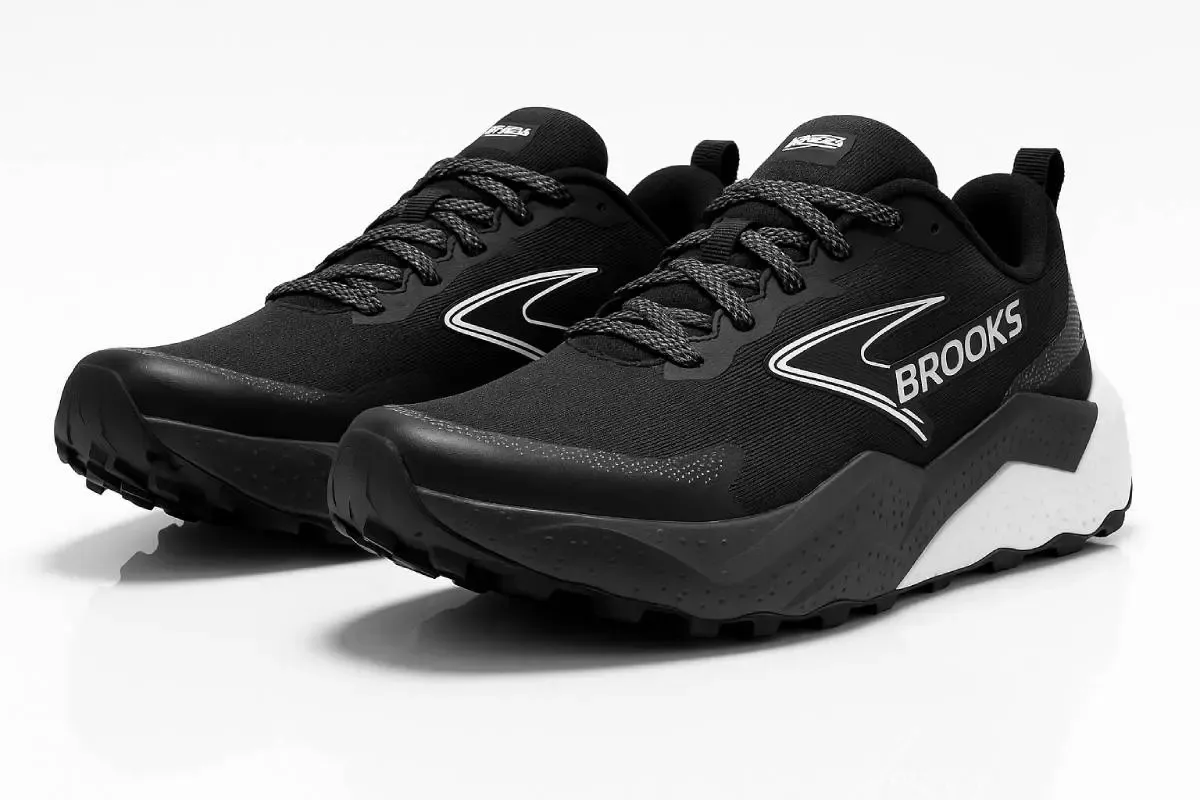
Caldera 8
For ultra-runners or those who want to float over the trails rather than feel them, the Brooks Caldera 8 is the answer.
Why it wins: It takes nitrogen-infused DNA LOFT v3 foam from the road (Glycerin) and adapts it for dirt. The result is massive cushioning that absorbs impact over long distances. Even with the high stack height, the raised sidewalls create a bathtub-like fit that keeps your foot stable.
| Feature | Spec |
|---|---|
| Weight | ~10.6 oz (301g) |
| Drop | 6mm |
| Best For | Ultra-marathons, long trail runs, high mileage |
Pros & Cons
- Pros: Exceptional plush cushioning for long hauls; wide base provides surprising stability; TrailTack Green outsole grips well.
- Cons: Can feel bulky and less nimble on technical sections; deep outsole grooves can trap mud.
Planning an ultra-adventure?
Best Brooks Shoes for Walking and Standing All Day
Running technology is surprisingly perfect for walking, but sometimes you need specific details for work or casual wear.
Brooks Addiction Walker 2: The Workhorse This isn’t just a shoe; it’s a medical device for your feet. It holds the APMA Seal of Acceptance and has a slip-resistant outsole certified for service environments.
- Best For: Nurses, service workers, and anyone needing maximum support (PDRB rollbar) for flat feet.
- Key Feature: Full-grain leather upper for durability and easy cleaning.
Brooks Revel 7: The Best Budget Brooks Running Shoe If you want one shoe to do it all (gym, short runs, coffee runs) without breaking the bank, this is it.
- Best For: Beginners, gym workouts, and casual wear.
- Key Feature: At just $100, it offers adaptive BioMoGo DNA cushioning and a sleek knit upper that looks good with jeans or shorts.
FAQs About the Best Brooks Running Shoes
Q: Which Brooks shoe is best for plantar fasciitis? For plantar fasciitis, you generally need two things: arch support and heel protection. The Brooks Ghost Max 2 is a top choice because its GlideRoll Rocker reduces stress on the heel and fascia by actively rolling you through your stride. If you also have flat feet or need stability, the Glycerin GTS 22 is excellent, offering maximum cushioning combined with GuideRails support to keep your foot properly aligned.
Q: What is the difference between Brooks Ghost and Adrenaline? The main difference is how they manage movement. The Brooks Ghost is a neutral shoe, designed for runners whose feet stay aligned or supinate (roll outward). The Brooks Adrenaline GTS is a stability shoe featuring GuideRails technology, making it ideal for runners who overpronate (feet roll inward) or need extra knee support. Think of the Adrenaline as a Ghost with bumpers.
Q: How many miles do Brooks running shoes last? Most Brooks running shoes are built to last between 300 and 500 miles (approx. 480–800 km). Factors like your weight, running surface, and the specific model affect this. For example, durable daily trainers like the Ghost 16 often hit the higher end of that range, while lightweight racing shoes like the Hyperion Elite 4 may lose their “pop” sooner, often around 250–300 miles.
Q: Do Brooks shoes run true to size? Generally, yes. However, running feet swell. A “true to size” fit for a casual shoe might be too tight for a run. It is widely recommended to go half a size up from your standard dress shoe size to allow for toe splay and swelling, especially in models like the Ghost Max 2 or Adrenaline GTS, where some users find the toe box snug.
Final Verdict: Choosing Your Perfect Brooks Pair
At the end of the day, the “best” running shoe isn’t about the highest tech or the biggest price tag. It’s the one that makes you forget you’re wearing shoes at all.
If you are looking for a do-it-all partner that never fails, the Brooks Ghost 16 remains the undisputed king of versatility. If your knees need a bodyguard, the Brooks Adrenaline GTS 24 offers the smartest support system on the market. And for those days when you just want to spoil your feet with cloud-like luxury, the Brooks Glycerin 22 is unmatched.
You’ve got the data, you know your foot type, and you’ve seen the reviews. The only thing left to do is lace up.
Sources
Brooks Shoe Finder toolBrooks cushioning and support technology
American Academy of Podiatric Sports Medicine