Short answer
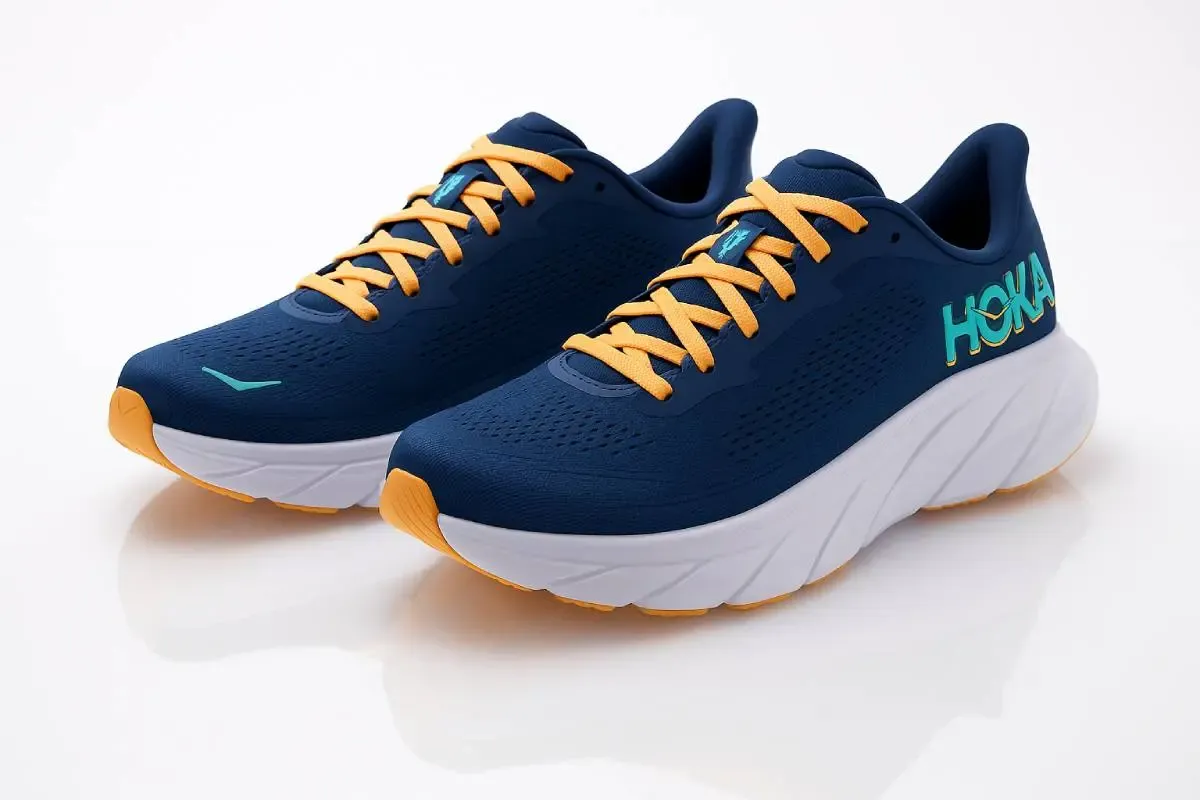
The Hoka Arahi 7 is a highly structured, moderate-stability daily trainer that aligns with true-to-size (TTS) physical internal length expectations, yet delivers a distinctly snug, performance-oriented fit. The re-engineered zonal flat-knit upper provides exceptional midfoot lockdown but offers virtually no lateral elasticity and will not stretch or loosen over time.
Runs true to size
Cross-sizing: what size to buy
Find a shoe you already own and read across to the Hoka Arahi 7 size to buy.
| Reference Shoe | US | EU | ||
|---|---|---|---|---|
| Your usual | Buy | Your usual | Buy | |
| Brooks Adrenaline GTS 23 / 24 | 10 | 10 (Wide 2E) or 10.5 | 44 | 44 (Wide 2E) or 44.5 |
| Hoka Clifton 9 | 10 | 10 (Wide 2E) or 10.5 | 44 | 44 (Wide 2E) or 44.5 |
| Saucony Guide 16 / 18 | 10 | 10 (Wide 2E) or 10.5 | 44 | 44 (Wide 2E) or 44.5 |
| Nike Performance / Pegasus | 10 | 10 (Standard D) | 44 | 44 (Standard D) |
-
Brooks Adrenaline GTS 23 / 24
Your usual Buy US 10 10 (Wide 2E) or 10.5 EU 44 44 (Wide 2E) or 44.5 -
Hoka Clifton 9
Your usual Buy US 10 10 (Wide 2E) or 10.5 EU 44 44 (Wide 2E) or 44.5 -
Saucony Guide 16 / 18
Your usual Buy US 10 10 (Wide 2E) or 10.5 EU 44 44 (Wide 2E) or 44.5 -
Nike Performance / Pegasus
Your usual Buy US 10 10 (Standard D) EU 44 44 (Standard D)
Fit Notes
- Brooks Adrenaline GTS 23 / 24
- Brooks models feature a significantly roomier horizontal toe box and a more relaxed, breathable upper. Switching to the standard Arahi 7 requires a half-size increase or a wide width to match the forefoot volume and prevent toe squeezing. Note the compensation factor: if you historically sized up in other shoes purely to gain width, you should return to your true length size in the Arahi 7 but opt for the dedicated Wide (2E) option to prevent misaligning the J-Frame stability wedge.
- Hoka Clifton 9
- The Clifton 9 is a neutral shoe featuring a softer, more accommodating engineered mesh upper and plush, bouncy cushioning. The Arahi 7 runs considerably narrower through the forefoot and feels firmer underfoot due to its stability mechanics. Most runners will need to opt for a wide configuration or step up a half size to maintain the relative forefoot volume and comfort level found in the Clifton.
- Saucony Guide 16 / 18
- Saucony's standard daily stability fit is historically wider and more accommodating through both the midfoot and forefoot. Because the Arahi 7 features a highly tapered 70.0 mm horizontal toe box compared to industry standards, Saucony wearers will feel cramped in their normal size unless they transition to an Arahi 7 wide width or increase by a half size in length.
- Nike Performance / Pegasus
- Nike running shoes tend to run inherently narrow and snug across categories. Runners transitioning from Nike models will find the length and high-tension midfoot lockdown of the Arahi 7 to be highly comparable, allowing for a direct 1-to-1 size match, though the Arahi provides slightly superior vertical toe box ceiling height.
Sizing FAQ
Does the Hoka Arahi 7 run true to size?
The Hoka Arahi 7 runs true to size in terms of physical internal length, but its general subjective fit profile is exceptionally snug and narrow. The updated zonal flat-knit upper does not stretch over its lifespan, meaning it locks the foot tightly in place to optimize midfoot security. Standard sizing is ideal for narrow-to-average feet, but anyone preferring a relaxed fit or experiencing initial tightness should immediately consider a wide width rather than expecting the material to loosen over time.
Is the Hoka Arahi 7 good for wide feet?
The standard (D) width configuration of the Arahi 7 is not recommended for wide feet due to its stiff, non-stretching flat-knit upper and aggressively tapered 70.0 mm horizontal toe box. However, it is an excellent choice for wide feet when purchased in its dedicated wide configuration (2E for men, D for women). It is critical to buy the wide version in your true length size instead of sizing up a half size in standard width, as increasing length shifts the internal flex point and misaligns the J-Frame arch support.
How is the arch support on the Hoka Arahi 7?
The Arahi 7 provides highly structured, active arch support via Hoka's patented J-Frame technology, which uses a firmer, J-shaped hook of compression-molded EVA foam on the medial side instead of a rigid plastic post. This creates a robust, supportive underfoot feel that requires a break-in period of roughly 25 miles (40 to 50 kilometers) to soften. Flat-footed runners or those with low arches may notice initial rubbing along the medial sidewall until the foam adapts to the foot's shape.