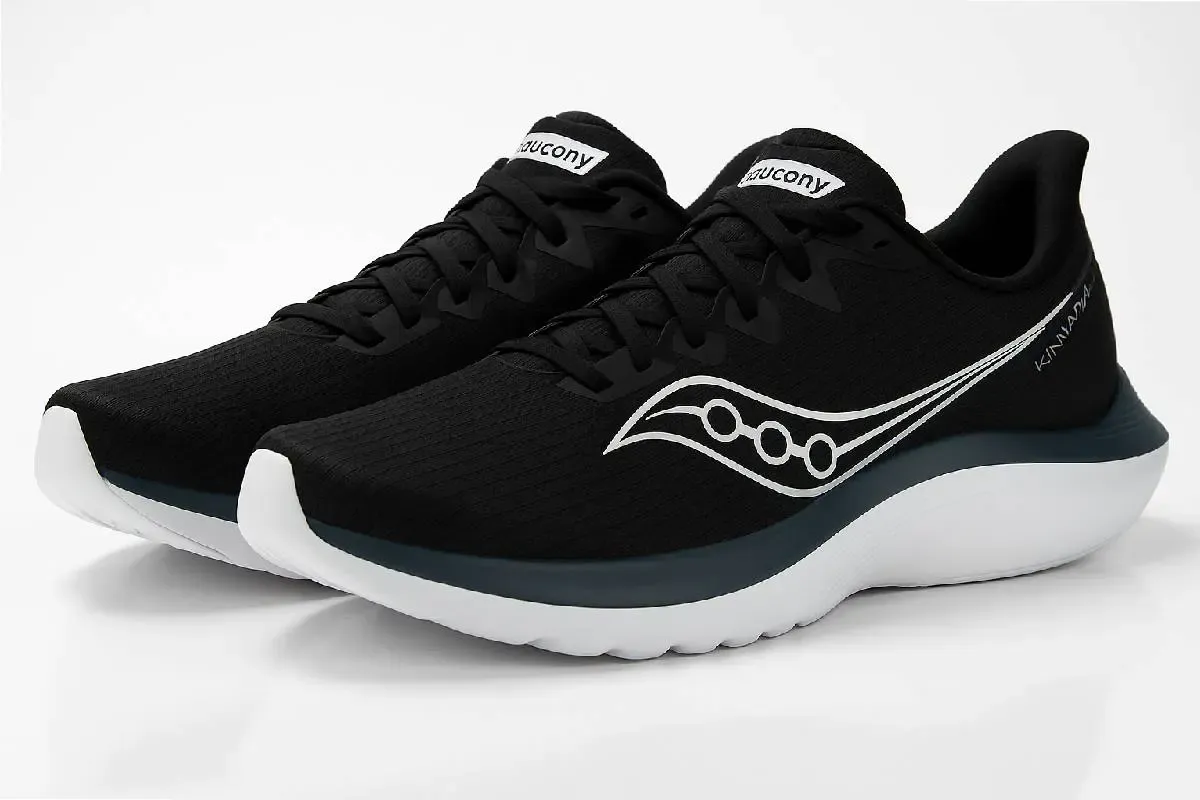
Founder & Lead Editor
Federico D'anna
Federico D'anna has spent 9 years reviewing sneakers with a methodology built on hands-on wear notes, side-by-side comparisons, and verified buyer feedback.
Learn more about Federico D'annaHighlights
Positive
- Incredibly lightweight and nimble on foot.
- Upgraded midsole is snappy, responsive, and perfect for speed.
Negative
- Outsole durability is a significant concern due to exposed foam.
Saucony Kinvara 16 Sizing & Fit Guide
The Saucony Kinvara 16 is a lightweight, low-profile trainer that delivers a highly secure, snug lockdown while fitting true to size (TTS) in physical length. However, it features an aggressively tapered toe box measuring just 70.8 mm at the big toe, which severely restricts natural toe splay and lacks lateral relief for wider foot profiles. Backed by a firmer PWRRUN midsole, this performance-driven shoe ensures an exceptional midfoot wrap but demands careful attention to width metrics, especially since its highly structured engineered mesh upper exhibits very limited elasticity over time.
Compare your current pair to find the best size match.
| Reference Shoe | Your Usual US | Buy in US | Your Usual EU | Buy in EU | Fit Notes |
|---|---|---|---|---|---|
| Hoka Mach 6 | 10.0 | 10.0 | 44 | 44 | Both models feature narrow, performance-oriented forefoots. While the Mach 6 has a slightly wider midfoot platform, its toe box is notoriously snug. Runners comfortable in the Mach 6's locked-in feel can safely purchase their regular true size in the Kinvara 16. |
| New Balance FuelCell Rebel v5 | 10.0 | 10.5 | 44 | 44.5 | The Rebel v5 features a roomier, highly flexible upper, a spacious toe box, and a soft, plush underfoot ride. The Kinvara 16's significantly narrower 94.0 mm forefoot and 70.8 mm tapered toe box will feel overly restrictive to a runner used to the Rebel's accommodating volume. Sizing up half a size helps reconcile this volume differential and provides necessary lateral relief. |
| ASICS Noosa Tri 16 | 10.0 | 9.5 or 10.0 | 44 | 43.5 or 44 | The Noosa Tri 16 has a low-volume upper and a prominent toe spring that makes the shoe feel short, forcing many runners to size up by a half or full size to wear socks comfortably. Because the Kinvara 16 is truer to standard length, runners who sized up in the Noosa Tri 16 as a compensation factor for length should drop down half a size (US 9.5 / EU 43.5) to return to their true length. Those who wore the Noosa sockless can maintain their standard size (US 10.0 / EU 44). |
| Nike Pegasus 41 | 10.0 | 10.0 | 44 | 44 | The Pegasus series traditionally runs narrow through the midfoot and heel. Because the Kinvara 16 shares this secure midfoot lock and snug forefoot design, runners can expect an identical fit profile and should purchase their standard true size without adjusting. |
Does the Saucony Kinvara 16 run true to size?
The Saucony Kinvara 16 runs true to size in terms of length, providing a highly secure, performance-oriented lock through the midfoot and heel. However, because of its narrow, tapered toe box (measuring just 70.8 mm at the big toe) and snug midfoot profile, runners with wider anatomical foot shapes or those who prefer a relaxed, daily training fit should consider sizing up a half size to prevent lateral friction and ensure comfort over longer distances.
Is the Saucony Kinvara 16 good for wide feet?
The standard D-width version of the Saucony Kinvara 16 is not recommended for wide feet due to its narrow midfoot base and tapered forefoot shape, which sits well below the industry average for daily running shoes. At initial launch, a wide-specific option was not offered in the retail lineup. Wide-footed runners should either select a half-size larger than standard to gain vertical and lateral clearance, or wait for wide-specific variants to be released.
How is the arch support on the Saucony Kinvara 16?
The Kinvara 16 is a neutral running shoe that does not contain structural arch supports, medial posts, or rigid shank plates. Instead, it provides a stable platform through its low-profile geometry (28.0 mm to 29.0 mm stack height), a flat forefoot rocker, and a firm 27.5 HA PWRRUN midsole that resists rolling or excessive deformation under load. This minimal setup relies on and actively helps develop the runner's intrinsic foot strength and natural arch stabilization.
Ready to experience the Saucony Kinvara 16 Review?
Get yours today with fast shipping from Amazon
The Saucony Kinvara line has been on a ride. For years it was the pick for runners who wanted to feel fast without a carbon plate, and who loved that connected “ground feel.” Then the 14 and 15 showed up and the shoe got bulkier, softer, and higher. In 2025, the Kinvara 16 feels like Saucony found the old recipe again. They stripped away the bulk and went back to the fast, low-profile, connected feel that made the Kinvara a favorite in the first place. This is the update loyalists have been asking for.
Quick Take
Overall Rating: 4.4/5
Best For: Neutral runners, Tempo runs, Speed workouts, Daily training (up to half marathon)
Key Strengths: Return to classic low-profile/flexible feel, Ultralight design, Responsive "snappy" ride, Affordable price point
Notable Limitations: Significant outsole durability concerns
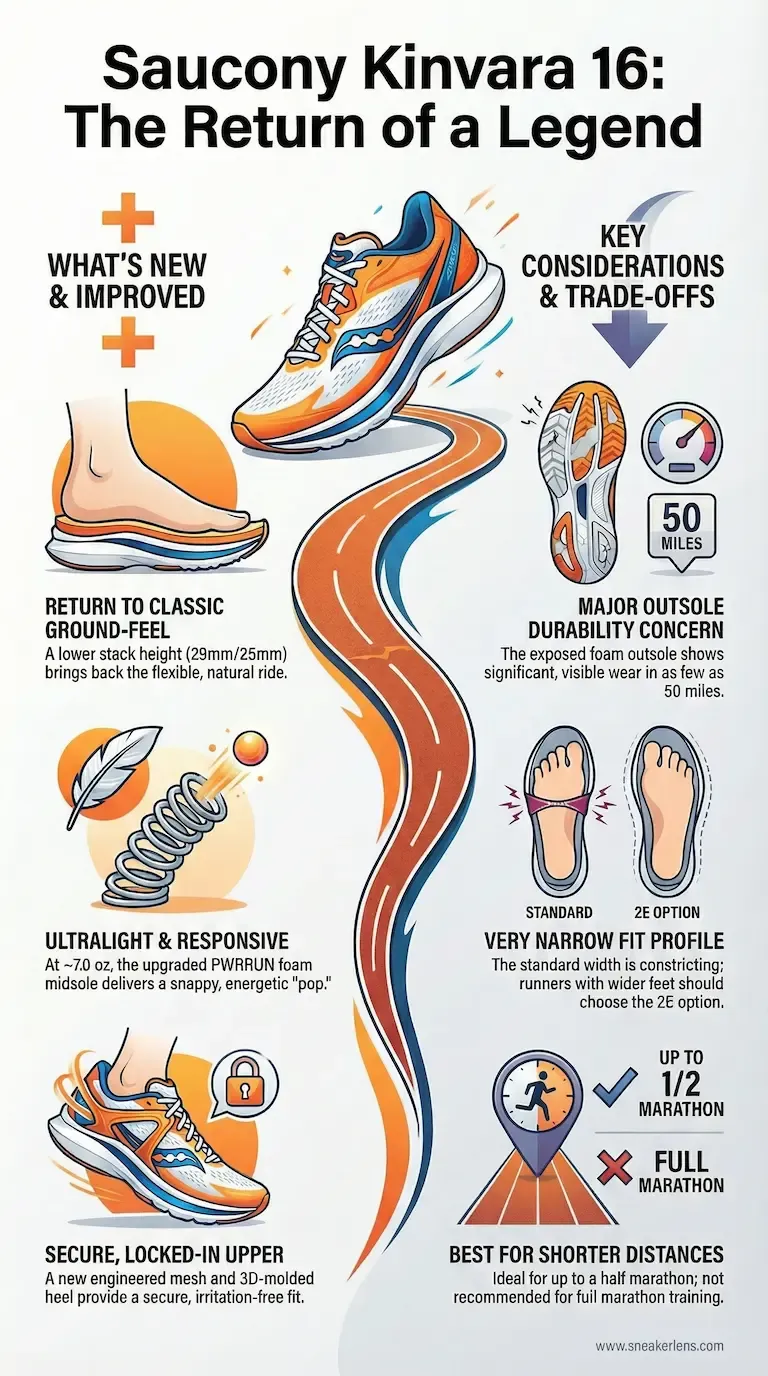
Visual Snapshot Summary
What Makes Kinvara 16 Stand Out?
The headline is the “return to roots.” If you loved the Kinvara 13 (or earlier) and felt like the 14 and 15 lost the plot, this is the comeback shoe. Saucony listened. Stack height is back down to 29mm heel and 25mm forefoot, which brings back that flexible, natural ground feel.
But it's not just a throwback. They also upgraded the engine. The new PWRRUN foam blend is a real step up. Saucony claims 3% more energy return and better abrasion resistance. On foot it feels snappier, with a nice “pop” without going mushy.
And the weight? It's basically gone. At approximately 7.0 oz for a men's size 9, it's ridiculously light. This thing is a scalpel for speed days, tempo runs, and even daily training if you like a light shoe. It's a no-gimmicks trainer that does the job, and at $130 it stays in the “reasonable” lane.
As one runner perfectly summed it up: "Finally, the Kinvara is back! This feels like the 13, light, fast, and responsive. So glad they went back to what made it great."
Real Customer Experiences
The buzz online is pretty clear. People are either celebrating the return, or (you guessed it) complaining about the outsole.
- The "Pop" is Real and Appreciated: A lot of runners praise the updated PWRRUN midsole. The consensus is that it feels firmer (in a good way) and much snappier than the “squishy” Kinvara 15. It gives that “noticeable pop” when you decide to pick up the pace.
- A Fantastic, Locked-in Upper: Across the board, people are happy with the upper. The new engineered mesh, combined with the gusseted tongue and that 3D-molded heel cup, is getting high marks. It provides a secure, comfortable, and irritation-free lockdown. No hot spots, no rubbing, no blisters. It just works.
- Narrow Fit and... "Garish" Colors? A couple of recurring gripes. First, the fit. While secure, many find the standard D-width to be quite narrow through the midfoot and toe box, causing issues for those with wider feet. Second, a slightly funny one: the colors. Some users are not fans, calling them "garish" and wishing for more simple, neutral options.
Here are a couple of quotes that really capture the feeling:
"The upper is fantastic, really breathable and locks my foot down without any hot spots."
"It's definitely a narrow shoe. My wider feet felt a bit cramped, especially after 8-10 miles."
Design and Build Quality
Let's get under the hood. Saucony made some very specific, very deliberate choices with the Kinvara 16.
- Upper: The Kinvara 16 uses a new, breathable engineered mesh. It's lightweight and secure, which is the job here. In hand it can feel a bit “plastic-like,” but this isn't a luxury cruiser—it's a lightweight speedster. That feel looks like the trade-off for cutting weight and boosting strength. A lot of runners had issues with the “weak mesh” of the Kinvara 14, with toes punching through, and this upper is meant to fix that. Between the 3D molded heel cup and the gusseted tongue, lockdown is solid with minimal slipping.
- Midsole: This is where the magic (and the "return") happens. We're looking at an upgraded PWRRUN foam blend. It's sitting on a lower stack of 29mm in the heel and 25mm in the forefoot. This gives you that classic, beautiful 4mm drop, which is the absolute key to the Kinvara's "ground feel" philosophy. The geometry is also updated with lower sidewalls and a straighter medial midfoot, which all just means it's designed for smoother transitions and comfort.
- Outsole: ...And here's the catch. The compromise. The Achilles' heel. To save all that weight, the outsole is almost all exposed PWRRUN foam. There are two tiny patches of XT-900 carbon rubber in high-wear zones (one on the medial forefoot, one on the lateral heel), but that's it. This is the shoe's single biggest weakness, and we'll talk more about that in the durability section.
- Weight: It's a featherweight. I mean, it's just so light. A men's size 9 is around 7.0 oz (206g), with some sources listing 7.3 oz. The women's is a ridiculous 6.3 oz (179g). You barely feel it on your foot, which is exactly what you want when you're trying to turn your legs over quickly.
Comfort and Fit
Fit and feel are pretty specific here. Sizing is generally true to size, so stick with your normal running shoe size. Step-in feel is surprisingly friendly thanks to the SRS sockliner, which gives a softer first impression than you might expect from a “ground feel” trainer.
The ride itself isn't “plush,” though. Don't expect a Hoka Clifton or a Saucony Triumph. The Kinvara 16 feels responsive and slightly firm. It's built for a connected-to-the-road sensation, not a squishy bounce. You feel what's under you, which is great for proprioception and for feeling quick.
Love the comfort features?
See current availability and pricing
Now, the main issue, as I mentioned, is the width profile. The standard model is narrow. I'm talking noticeably narrow, especially through the midfoot and into the toe box. If you have even slightly wide feet, or your feet swell a lot on runs, you must try the wide (2E) option. Thankfully, one exists.
The good news? There's virtually no break-in period required. That engineered mesh upper is comfortable, breathable, and provides a distraction-free experience right out of the box.
One reviewer captured the foam's feel perfectly: "The updated PWRRUN foam gives it a nice pop. It's firm but not harsh, perfect for my tempo runs."
Style and Versatility
The Kinvara 16 isn't a fashion shoe, but it isn't ugly either. The simple, low-profile shape just looks fast. It's made for speed and movement, not streetwear content. But because it stays low and light, it can still work as a fun casual shoe—kind of like the running-shoe equivalent of a classic hot hatch.
The "plastic-like" engineered mesh is very, very open and ventilated, which some reviewers found aesthetically less appealing. But it's functional, and that's the point. The colorways... yeah, they're loud. Launch colors include "White/Citron," "Teal/Mutant," and "Citron/Black". They're bright and in-your-face. As we saw in the customer feedback, many users are already asking for more simple or neutral options, calling the current ones "garish".
Where this shoe really shines, though, is its versatility. This is its core strength. It's fantastic for tempo runs, speed workouts, intervals on the track, and can comfortably serve as a daily trainer for runs up to about a half marathon. It's that one shoe you can pack for a weekend trip and know it'll cover your easy run, your workout, and even walking around town.
Quality and Durability
Let's talk about the elephant in the room. The Kinvara 16's upper and midsole quality look like a clear step up from recent years. The upgraded PWRRUN foam is described as “tougher against daily wear,” which is a good sign for midsole longevity. More importantly, the new engineered mesh is meant to be stronger than the flimsy “weak mesh” of the Kinvara 14 that was notorious for tearing. In those two areas, the build looks improved.
But—and this is a massive but—the outsole durability is a major, major concern. This is not a new problem for the Kinvara line, but it's very pronounced here. The decision to save weight by using almost all exposed foam is the shoe's Achilles' heel. This is where the budget price and ultralight weight show their true cost.
Experts and early users are reporting significant, visible wear on the foam after just 50 miles. Some have even posted pictures of noticeable degradation after a single 5-mile run. This is the trade-off. You can't have a 7.0 oz shoe with a beefy rubber outsole; it just doesn't work that way. The expected lifespan for this shoe is probably in the 250-300 mile range, and that's if you're a lighter runner and stick to smooth pavement. If you're a heavy lander or run on rough asphalt, you will shred this outsole.
As one user bluntly stated in a review: "The outsole wear is a real concern. After only 50 miles, the exposed foam is already showing significant degradation."
Decision Matrix
| Scenario ↓ / Criterion → | Comfort | Breathability | Rain/Grip | Style |
|---|---|---|---|---|
| Daily Training (Short) | ✓ | ✓ | ✓ | ○ |
| Tempo/Speed Workouts | ✓ | ✓ | ✓ | ○ |
| Long Runs (Marathon+) | ○ | ✓ | ✓ | ○ |
Legend: ✓ = Good ○ = Average ✕ = Poor
Further Reading
Who Should Buy
Perfect For
- Neutral runners: This is a neutral shoe, period. No stability features here.
- Ground-Feel Fans: Runners who want a lightweight, flexible, and responsive shoe. If you hate feeling disconnected from the road, this is for you. That 4mm drop is the key.
- Speed Demons: Anyone needing a dedicated, non-plated shoe for speed-oriented training like tempo runs, intervals, and track workouts. It's also great for daily training up to a half marathon.
- Value-Conscious Runners: If you want 90% of the "fast" feeling without the $180-$250 "super shoe" price, this is your ticket.
- The Kinvara Loyalists: Long-time fans of the Kinvara 13 (and earlier) who missed the classic feel. This is your welcome-home party.
Consider Alternatives If
- Stability-Needing Runners: If you overpronate, look elsewhere. This shoe has no stability features and will not help you.
- Max-Cushion Lovers: Anyone who prefers a highly cushioned, plush, or "maximalist" ride. This shoe will feel firm and harsh to you. You want a Triumph or a Clifton, not this.
- Marathon Runners: Heavier runners, or really anyone looking for a single shoe to take them through a full marathon, should probably pass. The lower stack and firmer foam just won't provide enough protection for 26.2 miles for most people.
- The High-Mileage Crew: Runners who expect 400, 500, or 600 miles from their daily trainers. You will be sorely disappointed when you see the outsole at 150 miles.
- Wide-Footed Runners (in Standard): Runners with very wide feet will find the standard D-width too constricting. You must seek out the 2E wide option.
Final Verdict
You know what? The Saucony Kinvara 16 is an apology letter to its long-time fans, and it's one we gladly accept. It marks a triumphant return to the lightweight, responsive, and natural-feeling shoe that so many runners loved. It's a fantastic, versatile, and affordable option for tempo days, speedwork, and daily miles. But—and you knew this was coming—that "pro" comes with a major "con": the outsole durability is a real gamble. If you want a fast, fun, "no-gimmicks" shoe and can accept a 250-300 mile lifespan, this is one of the best value-for-performance shoes of the year.
Browse our full Saucony collection to find your perfect pair.
As an Amazon Associate we earn from qualifying purchases. This helps support our site so we can keep bringing you the best content!
Frequently Asked Questions
Is the Saucony Kinvara 16 good for marathon running?
Does the Saucony Kinvara 16 have durability issues?
Is the Saucony Kinvara 16 soft or firm underfoot?
Related Reviews
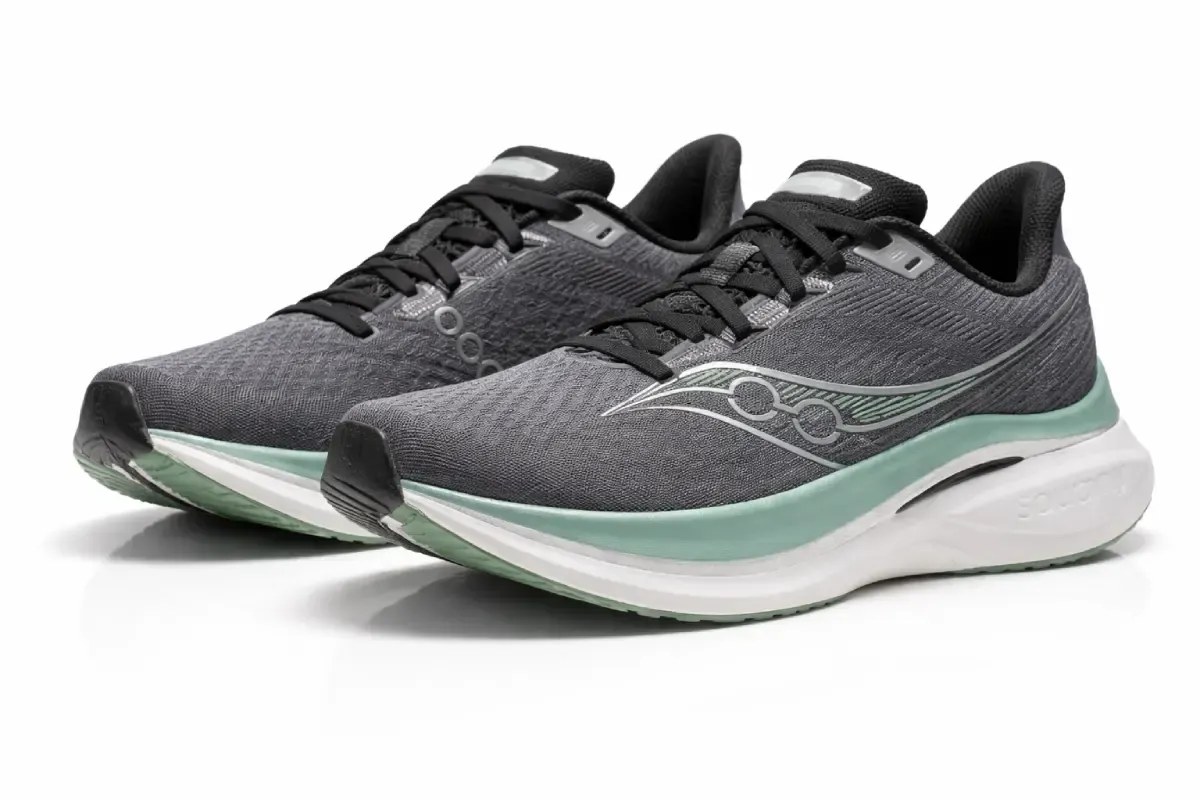
Saucony Endorphin Speed 5 Review
Saucony Endorphin Speed 5 Review: A versatile, durable performance trainer with a carbon plate. Discover why it's the top choice for daily speed.
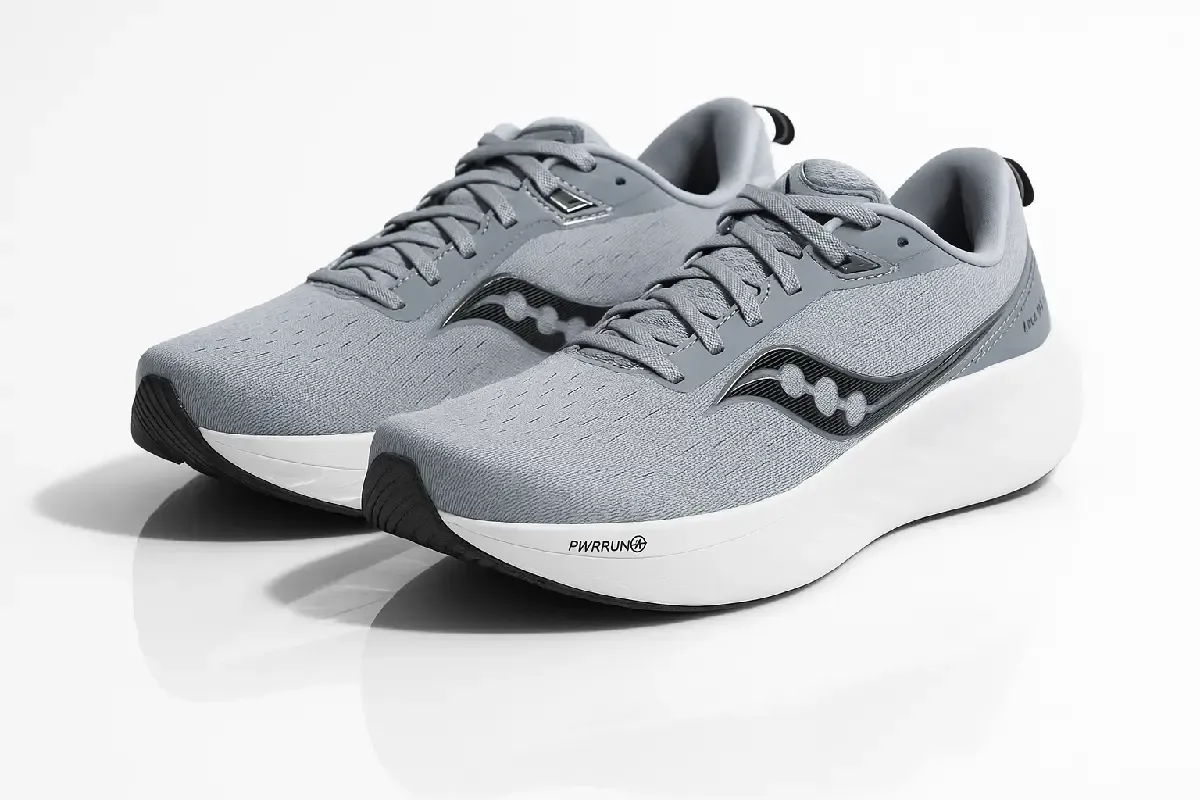
Saucony Triumph 22 Review
Read our in-depth Saucony Triumph 22 review. We analyze the new PWRRUN PB midsole, durability, and fit. Is this max-cushion trainer right for you?
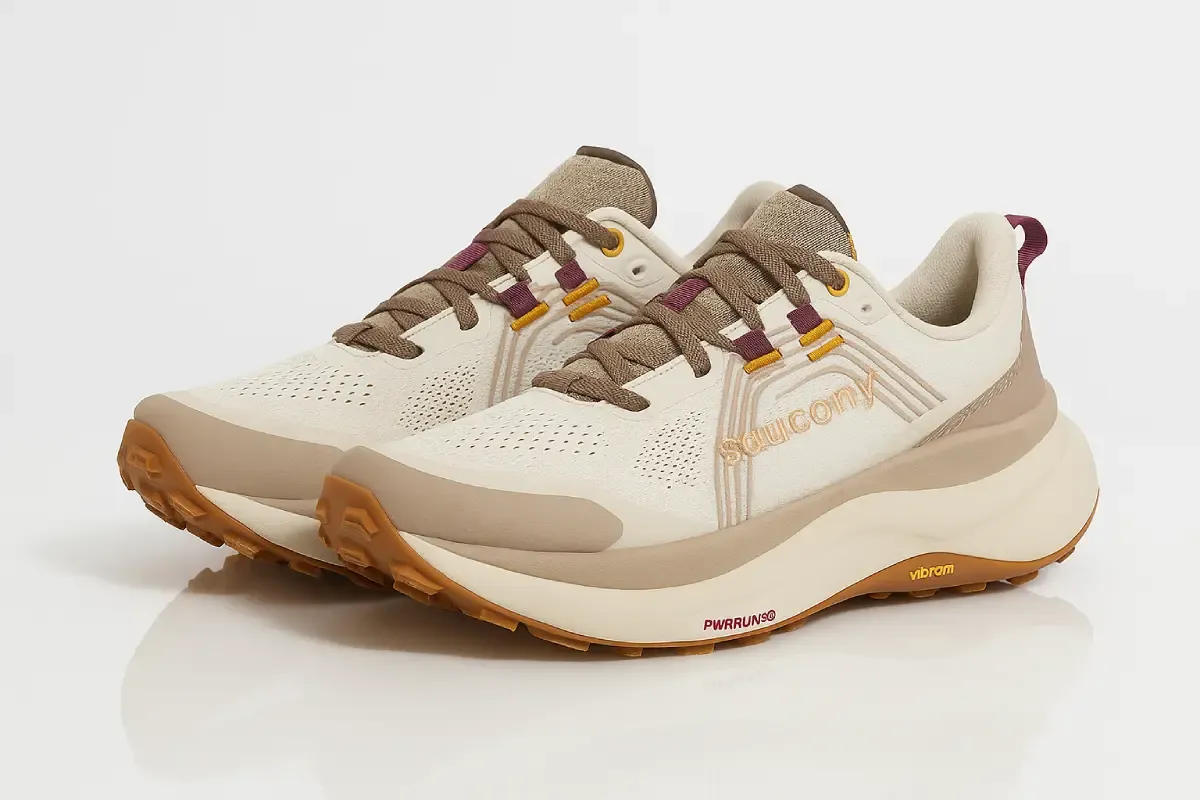
Saucony Xodus Ultra 4 Review
A detailed review of the Saucony Xodus Ultra 4. Is this the ultimate long-distance trail shoe? We test the grip, cushioning, and durability.
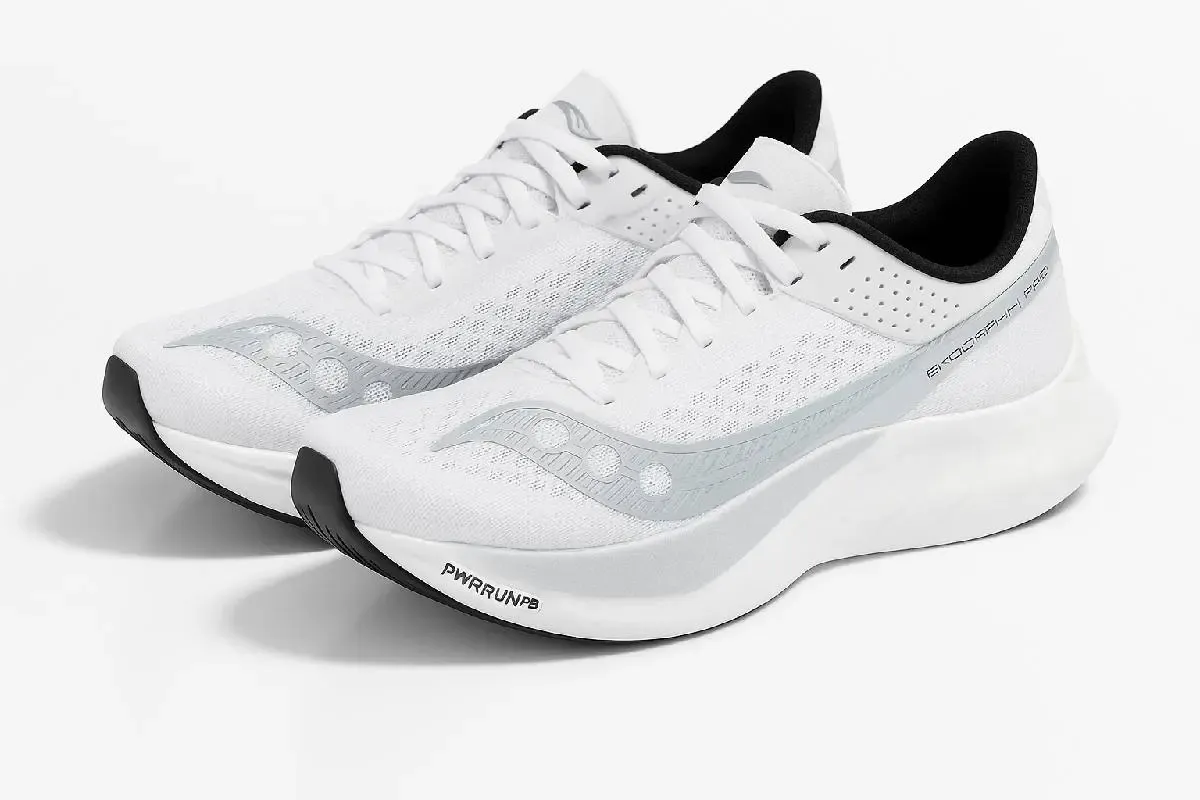
Saucony Endorphin Pro 4 Review
Get an in-depth review of the Saucony Endorphin Pro 4. Is this durable, comfortable, and versatile carbon-plated racer the right supershoe for you?
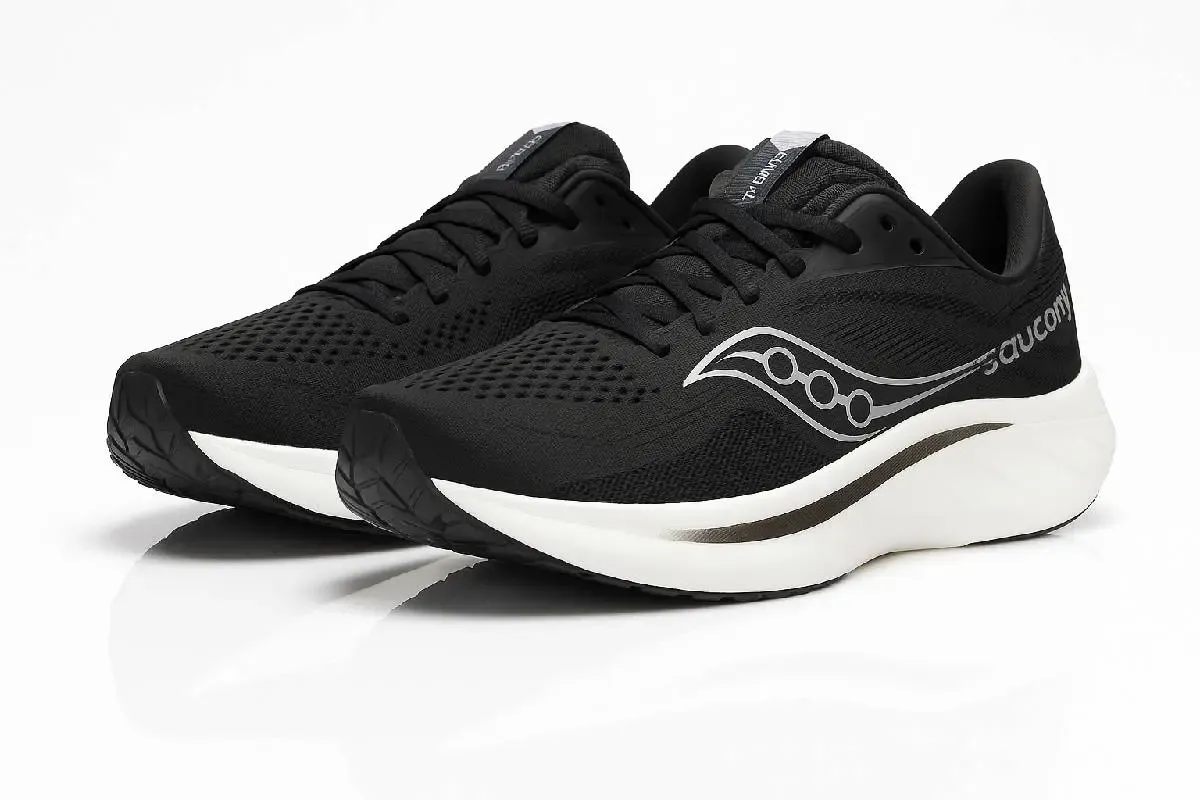
Saucony Ride 18 Review
An in-depth review of the Saucony Ride 18 running shoe. Learn about its new PWRRUN+ midsole, upgraded upper, performance, and who it's best for.
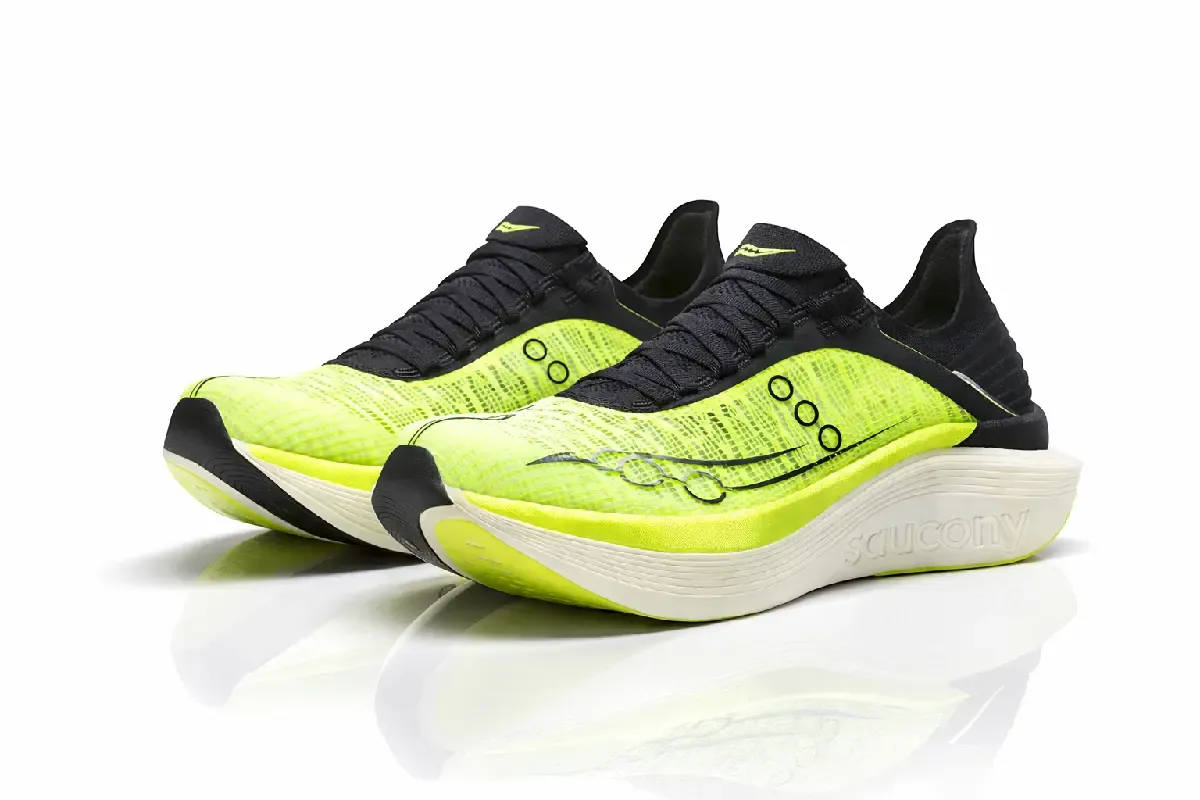
Saucony Endorphin Elite 2 Review
Saucony Endorphin Elite 2. A detailed look at the plush, carbon-plated racer. See how it stacks up against Nike & Adidas for marathon speed.