Founder & Lead Editor
Federico D'anna
Federico D'anna has spent 9 years reviewing sneakers with a methodology built on hands-on wear notes, side-by-side comparisons, and verified buyer feedback.
Learn more about Federico D'annaHighlights
Positive
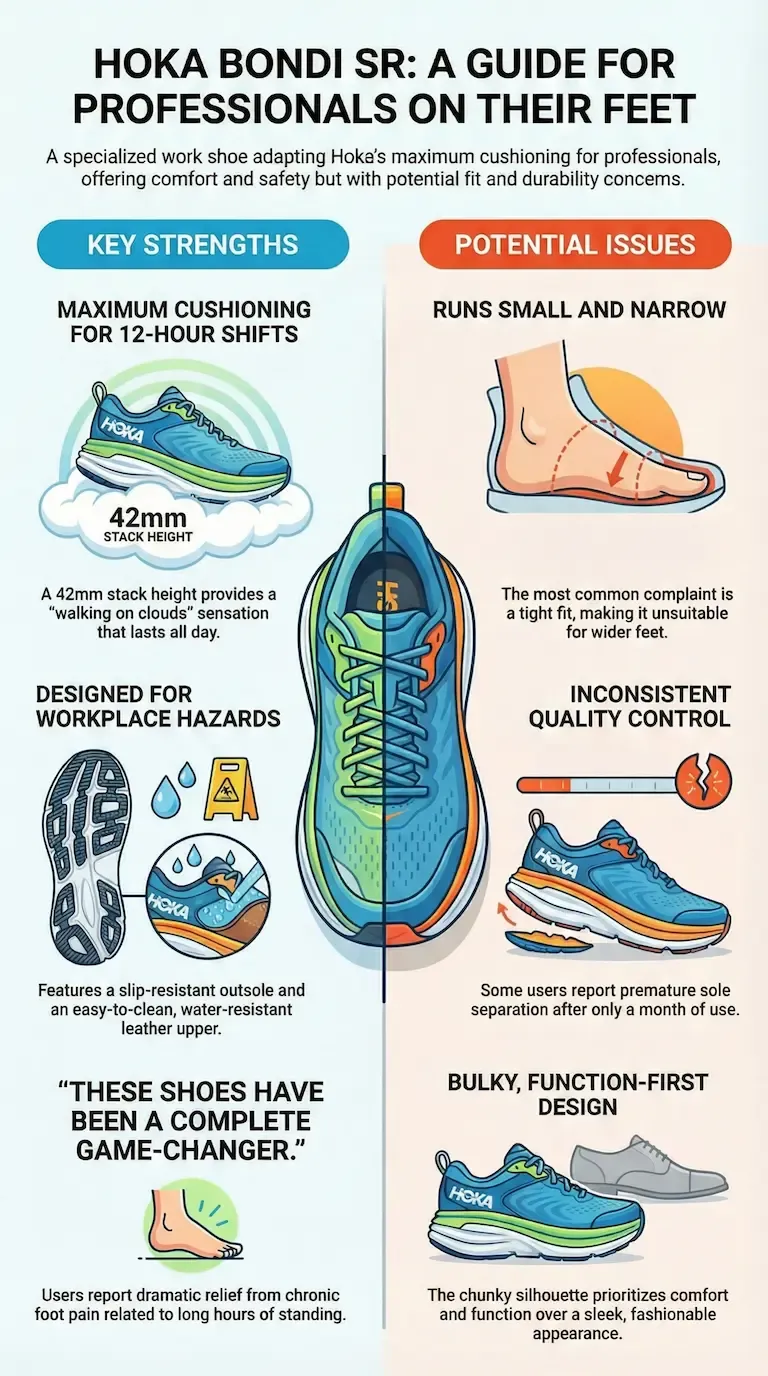
- The 42mm stack height provides amazing cushioning that lasts through entire 12-hour shifts.
- The water-resistant leather upper has survived countless spills and is super easy to wipe clean.
Negative
- For professionals with wider feet or those needing room for orthotics, the Bondi SR's narrow fit creates an uncomfortable and sometimes painful experience.
Hoka Bondi SR Sizing & Fit Guide
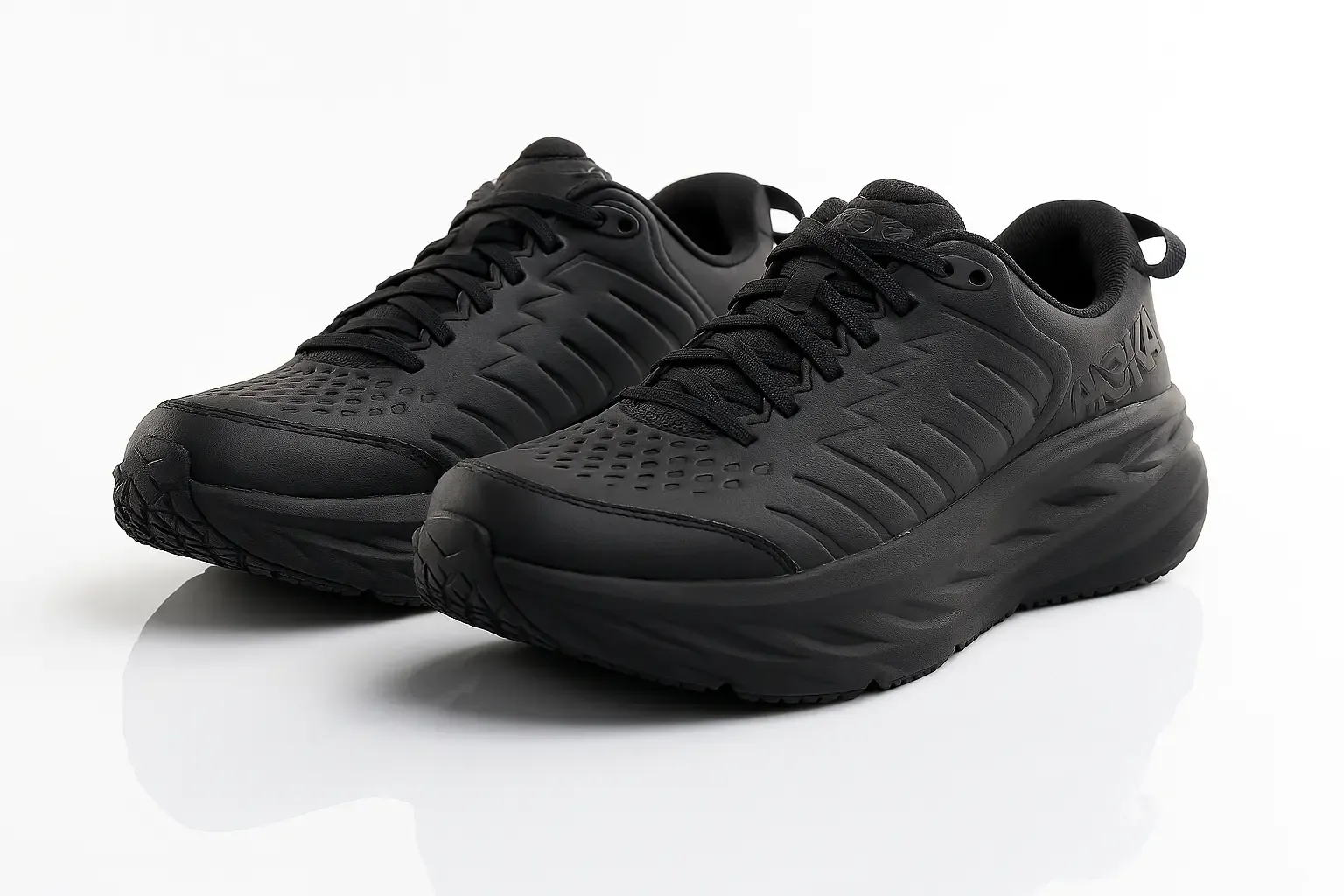
The Hoka Bondi SR represents a highly specialized, occupational adaptation of Hoka’s signature maximalist platform, engineered specifically for professionals requiring a protective and supportive work shoe. Sizing metrics indicate that the shoe generally fits true to size (TTS) in terms of linear length, but its overall volumetric fit profile is heavily restricted by its material construction. Unlike traditional performance models that utilize flexible mesh, the Bondi SR features a rigid, water-resistant leather upper with virtually no elasticity, creating an exceptionally snug midfoot lock and a stiff initial feel. This lack of stretch becomes critical when managing occupational lower-limb edema, as prolonged standing causes the foot to expand over long shifts. Because the rigid shell does not provide natural lateral relief, the toe box can feel highly constrictive as the day progresses, necessitating careful consideration of alternative widths or sizing adjustments to avoid forefoot compression.
Compare your current pair to find the best size match.
| Reference Shoe | Your Usual US | Buy in US | Your Usual EU | Buy in EU | Fit Notes |
|---|---|---|---|---|---|
| Hoka Bondi 8 / 9 | 10.0 Men / 8.0 Women | 10.5 Men / 8.5 Women (or 10.0M / 8.0W in Wide) | 44.0 Men / 39.0 Women | 44.5 Men / 39.5 Women (or 44.0M / 39.0W in Wide) | The standard Bondi 8 and 9 rely on a highly breathable, flexible engineered mesh upper that stretches dynamically to accommodate natural foot expansion. In contrast, the Bondi SR features a water-resistant leather upper that does not stretch, resulting in a tighter, more constricting volumetric hold. To ensure adequate room for length and width without causing compression, sizing up a half-size or moving to the dedicated wide configuration is highly recommended. |
| Brooks Ghost / Ghost Max | 10.0 Men / 8.0 Women | 10.0 Men / 8.0 Women (in Wide) | 44.0 Men / 39.0 Women | 44.0 Men / 39.0 Women (in Wide) | Brooks models feature an inherently wider anatomical toe box and are known to run slightly short, which often leads runners to choose a half-size larger than standard dress shoes. While standard Hokas match closely in length, the Bondi SR last is noticeably narrower and stiffer through the midfoot. To replicate the relaxed toe splay and spacious forefoot of a Brooks Ghost, you should keep your true length but transition into the wide configuration to gain lateral relief without introducing heel slippage. |
| Nike Air Force 1 | 10.0 Men / 8.0 Women | 10.5 to 11.0 Men / 8.5 to 9.0 Women | 44.0 Men / 39.0 Women | 44.5 to 45.0 Men / 39.5 to 40.0 Women | The Nike Air Force 1 is a roomy lifestyle shoe that runs notoriously large, causing most wearers to size down a half-size for a secure fit. Conversely, the Hoka Bondi SR is loaded with dense padding and wrapped in a rigid leather shell. If you try to match your AF1 size, you will experience severe toe-box pressure and painful compression; sizing up a half to a full size is mandatory to secure proper length and volume. |
| Skechers Work / Arch Fit | 10.0 Men / 8.0 Women | 10.5 Men / 8.5 Women (or 10.0M / 8.0W in Wide) | 44.0 Men / 39.0 Women | 44.5 Men / 39.5 Women (or 44.0M / 39.0W in Wide) | Skechers work models utilize highly forgiving, pliable upper materials that offer immediate mechanical stretch and a relaxed width profile out of the box. The structured, non-porous leather shell of the Hoka Bondi SR does not yield or adapt immediately. To maintain full comfort during long occupational shifts and prevent severe toe-crowding as natural swelling occurs, a half-size increase or a wide fitting is essential when moving from Skechers. |
Does the Hoka Bondi SR run true to size?
The Hoka Bondi SR generally tracks true to standard linear length measurements, but its specialized materials significantly alter how it fits. Because the water-resistant leather upper is rigid and lacks tensile elasticity, the interior volume feels noticeably tighter and more restrictive than standard mesh running shoes. While purchasing your standard size is appropriate for brief, casual walking, healthcare, service, and industrial shift workers who spend 8 to 12 hours on their feet are strongly advised to size up a half-size. This half-size increase functions as a vital buffer against occupational lower-limb edema (swelling) and stops the toes from repeatedly impacting the front tip of the shoe during long work shifts.
Is the Hoka Bondi SR good for wide feet?
In its standard medium configurations (D-width for men, B-width for women), the Hoka Bondi SR runs narrow through the midfoot and toe box because the structured leather upper does not stretch or yield over time. However, Hoka addresses this limitation by offering the shoe in dedicated wide variants (2E for men, D for women). Individuals with wide feet, prominent bunions, a high instep, or Morton's neuroma should avoid simply purchasing a larger size in length, as excessive length can disrupt the alignment of the early-stage Meta-Rocker sole and cause heel slippage. Instead, wide-footed professionals should select their true length in the dedicated wide configuration to ensure proper arch placement and comfortable toe splay.
How is the arch support on the Hoka Bondi SR?
The Hoka Bondi SR provides a neutral, highly stable foundation backed by a massive compression-molded EVA foam midsole and a wide, flared base footprint. This wide geometric platform inherently resists ankle rolling and effectively reduces plantar pressures, making it excellent for alleviating symptoms of plantar fasciitis, heel spurs, or joint pain. The stock, removable foam footbed delivers moderate, soft arch contouring. For individuals with severe overpronation or flat feet who require rigid, targeted orthopedic support, the factory insole can be easily swapped for custom medical-grade orthotics. However, because aftermarket inserts are often thicker, they consume valuable vertical space inside the midfoot, reinforcing the recommendation to compensate by selecting a wide width or a half-size larger to prevent painful downward pressure against the tongue.
Ready to experience the Hoka Bondi SR Review?
Get yours today with fast shipping from Amazon
You know that feeling after a 12-hour shift when your feet are throbbing so badly you don’t even want to walk to the fridge? Nurses, line cooks, and retail warriors know it well. And honestly, that’s exactly what the Hoka Bondi SR is built for. This isn’t a typical running shoe. It’s a tank built on a cloud for the grind of real work floors.
Here’s the deal: the Bondi SR takes the big, marshmallow-like cushioning from the Bondi running line and pairs it with a slip-resistant outsole and a water-resistant leather upper. Released in August 2021, it quietly became the go-to for people who stand on concrete for a living. It might look like something your dad would mow the lawn in (1994 vibes), but there’s a reason you see them on hospital floors from Seattle to New York.
Quick Take
Overall Rating: 4.3/5
Best For: Nurses, Chefs, Hospitality Workers, Retail Staff, Plantar Fasciitis sufferers.
Key Strengths: Unparalleled cushioning, certified slip resistance, water-resistant upper.
Notable Limitations: Heavy, limited breathability (runs hot), bulky aesthetic, high price point.
Visual Snapshot Summary
What Makes Hoka Bondi SR Stand Out?
Most work shoes fall into two buckets: hard-as-rock clogs that last forever but punish your knees, or cheap non-slip sneakers that feel like cardboard after a few months. The Hoka Bondi SR stands out because it doesn’t compromise on cushioning. It uses a maximalist EVA midsole that’s softer and thicker than the average walking shoe, around 40% softer in some lab tests.
But the real reason you buy this shoe is the "SR" part: Slip Resistant. Hoka didn’t just add random texture to the bottom. They built an outsole designed to meet strict industry standards (ASTM F2913-19) for wet, oily, and soapy surfaces. It’s basically snow tires for a greasy kitchen floor. Pair that with a Meta-Rocker shape that rolls you through your stride and you get a shoe that genuinely changes how your body handles a long shift. It’s bulky, yes, but it’s functional bulk meant to keep you upright and reduce pain.
"The plush, oversized EVA midsole provides unparalleled shock absorption, significantly reducing fatigue and alleviating pain in the feet, knees, ankles, and lower back."
Real Customer Experiences
To get a real sense of this shoe, I dug through reviews from nurses, servers, and postal workers. Here’s the general vibe:
- Pain Relief is Real: The most consistent feedback is the reduction in bodily wear and tear. People with plantar fasciitis frequently mention this shoe as a "cure" for their daily pain.
- The "Sauna" Effect: A common complaint is that the leather upper, while great for spills, doesn't breathe. Your feet are going to get warm, especially if you are running around a hot kitchen.
- Sizing Sweet Spot: Most people find them true to size, but the wide toe box is a massive hit for people whose feet swell after 10 hours of standing.
Here is what actual users are saying:
"I'm a nurse and work 12+ hour shifts. These shoes are like walking on clouds. My feet and back don't hurt anymore after work. They are worth every penny." — Zappos Customer Review
"The slip resistance is no joke. I work in a kitchen with grease and water on the floor constantly, and I feel completely stable. They are a bit clunky, but I'll take clunky over slipping any day." — Hoka.com Reviewer
Design and Build Quality
For $175, you deserve to know what you’re paying for, so here’s the build, piece by piece.
The Upper: Leather Fortress
Unlike the standard Bondi running shoe which uses breathable mesh, the SR uses a full-grain, water-resistant leather. Imagine a protective shield for your foot. This is crucial if you work in a hospital (bodily fluids, yuck) or a kitchen (hot soup, ouch). It wipes clean easily, which is a massive plus. However, and I can't stress this enough, leather does not breathe like mesh. It just doesn't. If you are prone to sweaty feet, you might find these a bit swampy by hour eight.
The Midsole: The Marshmallow
This is the heart of the shoe. It's a massive slab of compression-molded EVA foam. It has a stack height of nearly 40mm in the heel. That is a lot of foam between you and the concrete. It's designed to absorb impact so your joints don't have to. It also features Hoka's "Early Stage Meta-Rocker," which is a fancy way of saying the sole is curved like a rocking chair to help propel you forward effortlessly.
The Outsole: The Anchor
The outsole is made of a specialized, ultra-grippy rubber with a tread pattern designed to channel fluids away from the contact points. It covers the entire bottom of the shoe—no exposed foam here. This full ground contact ensures stability, which is vital when you are carrying a tray of drinks or a patient.
Durability Issues
Now, no shoe is perfect. While the leather upper is tough as nails, there have been some reports of the outsole peeling away or "delaminating" earlier than expected—sometimes within a few months of heavy use. Also, because the foam is so soft, it will eventually compress. You know how a mattress gets a divot after years of sleeping in the same spot? Same concept. Heavy users might need to replace these every 6 to 9 months to maintain that "cloud" feeling.
Comfort and Fit
Honestly, putting these on the first time is an experience. It feels like stepping onto a memory-foam mattress.
Sizing Advice: For the vast majority of people—about 82% according to Zappos data—these fit true to size. You likely won't need to size up or down.
Width Profile: Hoka is known for being a bit narrow sometimes, but the Bondi SR is actually quite accommodating. It has a wider base than the running versions to provide extra stability. Plus, the toe box is roomy (measured around 100mm wide), which allows your toes to splay out naturally. If you have wide feet or bunions, they do offer a Wide (D) option, which I highly recommend checking out if you are on the fence.
Break-in Period: Here is the good news: there is almost zero break-in period for the sole. It's plush right out of the box. However, the leather upper can feel a little stiff initially compared to a mesh shoe. It might take a few shifts for the leather to soften up and mold to the top of your foot, but generally, you can wear these for a full shift on day one without regretting it.
"A significant number of users report immediate comfort upon wearing the Bondi SR, describing the sensation as 'cloud-like' or 'walking on pillows'."
Style and Versatility
Okay, the elephant in the room: these shoes are distinct. They’re bulky. The sole is huge. They read orthopedic, and they give off serious “dad grilling in the backyard” energy.
But you know what? In 2025, that chunky aesthetic is actually kind of in. I've seen Gen Z styling these with baggy cargo pants and wide-leg denim, leaning into the "ugly-cool" trend.
That said, for most people, these are strictly work tools. They come in monochrome colors—Black and White—mostly to comply with uniform codes. You aren't buying these to look cute on a date; you are buying them so you can still walk when you are 60. They are versatile in the sense that they work for almost any job requiring standing, but don't expect to win any fashion weeks unless the theme is "Practical Healthcare Chic."
Quality and Durability
Quality is a bit of a double-edged sword here. On one hand, the materials feel premium: thick leather, soft lining, and a substantial (read: heavy) feel in-hand. The water resistance holds up well and they wipe down easily, so they can look professional longer than mesh shoes that soak up stains.
On the other hand, the durability of the cushioning depends entirely on how much you weigh and how much you walk. Because the foam is so soft (20.4 HA on the durometer scale, which is super soft), it is prone to compression creases.
I have to mention the negative reports again because it's important. A small but vocal minority of users have reported the sole separating at the toe or heel. It seems to be a glue issue in some batches. However, for a shoe that takes the beating of a 12-hour shift on grit and grease, a lifespan of 6 to 12 months is pretty standard for the industry.
"A smaller but significant number of reviews detail specific failures, such as sole separation, internal ripping, and upper wear, within months of heavy use."
Decision Matrix
Let's break this down simply. I've mapped out how these perform in the specific scenarios you're likely to encounter.
| Scenario ↓ / Criterion → | Comfort | Breathability | Rain/Grip | Style |
|---|---|---|---|---|
| Standing All Day | ✓ | ○ | ✓ | ○ |
| Kitchen/Hospital Work | ✓ | ✕ | ✓ | ✓ |
| Casual Walking | ✓ | ○ | ✓ | ✕ |
Legend: ✓ = Good ○ = Average ✕ = Poor
Who Should Buy
Perfect For
- Healthcare professionals working long shifts on hard hospital floors
- Restaurant and kitchen staff dealing with slippery surfaces and extended standing
- Retail workers who stand all day on concrete or tile flooring
- Individuals with plantar fasciitis, heel pain, or other foot conditions requiring maximum cushioning
- Service industry professionals seeking slip-resistant footwear with superior comfort
- People who prioritize comfort and foot health over price and aesthetic considerations
- Workers in environments where spills and wet surfaces are common hazards
Consider Alternatives If
- People with wide feet or those who need room for custom orthotics
- Budget-conscious shoppers unwilling to invest $170+ in work shoes
- Those seeking lightweight, minimalist footwear
- Individuals who prioritize sleek aesthetics over function
- People with lower arches who find Hoka's arch placement uncomfortable
- Those seeking a shoe that transitions easily between professional and casual settings
- Shoppers who value consistent quality control in premium products
Final Verdict
The Hoka Bondi SR is an ugly, heavy, expensive shoe—and for the people who need it, it is absolutely beautiful. It prioritizes function over form in a way that few other footwear products do. It takes the proven maximalist cushioning of a marathon runner's recovery shoe and wraps it in a protective, grippy package for the working class.
If you leave work every day feeling like your lower back is about to snap and your heels are on fire, the Bondi SR is essentially a prescription you can buy over the counter. It might not win any beauty contests, but at 4:00 AM when you are on hour eleven of a double shift, you won't care what they look like. You'll just be glad you're wearing them.
Browse our full Hoka collection to find your perfect pair.
As an Amazon Associate we earn from qualifying purchases. This helps support our site so we can keep bringing you the best content!
Frequently Asked Questions
Who is the ideal person for the Hoka Bondi SR?
Is the Hoka Bondi SR actually slip-resistant for kitchen and hospital floors?
What are the main quality concerns with the Hoka Bondi SR?
Related Reviews
Hoka Bondi 9 Review
The HOKA Bondi 9 delivers exceptional cushioning with revolutionary foam technology, earning 4.8/5 stars for outstanding comfort & pain relief. Perfect for all-day wear.
Hoka Challenger 7 Review
An in-depth review of the Hoka Challenger 7. Explore its road-to-trail performance, plush comfort, narrow fit, and questionable durability. Is it right for you?
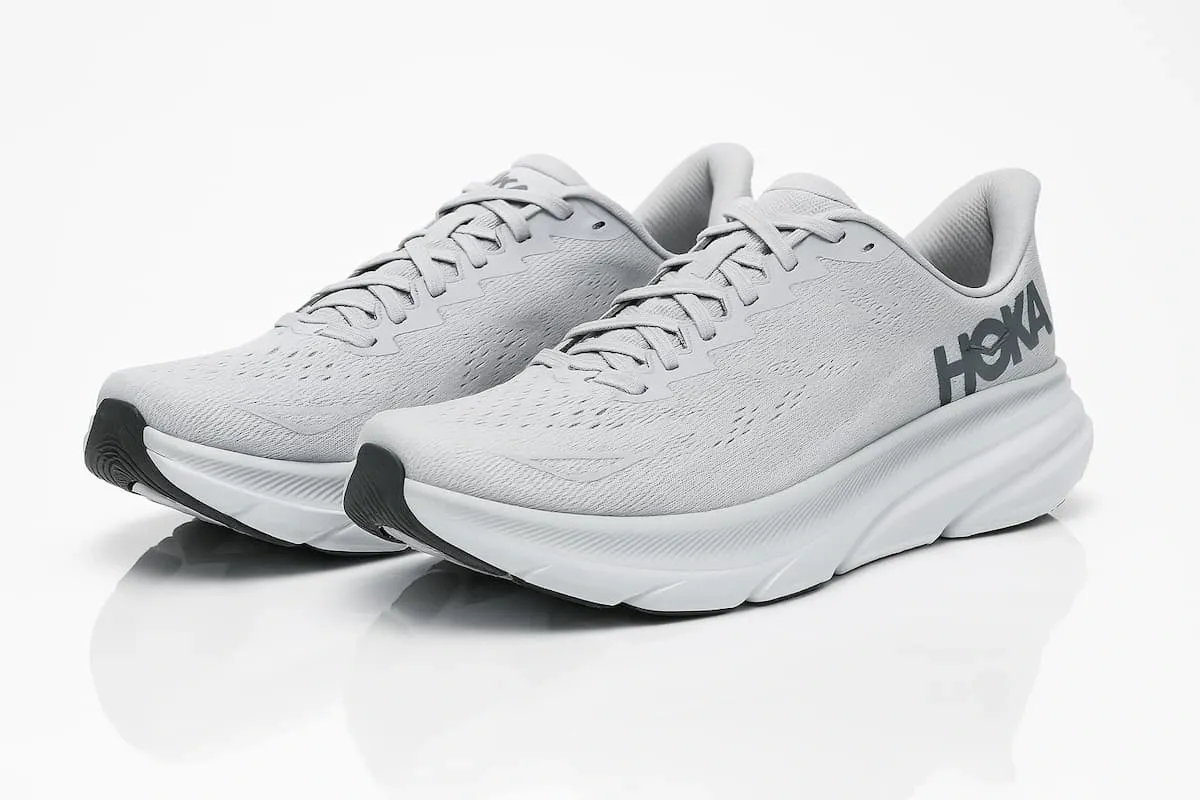
Hoka Clifton 9 Review
Hoka Clifton 9 Review: A detailed analysis of the lightweight, max-cushion daily trainer. Discover pros, cons, fit advice, and why it's a runner favorite.
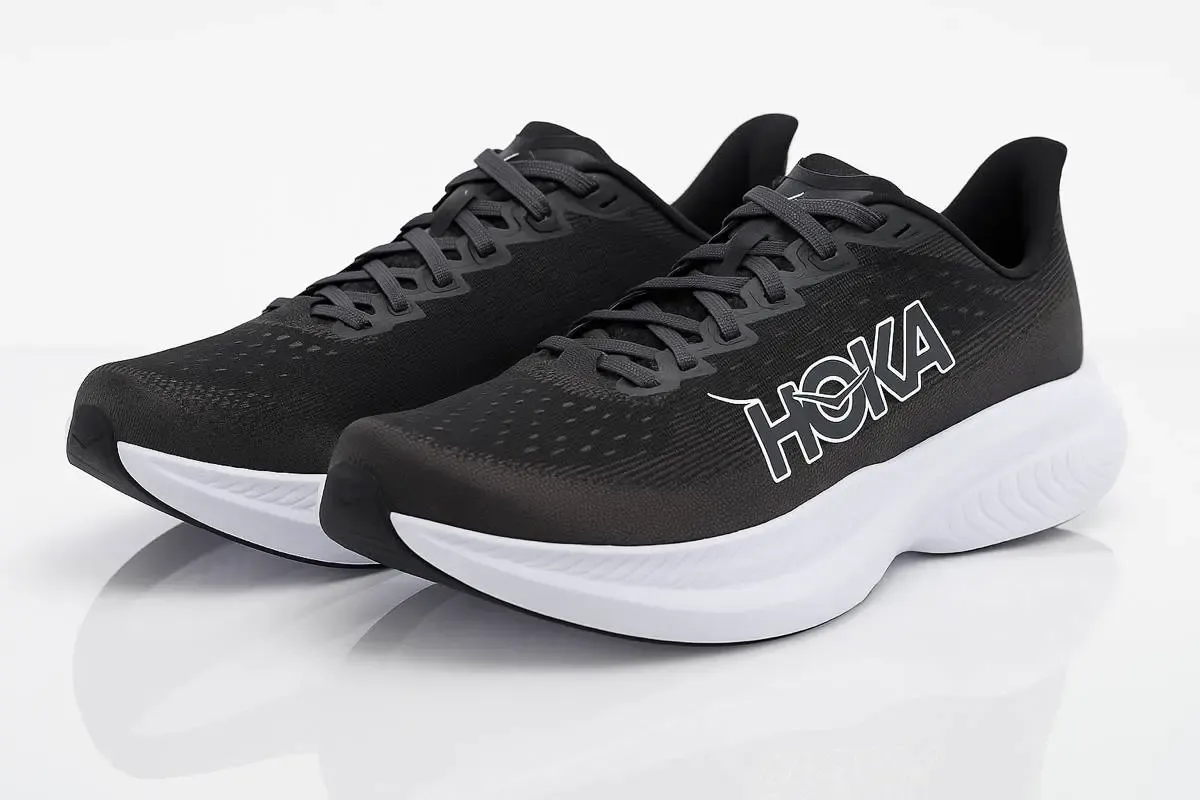
Hoka Mach 6 Review
An expert review of the Hoka Mach 6, a versatile daily trainer. We cover its new supercritical foam, durability, narrow fit, and value.
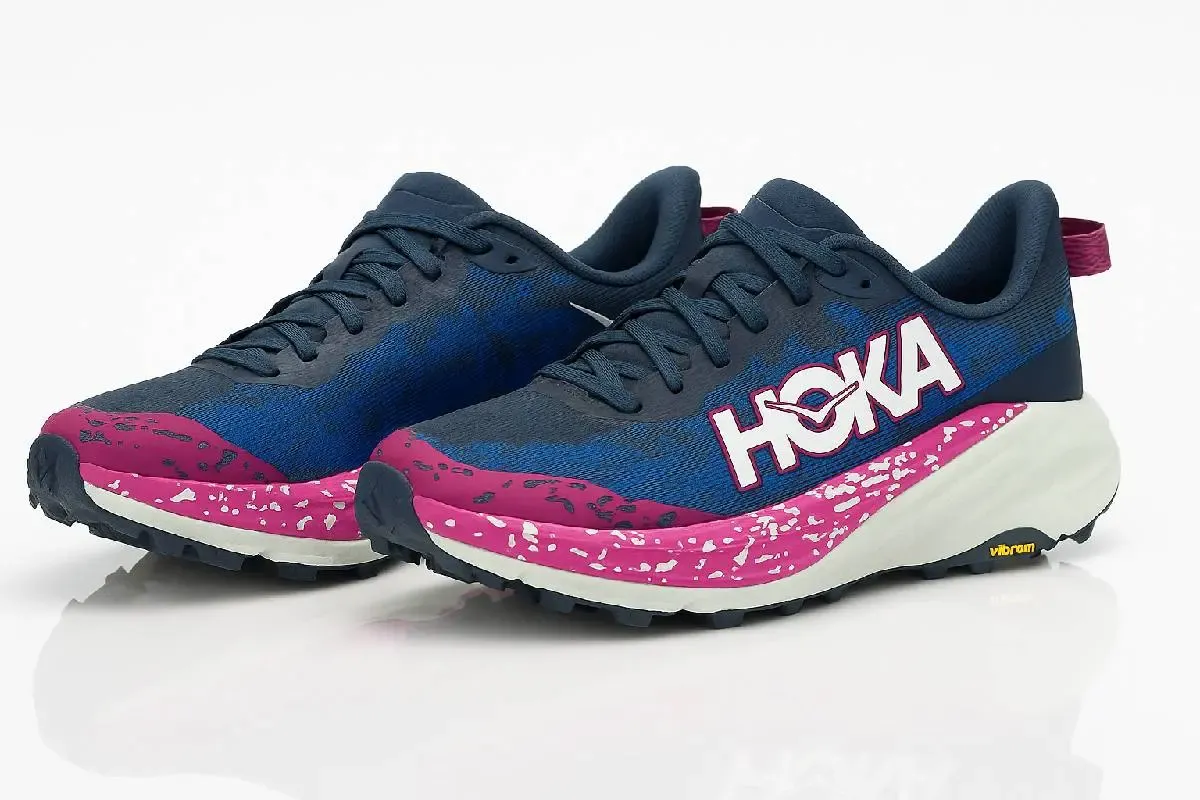
Hoka Speedgoat 6 Review
Get an expert review of the Hoka Speedgoat 6. We analyze its firmer cushion, elite traction, snug fit, and durability for trail and ultra running.
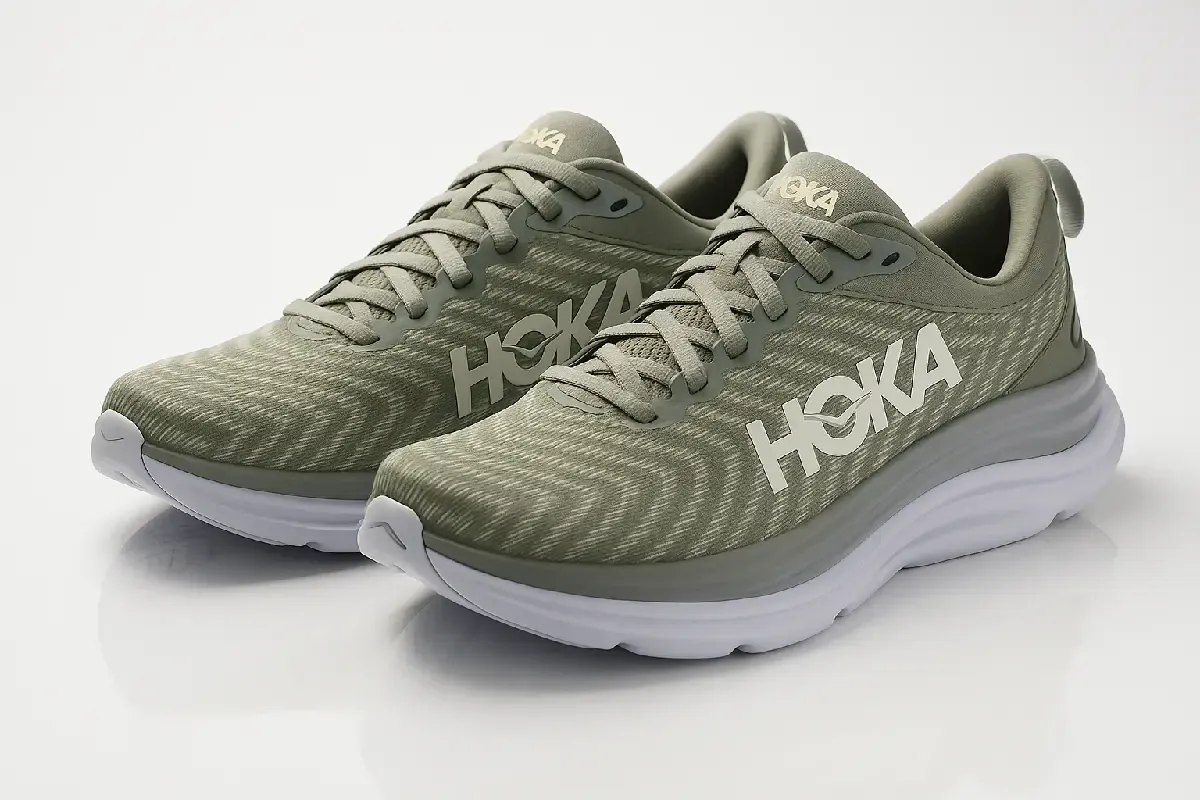
Hoka Gaviota 5 Review
Hoka Gaviota 5 review: A detailed analysis of the H-Frame stability, plush cushioning, and significantly wider fit. Find out if it's for you.