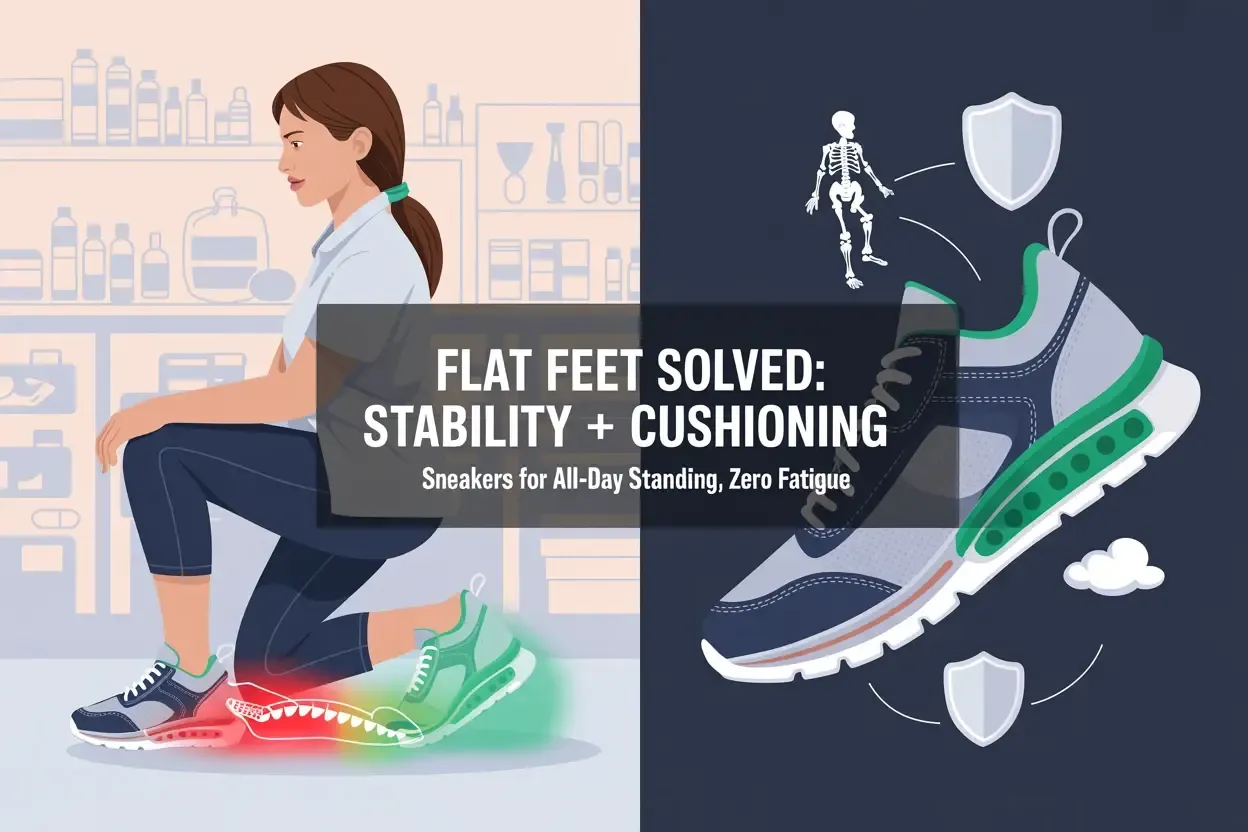
Let's talk about feet—specifically, flat feet—and how to find that sweet spot of support and a good-on-your-feet feel, especially when you're standing all day. Because our feet do a lot for us. And when they're not happy, the rest of the day gets harder fast.
So, What's the Deal with Flat Feet Anyway?
You've probably heard the term "flat feet," or maybe even "pes planus" if you've delved into the more clinical side of things. Essentially, it means that the arch on the inside of your foot, the medial longitudinal arch (try saying that five times fast!), is lower than average, or might even touch the ground when you stand. Think of it like this: a typical arch creates a little bridge, but with flat feet, that bridge is closer to the ground.
Now, here's a crucial point: having flat feet is surprisingly common! Estimates suggest anywhere from 20% to 37% of people have them. And for loads of people, it's just how their feet are built, and it causes absolutely no problems whatsoever. Like, zero pain, zero issues. It's just a normal variation, like having a cowlick or being able to wiggle your ears.
But for some people, that flatter arch changes how the foot moves when you walk or stand. The foot may roll inward a bit too much (overpronation). That can affect alignment further up the leg and sometimes show up as knee, hip, or lower back issues. And that's when flat feet can become a pain—literally. Think arch pain, heel pain (hello, potential plantar fasciitis!), ankle soreness, or that deep foot fatigue that creeps in after hours on your feet.
This is where your shoe choices really matter. The right pair can add support and cushioning to help manage symptoms and keep things feeling steady, whether you're walking for exercise, standing at work, or just moving through a busy day.
If your "flat feet" symptoms show up as knee/hip/back fatigue by the end of the day, read this alongside best sneakers for back pain relief to connect shoe geometry (drop/stability) to the rest of the kinetic chain. And if heat + sweat is part of the discomfort (common in long shifts), our summer sneaker sweat & odor guide helps you choose breathable uppers and socks without sacrificing support.
Not All Flat Feet Are Created Equal (And Why Your Shoes Matter)
There are two main types of flat feet: flexible and rigid. Most adults have the flexible kind. That means you can see some arch when you're sitting or unweighted, but it flattens when you stand. That's usually what people mean when they're shopping for supportive sneakers. Rigid flat feet, on the other hand, stay flat all the time, weight-bearing or not. They're less common and often tied to underlying structural issues. Our focus here is the more common flexible type—and finding shoes that feel good for real life.
When your foot overpronates, it can put extra stress on certain tissues and change how forces are absorbed as you move. This is why people often look for shoes designed to provide extra stability. The goal isn't necessarily to create an arch where there isn't one statically, but to guide the foot and help control that inward rolling motion during activity to potentially reduce strain.
Digging into Sneaker Anatomy: What Provides Support?
So what are the features that actually matter for flat feet? Let's break down the key things to look for.
First off, you'll often hear about "supportive footwear" or "motion control shoes". These categories generally contain design elements aimed at limiting that excessive pronation we talked about.
One common feature is a medial post. Imagine the midsole of your shoe (that's the foam layer between the upper and the rubber outsole). A medial post is essentially a section of denser, firmer foam placed on the inner side (the medial side) of the midsole, usually under the arch and heel. This firmer material is less compressible than the surrounding foam, acting like a subtle wedge to resist the foot rolling inward excessively. Think of it as a gentle nudge to keep things more aligned.
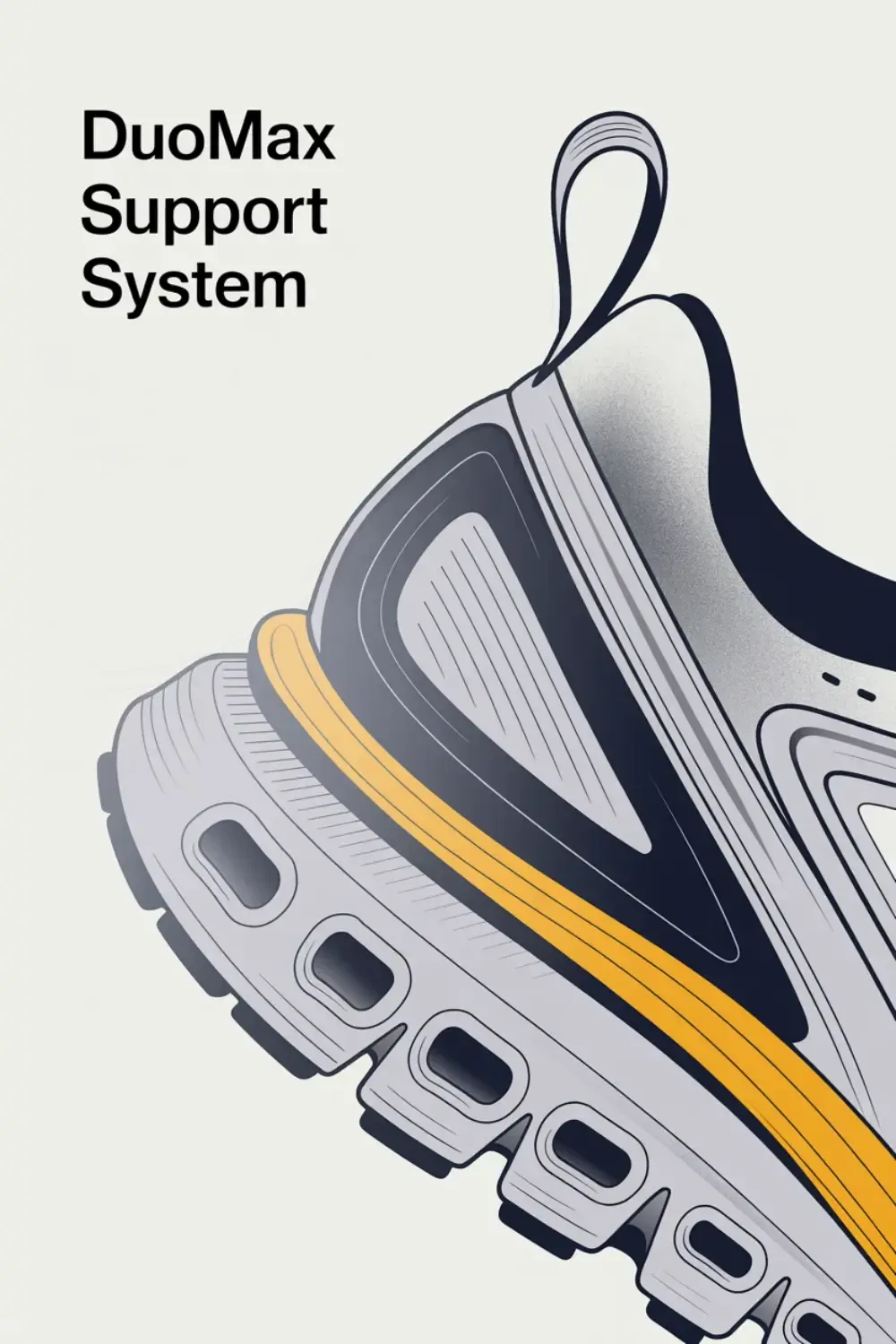
Some brands have their own specific names for this kind of technology. ASICS, for example, famously uses something called DuoMax Support System (or sometimes Dynamic DuoMax). This is their version of a dual-density midsole where a firmer material is strategically placed on the medial side to enhance stability. It's a pretty common and well-regarded approach in stability shoes.
Besides medial posts, look for shoes with a firm heel counter. That's the stiff cup at the back of the shoe that wraps around your heel. A good, solid heel counter helps to hold your heel bone in place, providing rearfoot stability which is crucial for controlling pronation from the ground up.
Arch support is another big one, naturally. This can come from the shape of the shoe's insole or the structure built into the midsole itself. The idea is to provide some external scaffolding for that flattened arch, potentially reducing strain on the plantar fascia (the band of tissue on the bottom of your foot) and the posterior tibial tendon (a key muscle/tendon that helps support the arch).
Now, while we're talking about support, let's talk flexibility. A good walking or running shoe should bend where your foot bends—usually at the ball of your foot (the "toe break"). But here's the catch: if you need stability, overly flexible soles can backfire. If you can twist the shoe into a pretzel or fold it completely in half lengthwise, it probably won't give you the structure you need to help control pronation. You want some rigidity through the midfoot.
Finally, cushioning matters for shock absorption, especially if you're on your feet for long periods. But too much plush, unstable cushioning isn't always ideal when your feet crave structure. It's usually about balance: impact absorption without feeling wobbly.
The Real Story: What Research and Users Actually Experience
The science tells us that features like medial posts can change how your foot moves in a lab setting. They can affect things like plantar pressure distribution or how much your ankle rolls inward. That's useful objective data.
But here's the really important part: those lab-measured changes don't always translate into less pain or better function for everyone in the real world. What often matters more to the person wearing the shoe is simple—how it feels on their feet.
Talk to people with flat feet online or in running groups, and you'll hear the same theme: on-foot feel is everything. What feels supportive to one person can feel like a painful lump in the arch to someone else. Medial posts or rigid guide rails (another type of stability tech used by brands like Brooks) are sometimes exactly what someone needs, but just as often they're described as feeling intrusive, irritating, or simply unnecessary.
Another huge theme from user feedback is the struggle with fit, particularly width. People with flatter feet often have wider feet, and trying to cram them into a standard width shoe designed for a higher arch? Not fun. Many find they need wide or even extra-wide versions, and sometimes even those feel snug.
And if you are comparing men's vs women's versions to solve that width/volume problem, it helps to know what actually changes between them—this guide on gender-specific sneaker designs breaks down the practical differences in lasts, width, and fit.
One of the most surprising takeaways from user experiences is how many people with diagnosed flat feet do just fine in neutral shoes (meaning: no aggressive stability features). That challenges the old-school idea that flat feet automatically need stability shoes. Plenty of people try stability models based on recommendations (sometimes from well-meaning store staff), find them uncomfortable, then feel great in a neutral pair.
This has led to the rise of the "stable neutral" shoe concept. These are technically classified as neutral, but they have inherent stability thanks to a wider base, a solid heel counter, or clever midsole geometry, offering some support without feeling overly controlling.
Spotlight on Some Popular Picks (And What Users Say)
Given the brief and the research, let's look at some models that frequently come up in discussions about sneakers for flat feet:
- ASICS Gel-Kayano: This is a classic stability shoe, often recommended, and it features that DuoMax support system we talked about. Users often praise its ample GEL cushioning and effective guidance. However, common feedback includes that it can feel quite heavy and maybe a bit too structured or slow for some.
- New Balance (Think Fresh Foam & the 860): New Balance has various lines, and Fresh Foam is known for its cushioning. The New Balance 860 is their long-standing stability model . User experiences can be mixed, with some finding them supportive, while others, like one user mentioned in the report, unfortunately experienced discomfort. The feel can also vary significantly from one version number to the next.
- Saucony (Specifically the Guide): The Saucony Guide is another popular stability shoe. Some users have noted that the stability structure in past versions could feel like it was pressing into the arch area. However, Saucony also offers other models; the Tempus, for instance, has been highlighted by some flat-footed runners for providing good stability in a less intrusive way, using a specific frame around softer foam.
Beyond these, the report mentioned other models frequently discussed, like the Brooks Adrenaline GTS (known for its GuideRails stability) and Hoka models like the Arahi or the super-cushioned Gaviota, which some flat-footed folks absolutely love for its stability and plushness, though it's definitely a maximalist shoe best suited for walking or easy miles. The Puma ForeverRun Nitro also got a nod for a less aggressive stability feel with good cushioning.
The key takeaway? What works for your friend—or what a quick in-store gait analysis suggests—is only a starting point. You have to try them on, walk around, and ideally spend some time in them (many stores have return policies for worn shoes) to see how they feel on your feet.
It's Not Just About the Shoes
While finding the right sneakers is super important, it's often just one piece of the puzzle, especially if you're dealing with pain. There are other things you can do that might help:
Strengthening Your Feet
This might sound odd, but your feet have muscles, and strengthening them could help provide more dynamic support for your arch. Simple exercises like "Short Foot" (trying to lift your arch without curling your toes) or picking up marbles with your toes are often recommended. While the research isn't totally conclusive on how much these change foot structure, they make sense logically as part of a comprehensive approach.
Orthotics (Insoles)
These are a common recommendation. Orthotics, whether custom-made or off-the-shelf, are designed to provide arch support and potentially help control motion. While the high-level evidence isn't super strong for curing flexible flat feet in adults, many people find they help reduce pain. If you use orthotics, make sure your shoe has a removable insole and enough depth to accommodate them comfortably.
Other Stuff
Depending on your situation, things like losing weight (less load on your feet!), stretching tight calf muscles, temporarily modifying activities that cause pain, or using over-the-counter pain relievers can also be beneficial.
Finding Your Happy Feet: Personalization is Everything
If there's one message to take away, it's that choosing sneakers for flat feet is highly personal. Forget rigid rules based only on how flat your arch looks when you're standing still.
Think about:
- Your Symptoms: Are you experiencing pain, fatigue, or something else? Focus on shoes that seem to alleviate those specific issues .
- Your Activity: Are you mostly standing, walking for exercise, or running? The demands on your shoes will be different .
- How They FEEL: This is non-negotiable. A shoe that's theoretically perfect but feels awful on your foot is the wrong shoe. Pay attention to poking in the arch, pinching, or rubbing.
- Your Body: Consider your weight and overall flexibility, as these can influence what kind of support you might need .
If you're dealing with persistent pain or uncertainty, seeing a podiatrist or a physical therapist who understands foot biomechanics is a great idea. But remember, you're the expert on your own feet. Be an active participant, share what you're feeling, and trust your gut (and your feet) when it comes to on-foot feel. The goal is footwear that lets you function with less pain, not just footwear that makes your arch look higher.
Wrapping It Up
So, there you have it. Flat feet are common and often totally fine. If yours are giving you trouble, especially with standing for long periods, the right sneakers can make a big difference. But forget the idea that everyone with flat feet needs the same type of shoe.
Look for features like medial posts and firm heel counters if stability seems helpful, but be wary of overly flexible soles. Consider popular models like the ASICS Gel-Kayano, New Balance 860 or Fresh Foam options, and the Saucony Guide, but remember that user experiences vary wildly.
Ultimately, the best sneaker for your flat feet is the one that feels the most supportive and easiest on your feet during your intended activities. Don't be afraid to try different types, listen to your body, and consider other strategies like strengthening exercises if needed. Your feet will thank you!