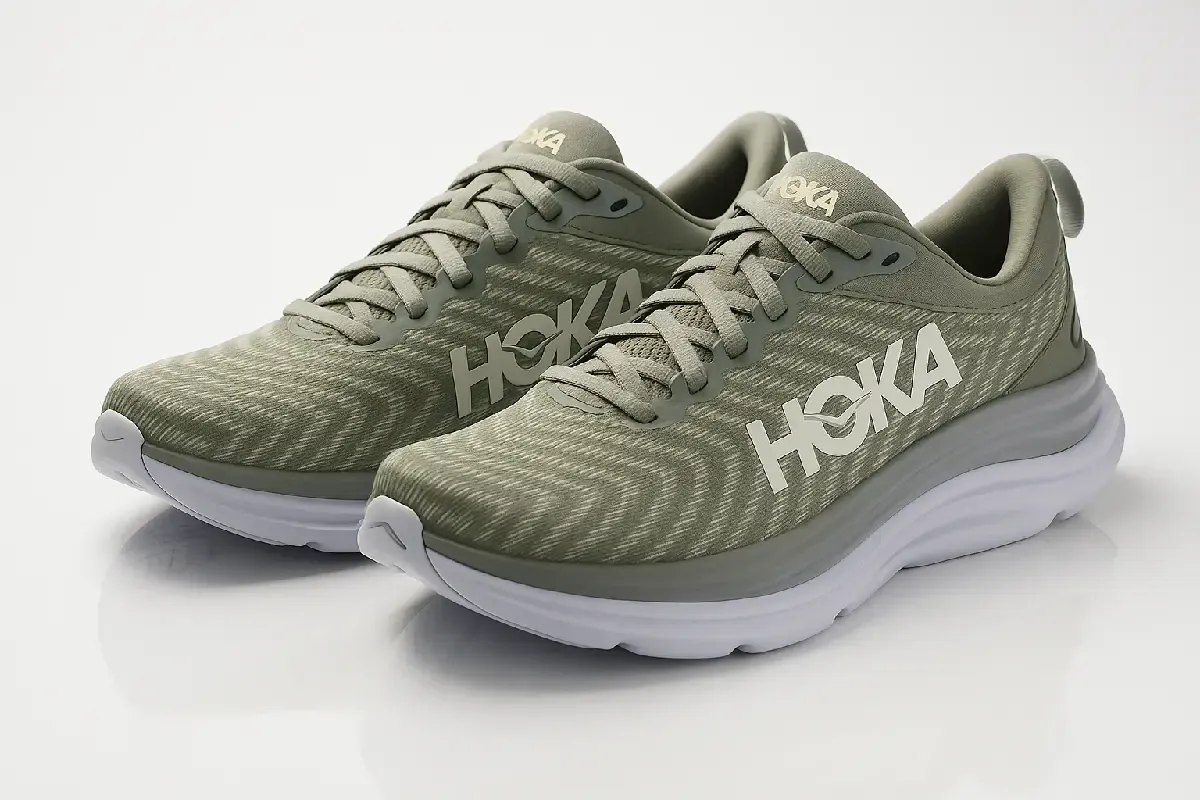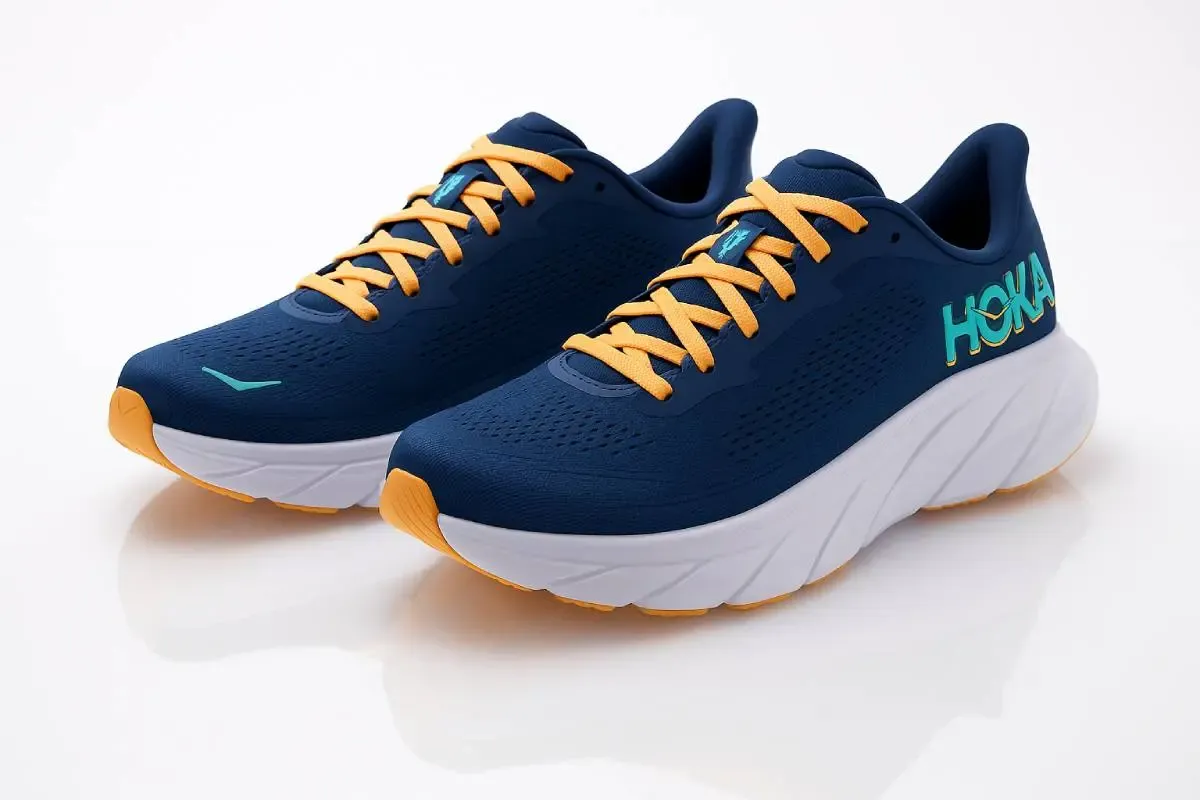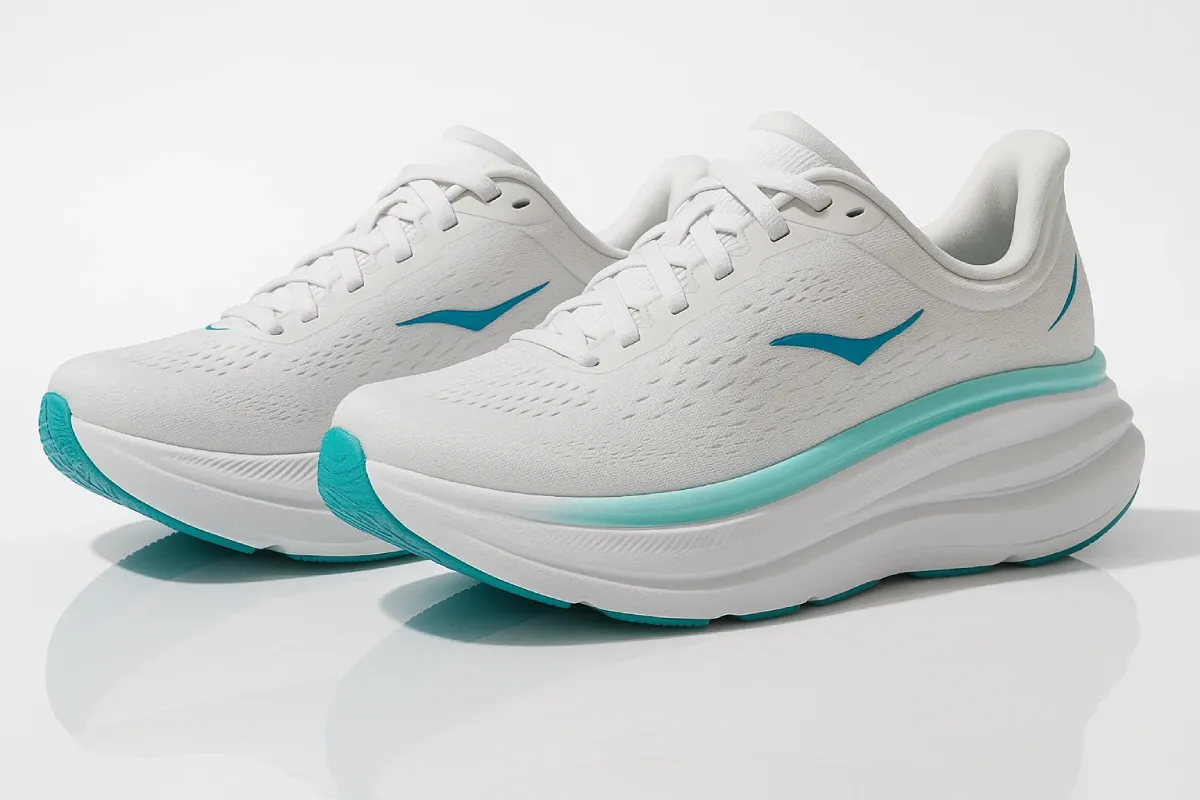
If you've ever shopped for running shoes, you've probably hit the big fork in the road: neutral or stability. For Hoka, a brand known for big, cloud-like cushioning, the challenge was obvious. How do you guide the foot and control excessive motion without killing the soft, smooth ride people come to Hoka for?
For years, stability shoes basically meant firm, rigid "posts" (blocks of hard foam) jammed on the inside of the shoe. They worked, but the ride often felt clunky and stiff.
Hoka didn't just slap on a post and call it done. They reworked the midsole itself. The two headline solutions are the J-Frame and the H-Frame. The names sound similar, but the ride they create is pretty different.
Let's break down what they are, how they work, and which one makes more sense for you.
If you're deciding between "soft comfort" and "structured support," it helps to anchor the comparison with real shoe categories: our Hoka max-cushion road running guide covers the plush end of the spectrum, while the Saucony road running overview maps similar concepts (foam feel, stability, fit) across another major brand.
What Is Stability Technology, Anyway?
In simple terms, stability shoes are for runners who overpronate. Pronation is the natural inward roll of your foot as it hits the ground. It's a good thing—your body's built-in shock absorber.
But overpronation is when the foot rolls in too much or for too long. That can be linked to running injuries.
Traditional stability shoes fight this by using:
- Medial Posts: A wedge of firmer foam on the inner side of the shoe to prop the arch up and stop the inward roll.
- Dual-Density Midsoles: Using two different foam densities, with the firmer one on the inside.
- Guide Rails: A more modern approach (like Brooks' system) that uses "bumpers" on both sides to help guide your foot into alignment.
Hoka took a different path. They build stability into the midsole geometry, using the foam itself to guide the foot. That's where the J-Frame and H-Frame come in. You can see this mindset across their stability road shoes.
Understanding the Hoka J-Frame
How It Works
The J-Frame is Hoka's original take on stability. Picture a letter "J" made of firmer, denser EVA foam.
This "J" starts on the outside (lateral) edge of your heel, wraps around the back, and then extends all the way along the inner (medial) side of your foot, right up toward your big toe.
It doesn't act like a rigid post. Instead, it works more like a supportive "wall" or "bumper." When your foot tries to roll inward (overpronate), it meets that firmer J-Frame, which nudges you back toward neutral. It guides rather than forces.
Ride Feel & Models
Because the J-Frame uses firmer foam, the ride feels more controlled, secure, and slightly firmer, especially on the inside of the foot. It's not harsh, but you'll notice the support.
The flagship model using this tech is the Hoka Arahi series (like the Arahi 6 and Arahi 7). It's best for runners who need mild-to-moderate stability and prefer a ride that feels more responsive and connected to the ground, instead of bottomless-ly soft.
Understanding the Hoka H-Frame
How It Works
The H-Frame is Hoka's newest stability solution, and honestly, it changes how stability can feel.
Instead of a "J" on one side, the H-Frame is a dual-density structure shaped like an "H" (or a figure-eight) that sits within the midsole. That "H" forms an interlocking base that cradles your foot from the center out.
Here's the key: the H-shaped frame supports both the medial (inner) and lateral (outer) sides. It works like a real "bucket seat," centering your foot and only kicking in when you start to roll too far in or out.
Ride Feel & Models
Because the H-Frame provides the structure, Hoka can use its softest, plushest foams for the rest of the midsole.
For example, in the Gaviota 5, the main midsole foam is incredibly soft (around 12.9 HA durometer), while the H-Frame elements are firmer (around 22.0 HA). This is how you get a "Bondi-level" of plushness in a maximum stability shoe.
The ride is incredibly soft, cushioned, and smooth, with stability that feels invisible until you need it. This technology is featured in the Hoka Gaviota 5. It's ideal for runners who want maximum support and maximum cushioning.
Key Differences: J-Frame vs. H-Frame
Here's the simple breakdown:
| Feature | J-Frame (Arahi) | H-Frame (Gaviota) |
|---|---|---|
| Stability Mechanism | Firmer J-shaped foam on the medial side and heel. | Interlocking H-shaped frame within the midsole. |
| Foam Feel | Firmer and more controlled. | Softer and more plush. |
| Support Level | Moderate. | Maximum / Adaptive. |
| Ride Character | Stable & direct. | Smooth, centered & highly cushioned. |
| Ideal Runner | Mild-to-moderate overpronator. | Moderate-to-severe overpronator, or anyone wanting max cushion with support. |
| Key Models | Arahi 6 / Arahi 7 | Gaviota 5 |
How Stability Interacts with Hoka's Meta-Rocker
Neither the J-Frame nor the H-Frame works in a vacuum. They're part of Hoka's full system, including the Active Foot Frame (the "bucket seat" that cradles your heel) and, most importantly, the Meta-Rocker.
The Meta-Rocker is the "rocking chair" curvature of the sole. This geometry encourages a smooth, quick transition from heel-strike to toe-off.
This matters because the rocker complements the stability. By helping you roll through your stride more efficiently, the Meta-Rocker reduces the time your foot spends on the ground, which helps minimize the stress of overpronation. The J-Frame or H-Frame then keeps you aligned during that smooth roll.
Foam Materials Behind Each Frame
The foam itself is key. Both systems use Hoka's CMEVA (Compression-Molded EVA) foam, but they use it differently.
- J-Frame (Arahi): The J-Frame is the firmer CMEVA blend, set against a slightly softer CMEVA main midsole. The stability comes from this density contrast.
- H-Frame (Gaviota): This system uses a dual-density CMEVA, but the difference is more extreme. It pairs the firmer H-frame with a much softer, bouncier CMEVA core. This is what enables that "soft stability".
Which Stability System Is Right for You?
Let's make this really simple.
| If you are a runner who... | Your Best Bet Is... | Why? |
|---|---|---|
| Needs mild guidance and prefers a firmer, lighter, more responsive ride. | J-Frame (Arahi) | It provides direct, noticeable support without the bulk. |
| Wants plush, maximum cushioning for long runs or recovery days, but needs support. | H-Frame (Gaviota) | It delivers "invisible" stability in one of the softest packages on the market. |
| Is a heavier runner or puts in very high mileage. | H-Frame (Gaviota) | The wide, soft, and supportive base offers incredible shock absorption and distributed support. |
| Is transitioning from a neutral shoe and is worried about stability feeling "stiff." | J-Frame (Arahi) | It's often described as a "stable neutral" shoe—a very natural-feeling first step into stability. |
Real-World Feedback
Don't just take our word for it. Here's what reviews generally say:
- Arahi 7 (J-Frame): Runners consistently praise its "effective, non-intrusive stability" and lightweight feel. The most common critique? It's "firm," especially compared to other Hokas.
- Gaviota 5 (H-Frame): The overwhelming feedback is shock at how "super soft" and "plush" it is for a stability shoe. Reviewers love the "reliable, maximal stability" that doesn't feel restrictive. The main trade-off? It's "heavier and bulkier" than the Arahi.
Final Thoughts
Hoka has successfully solved the stability challenge in two distinct ways. Both the J-Frame and H-Frame move far away from the rigid, old-school medial posts.
The choice is yours:
- J-Frame (Arahi): For lightweight, direct, and firmer structural guidance.
- H-Frame (Gaviota): For plush, cushioned, and distributed stability.
The best way to know for sure is to try them both. But now you know exactly what's happening under your foot.
🏃 Explore detailed reviews: Arahi 7 Review | Gaviota 5 Review.