Table of Contents
There is a specific moment in every pregnancy—usually around the mid-second or early third trimester—when you look down and realize your favorite shoes have turned against you. Between the "pregnancy waddle," the struggle to bend over a growing bump, and the sudden disappearance of your ankle bones, finding footwear becomes a daily battle.
You are not alone in this struggle. Research indicates that approximately 80% of pregnant women experience lower extremity edema, or swelling of the feet and ankles. When you combine that fluid retention with hormonal changes that loosen your ligaments, your pre-pregnancy shoe collection simply doesn't stand a chance.
The right pair of shoes isn't just about comfort; it is about safety and stability. This guide breaks down the science of your changing feet and delivers a curated list of the best pregnancy shoes for swollen feet, focusing on hands-free technology, wide toe boxes, and podiatrist-approved support.
Quick Look: The Science of Pregnancy Feet
Before diving into shoe recommendations, it is helpful to see exactly how your feet change by the numbers.
| Physiological Change | What Happens? | Impact on Footwear |
|---|---|---|
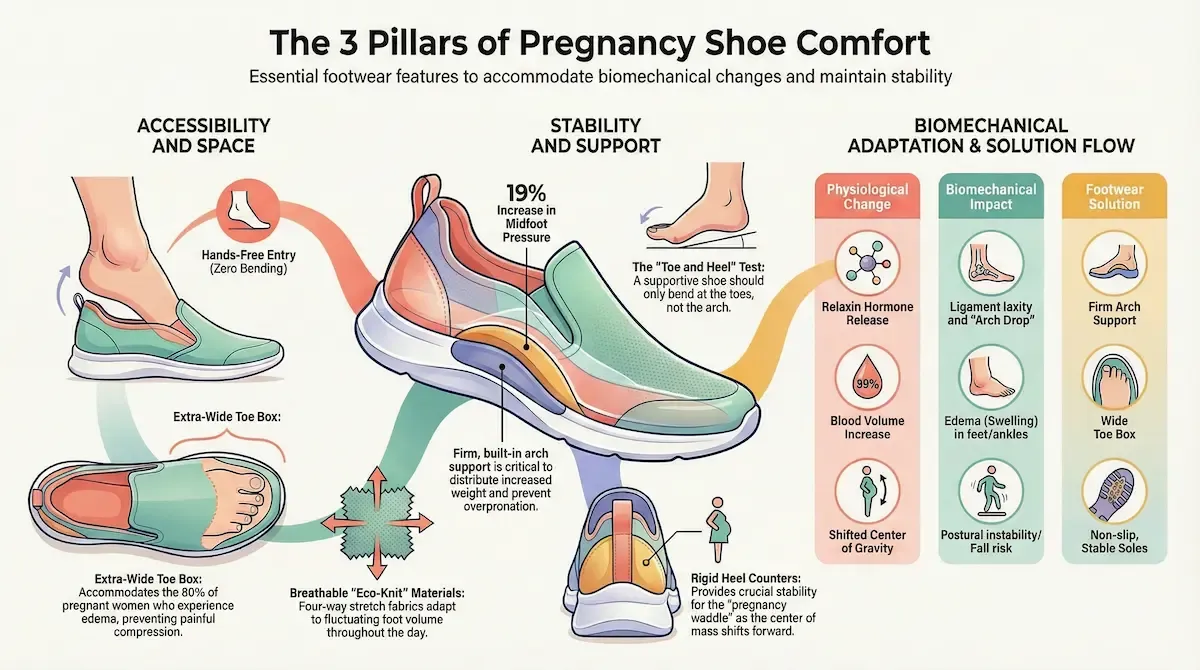
| Arch Height Drop | The talus bone can drop approx. 1 cm due to lax ligaments. | You need firmer arch support to prevent overpronation. |
| Foot Length | Feet can lengthen by 2–10 mm, often permanently. | You likely need to size up 0.5 to 1 full size. |
| Medial Pressure | Pressure on the midfoot increases by ~19%. | Flat shoes or flimsy ballet flats will cause pain. |
| Edema (Swelling) | Fluid pools in extremities due to gravity and uterine pressure. | Adjustable volume (laces/straps) or stretchy mesh is required. |
Why Do Feet Change During Pregnancy? (The Science)
It isn't just weight gain that makes your shoes feel tight. There are significant physiological and hormonal shifts occurring that alter the actual structure of your feet.
The Role of Relaxin and Permanent Growth
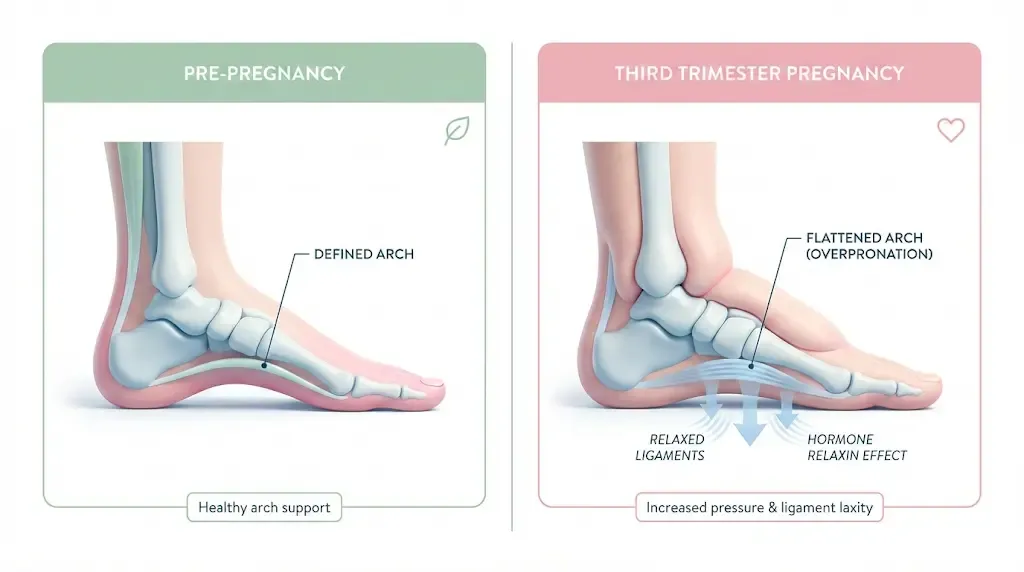
During pregnancy, your body produces a hormone called relaxin. Its primary job is to soften the pelvic ligaments to prepare for childbirth. However, relaxin is systemic—it doesn't just target the pelvis. It also loosens the ligaments in your feet.
When these ligaments loosen under the added weight of pregnancy, the arches of the feet can flatten (overpronation) and the foot can lengthen. Studies have shown that this "arch drop" can cause the foot to increase in length and width, changes that often persist postpartum. In fact, the first pregnancy typically accounts for the most significant reduction in arch rigidity, leading many women to go up a half or full shoe size permanently.
Edema and Fluid Retention
Beyond structural changes, there is the issue of volume. During pregnancy, your blood volume increases by 20% to 100% to support the baby. Simultaneously, your growing uterus puts pressure on the vena cava (the large vein carrying blood from the legs to the heart) and pelvic veins. This slows circulation and forces fluid to pool in the lower extremities, leading to edema.
This swelling typically worsens throughout the day and peaks in the third trimester. Heat and prolonged standing exacerbate this, causing blood vessels near the skin to widen and allowing more fluid into the tissues. This is why a shoe that fits at 9:00 AM might feel like a vice grip by 5:00 PM.
What to Look for in the Best Shoes for Third Trimester
When shopping for "cute maternity shoes," you must prioritize three technical features to handle the swelling and mobility issues of late pregnancy.
Hands-Free and Slip-On Technology
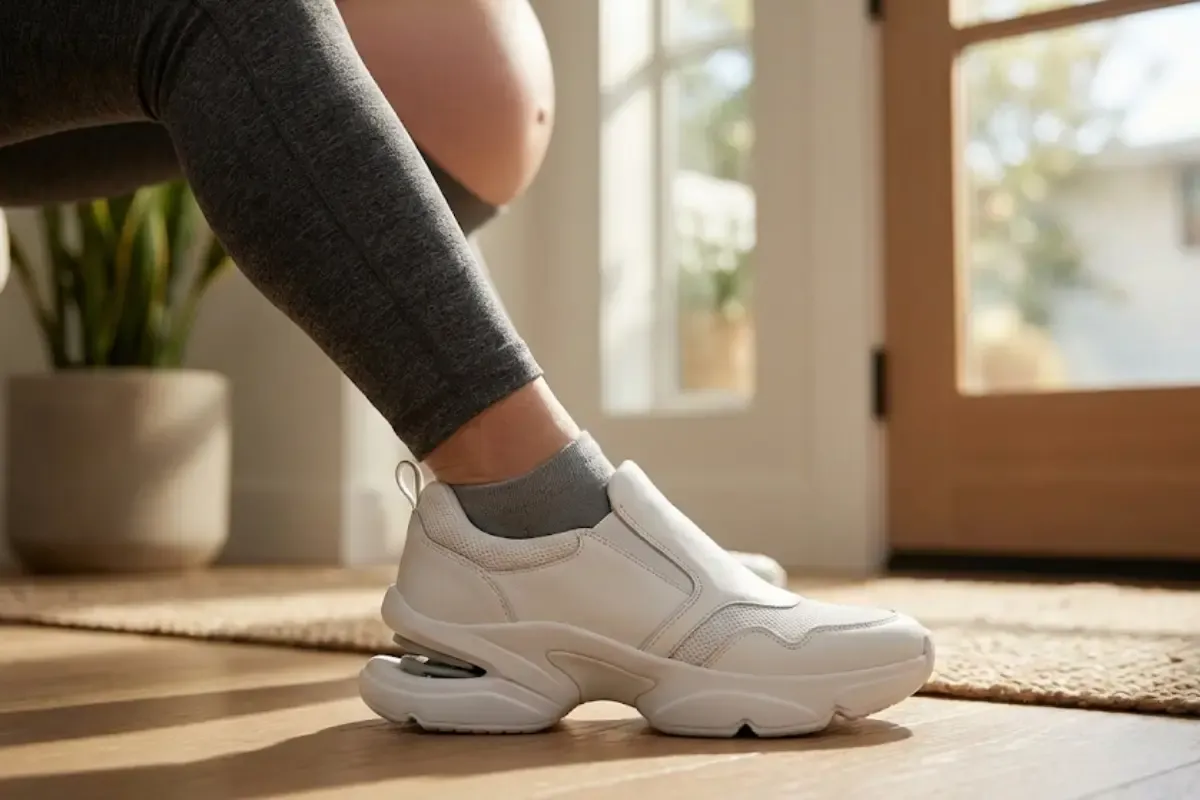
As your belly grows, your center of gravity shifts anteriorly, and bending over to tie laces becomes difficult—or even dangerous. The "best shoes for third trimester" are undoubtedly ones you can put on without using your hands. Look for shoes with specialized heels that collapse and spring back (like Kizik's cage technology) or rigid heel counters that allow you to slide your foot in while standing.
Wide Toe Box and Adjustable Fit
Because swelling fluctuates, you need shoes that offer volume. A wide toe box allows your toes to splay naturally, which is critical for maintaining balance as your center of gravity shifts forward. Podiatrists recommend avoiding rigid materials; instead, look for stretchy mesh uppers or soft leathers that can accommodate the foot's changing shape throughout the day without restricting circulation.
Arch Support and Shock Absorption
The hormone-induced flattening of the arch (overpronation) can lead to plantar fasciitis and knee pain. To counteract this, you need shoes with firm, functional arch support—not just soft memory foam that collapses under weight. A good heel counter (the back of the shoe) should be firm to provide stability and prevent the ankle from rolling. Podiatrists suggest performing the "Toe and Heel Test": if you push up on the toe and heel, the shoe should bend at the toe (where your foot bends), not in the middle of the arch.
Top Picks: Best Pregnancy Sneakers for Swollen Feet
Based on podiatrist recommendations, clinical studies, and user testing, here are the top contenders for keeping your feet happy through delivery day.
Best Overall Hands-Free: Kizik Lima & Athens
Why We Love It: Kizik has revolutionized maternity footwear with their patented "HandsFree Lab" technology. The heel features a "cage" that compresses when you step in and then snaps back into place, making them truly hands-free.
- The Tech: The Athens 2 features a Rabbit Foam outsole for cushioning and a cage heel that allows for zero-bending entry. The Lima offers a roomy toe box and extra ankle padding, making it a favorite for severe swelling.
- Why for Pregnancy: They eliminate the need to bend down, which is a "game changer" when you can't see your feet. They are also available in wide widths (EE), accommodating the spread caused by relaxin.
- Pinterest Angle: These are widely considered the "cute maternity shoes" that don't look orthopedic, available in trendy colorways like "Cream" and "Date Night".
Best Budget Slip-On: Skechers Slip-Ins & Go Walk
Why We Love It: If you need a more affordable option, Skechers delivers high comfort. Their Hands Free Slip-ins line uses a "Comfort Pillow" in the heel to hold your foot securely.
- The Tech: Models like the Go Walk 6 and 7 utilize "Hyper Pillar" technology for lightweight support and high-rebound cushioning.
- Why for Pregnancy: They are lightweight, machine washable, and widely available in wide fits. While Kizik uses a spring-back cage, Skechers relies on a stiff, molded heel cup to facilitate entry.
- Verdict: A fantastic budget-friendly alternative ($45-$60) that is perfect for postpartum baby-wearing as well.
Best Max Cushioning: Hoka Bondi 8 & Restore TC
Why We Love It: When your feet feel bruised and heavy, you need maximalist cushioning. The Hoka Bondi 8 is frequently cited by experts as a top choice for swollen feet due to its pillowy, shock-absorbing foam.
- The Tech: The Bondi features a memory foam collar that cradles the ankle and an extended heel for stability. The Restore TC is a slip-on recovery shoe designed to be worn without socks, perfect for sensitive, swollen skin.
- Why for Pregnancy: The engineered mesh upper is flexible enough to accommodate "puffiness," while the rocker bottom sole helps propel you forward, reducing the effort required to walk.
- Note: These often hold the APMA Seal of Acceptance, signaling they promote good foot health.

As an Amazon Associate, we earn from qualifying purchases.
Best for Stability & Widths: New Balance Fresh Foam
Why We Love It: New Balance is one of the few brands that offers extended widths (Standard, Wide, and Extra-Wide/2E/4E) in almost all their models.
- The Tech: The Fresh Foam x860 offers a stable base to prevent wobbling, which is crucial as your joints loosen. The foam midsole provides durability in high-wear areas.
- Why for Pregnancy: Dr. Usman, a podiatric surgeon, recommends choosing a wider shoe rather than just sizing up in length, which can cause tripping. New Balance allows for a precise wide fit without the clown-shoe length.

New Balance Fresh Foam X 860 V12 — Expert Review
- Excellent stability
- Comfortable upper
- Durable construction
As an Amazon Associate, we earn from qualifying purchases.
Best Eco-Friendly/Breathable: Allbirds Tree Loungers
Why We Love It: For women whose feet run hot (a common pregnancy symptom), the Allbirds Tree Lounger is a lifesaver.
- The Tech: Made from eucalyptus fiber, the material is naturally cooling, breathable, and stretches to fit swollen feet.
- Why for Pregnancy: They are incredibly lightweight and machine washable. While they offer less structural arch support than a Hoka or New Balance, their "sock-like" fit is unbeatable for casual wear when rigid shoes feel too restrictive.
Best Sandals and House Shoes for Pregnancy
You can't wear sneakers 24/7. Whether you are lounging at home or packing your hospital bag, you need open-toe options.
The Recovery Slide: Oofos OOahh
Why We Love It: These are often described as "walking on clouds." Oofos uses proprietary OOfoam that absorbs 37% more impact than traditional foam.
- Benefit: They reduce stress on sore knees and lower backs. Podiatrists recommend them as indoor house shoes to avoid walking barefoot on hard floors, which exacerbates arch collapse.
The Adjustable Classic: Birkenstock Arizona or Mayari
Why We Love It: The cork footbed molds to your foot, providing excellent arch support.
- Benefit: The Arizona or Mayari styles feature adjustable buckles. This is critical for pregnancy because you can loosen the straps as your feet swell throughout the day. If your feet are sensitive, opt for the EVA (waterproof) version, which is lighter and softer.
Sizing Guide: Should You Size Up During Pregnancy?
One of the most common questions is, "Will my feet go back to normal?" The answer is complex. Swelling (edema) will resolve postpartum, but structural changes from relaxin—such as a flattened arch and longer foot—are often permanent.
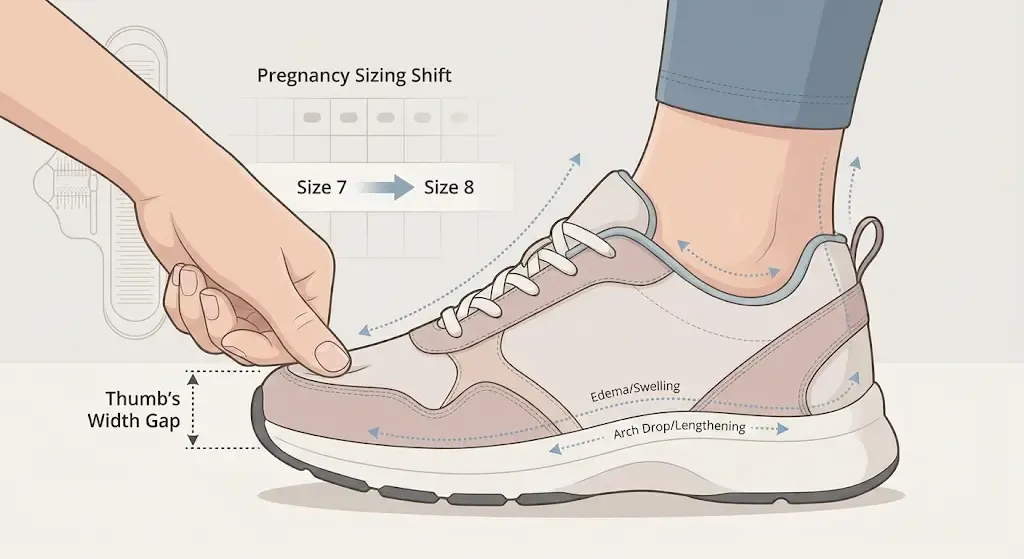
- The Recommendation: Yes, you should size up if your shoes feel tight. Dr. Steven Gershman, DPM, suggests checking your size regularly. If there isn't a thumb's width from your longest toe to the end of the shoe, it is time to size up.
- Width vs. Length: Prioritize width. Sizing up in length to get width can cause tripping hazards. Look for brands like New Balance or Kizik that offer Wide (D) or Extra Wide (EE) options.
- Don't Wait: If a shoe feels tight, it is tight. Do not try to "break in" shoes during pregnancy; this can lead to ingrown toenails and circulation issues.
Expert Tips for Managing Swollen Feet
Beyond buying the right shoes, podiatrists recommend a few daily habits to manage the "cankles" and discomfort.
- Wear Compression Socks: Put on compression stockings (15-20 mmHg or 20-30 mmHg) first thing in the morning before swelling sets in. They help pump fluid out of the legs and back to the heart.
- Elevation is Key: Whenever possible, prop your feet up above the level of your heart. This allows gravity to assist in draining the pooled fluid.
- Hydrate: It sounds counterintuitive, but drinking plenty of water helps flush excess sodium from your system, which actually reduces fluid retention.
- Movement: Avoid standing still for long periods. Short walks or doing ankle circles helps the calf muscles pump blood upward.
Resources & Further Reading
- National Institutes of Health (NIH) / Journal of Foot and Ankle Research: Changes in Foot Biomechanics During Pregnancy: Associations With Plantar Pressure, Low Back Pain and Daily Function [1]
- PubMed Central (PMC) / Am J Phys Med Rehabil: Pregnancy Leads to Lasting Changes in Foot Structure [2]
- Nemours KidsHealth: Dealing With Swollen Ankles During Pregnancy [3]
- Franciscan Health: Swollen Feet During Pregnancy: Causes and Relief [4]
- Verywell Fit (Medically Reviewed): The 12 Best Slip-on Sneakers of 2026 That Podiatrists Love [5]
- Forbes Vetted: The Best Shoes For Swollen Feet That Keep You Comfy And Ache-Free [6]