Founder & Lead Editor
Federico D'anna
Federico D'anna has spent 9 years reviewing sneakers with a methodology built on hands-on wear notes, side-by-side comparisons, and verified buyer feedback.
Learn more about Federico D'annaHighlights
Positive
- The return to a molded heel counter fixes the slippage issues from the v11, providing a much more secure lockdown.
- Availability in widths from Extra-Narrow (2A) to Extra-Wide (4E) makes it accessible for almost every foot shape.
Negative
- The shoe is relatively heavy at 11.4 oz, which can feel clunky and unresponsive during faster-paced runs.
New Balance Fresh Foam X 860 V12 Sizing & Fit Guide
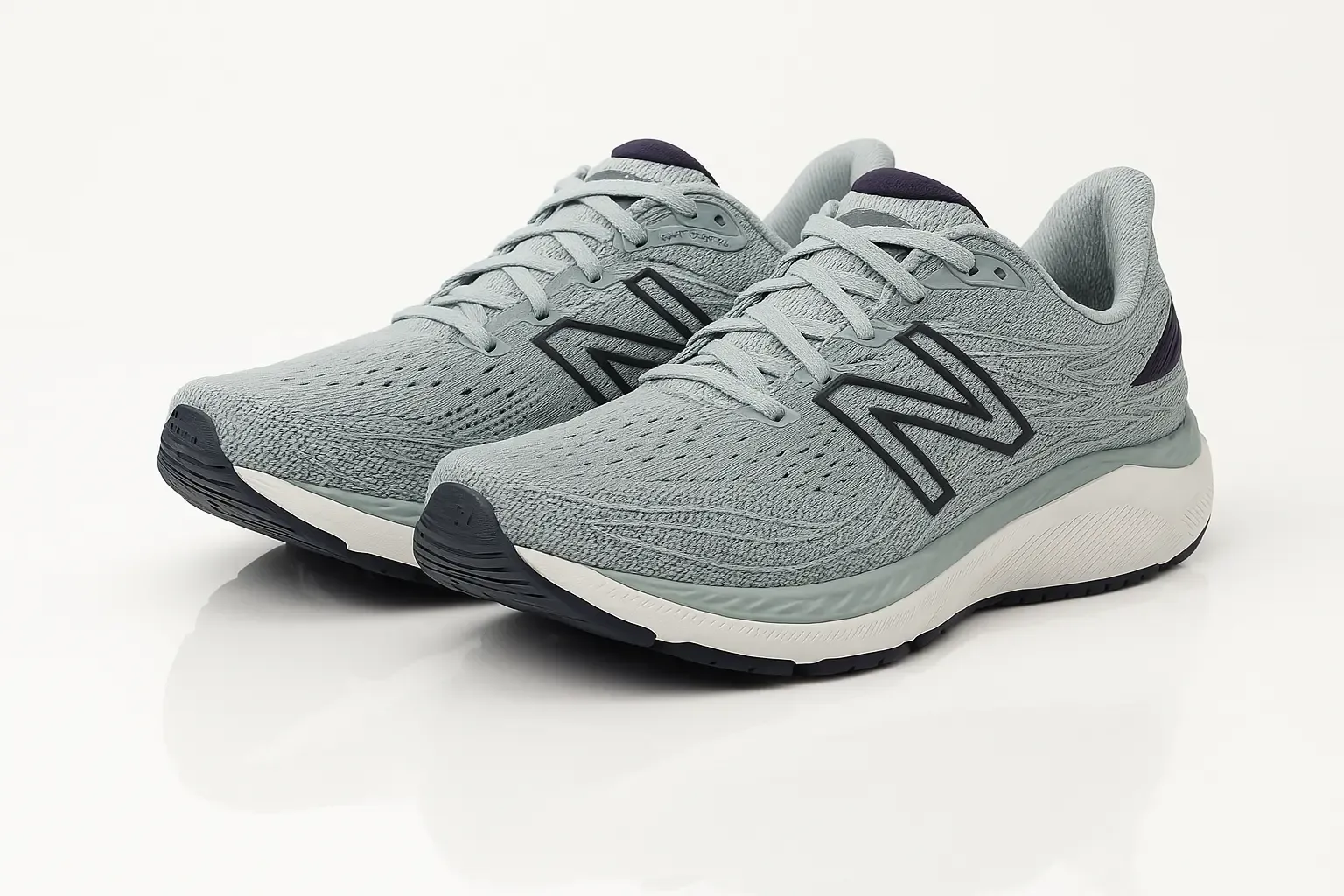
The New Balance Fresh Foam X 860 v12 is a highly engineered daily stability shoe designed to address the biomechanical demands of overpronation. For runners seeking to eliminate heel slippage, this model introduces a redesigned double-jacquard synthetic air mesh upper that optimizes midfoot lockdown while maintaining comfort. Unlike its predecessor, the v12 reverts to a traditional, moderately padded heel counter that provides excellent rearfoot security without localized Achilles irritation. Up front, the toe box offers a remarkably accommodating, squared-off shape that allows for natural toe splay and avoids a narrow, claustrophobic forefoot feel. This combination of a structured, multi-density midsole and an adaptable upper ensures the shoe fits true to size (TTS) while delivering targeted lateral relief.
Compare your current pair to find the best size match.
| Reference Shoe | Your Usual US | Buy in US | Your Usual EU | Buy in EU | Fit Notes |
|---|---|---|---|---|---|
| Nike Air Force 1 | 10.0 | 10.5 | 44.0 | 44.5 | The Nike Air Force 1 is a classic lifestyle model that runs approximately half a size large and features an inherently spacious interior. In contrast, the performance-oriented 860 v12 utilizes a highly structured upper and a snug midfoot lockdown to prevent lateral foot sliding. Therefore, buyers must size up a half size from their lifestyle AF1 size to secure adequate toe box space and prevent forefoot constriction. |
| Brooks Adrenaline GTS (21/22/24) | 10.0 | 10.0 | 44.0 | 44.0 | Both shoes serve as premier daily stability trainers and track identically true to length, making a direct size match highly accurate. However, the Adrenaline GTS features a narrower, more tapered forefoot profile. The 860 v12 offers a wider, more squared-off toe box geometry, providing enhanced lateral relief and superior room for natural toe splay without necessitating a change in length. |
| ASICS Gel-Kayano (28/30/31) | 10.0 | 10.0 | 44.0 | 44.0 | While both models align closely in true linear length, the Gel-Kayano utilizes highly plush, luxurious interior padding around the heel counter and midfoot that creates an incredibly snug, compressed internal environment. The 860 v12 implements a slightly more open upper mesh structure and provides higher vertical toe box clearance, allowing the standard true-to-size length to feel notably more spacious and accommodating. |
| New Balance Fresh Foam X 1080 v12 | 10.0 | 10.5 | 44.0 | 44.5 | The neutral 1080 v12 runs exceptionally long and voluminous, which typically prompts runners to size down a half size from their standard technical running shoe size. Because the 860 v12 relies on a traditional athletic last that fits closer to standard performance sizing benchmarks, users who previously compensated by sizing down in the 1080 v12 must return to their true length by going up a half size to achieve a proper, non-restrictive fit in the 860 v12. |
Does the New Balance Fresh Foam X 860 V12 run true to size?
The New Balance Fresh Foam X 860 v12 generally runs true to size in linear length, though its performance-driven engineering creates a secure, snug fit through the midfoot and instep to keep the foot stable. Because this localized lockdown is vital for preventing internal foot sliding during the gait cycle, runners transitioning from roomy casual sneakers may initially feel the shoe runs short. Expert testing and user feedback indicate that runners who are between sizes, have high-volume feet, or wear thick performance socks should go up a half size. This half-size increase guarantees proper clearance at the front of the toe box and prevents contact with the tapered tip of the toe cap under impact.
Is the New Balance Fresh Foam X 860 V12 good for wide feet?
Yes, the New Balance Fresh Foam X 860 v12 is highly recommended for runners with wide feet due to its accommodating design and extensive width offerings. New Balance provides multiple standalone width variants, spanning narrow (B), standard (D), wide (2E), and extra-wide (4E) for men, alongside equivalent options for women. Even within the standard width configuration, the v12 features an updated, wider forefoot platform measuring 100.4 mm and a spacious, squared-off toe box that resolves the narrow, restrictive feel of prior iterations. The soft double-jacquard mesh upper also stretches dynamically to accommodate structural variations like bunions without causing friction, allowing wide-footed runners to secure an optimal fit by selecting their true length in their designated width option.
How is the arch support on the New Balance Fresh Foam X 860 V12?
The arch support on the Fresh Foam X 860 v12 is highly structured, continuous, and supportive, making it an excellent match for mild-to-moderate overpronators, individuals with flat feet, or those managing posterior tibial tendonitis. The shoe's core stability engine is a traditional, high-density medial post—a physical wedge of firmer, high-durometer foam built into the medial side of the midsole beneath the arch. This post acts as an unyielding structural barrier that resists compression and actively guides the foot away from overpronation. Paired with a wide midsole base, full ground-contact blown rubber outsole, and light embroidered upper overlays, this supportive system is topped with a layer of plush Fresh Foam X, ensuring the structural correction remains highly effective without feeling overly harsh or rigid underfoot.
Ready to experience the New Balance Fresh Foam X 860 V12 Review?
Get yours today with fast shipping from Amazon
If you’ve been running for a while, you know a truly reliable stability shoe can be weirdly hard to find. The New Balance Fresh Foam X 860v12 is one of those pairs that just shows up and does the job, day after day. It’s a very traditional stability trainer in a market obsessed with plates and rockers, and it’s aimed squarely at runners who need help with overpronation without turning the run into a science experiment.
Quick Take
Overall Rating: 4.5/5
Best For: Moderate overpronators, High-mileage daily training, Wide feet, Walkers
Key Strengths: Dependable stability, Incredible durability, Extensive width options (2A to 4E)
Notable Limitations: Heavy weight, Firm ride (despite the "Fresh Foam" name), Slippery laces
Visual Snapshot Summary
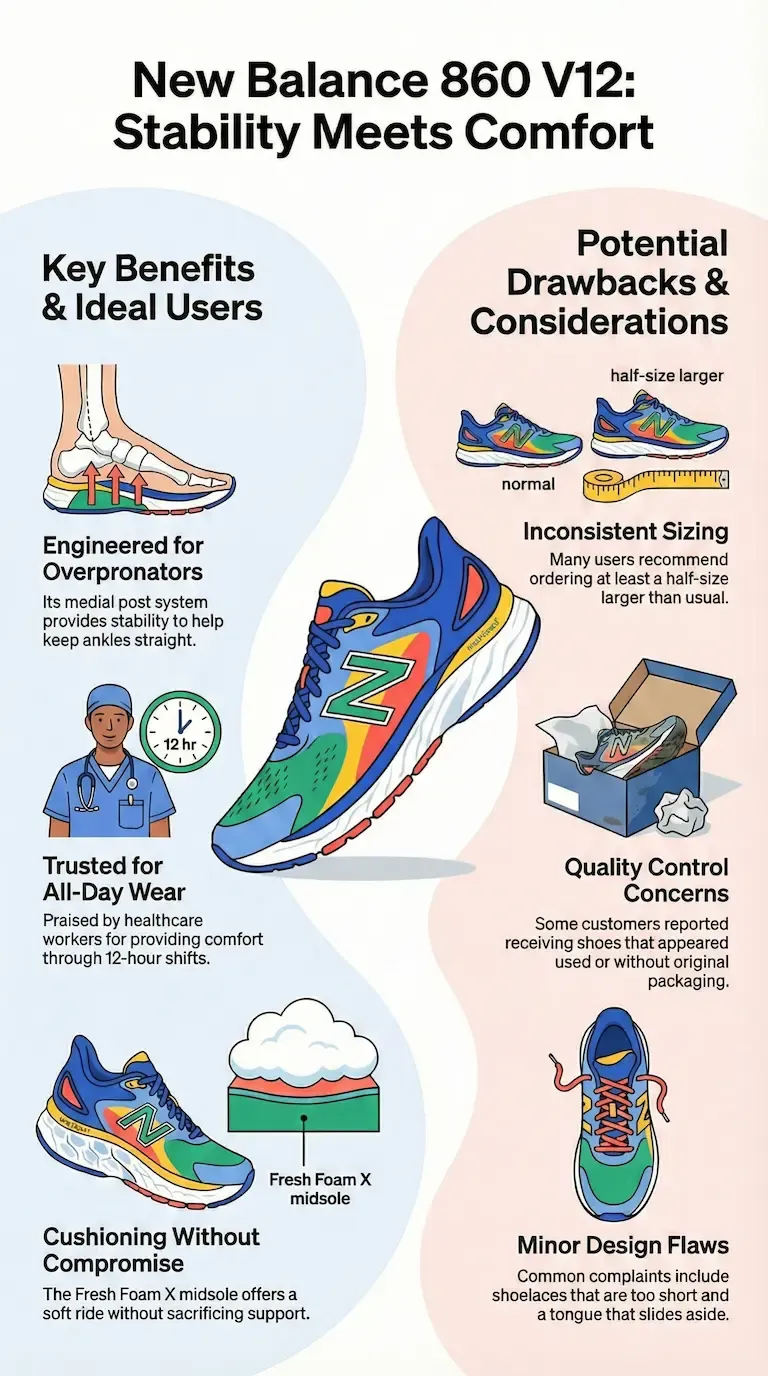
What Makes New Balance Fresh Foam X 860v12 Stand Out?
In a world where running shoes are starting to look like spaceships, the 860v12 stands out by keeping it simple. The big talking point is Fresh Foam X in the top layer of the midsole. One important note, though: if you see “Fresh Foam X” and expect a squishy, marshmallow ride like the NB 1080, you might be surprised. This shoe is built to be stable first and soft second.
What really matters is how that cushioning works with a traditional dual-density medial post. While brands like Brooks moved toward "GuideRails," New Balance kept the classic firmer foam wedge under the arch. For runners who know they need that physical “stop” against inward rolling, this is a big deal. It’s mechanical support that doesn’t try to get cute.
Another standout is sizing. It’s rare to find a performance trainer available from Extra-Narrow (2A) all the way to Extra-Wide (4E). New Balance clearly understands feet don’t come in one default shape.
One user perfectly captured the essence of this shoe:
"This is a reliable stability shoe that isn't trying to be something it's not. It's a tank, but a comfortable one."
Real Customer Experiences
When you dig into what real people say (not just lab testers), you get a clear picture of who this shoe is for.
- The "All-Day" Crowd: A massive chunk of the praise comes not just from runners, but from people who are on their feet all day, like nurses and retail workers. They love the structural support that prevents foot fatigue.
- The "Wide Foot" Relief: There is a palpable sense of relief in the reviews from people with wide feet who finally found a toe box that allows their toes to splay naturally without feeling cramped.
- The Durability Fans: Users are consistently impressed by how long the outsole lasts, often citing it as a "workhorse" that refuses to die even after hundreds of miles.
Here is what actual buyers are saying:
"I have flat feet and overpronate... these shoes have been a lifesaver for my knees and hips on long walks and runs. The support is definitely there."
"Finally a shoe that fits my wide feet! The 2E width is actually wide enough and I don't feel like my pinky toe is being crushed."
Design and Build Quality
The build quality is exactly what you’d expect from a New Balance heritage model: robust and practical.
The Upper The shoe uses an engineered mesh (often called "Air Mesh") meant to stay breathable while still locking the foot down. And it works. It holds you in place without feeling like a straitjacket. A big improvement over the v11 is the heel counter. The v11’s flared "Ultra Heel" had more heel slip complaints. The v12 goes back to a traditional, molded heel counter with extra padding. It’s old school, but it locks the heel down, which is the whole point.
The Midsole This is where things get a bit technical. The midsole is a dual-layer sandwich. The top layer is that Fresh Foam X we talked about, providing a touch of responsiveness and softness. The bottom layer is a denser foam (some sources say FuelCell, others say a tweaked EVA, but Runner's World clarifies it's a firmer Fresh Foam variant). This creates a stable platform. Then you have the dual-density medial post—a chunk of harder foam on the inside edge—to stop your ankle from collapsing inward.
The Outsole If there is one thing New Balance didn't skimp on, it's the rubber. The outsole features a thick layer of blown rubber. It's heavy, yes, but it provides excellent grip and acts as a shield for the midsole.
Weight Here is the catch: all that stability and rubber comes at a cost. The men's size 9 weighs in at roughly 11.4 oz (324 g). In an era where shoes are racing to be under 10 oz, this feels a bit like running with a sturdy boot. It's not a dealbreaker for training, but you aren't going to want to race a 5K in these.
Common Durability Issues While the shoe is generally a tank, the laces are... annoying. They are flat and stretchy, but they have a tendency to come untied unless you double-knot them tightly. It's a small annoyance, but a persistent one.
Comfort and Fit
Comfort is subjective, but with the 860v12 the consensus is pretty consistent: it’s “firm-comfortable,” not “soft-comfortable.”
Sizing Advice For the vast majority of runners, this shoe fits true to size. However, because feet are weird and wonderful things, there are isolated reports of people needing to go up half a size. If you are usually between sizes, I'd suggest leaning toward the larger one just to be safe.
Width Profile I cannot stress this enough—the width profile is excellent. The toe box is naturally accommodating, allowing for good toe splay. If you have bunions or just hate having your toes squished, this is a safe harbor.
The Break-in Here's the thing about stability shoes—sometimes they need a "getting to know you" phase. But interestingly, many users report that the 860v12 is comfortable right out of the box with minimal break-in required. You might feel the firmness of the support immediately, but it shouldn't cause blisters.
One runner noted:
"It felt a bit stiff for the first mile or two, but after that, it just disappeared on my foot. No hot spots, no rubbing."
Style and Versatility
On looks, the 860v12 avoids the dreaded “orthopedic shoe” vibe, even though it’s a stability model. The mesh stays clean, the "N" logo pops with reflectivity, and there are enough colorways for both neon lovers and subtle-grey fans.
In terms of versatility, this is a true dual-threat.
- Running: obviously. It's a high-mileage cruiser.
- Walking/Standing: Because of that firm support, it is arguably better for walking than super-soft shoes like the Hoka Clifton, which can sometimes feel unstable at a walking pace.
- Gym: It's actually decent for the gym because it provides a stable base for lifting, unlike those squishy neutral runners that make you wobble during squats.
Ideally, you are wearing this for your daily 5-miler, your morning dog walk, or your 12-hour shift at the hospital.
Quality and Durability
If I had to bet on a shoe lasting 500 miles, I’d put my chips on the 860v12. Praise for durability is strong, and the thick blown rubber outsole tends to hold up for a long time.
However, no shoe is perfect. We have to talk about the "dead" feel. Some runners report that while the shoe physically holds together, the midsole foam can start to feel a bit compressed or "dead" after long runs (8+ miles) or after hitting the 300-mile mark. The materials are durable, but the feeling of pop might fade before the rubber does.
And again, those laces. It's a quality control choice that baffles me. Why put cheap, slippery laces on a premium stability shoe?
"Great shoe, built like a tank, but I had to replace the laces within a week because they kept coming undone."
Decision Matrix
| Scenario ↓ / Criterion → | Comfort | Breathability | Rain/Grip | Style |
|---|---|---|---|---|
| Daily Urban | ✓ | ✓ | ✓ | ○ |
| Office Casual | ✓ | ✓ | ○ | ○ |
| Light Sport | ✓ | ✓ | N/A | ✓ |
Legend: ✓ = Good ○ = Average ✕ = Poor
Who Should Buy
Perfect For
- Runners with overpronation issues who need stability and medial support without sacrificing cushioning
- Healthcare workers and service industry professionals who stand for long periods and need supportive footwear
- People with flat feet or ankle stability concerns who benefit from the medial posting system
- Individuals with plantar fasciitis seeking a supportive yet comfortable shoe
- Gym-goers and cross-trainers who want a versatile shoe for various workout types
- Older individuals needing additional foot support without excessive weight
- As one satisfied user summarized, "I'm in my 70's and needed something practical. I got 2 pair, at different times, that have roll bar technology. Not easy to find anymore... These shoes are REALLY fabulous!!"
Consider Alternatives If
- Neutral runners who don't require pronation control features
- Those seeking an ultralight running shoe – at 11.4oz for men's sizes, these are moderately heavy
- Bargain-conscious shoppers who don't have specific stability needs
- People with high arches who may find the medial support uncomfortable
- Barefoot-style shoe enthusiasts looking for minimal cushioning and ground feel
- A few customer experiences highlight why some should consider alternatives: "The arch support hurts, and the overall fit was awkward feel. I did not like the fit, it was not comfortable at all! Returned," reported one dissatisfied user.
Final Verdict
The New Balance Fresh Foam X 860v12 is not the flashiest shoe on the block. It isn't the lightest, and it certainly isn't the softest. But you know what? It is incredibly dependable. It is the footwear equivalent of a trusty pickup truck—it might not corner like a sports car, but it will haul your heavy mileage without complaining.
It fixes the heel slippage issues of its predecessor, offers a fit that works for almost everyone, and provides the kind of stability that keeps your joints happy. If you are an overpronator looking for a daily trainer that will last, or if you just want a supportive walking shoe, this is a solid pick. And considering the current discounts available, it is arguably one of the best values in running right now.
Browse our full New Balance collection to find your perfect pair.
As an Amazon Associate we earn from qualifying purchases. This helps support our site so we can keep bringing you the best content!
Frequently Asked Questions
Who is the ideal user for the New Balance 860 V12?
Is the New Balance 860 V12 a good shoe for walking and long work shifts?
What are the most common design complaints about the 860 V12?
Related Reviews
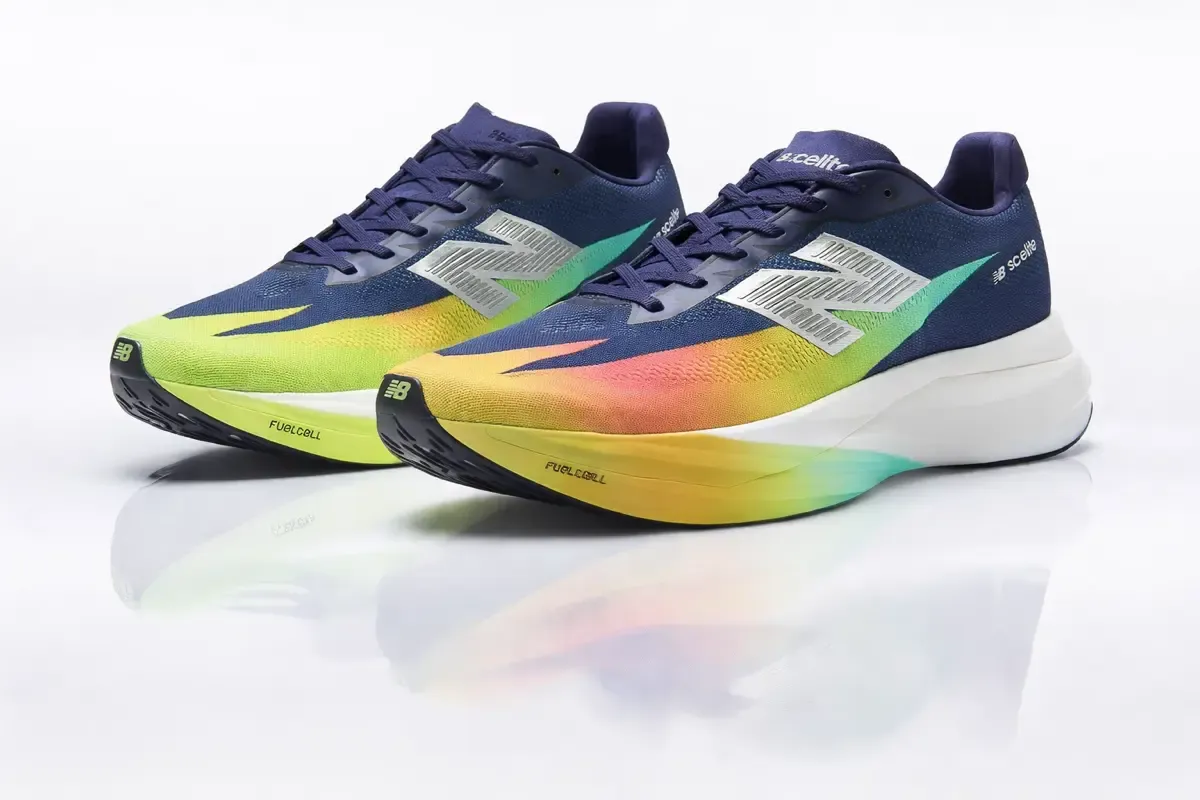
New Balance Fuelcell Supercomp Elite V5 Review
New Balance FuelCell Supercomp Elite V5 Review: A top-tier hybrid racer blending elite propulsion with lifestyle versatility. Does it live up to the hype?
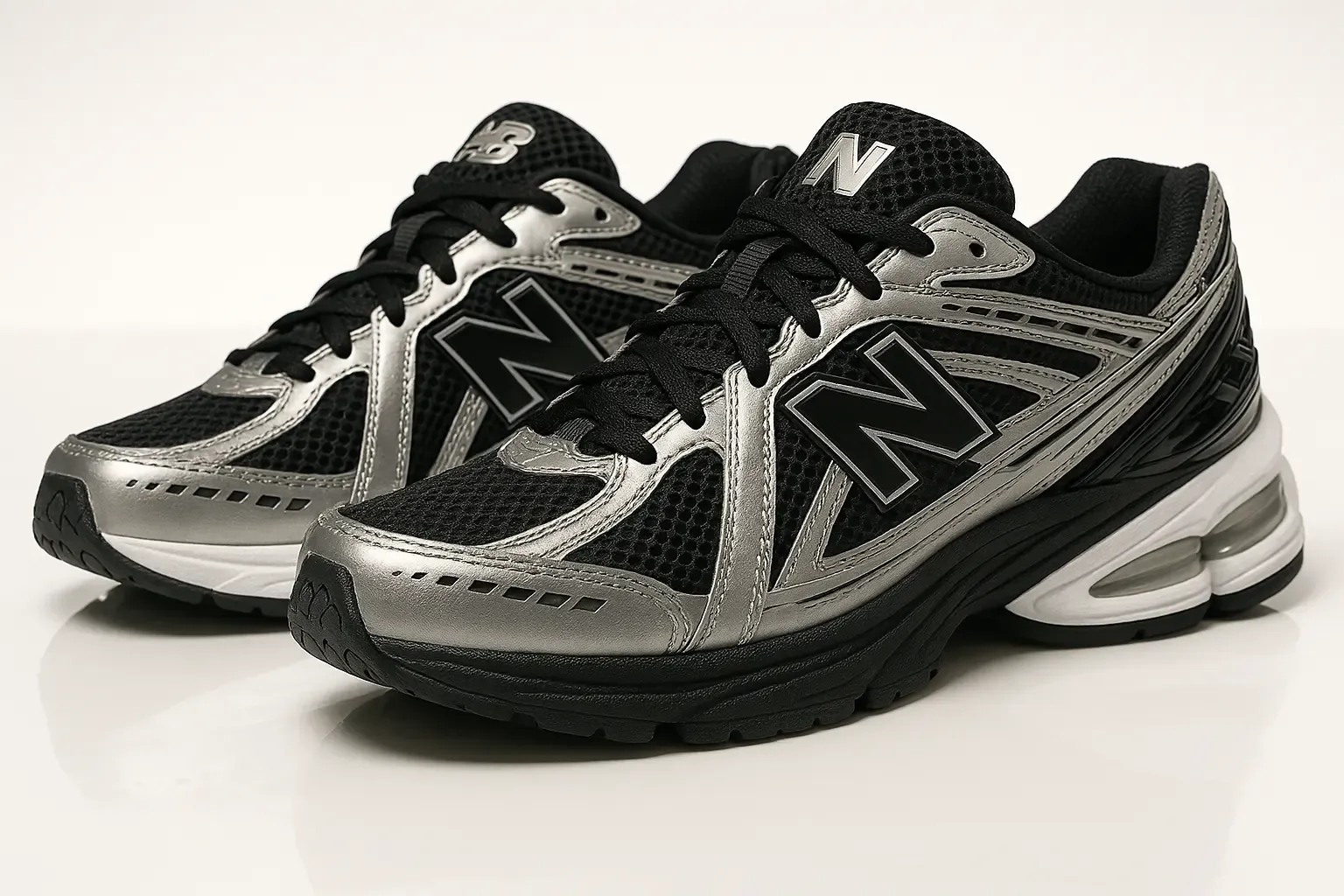
New Balance 1906r Review
The New Balance 1906R combines retro design with modern comfort, offering cloud-like cushioning and distinctive style despite some quality control concerns.
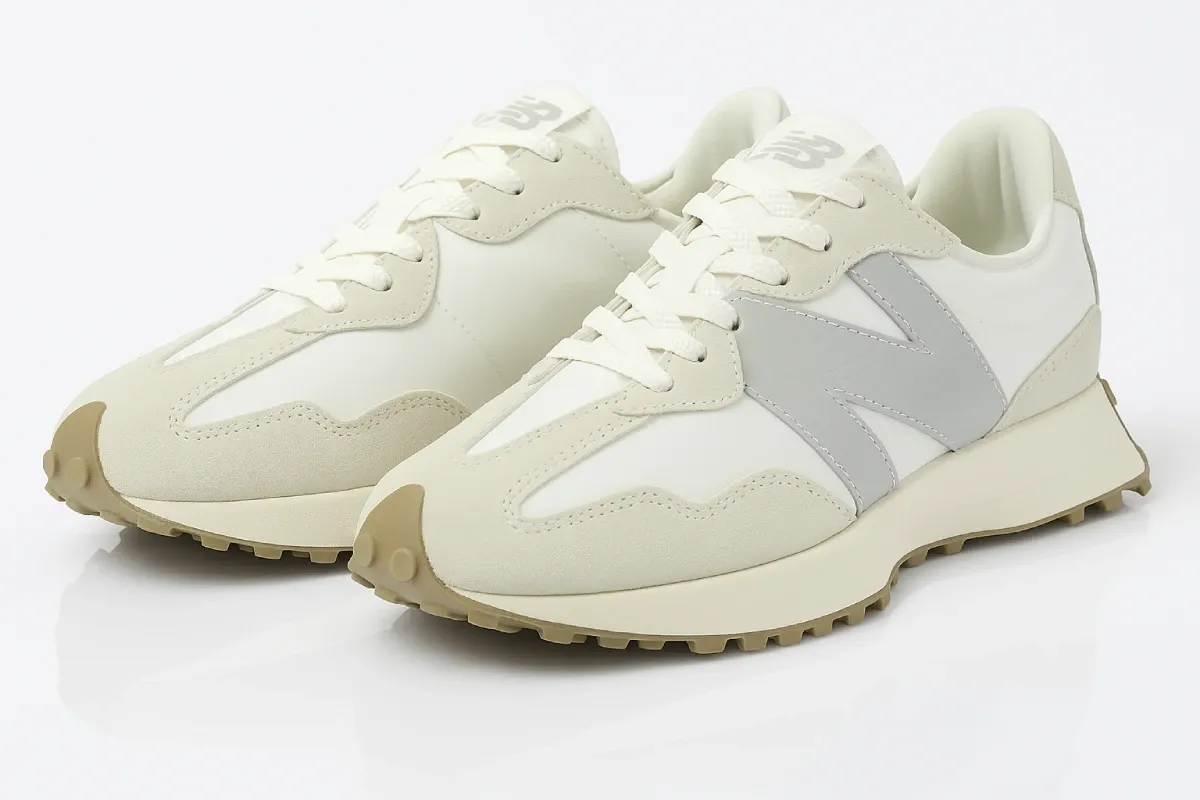
New Balance 327 Review
In-depth New Balance 327 review. Explore comfort, style, and sizing issues before you buy. Is this retro-inspired sneaker worth the hype?
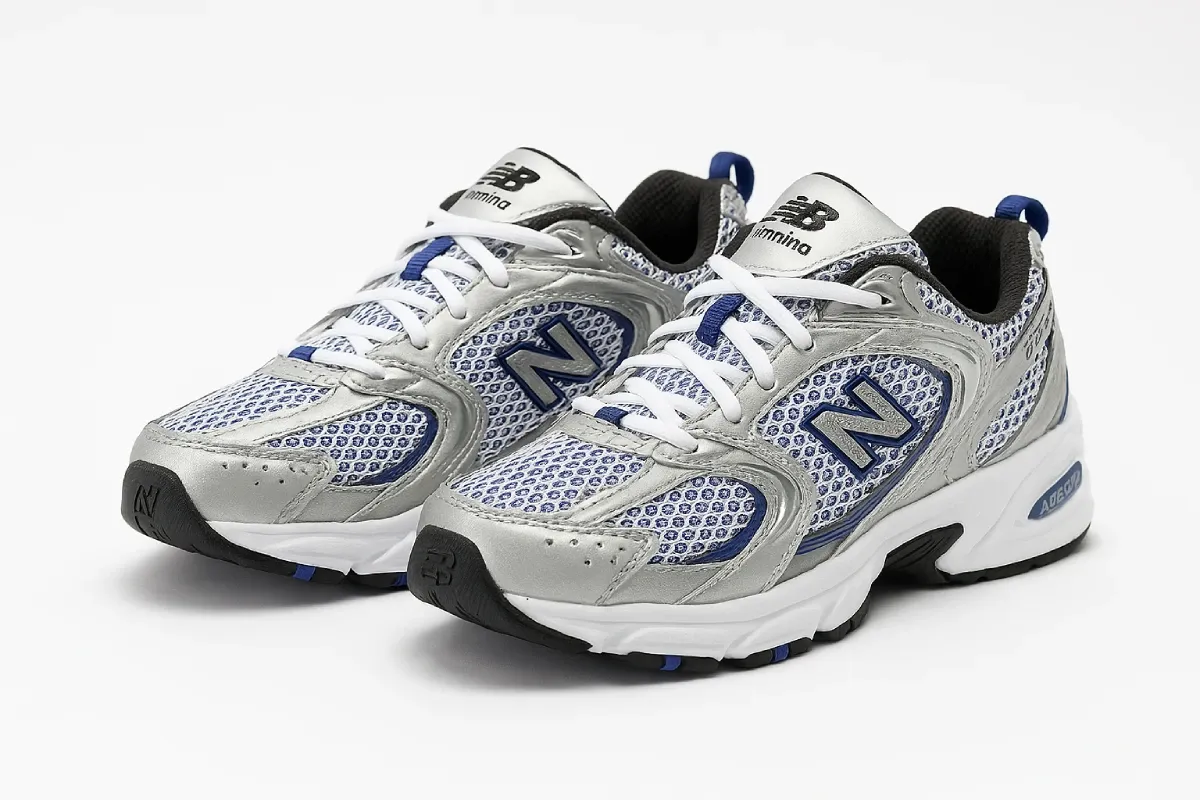
New Balance 530 Review
Review of the New Balance 530: A deep dive into the comfort, sizing, and durability of this trending retro "Dad Shoe." Is it worth the hype?
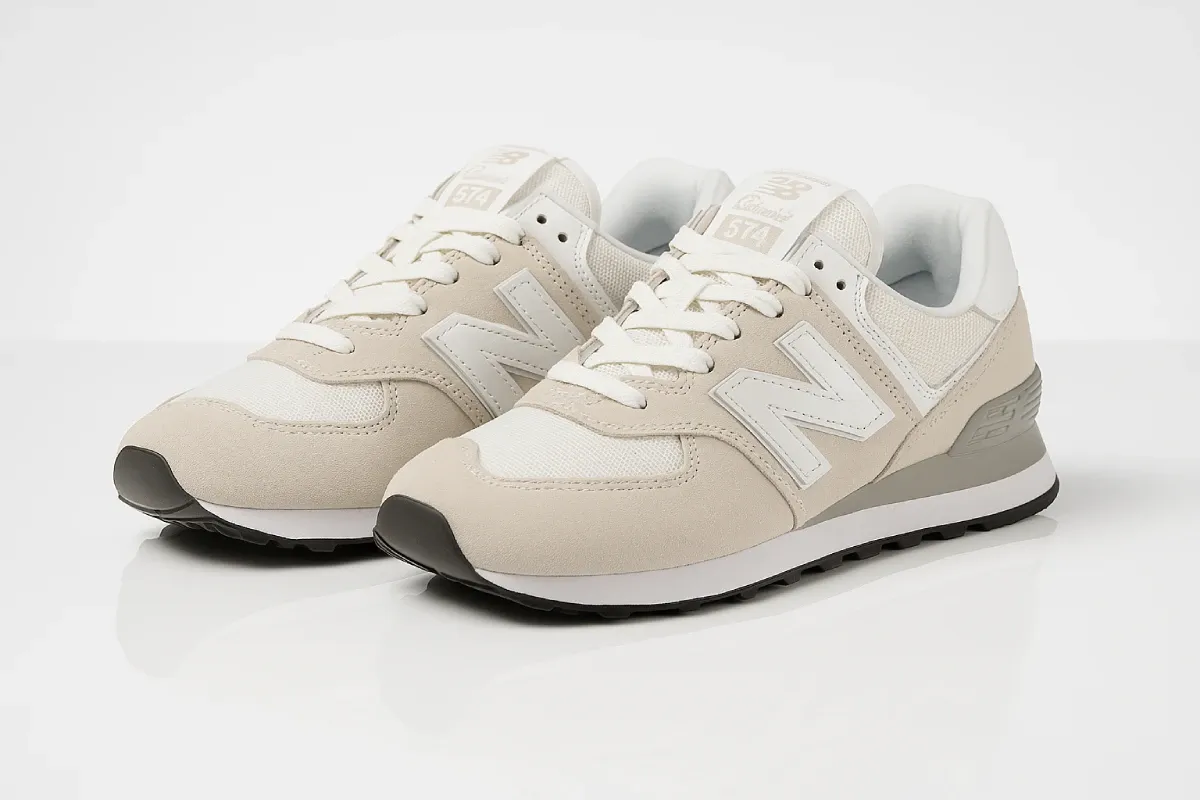
New Balance 574 Core Review
Get an honest review of the iconic New Balance 574 Core. We dive deep into its comfort, style, durability, and value to see if it's worth the hype.
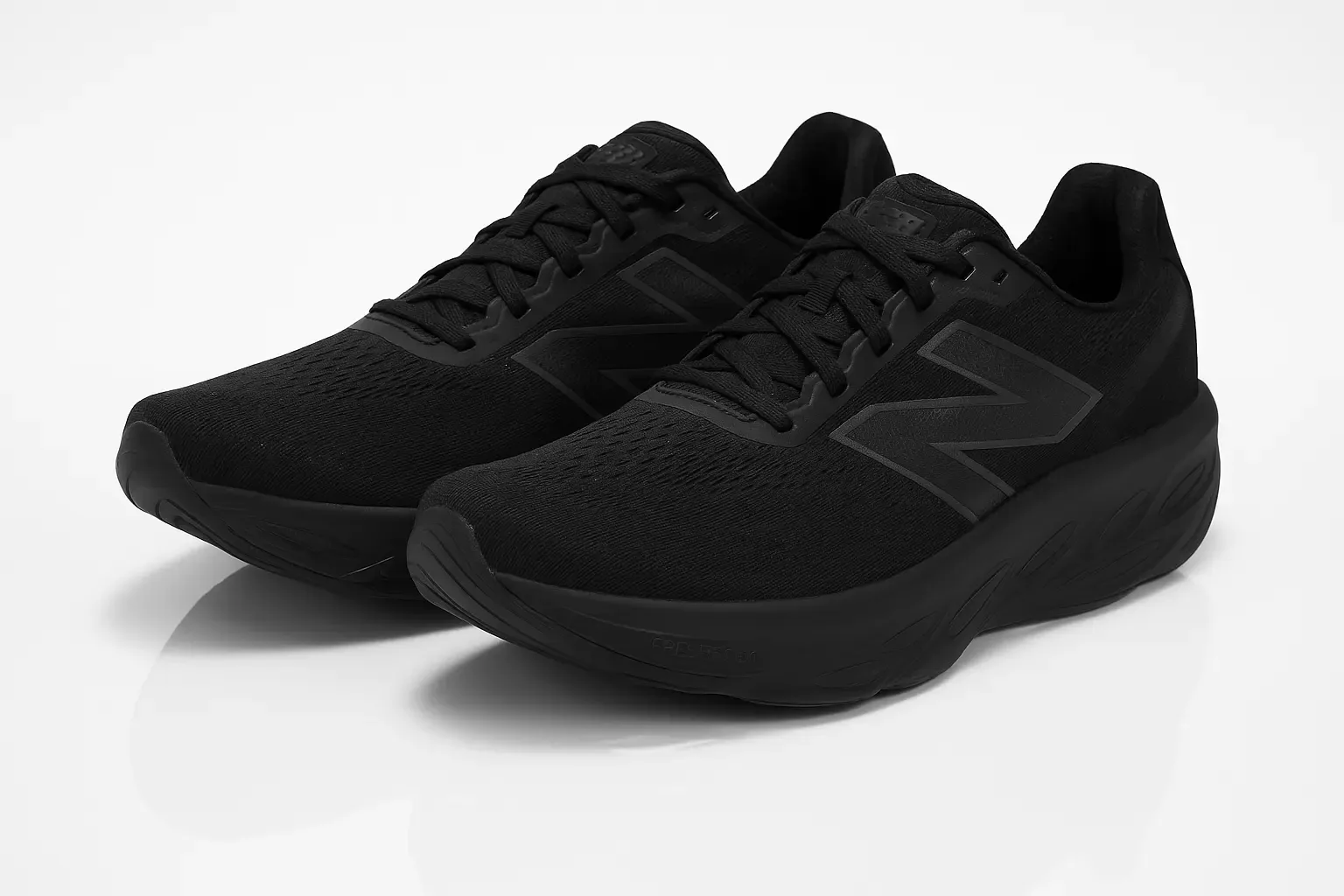
New Balance Fresh Foam X 1080 v14 Review
Experience exceptional cushioning with the New Balance Fresh Foam X 1080 v14, offering plush support for runners and anyone spending long hours on their feet.