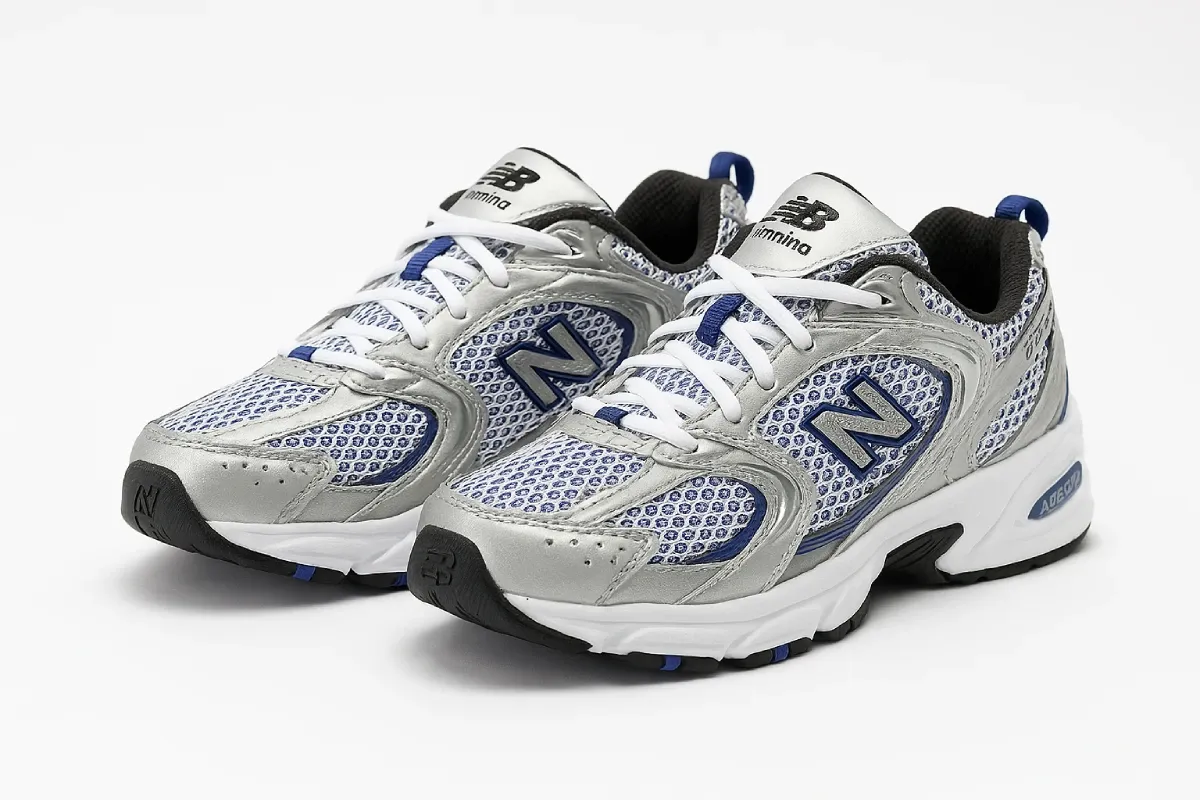
Short answer
The New Balance 530 has firmly established itself as a premier retro lifestyle sneaker, but finding the perfect fit requires an understanding of its unique silhouette dynamics. While the general consensus indicates that the shoe runs true to size (TTS) for individuals with narrow to average foot widths, its overall volume profile leans towards a more tailored, secure lockdown.
Runs true to size
Cross-sizing: what size to buy
Find a shoe you already own and read across to the New Balance 530 size to buy.
| Reference Shoe | US | EU | ||
|---|---|---|---|---|
| Your usual | Buy | Your usual | Buy | |
| Nike Air Force 1 | 10 | 10.5 | 44 | 44.5 |
| Adidas Samba | 10 | 10 | 44 | 44 |
| Nike Dunk Low | 10 | 11 | 44 | 45 |
-
Nike Air Force 1
Your usual Buy US 10 10.5 EU 44 44.5 -
Adidas Samba
Your usual Buy US 10 10 EU 44 44 -
Nike Dunk Low
Your usual Buy US 10 11 EU 44 45
Fit Notes
- Nike Air Force 1
- The Nike Air Force 1 is highly celebrated for its generous internal footprint and exceptionally wide toe box. Because the New Balance 530 is distinctly narrower and features a more tapered forefoot silhouette, staying true-to-size relative to your AF1 size will cause a restrictive squeeze. Sizing up a half-size to a US 10.5 (EU 44.5) compensates for this volume drop, mirroring the spacious comfort of the Nike model without pinching your toes.
- Adidas Samba
- The Adidas Samba and the New Balance 530 share a nearly identical, low-volume fit philosophy characterized by a streamlined, moderately narrow profile. They exhibit a true 1:1 cross-sizing relationship. For the width compensation factor: if you are someone who normally sizes up a half size in the notoriously narrow Samba strictly to obtain extra horizontal room, you should apply that same logic and stick with your adjusted Samba size here rather than dropping back to your literal measured length, as the 530's toe box enforces a similarly snug lateral boundary.
- Nike Dunk Low
- Rooted in basketball heritage, the Nike Dunk Low offers an intensely roomy, wide, and heavily cushioned internal chamber. The New Balance 530 is significantly less voluminous across both the midfoot and forefoot channels. Transitioning from the spacious Dunk Low environment to the 530 in the same numerical size will yield an uncomfortably cramped experience; therefore, purchasing a full size larger (US 11 / EU 45) is necessary to achieve a comparable level of structural freedom.
Sizing FAQ
Does the New Balance 530 run true to size?
Yes, the New Balance 530 runs true to size (TTS) in length, making it a reliable match for manufacturer size charts if you have narrow to average-width feet. However, the initial step-in feel is characterized by a firm upper and reduced internal volume across the midfoot and forefoot, which can cause a temporary sensation of tightness. Over time, a natural break-in period occurs where the synthetic or leather structural overlays gradually relax and conform to your foot. If you prefer a loose fit or are transitioning from wide-fitting sneaker brands, adjusting your size upward is highly recommended.
Is the New Balance 530 good for wide feet?
The New Balance 530 is inherently less accommodating for individuals with wide feet due to its sleeker design philosophy, which favors a narrow last and an early-tapering toe box over maximum interior space. Out of the box, the rigid upper materials do not offer immediate stretch or lateral relief, potentially creating painful pressure points across the metatarsal heads. Wide-footed buyers looking to style the 530 comfortably should avoid choosing their standard true-to-size length and instead proactively size up by a half to a full size to manually inject enough horizontal clearance for their foot shape.
How is the arch support on the New Balance 530?
The arch support profile of the New Balance 530 is minimal and flat. Rather than featuring a pronounced internal contour or sophisticated orthopedic arch tech, the shoe relies on its solid external framework and baseline outsole cushioning to support the foot. While this flat architecture is completely adequate for neutral gaits, individuals with fallen arches, low arches, or severe flat-foot conditions will find the stock bed insufficient. To avoid long-term discomfort, flat-footed wearers should plan to swap out the factory insoles for supportive, custom rigid orthotics or aftermarket lifestyle inserts.
Specs & Sizing
| Weight | 308 g |
|---|---|
| Retail price | $110 |
| Price on Amazon | 80-120 |
| Release year | 1992 |
| Upper | Mesh with synthetic overlays |
| Midsole | ABZORB foam |
| Outsole | Rubber |
| Technologies | ABZORB cushioning |
| Fit & sizing | True to size, or 0.5 down for snug fit |