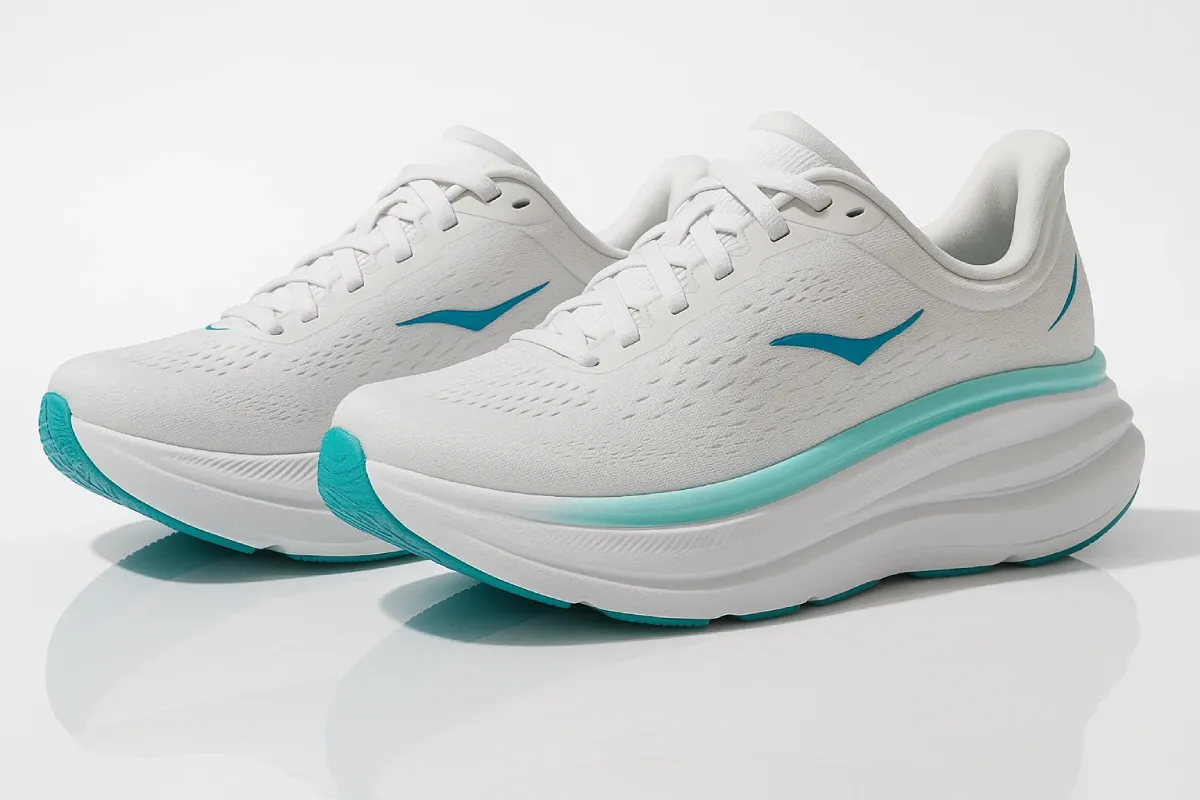
Short answer
Real-world user-experience data reveals that the Bondi 9 cannot be generalized as entirely 'true to size' (TTS); while it provides a secure, snug lockdown for narrow-to-average feet during casual walking, it runs approximately a half-size short for individuals with high-volume, wide, or flat foot shapes.
Cross-sizing: what size to buy
Find a shoe you already own and read across to the Hoka Bondi 9 size to buy.
| Reference Shoe | US | EU | ||
|---|---|---|---|---|
| Your usual | Buy | Your usual | Buy | |
| Hoka Bondi 8 | 10 | 10.5 (or 10 Wide) | 44 | 44.5 (or 44 Wide) |
| Hoka Clifton 10 | 10 | 10.5 (or 10 Wide) | 44 | 44.5 (or 44 Wide) |
| ASICS Gel-Nimbus 28 | 10 | 10.5 | 44 | 44.5 |
| New Balance 1080v15 | 10 | 10.5 (or 10 Wide) | 44 | 44.5 (or 44 Wide) |
-
Hoka Bondi 8
Your usual Buy US 10 10.5 (or 10 Wide) EU 44 44.5 (or 44 Wide) -
Hoka Clifton 10
Your usual Buy US 10 10.5 (or 10 Wide) EU 44 44.5 (or 44 Wide) -
ASICS Gel-Nimbus 28
Your usual Buy US 10 10.5 EU 44 44.5 -
New Balance 1080v15
Your usual Buy US 10 10.5 (or 10 Wide) EU 44 44.5 (or 44 Wide)
Fit Notes
- Hoka Bondi 8
- The Bondi 9's built-up 3-D molded collar and dense rearfoot padding occupy substantial internal volume, pushing the foot forward and making the shoe feel a half-size shorter than the Bondi 8. Standard-width wearers require a half-size increase to US 10.5 to prevent toe crowding. To address the length vs. width dynamic without contradiction: if your true-to-size length is perfect but you experience lateral pressure across the metatarsal heads, do not size up continuously; instead, remain at your true length and choose the Wide (2E) version to secure proper lateral relief without misaligning the foot's natural flex point.
- Hoka Clifton 10
- The Clifton 10 is built with a redesigned, more accommodating toe box and a higher 8 mm heel-to-toe drop. Conversely, the Bondi 9 employs a lower 5 mm drop and a narrower last that tapers early in the metatarsal zone, resulting in immediate lateral restriction. Clifton wearers often feel their toes crowding the front and sides in the Bondi 9, necessitating a half-size increase to US 10.5. Note the compensation factor: if you normally size up in Hokas purely to escape a narrow forefoot taper, choose your true length (US 10) in a Wide variant rather than buying an overly long shoe that compromises heel lockdown.
- ASICS Gel-Nimbus 28
- The Gel-Nimbus 28 relies on a highly elastic engineered knit upper and a generous, rounded forefoot profile that permits uninhibited toe splay. Because the Bondi 9's warp knit jacquard upper is structurally rigid and possesses significantly less mechanical stretch, its early metatarsal taper causes a tighter squeeze. ASICS wearers typically require a half-size increase to US 10.5 in the Bondi 9 to recreate the necessary clearance and avoid subungual hematomas during high-mileage training.
- New Balance 1080v15
- New Balance's signature Hypoknit upper and anatomically rounded toe box allow the forefoot to expand naturally without perimeter resistance. The Bondi 9's rigid, built-up foam sidewalls and shallow forefoot volume restrict this lateral expansion. To avoid a punishing lateral pinch on the pinky toe, New Balance wearers must either size up a half size to US 10.5 or—if their feet are wide or flat—select their true length in a Wide (2E) option to ensure appropriate lateral relief.
Sizing FAQ
Does the Hoka Bondi 9 run true to size?
The Hoka Bondi 9 does not have a uniform true-to-size profile. It runs true to size only for individuals with narrow-to-average feet who use the shoe for casual walking or all-day standing shifts, where a highly snug and locked-in upper is preferred. However, because the plush, 3-D molded heel counter and heavily padded collar take up substantial internal space, the foot is pushed forward in the shoe bed. For road running, high-mileage training, or individuals with wide or high-volume feet, the shoe effectively runs a half-size short, making a half-size increase necessary to guarantee a minimum half-inch of toe box clearance.
Is the Hoka Bondi 9 good for wide feet?
The standard medium (D) width of the Bondi 9 is built on a narrow last that tapers early in the metatarsal area, which frequently compresses the big and pinky toes of wide-footed individuals. Despite having an exceptionally wide and stable underfoot platform base, the upper layout creates a shallow forefoot volume that causes immediate structural pressure over the metatarsal heads. To accommodate wide feet comfortably, buyers should avoid the standard width and choose Hoka's dedicated Wide (2E) or Extra-Wide (4E) options, which provide the horizontal volume required for natural toe splay, foot swelling, and rigid custom orthotics.
How is the arch support on the Hoka Bondi 9?
The arch support on the Bondi 9 represents a major, successful ergonomic update over previous iterations. While the Bondi 8 featured a high-walled 'bucket seat' foam design that frequently pressed uncomfortably into low or flat arches, the Bondi 9 features significantly lowered and tapered foam sidewalls. This modified geometry smoothly cradles and supports neutral-to-flat arches without causing painful friction or poking. This updated stability architecture makes the shoe an excellent, highly protective option for runners and walkers managing flat feet or plantar fasciitis.