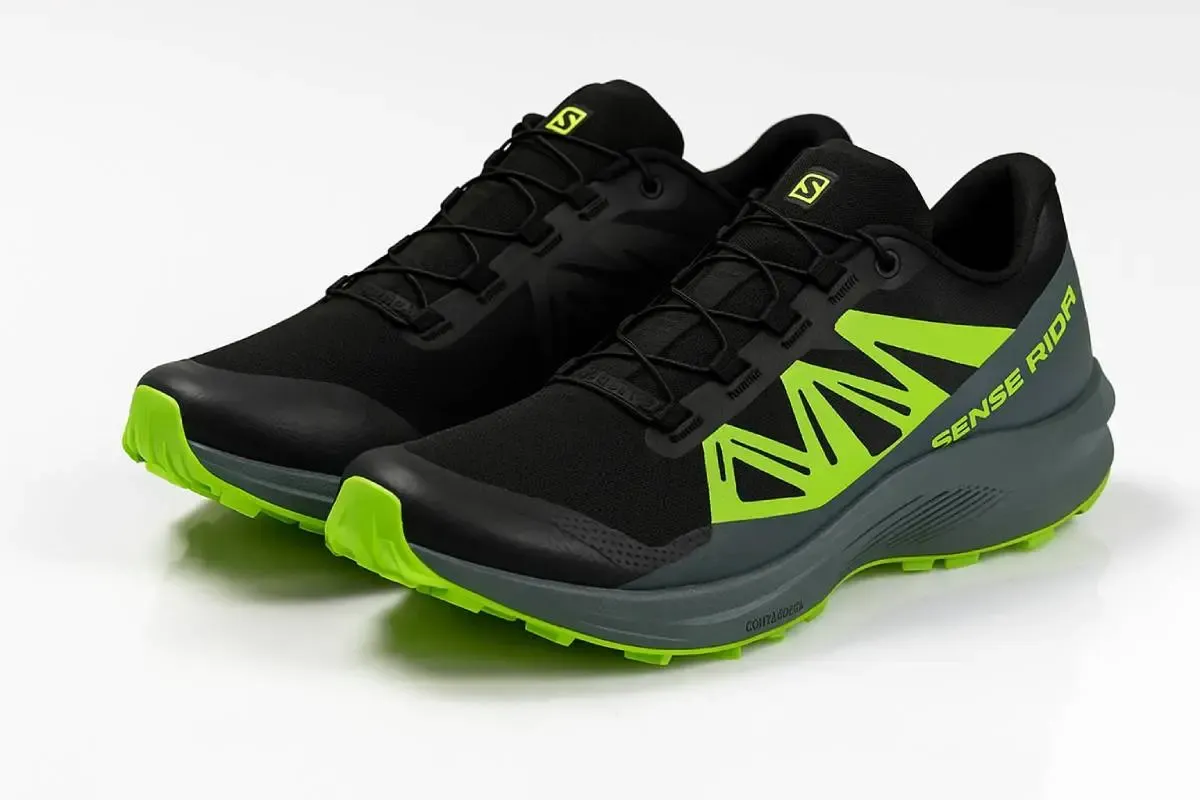
Founder & Lead Editor
Federico D'anna
Federico D'anna has spent 9 years reviewing sneakers with a methodology built on hands-on wear notes, side-by-side comparisons, and verified buyer feedback.
Learn more about Federico D'annaHighlights
Positive
- The balanced Energy Foam midsole provides both comfort and responsiveness.
- Its All Terrain Contagrip® outsole is incredibly versatile for mixed-terrain running.
Negative
- The narrow fit can be uncomfortable for runners with wider feet.
Salomon Sense Ride 5 Sizing & Fit Guide
The Salomon Sense Ride 5 is established as a highly versatile daily trail driver, bridging the gap between road flexibility and off-road security. Sizing consensus for this model is complex due to European lasting standards that can make the physical length feel slightly short for runners accustomed to standard US sizing charts. While a majority of users find it true to size (TTS) for a narrow or athletic silhouette, its low-volume upper, snug midfoot lockdown, and aggressively tapered toe box create a restrictive fit for higher-volume feet. Incorporating LSI considerations like lateral relief, custom tension limitations from the Quicklace system, and the secure SensiFit overlays, this hybrid trainer demands careful sizing selection to balance its high-performance lockdown with long-distance comfort.
Compare your current pair to find the best size match.
| Reference Shoe | Your Usual US | Buy in US | Your Usual EU | Buy in EU | Fit Notes |
|---|---|---|---|---|---|
| Hoka Speedgoat 5 / 6 | 10 | 10.0 or 10.5 | 44 | 44 or 44.5 | The Speedgoat series delivers a maximalist, highly cushioned ride with a snug, narrow standard upper. In comparison, the Sense Ride 5 is significantly firmer underfoot with superior ground feel. Runners with standard-width feet can remain true to size. However, because Salomon does not offer dedicated wide variations, runners who normally choose Hoka's 'Wide' options must scale up a half-size in the Salomon to find adequate lateral relief, taking care to secure the ankle with the Quicklace system to prevent heel slippage caused by the extra length. |
| Nike React Pegasus Trail 4 | 10 | 10.5 | 44 | 44.5 | The Pegasus Trail 4 behaves much like a standard, accommodating road shoe, offering a softer React foam midsole and a more relaxed toe box. Transitioning to the Salomon Sense Ride 5 requires a half-size increase for those accustomed to Nike's comfortable toe splay. The Salomon features a more rigid upper, a lower vertical ceiling, and a heavily tapered forefoot profile that will pinch the toes if purchased in the exact same size. |
| Salomon Ultra Glide 2 | 10 | 10.0 | 44 | 44 | As brand siblings, both models share identical short-running European length scaling, making a true-to-size transition consistent across the brand. However, the Ultra Glide 2 is a max-cushion variant with significantly higher internal volume throughout the midfoot and a more padded collar. While you should buy the same size in both, expect the Sense Ride 5 to feel noticeably tighter, lower-profile, and firmer out of the box. |
| Brooks Cascadia 17 / 18 | 10 | 10.5 | 44 | 44.5 | The Brooks Cascadia is built on a heavier, boxier last with a traditional, squared-off toe box that naturally accommodates wide foot structures. The Salomon Sense Ride 5 features an athletic, aggressively tapered silhouette. To prevent painful pinky toe compression and match the forefoot room of the Cascadia, a half-size increase in the Sense Ride 5 is highly recommended for all but the narrowest foot shapes. |
Does the Salomon Sense Ride 5 run true to size?
For runners with narrow to average foot profiles, the Salomon Sense Ride 5 runs true to size, offering a highly secure, athletic lockdown. However, its physical length scales slightly short due to European lasting increments, and the overall interior volume is low. If you fall between sizes, plan to wear thick performance socks, or anticipate foot swelling over long distances, opting for a half-size larger than your standard casual shoe size is recommended to prevent toe compression and toe-bang.
Is the Salomon Sense Ride 5 good for wide feet?
No, the standard Salomon Sense Ride 5 is not recommended for genuinely wide feet. While the underfoot footprint is wider than historical Salomon models, the 3D engineered mesh upper tapers aggressively at the toes and lacks flexibility. Furthermore, the SensiFit system creates a rigid crease over the metatarsal heads that imposes strict vertical constraints, causing severe pressure on high-volume or wide feet. Wide-footed runners should consider alternative wide-specific models.
How is the arch support on the Salomon Sense Ride 5?
The Salomon Sense Ride 5 provides prominent, structurally sound arch support that is highly beneficial for neutral runners and mild overpronators. This support is driven by a rigid TPU Advanced Chassis system that wraps the midfoot to resist inward rolling. While the platform is exceptionally stable over long miles, this prominent arch combined with a low-volume upper limits orthotic compatibility; swapping the factory insole for a thick custom orthotic will choke the instep unless you size up.
Ready to experience the Salomon Sense Ride 5 Review?
Get yours today with fast shipping from Amazon
Finding one trail shoe that truly does it all can feel like a myth, but the Salomon Sense Ride 5 makes a strong case. It’s built to be a jack-of-all-trades, blending road-shoe comfort with trail-ready grip and stability for runners who mix up their terrain. This review breaks down how it performs and whether it’s the right daily driver for your adventures.
Quick Take
Overall Rating: 4.7/5
Best For: Mixed terrain, Daily trail training, Road-to-trail applications
Key Strengths: Versatility across different terrains and distances, Comfortable, balanced cushioning from Energy Foam, Inherent stability from the midsole and upper, Reliable traction on most dry and moderate surfaces, Good outsole durability
Notable Limitations: Initial stiffness requiring a break-in period, Limited traction on highly technical or wet terrain, Potential fit inconsistency (narrow for some), The Quicklace system can be polarizing
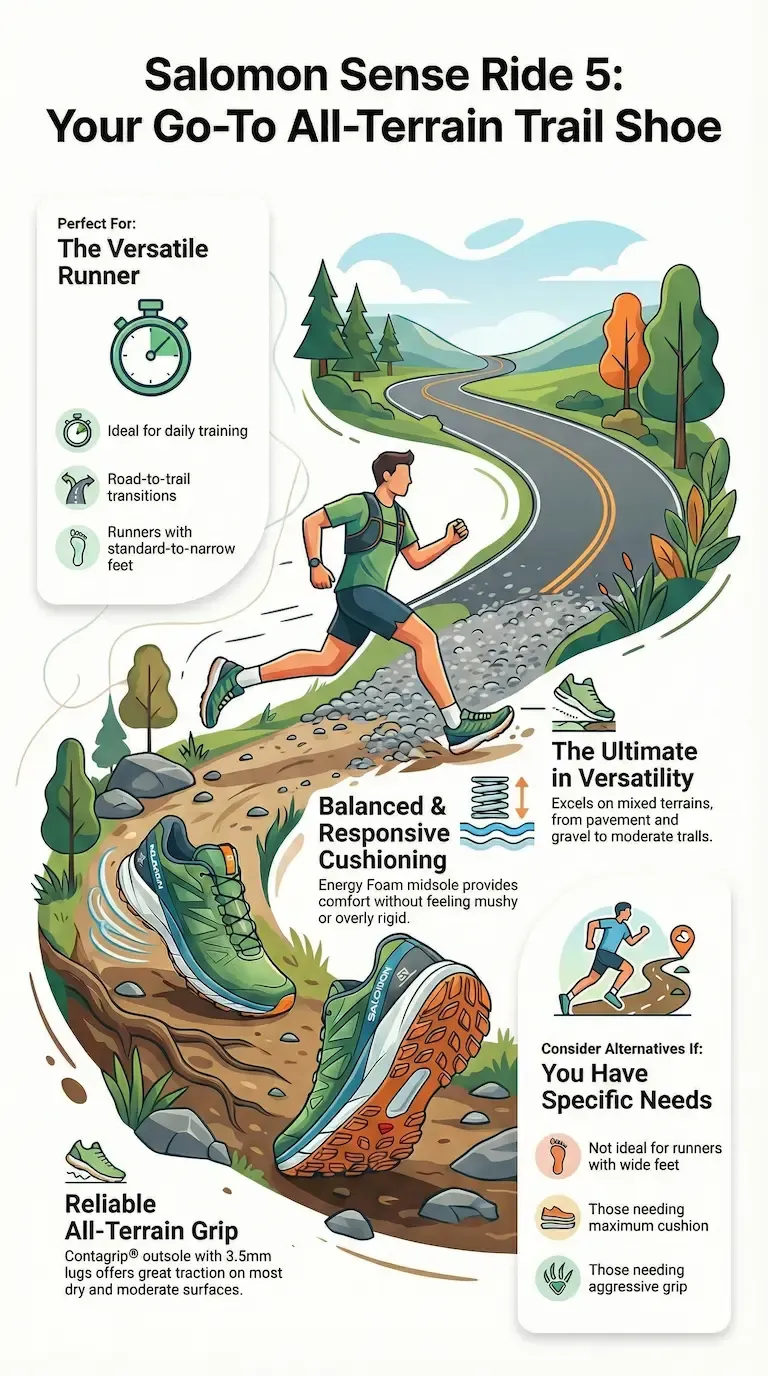
Visual Snapshot Summary
What Makes Salomon Sense Ride 5 Stand Out?
The Sense Ride 5 stands out because it’s built for the middle ground. It’s not the plushest, not the fastest, and not the most aggressive, but it might be the most versatile trail shoe you own. Salomon aims for the sweet spot and largely hits it by pairing the Energy Foam midsole (a responsive blend of EVA and Olefin) with the All Terrain Contagrip® outsole. The result feels just as comfortable on the pavement leading to the trailhead as it does on packed dirt, gravel paths, and moderately technical singletrack.
That chameleon-like adaptability is what defines the Sense Ride 5. It’s the shoe you grab when you’re not exactly sure what the day’s route will throw at you. As one happy runner put it, "The shoe's versatility is a major highlight, with users appreciating its ability to perform well on everything from short to mid-length runs, smooth to technical trails, and road-to-trail transitions."
Real Customer Experiences
When you dig into what actual runners are saying, you see a pretty clear picture emerge. The feedback generally skews positive, with a strong emphasis on the shoe's all-around capability and comfort, though there are a few recurring gripes.
- Sentiment: Strong on Comfort and Versatility. A common thread is out-of-the-box comfort and the shoe's adaptability. Many runners like how smoothly it transitions from road to trail without feeling awkward.
- Sentiment: Divided on Fit and Lacing. Fit, especially in the forefoot, is the main point of debate. Some find it snug and secure; many wide-footed runners find it narrow and constricting. The Quicklace system is similarly polarizing.
- Sentiment: Mixed on Long-Term Durability. The outsole is generally praised for toughness, but some runners raise concerns about upper longevity and midsole life, noting that cushioning can pack out faster than expected.
Here are a couple of quotes that capture the user experience well:
"Many users praise the Sense Ride 5 for its comfort, often noting it feels great right out of the box with no hotspots or pressure points, even on initial long runs."
"A significant and recurring complaint is the shoe's narrow fit, particularly in the forefoot and toe box."
Design and Build Quality
The Sense Ride 5 is a classic Salomon build: robust, purposeful, and more evolutionary than revolutionary.
Upper: The shoe features an Engineered Mesh upper. It feels light, it's quite flexible, and it does a decent job of breathing on warmer days. Woven into this structure is Salomon's SensiFit™ technology. Think of it as a set of wings that wrap from the midsole up to the laces, giving you a secure, cradle-like hold when you cinch everything down with the Quicklace™ system. The material feels durable enough for brushes with trail debris, though it's not an armored tank.
Midsole: This is where a lot of the magic happens. The Sense Ride 5 uses Salomon's Energy Foam, a compound made from EVA and Olefin (OBC). It strikes a fantastic balance. It's not that sink-in, marshmallowy soft you find in max-cushion shoes, nor is it a rigid, unforgiving racing flat. It's a responsive, energetic foam that provides enough cushioning for daily miles while still giving you a good feel for the trail. The stack height is moderate, at 29.6 mm in the heel and 21.3 mm in the forefoot, resulting in a very traditional 8mm drop. Sandwiched in there is a Profeel Film, which is a thin, flexible layer that acts as a rock filter, protecting your feet from sharp objects without making the shoe feel stiff as a board.
Outsole: Underneath it all is the All Terrain Contagrip® outsole. This is Salomon's proprietary rubber compound, designed to be the ultimate generalist. The 3.5 mm diamond-shaped lugs aren't the deepest or most aggressive you'll find, but that's by design. They provide excellent grip on a wide variety of surfaces like hardpacked dirt, gravel, and dry rock. The full-coverage rubber also adds to the shoe's overall stability and durability.
Weight: My pair in a standard men's size 9 comes in at about 286 grams (10.1 ounces). It's not the lightest shoe on the market, but it feels nimble on the foot and never clunky. It hits a sweet spot that aligns perfectly with its versatile intentions.
Special Tech:
- SensiFit™: Provides that signature secure lockdown around the midfoot.
- Quicklace™: For fast, one-pull adjustments and a clean look, though it can create pressure points if you're not careful.
- Energy Foam: The heart of the shoe, offering a balanced and responsive ride.
- Profeel Film: A subtle but important feature for underfoot protection.
- All Terrain Contagrip®: The do-it-all outsole that gives the shoe its versatile grip.
Common Durability Issues: No shoe is perfect. Some runners have noted that a crease can form on the mesh upper right where the foot flexes. More significantly, a few have experienced premature wear on the outsole, especially if they have a specific pronation pattern, and there are reports that the soft midsole might lose its pop around the 300-mile mark.
Comfort and Fit
Comfort is subjective, but the Sense Ride 5 has a few clear patterns that show up again and again.
For many runners, the step-in comfort is good. The padding around the heel collar and tongue feels welcoming, and the Energy Foam midsole lands in a balanced place underfoot—neither mushy nor harsh. The main caveat is stiffness.
Break-in: Don’t be surprised if it feels a bit rigid out of the box. Some users report the upper and sidewalls feeling stiff, with a break-in period of up to 50 miles before it softens and molds more naturally. It’s not usually painful, but it is noticeable.
Sizing Advice: In length, the Sense Ride 5 generally fits true to size. The width, though, is a whole other story.
Width Profile: This is the most polarizing part. Salomon’s fit is often described as "standard to narrow," and the Sense Ride 5 leans into that. Runners with wider feet—or anyone who prefers more room up front—may find it constricting. There isn’t a dedicated wide option, which is a common complaint. As one runner noted, a recurring issue is "the shoe's narrow fit, particularly in the forefoot and toe box." If you’re on the wider side, trying them on first (or considering a half-size up for a bit more volume) is the safer move.
Love the comfort features?
See current availability and pricing
Style and Versatility
One of the unsung strengths of the Sense Ride 5 is the look. It’s rugged without being over-the-top, and it has a clean silhouette that doesn’t scream “ultra-technical trail shoe.” The lines are sleek, and the colorways are typically tasteful.
This stylistic balance makes it incredibly versatile. Of course, it's at home on the trails, but it doesn't look out of place on long walks, for casual outdoor activities like a day at the park, or even for something like bikepacking where you need one shoe to do it all.
Quality and Durability
At $140, you expect real durability. The Sense Ride 5 mostly delivers, but it can be a mixed bag depending on mileage, terrain, and runner mechanics.
On the plus side, many aspects feel well built. The Contagrip® outsole is a highlight for many runners and tends to last well on the mixed terrain it’s meant for. The overall construction feels solid, and plenty of users get hundreds of trouble-free miles.
The flip side is recurring complaints about specific wear patterns. The mesh upper can crease and form weak spots at flex points, and the relatively soft Energy Foam midsole can compress and lose some responsiveness sooner than some runners want, possibly around the 300-mile mark. There are also scattered reports of the insole slipping and inner heel fabric wearing through.
As one particularly critical user reported, they experienced "complete wear-out (loss of grip and cushioning) after as little as 550km (340 miles) in 3 months for a light runner." While this seems to be an outlier, it points to potential inconsistencies in longevity depending on runner weight, gait, and terrain. It's not a deal-breaker for me, but it's something to be aware of.
Decision Matrix
To simplify things, here's how the Sense Ride 5 stacks up in a few common scenarios.
| Scenario ↓ / Criterion → | Comfort | Breathability | Rain/Grip | Style |
|---|---|---|---|---|
| Trail Running | ✓ | ✓ | ○ | ✓ |
| Hiking | ✓ | ✓ | ○ | ✓ |
| Casual Outdoor | ✓ | ○ | ✓ | ✓ |
Legend: ✓ = Good ○ = Average ✕ = Poor
Who Should Buy
Perfect For
- Versatile Trail Runners: If your runs include a mix of pavement, gravel paths, and moderate trails, this shoe is your new best friend.
- Beginner to Experienced Runners: It's approachable for newcomers but has enough performance to satisfy seasoned trail vets for daily miles.
- Runners with Standard to Narrow Feet: If you appreciate a snug, secure lockdown and don't have wide feet, the classic Salomon fit will work well for you.
- Heel Strikers: The 8mm drop and decent heel cushioning make it a comfortable option for those who land on their heels.
- Those Transitioning from Road to Trail: Its road-shoe-like feel and balanced cushioning make it an excellent gateway shoe into the world of trail running.
Consider Alternatives If
- Max-Cushioning Seekers: If you want a plush, pillowy ride to absorb every impact, you'll find the Sense Ride 5 to be on the firmer side.
- Technical Terrain Specialists: For those who spend most of their time on slick, wet rock, deep mud, or snow, the 3.5mm lugs won't provide enough aggressive traction.
- Dedicated Forefoot Strikers: Some may find the forefoot cushioning a bit thin for long distances, especially if you're a pure forefoot striker.
- Runners with Wide Feet: This is the big one. If you have wide feet, the narrow fit is likely to be a deal-breaker.
Final Verdict
The Salomon Sense Ride 5 is a masterclass in balance and versatility. It's the shoe you can rely on for the majority of your trail adventures without a second thought. While it doesn't claim the top spot in any extreme category, its strength lies in its incredible competence across a vast range of conditions and surfaces. It's comfortable, responsive enough, and provides a secure, stable ride. The main considerations are the potentially narrow fit and the less-than-aggressive grip on truly gnarly terrain. For the runner looking for one shoe to handle daily training, weekend explorations, and road-to-trail transitions, it's an exceptional choice and a great value.
Browse our full Salomon collection to find your perfect pair.
As an Amazon Associate we earn from qualifying purchases. This helps support our site so we can keep bringing you the best content!
Frequently Asked Questions
What kind of terrain is the Salomon Sense Ride 5 best for?
Is Salomon Quicklace on the Sense Ride 5 easy to use, and does it stay secure?
How does the Salomon Sense Ride 5 compare to other versatile trail shoes like the Hoka Challenger or Nike Pegasus Trail?
Related Reviews
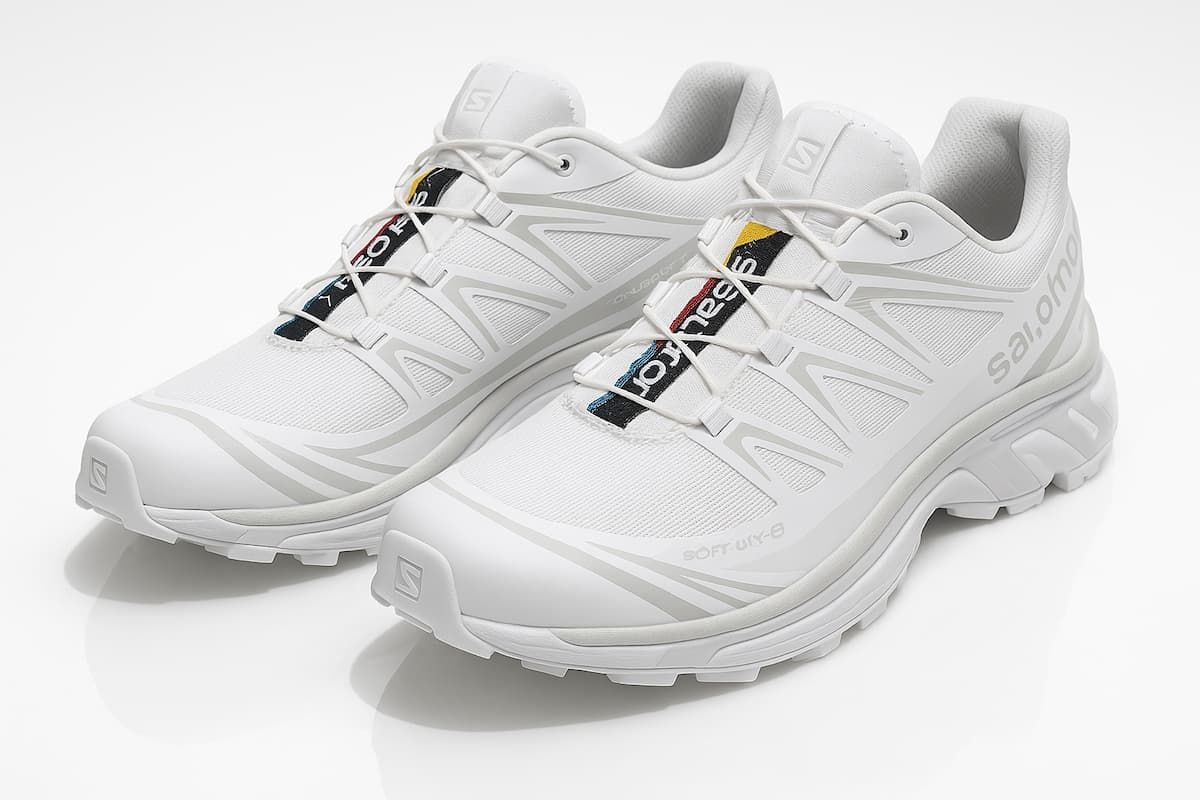
Salomon XT-6 Review
Salomon XT-6 Review: Tech, Sizing & Durability Analysis Description: Is the Salomon XT-6 still worth the hype? We analyze the fit, durability, and comfort of this gorpcore icon in our detailed review.
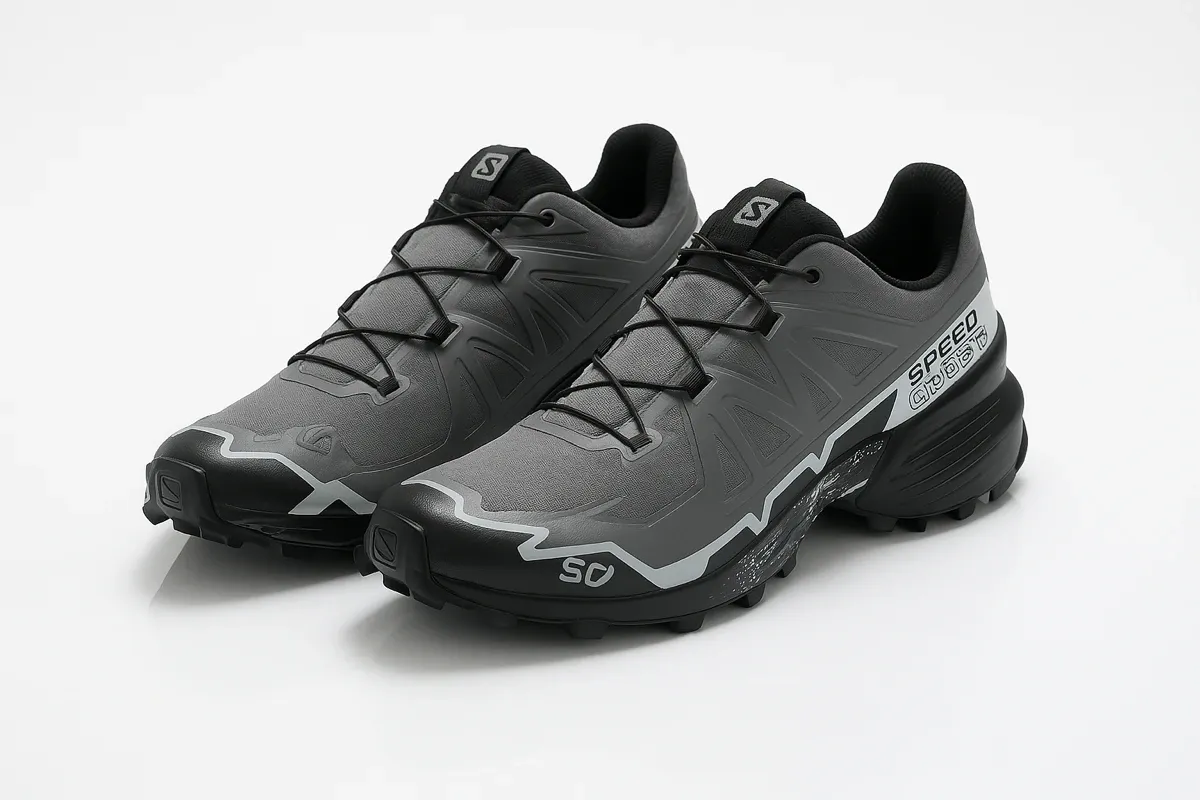
Salomon Speedcross 6 Review
Comprehensive review of the Salomon Speedcross 6 Forces Trail shoe highlighting its 4.6/5 rating, aggressive grip, quick-lace system, and ideal uses for trail enthusiasts.
Salomon Alphacross 5 Trail Running Shoe Review
Detailed review of the Salomon Alphacross 5. We test its mud grip, wide fit, and durability to see if this budget trail runner is worth the hype.
Salomon XA PRO 3D Gore-Tex Review
Looking for a versatile and durable trail shoe? Our comprehensive review of the Salomon XA PRO 3D Gore-Tex covers its performance, comfort, and more. Find out if this iconic shoe is the right fit for your adventures.
Salomon XA PRO 3D Review
An in-depth review of the Salomon XA PRO 3D, a durable and stable trail running shoe perfect for hiking and technical trails. Is it right for you?
Salomon Pulsar Trail Review
Expert review of the Salomon Pulsar Trail. Discover its responsive ride, stylish design, snug fit, and critical limitations on wet terrain.