Founder & Lead Editor
Federico D'anna
Federico D'anna has spent 9 years reviewing sneakers with a methodology built on hands-on wear notes, side-by-side comparisons, and verified buyer feedback.
Learn more about Federico D'annaHighlights
Positive
- Aesthetically, this shoe is one of the best-looking walking shoes on the market.
- I walk 2-3 miles several times a week, and these shoes are extremely comfortable for my 5-mile walks.
Negative
- The side split open where material meets sole after 7 months of constant wear 4-5 days a week.
New Balance Fuelcell Walker Elite Sizing & Fit Guide
The New Balance FuelCell Walker Elite represents a significant design departure from the traditional high-volume shapes historically seen in classic walking footwear, utilizing a highly contoured, performance-driven last. While standard manufacturer size charts categorize this shoe as running true to size, extensive consumer data reveals that it delivers a highly specialized, snug fit that frequently feels short and exceptionally narrow. The engineered upper features a low-volume vertical toe ceiling and an aggressively tapered lateral profile that compresses the forefoot. To secure adequate lateral relief and avoid localized constriction across the metatarsals, shoe specialists and wearers uniformly recommend bypassing true-to-size (TTS) baselines in favor of a half-size increase or an expanded width designation.
Compare your current pair to find the best size match.
| Reference Shoe | Your Usual US | Buy in US | Your Usual EU | Buy in EU | Fit Notes |
|---|---|---|---|---|---|
| New Balance 847 (v4) | 10.0 | 10.5 (Standard D) or 10.0 (Wide 2E) | 44.0 | 44.5 (Standard D) or 44.0 (Wide 2E) | The legacy 847 v4 is built upon a much wider rubber sole footprint and features a squared, inherently deeper toe box layout. Because the FuelCell Walker Elite transitions to a narrower base and a sharply tapered forefoot shape, moving directly into the same size causes outer toe pinching. Users must size up a half-size in length or transition directly into a Wide (2E) designation to recover the necessary internal volume. |
| New Balance Fresh Foam X 1080 (v13/v14) | 10.0 | 10.5 (Standard D) or 10.0 (Wide 2E) | 44.0 | 44.5 (Standard D) or 44.0 (Wide 2E) | The Fresh Foam X 1080 series is globally recognized for its highly plush, accommodating engineered mesh upper that runs noticeably wide throughout. In comparison, the Walker Elite features a substantially tighter midfoot lockdown wrap and a severely restricted, lower-volume toe ceiling. To prevent the dorsal aspect of the toes from rubbing raw against the fabric, moving up a half-size or adjusting to a 2E wide width is highly critical. |
| Hoka Bondi (v8) | 10.0 | 10.5 | 44.0 | 44.5 | Although the Hoka Bondi v8 has a reputation for running slightly long in linear measurement, its forefoot platform remains significantly more accommodating than the Walker Elite. The Walker Elite's distinctively pointed, dress-shoe-like lateral taper forces the smaller toes inward. A half-size up is required as a deliberate compensation factor to provide lateral toe relief and eliminate friction blisters. |
| Brooks Ghost (Ghost Max/Beast GTS) | 10.0 | 10.5 | 44.0 | 44.5 | Brooks footwear typically provides a classically consistent, stable standard standard-width footprint. The FuelCell Walker Elite cuts down on vertical clearance directly above the toes, causing the big toe to uncomfortably poke upward against the upper mesh. Purchasing a half-size larger than your standard Brooks baseline is essential to secure the vertical space needed to bypass continuous pressure points. |
Does the New Balance FuelCell Walker Elite run true to size?
No, the New Balance FuelCell Walker Elite does not consistently run true to size for the vast majority of active walkers. While its absolute linear length matches industry measurements, its narrow midfoot architecture, sharply tapered toe box, and low vertical ceiling combine to create a fit that feels roughly a half-size too small. Unless you have an exceptionally narrow or low-volume foot shape, ordering a half-size larger than your standard casual shoe size or selecting an expanded width configuration is highly recommended to protect against toe restriction and premature material failure.
Is the New Balance FuelCell Walker Elite good for wide feet?
The Walker Elite presents notable sizing challenges for wide-footed individuals and is generally not considered optimal without explicit structural adjustments. Although New Balance manufactures this model in wide (2E) and extra-wide (4E) options, the physical rubber sole platform footprint was reduced by roughly a quarter-inch compared to legacy walking shoes, causing wider feet to awkwardly hang over the edges of the sole. Because the tightly woven upper mesh and synthetic overlays are completely non-stretch, wide-footed walkers must carefully size up in both length and width simultaneously to achieve an unconstrained, stable fit.
How is the arch support on the New Balance FuelCell Walker Elite?
The model provides robust, moderate-to-high underfoot arch support that effectively counters torsional twisting during long fitness walks. It features an integrated, full-length nylon plate and active stability planes embedded within the dual-density FuelCell midsole, acting as a highly supportive arch bridge that easily accommodates prescription orthotics. However, this firm structural profile can feel overly aggressive or intrusive for completely flat-footed walkers. Furthermore, the high-rising ankle collar design is known to rub initially against the lateral ankle bone (malleolus), meaning thick, high-cut socks are mandatory during its multi-mile break-in phase.
Ready to experience the New Balance Fuelcell Walker Elite Review?
Get yours today with fast shipping from Amazon
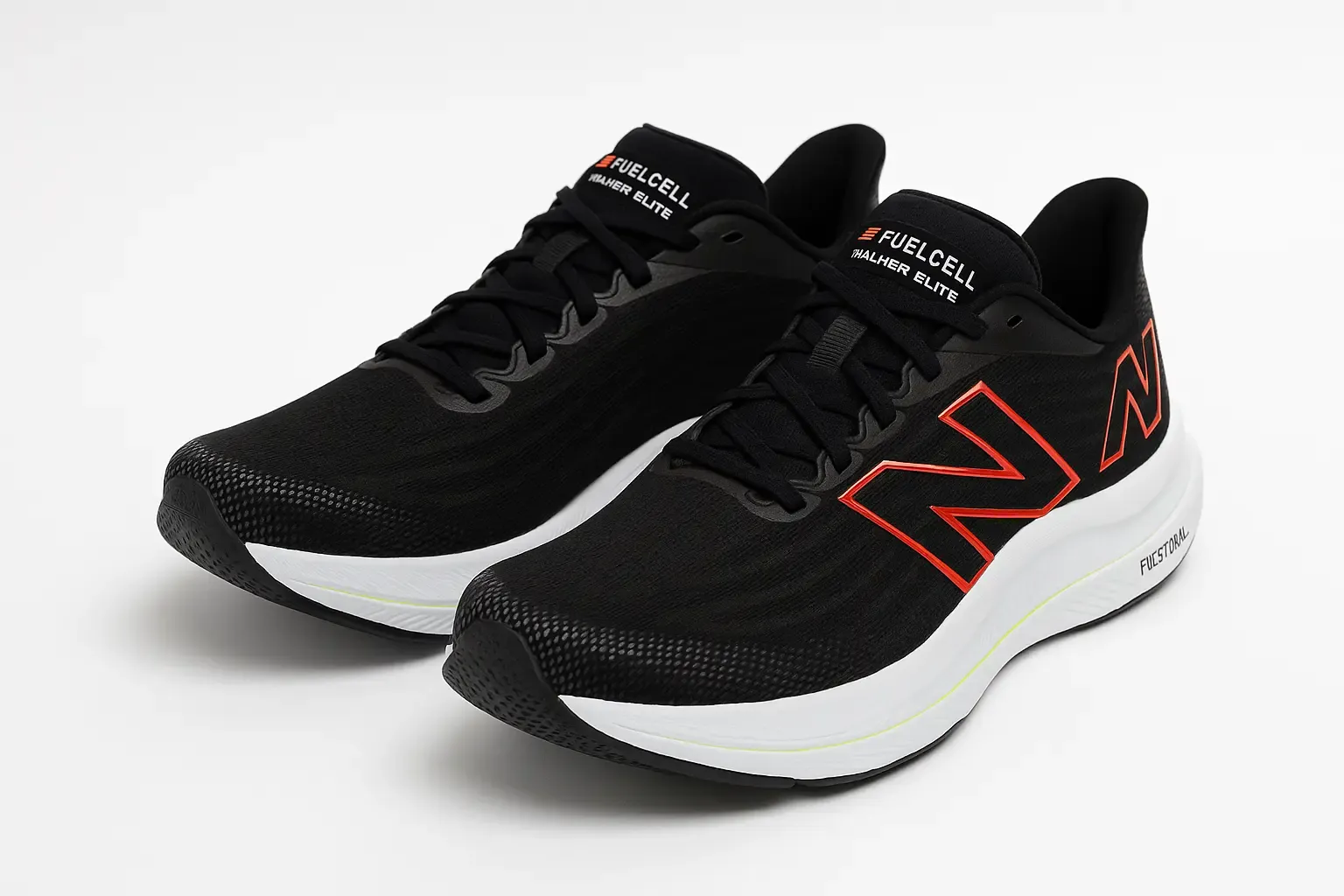
You know, walking shoes used to be the uncool younger sibling of performance runners: bulky, beige, and honestly kind of boring. That’s shifted. New Balance has been steadily redefining what “all-day on your feet” can look and feel like. Enter the New Balance FuelCell Walker Elite. It’s a premium, high-tech pick for anyone who isn’t chasing marathon times but is still racking up real mileage on sidewalks or hard hospital floors.
When I first heard they were putting their high-rebound FuelCell foam (usually saved for faster runners) into a dedicated walker, I was skeptical. Would it feel wobbly? Too soft? After digging through the specs and a pile of real-world feedback, it’s clear this isn’t just a running shoe in a trench coat. It’s built with purpose. If you power walk for fitness, work long shifts, or just want something that doesn’t scream “orthopedic,” this shoe is aiming right at that gap.
Quick Take
Overall Rating: 4.3/5
Best For: Daily urban walking, individuals with plantar fasciitis or high arches, professionals standing all day, light fitness walking.
Key Strengths: Responsive FuelCell cushioning, APMA Seal of Acceptance, excellent stability features, breathable aesthetic.
Notable Limitations: Inconsistent sizing (often runs small/narrow), 6mm drop may be too low for some, premium price point.
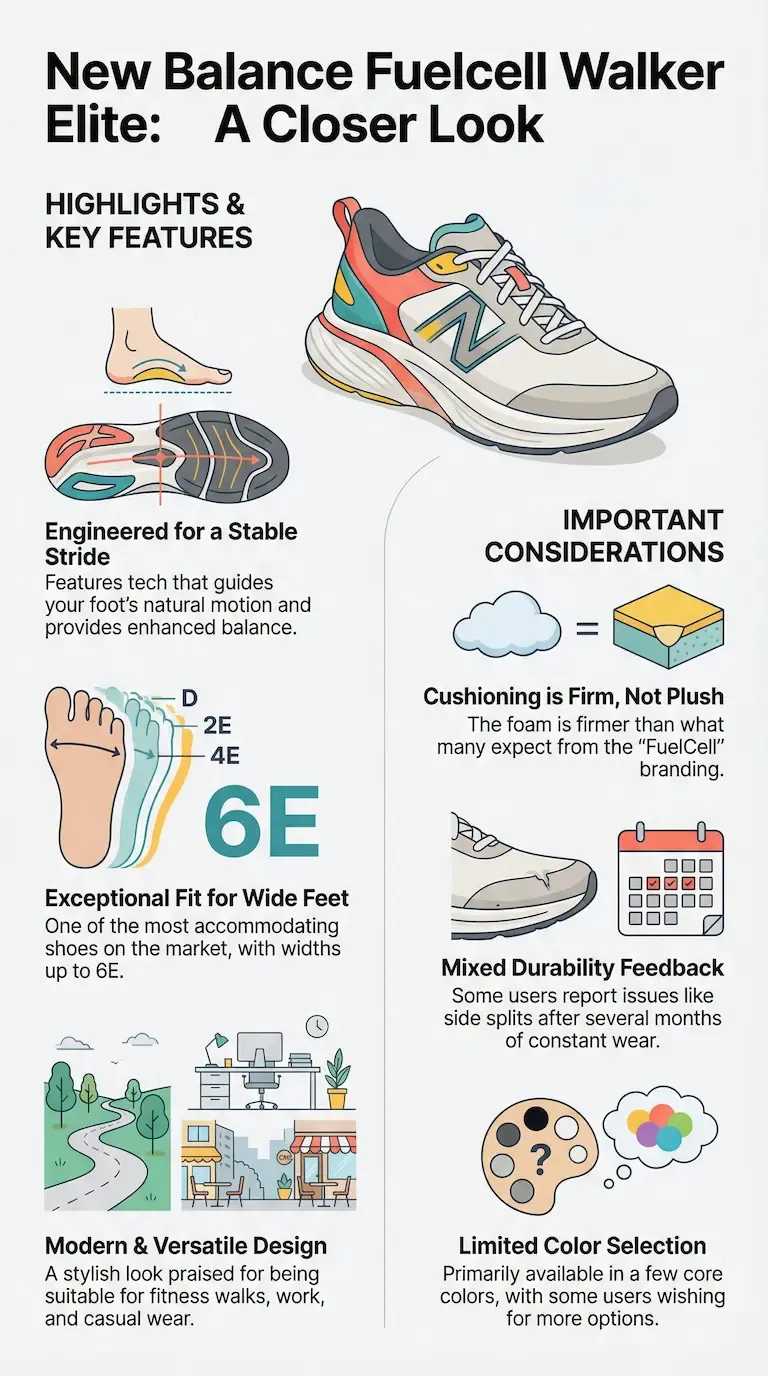
Visual Snapshot Summary
What Makes New Balance FuelCell Walker Elite Stand Out?
Most walking shoes lean on basic EVA that starts to feel “dead” once the miles add up. The big draw here is the FuelCell midsole. New Balance took their top-tier energy-return foam and tuned it for walking mechanics. So instead of the trampoline-style bounce you’d get from a FuelCell Rebel, the Walker Elite uses a firmer, denser version.
That matters because walking isn’t running. You’re always in contact with the ground, so stability wins over raw pop. This one still gives you that little “go” at toe-off, but it doesn’t feel like you’re teetering on a soft platform.
It also earned the Seal of Acceptance from the American Podiatric Medical Association (APMA). That isn’t just a sticker. A group of podiatrists reviewed the shoe and agreed it supports foot health. For something this sleek and modern-looking, that medical nod is a pretty rare combo.
"This shoe has been reviewed by APMA podiatrists and is recognized for its value in daily foot care."
Real Customer Experiences
Scroll through enough reviews and a pretty clear split shows up: people who nail the sizing and love them, and people who feel shut out by the fit.
- The "Walking on Clouds" Crowd: Most praise circles around the underfoot feel. Buyers call the step-in sensation “pillow-like” and “feathery soft,” especially folks dealing with joint pain or arthritis.
- The "Where's the Width?" Frustration: This is the big sticking point. New Balance is known for wide options (2E, 4E), but long-time fans say this model runs noticeably narrower than classics like the 847 series. If you’re used to a roomy 4E, this can feel tight fast.
- The Instant Relief Factor: The low break-in time comes up again and again. Plenty of users say they went straight from box to a 5-mile walk without blisters, which is basically the walking-shoe holy grail.
What Buyers Are Saying:
"Most comfortable sneakers I've ever worn. I'm 92 and have worn a lot of sneakers."
"I ordered a wide and they were still too narrow. My foot hung over the sole."
Design and Build Quality
New Balance didn’t just slap a mesh upper on a rubber slab here. The build is clearly thought through, and it shows once you look closer.
Upper Construction
The upper is a breathable engineered mesh with no-sew overlays. That “no-sew” part matters because seams are where blisters usually start. The support pieces are bonded to the mesh instead of stitched, which cuts down on hot spots. It stays light and airy for warm-weather walks, while still giving enough structure for a secure midfoot hold.
The Midsole: FuelCell + Stability Plane
This is the engine room. We’ve already covered FuelCell foam, but the unsung hero is the Stability Plane. Think of it like a guidance rail. It’s a slightly firmer element built into the midsole that helps limit excessive inward roll (overpronation) without the harsh “plastic post” feel. It works with the foam to keep your stride feeling centered.
Outsole and Tech
Flip the shoe over and you’ll see Walking Strike Path. Walking is a heel-to-toe roll, and the outsole rubber is laid out to guide that motion. It isn’t random traction; it’s more like a track your foot can follow. The rubber pods are durable and give reliable grip, even on wet city surfaces.
Weight
For a stability shoe, it’s surprisingly light. The women’s model lands around 247g (8.7 oz) and the men’s around 262g (9.2 oz). That’s a big step down from old-school leather walkers, and it helps keep fatigue in check when you’re on your feet for an 8-hour shift.
Comfort and Fit
This part is a little tricky, so stick with me. Cushioning feel and fit usually go hand-in-hand, but with the FuelCell Walker Elite, they’re two separate conversations.
The Comfort Experience
If the sizing works for your foot, the underfoot feel really is elite. The cushioning is responsive. It doesn’t feel “mushy” like a memory-foam slipper that bottoms out; it pushes back. That gives you a lively step that makes walking feel easier. Runners and walkers with higher arches also note it plays well with orthotics, and the built-in moderate arch support is often enough on its own.
The Sizing Dilemma
This is where you need to pay attention. The fit profile is undeniably narrow.
- Length: Generally true to size, but the tapered toe box makes it feel short for some.
- Width: This is the main pain point. Even the "Wide" (2E) and "X-Wide" (4E) options are reported to be narrower than industry standards and previous New Balance models. The toe box volume is lower, meaning if you have bunions or just like to splay your toes, you might feel restricted.
My Advice: If you have average-width feet, start with your normal size. If you’re slightly wide, go Wide (2E). If you’re truly wide, grab Extra Wide (4E) and consider a half-size up. And if you’re very wide, this model probably isn’t the best match.
"Fits perfect... very comfortable from the first wear."
Style and Versatility
Walking shoes have a reputation for looking a little… geriatric. The FuelCell Walker Elite pushes back hard. It leans into a sleek, modern running-shoe look instead of the bulky “dad shoe” vibe you get from something like the New Balance 608 or 624.
The design stays clean. The branding is there (classic 'N' logo), but it’s not screaming for attention. That no-sew upper keeps things smooth and modern, which makes the shoe easy to wear outside of “exercise only” situations.
- The Scenario: You can wear these for a morning power walk, keep them on for a casual office environment, and then head to the grocery store without looking like you just came from a mall walk in 1995.
- Colorways: They offer safe bets like Black and Navy, but also bolder options like "Neo Flame" if you want a pop of color. It works with jeans, chinos, or athletic wear seamlessly.
Quality and Durability
When you’re spending $140 on a shoe, it needs to hold up. Feedback here is a bit mixed, which is pretty common with modern lightweight foams and uppers.
The Good: There are no widespread reports of the outsole peeling off or the upper tearing catastrophically early on. The rubber outsole is robust enough for daily concrete pounding. The "firmer" nature of this specific FuelCell blend suggests it might resist compression set (the flattening of the foam) better than softer running shoes, theoretically keeping that cushioned feel for longer.
The Concern: The durability issues reported often stem from the fit issues. When a shoe is too narrow, your foot pushes against the mesh sidewalls. Over time, this pressure can cause the upper to stretch, fray, or tear at the connection points. If you get the wrong size, you will likely kill this shoe faster. Some users also felt the support faded over time, which is typical of foam-based shoes, especially if you’re a heavy heel striker.
"Stability is good, but I wish the heel support held up longer." (Paraphrased sentiment)
Decision Matrix
Let's break this down. Where does this shoe actually thrive?
| Scenario ↓ / Criterion → | Comfort | Breathability | Rain/Grip | Style |
|---|---|---|---|---|
| Daily Urban Commute | ✓ | ✓ | ○ | ✓ |
| All-Day Standing (Work) | ✓ | ✓ | ✓ | ✓ |
| Light Gym / Fitness | ○ | ✓ | ✓ | ✓ |
Legend: ✓ = Good ○ = Average ✕ = Poor
Who Should Buy
Perfect For
- The "On-Your-Feet" Professional: If you are a nurse, teacher, or retail worker standing on hard floors for 8+ hours, the stability and firm cushioning will save your back and knees.
- The Fitness Walker: If you treat walking as a sport and need a shoe that guides your stride and propels you forward without the instability of a high-stack running shoe.
- The Foot Health Conscious: If you have plantar fasciitis or need a shoe that is APMA accepted and orthotic-friendly (provided you size up for the insert).
- The Style-Conscious Commuter: If you want a comfortable walking shoe that doesn't look like a medical device.
Consider Alternatives If
- The Wide Foot Warrior: Honestly, if you have genuinely wide feet (4E+), this shoe will likely break your heart. Stick to the New Balance 847 or 928 series.
- The "Max Plush" Seeker: If you want that sinking-into-marshmallows feeling (like a Hoka Bondi or Nike Invincible), this FuelCell foam is too firm for you.
- The High-Drop Loyalist: If you are used to a traditional 10-12mm heel drop to relieve calf strain, the 6mm drop here might feel too flat and strain your Achilles.
Final Verdict
The New Balance FuelCell Walker Elite is a fascinating evolution in the walking shoe market. It successfully borrows the "fun" technology from running shoes—that energetic FuelCell foam—and disciplines it with the stability features necessary for a proper walking gait. It looks great, feels fast, and has the medical backing to prove its worth.
However, the execution on fit is a stumble. The narrow toe box and inconsistent width sizing prevent it from being a perfect slam dunk for everyone, especially the loyal New Balance customer base that relies on their generous wide sizing. If you can dial in the size (seriously, try them on or order up), it is easily one of the best walking shoes on the market today. But if you have wide feet, proceed with caution.
Browse our full New Balance collection to find your perfect pair.
As an Amazon Associate we earn from qualifying purchases. This helps support our site so we can keep bringing you the best content!
Frequently Asked Questions
How does the cushioning in the FuelCell Walker Elite feel?
Is the FuelCell Walker Elite a good shoe for standing all day on hard floors?
What makes this a dedicated 'walking' shoe?
Related Reviews
New Balance Fuelcell Supercomp Elite V5 Review
New Balance FuelCell Supercomp Elite V5 Review: A top-tier hybrid racer blending elite propulsion with lifestyle versatility. Does it live up to the hype?
New Balance 1906r Review
The New Balance 1906R combines retro design with modern comfort, offering cloud-like cushioning and distinctive style despite some quality control concerns.
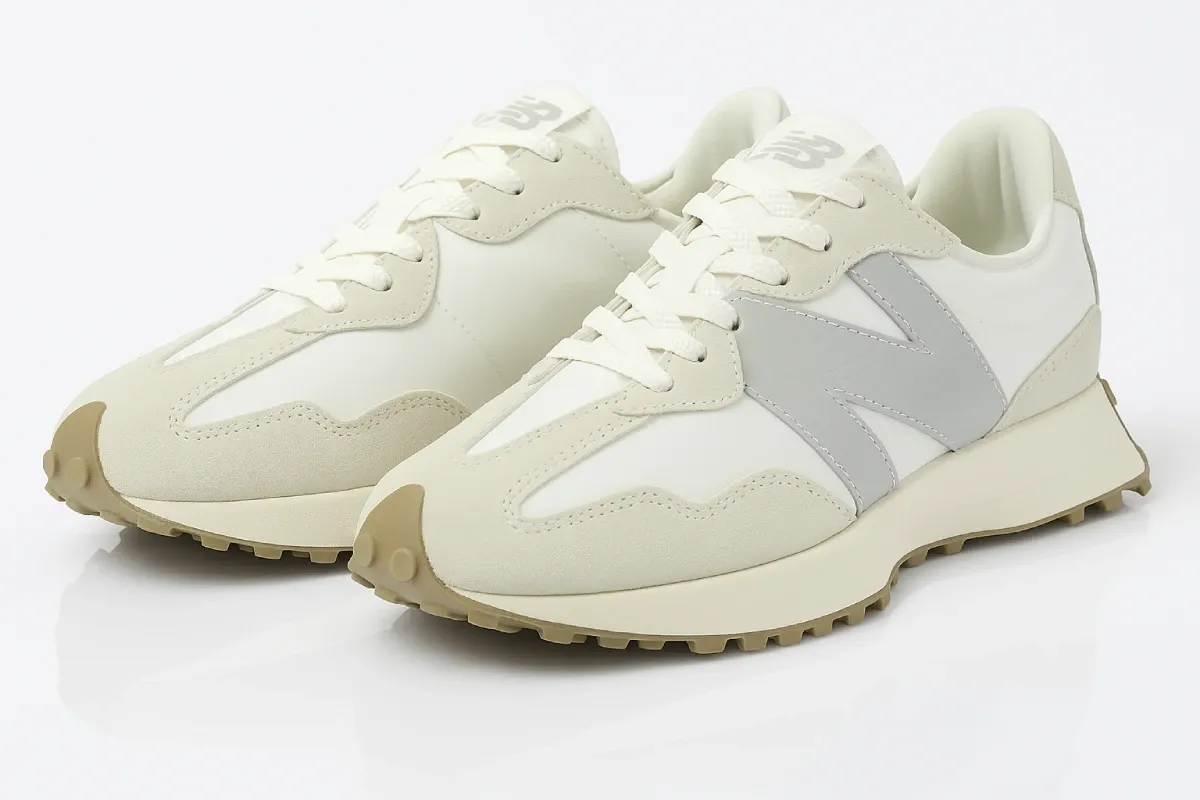
New Balance 327 Review
In-depth New Balance 327 review. Explore comfort, style, and sizing issues before you buy. Is this retro-inspired sneaker worth the hype?
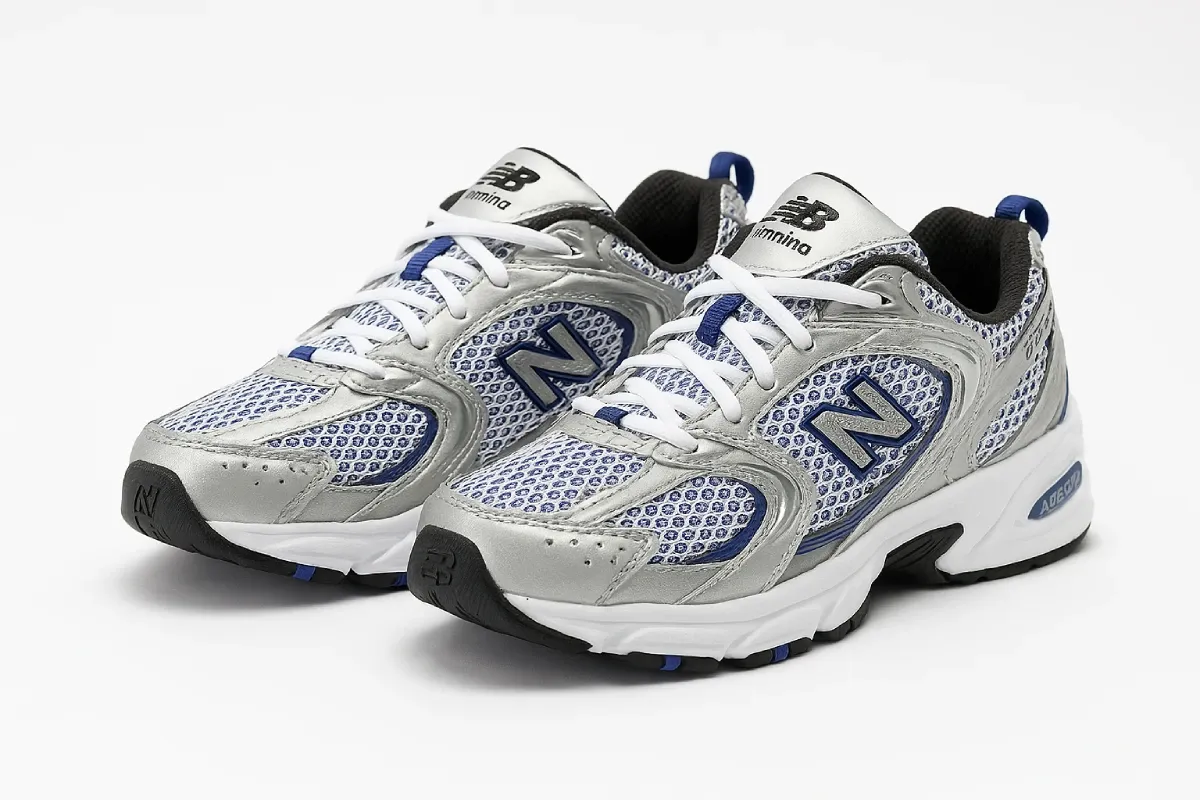
New Balance 530 Review
Review of the New Balance 530: A deep dive into the comfort, sizing, and durability of this trending retro "Dad Shoe." Is it worth the hype?
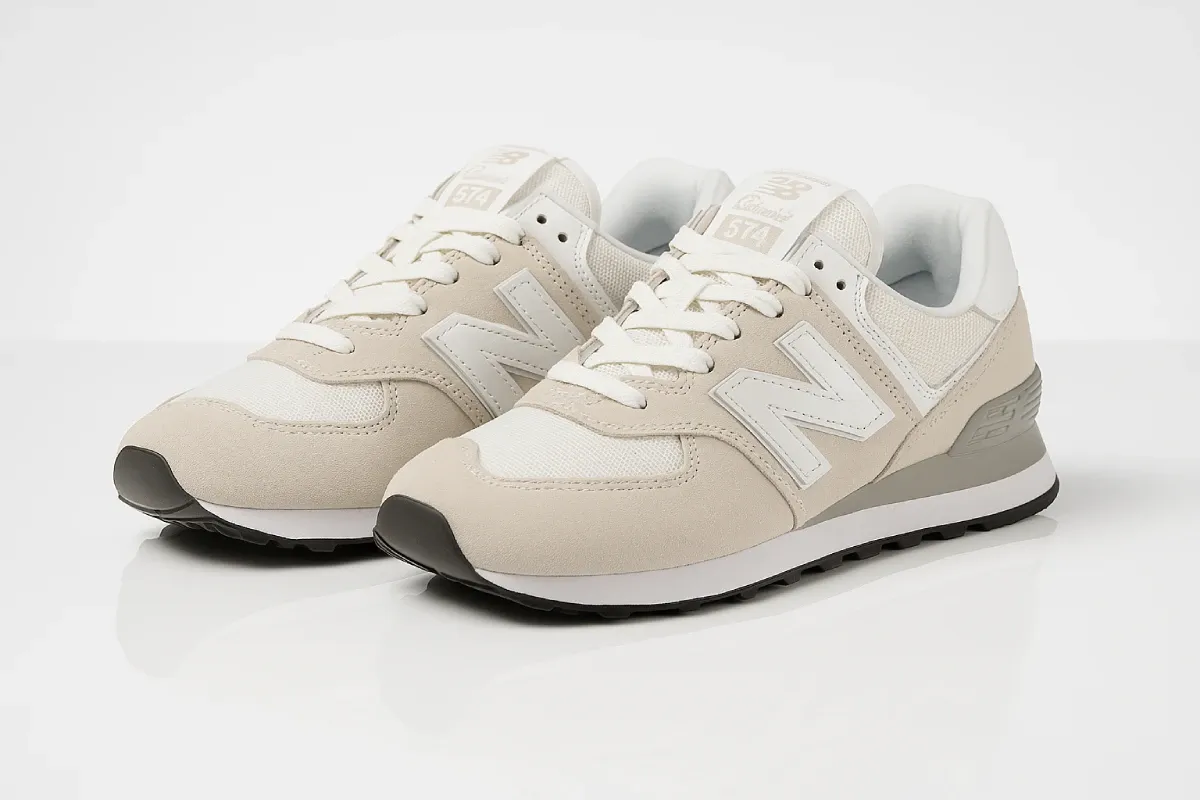
New Balance 574 Core Review
Get an honest review of the iconic New Balance 574 Core. We dive deep into its comfort, style, durability, and value to see if it's worth the hype.
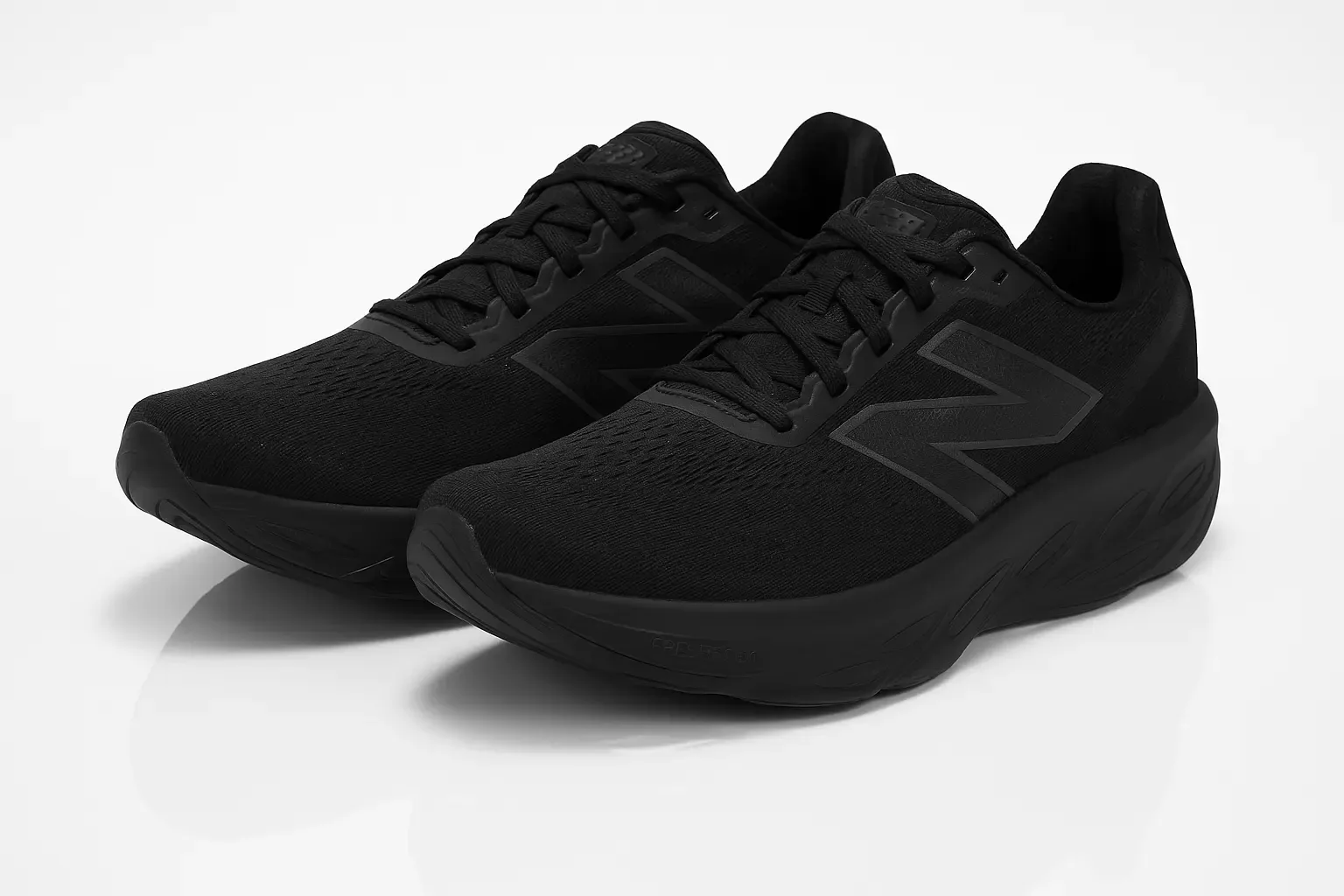
New Balance Fresh Foam X 1080 v14 Review
Experience exceptional cushioning with the New Balance Fresh Foam X 1080 v14, offering plush support for runners and anyone spending long hours on their feet.