Founder & Lead Editor
Federico D'anna
Federico D'anna has spent 9 years reviewing sneakers with a methodology built on hands-on wear notes, side-by-side comparisons, and verified buyer feedback.
Learn more about Federico D'annaHighlights
Positive
- Premium leather design pairs well with any outfit.
- Exceptional comfort with plenty of room for wide feet.
Negative
- Runs large - most users need to size down.
Brooks Hyperion Elite 4 Sizing & Fit Guide
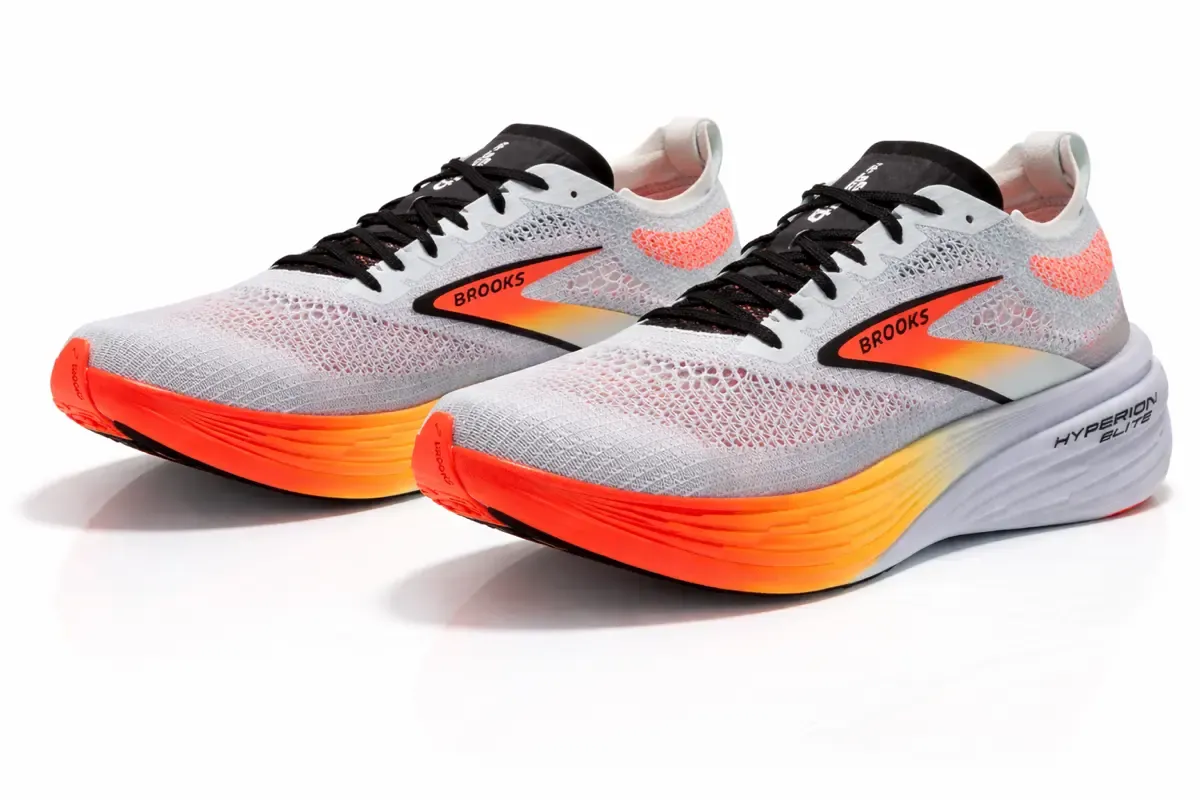
The Brooks Hyperion Elite 4 introduces a substantial structural overhaul to carbon-plated road racing shoes, highlighting a secure midfoot lockdown and an exceptionally breathable open-knit upper. Built on a unisex platform, it delivers a true-to-size (TTS) fit lengthwise, avoiding the overly constricting layout of traditional elite racing flats. The standard model delivers a roomy toe box and a straight big-toe line, providing plenty of lateral relief and vertical volume. However, because the premium PB variant runs significantly narrower, runners must differentiate between the two models to secure proper lockdown and long-distance comfort.
Compare your current pair to find the best size match.
| Reference Shoe | Your Usual US | Buy in US | Your Usual EU | Buy in EU | Fit Notes |
|---|---|---|---|---|---|
| Nike Vaporfly 3 | 10.0 | 10.0 | 44 | 44 | Both models run identically in terms of pure longitudinal length. However, the standard Brooks model provides substantially more vertical volume and toe box width compared to the low-volume, narrow Nike forefoot. If you typically size up in the Vaporfly 3 solely to accommodate your foot width, you should apply the compensation factor and return to your true size (US 10.0 / EU 44) for the standard Brooks to avoid an excessively long fit. |
| Saucony Endorphin Pro 4 | 10.0 | 10.0 | 44 | 44 | The shoes match perfectly in overall length and midfoot wrap characteristics. The primary structural distinction lies in the toe box geometry: the standard Brooks features a straighter big-toe line that promotes superior natural toe splay, whereas the Saucony relies on a more aggressively curved rocker profile that pushes the toes together. |
| Adidas Adios Pro 4 | 10.0 | 9.5 | 44 | 43 | The Adidas Adios Pro 4 features a highly tapered and shallow toe box, frequently forcing runners to size up a half size (e.g., to a US 10.0) to prevent bruised toenails. Because the Brooks is cut true to size with an exceptionally roomy forefoot, you do not need to size up for width compensation; you can safely return to your true standard size of US 9.5 (EU 43) to achieve a proper, secure performance fit. |
| Nike Alphafly 3 | 10.0 | 10.0 | 44 | 44 | Both shoes share a similar lengthwise fit, but they diverge massively in midfoot and upper entry mechanics. The Nike Alphafly 3 is known for a tight, low-volume entry and a narrow, aggressive arch curve, while the Brooks Hyperion Elite 4 provides an accommodating step-in, a higher toe box ceiling, and a more neutral arch profile. |
Does the Brooks Hyperion Elite 4 run true to size?
Yes, the Brooks Hyperion Elite 4 fits true to size lengthwise and aligns consistently with standard running shoe measurements. Since it is built on a unisex platform, female runners must subtract exactly 1.5 sizes from their standard US women's size (e.g., a women's 9.5 should buy a unisex 8). If you are typically between sizes, it is recommended to opt for the smaller half size because the pattern cuts slightly long in the forefoot, and choosing the larger size can result in material creasing or sliding during workouts.
Is the Brooks Hyperion Elite 4 good for wide feet?
The standard Brooks Hyperion Elite 4 is excellent for wide feet due to its open-knit woven upper, which offers exceptional natural stretch that effortlessly accommodates wider feet without creating pressure points. This extra volume also helps wide-footers prevent internal sliding on the top layer of the insole. Conversely, the premium PB variant features a much narrower midfoot and a tapered toe box (measuring 91.3 mm) typical of aggressive racing flats. Neither version is sold in dedicated wide widths, so runners with very wide feet (EE or wider) should stick strictly to the standard knit model.
How is the arch support on the Brooks Hyperion Elite 4?
The Brooks Hyperion Elite 4 is designed as a neutral speed shoe and contains no active or structured medial arch support mechanisms like posts. However, it offers exceptional passive stability for a high-stack marathon shoe. This stable ride comes from its wide rearfoot platform and the highly rigid, 3D-printed SpeedVault Race+ carbon-fiber plate, which features size-specific stiffness to prevent the shoe from feeling mushy or unstable under heavier loads.
Ready to experience the Brooks Hyperion Elite 4 Review?
Get yours today with fast shipping from Amazon
If you've been following the super-shoe wars, you already know the line between a race-day weapon and a daily trainer gets blurrier every year. The Brooks Hyperion Elite 4 lands right in the middle of that chaos, trying to be the jack-of-all-trades for speed-obsessed runners. It promises the moon (or at least a very fast marathon), but once you peel back the layers, you start to see a bit of a split personality.
Quick Take
Overall Rating: 4.2/5
Best For: Mid-distance track racing, 5K to Marathon racing, Tempo runs
Key Strengths: Ultra-soft DNA Gold cushioning, lightweight design, "trampoline-like" energy return
Notable Limitations: Stability issues for some runners, outsole durability, lacks support for very long endurance efforts
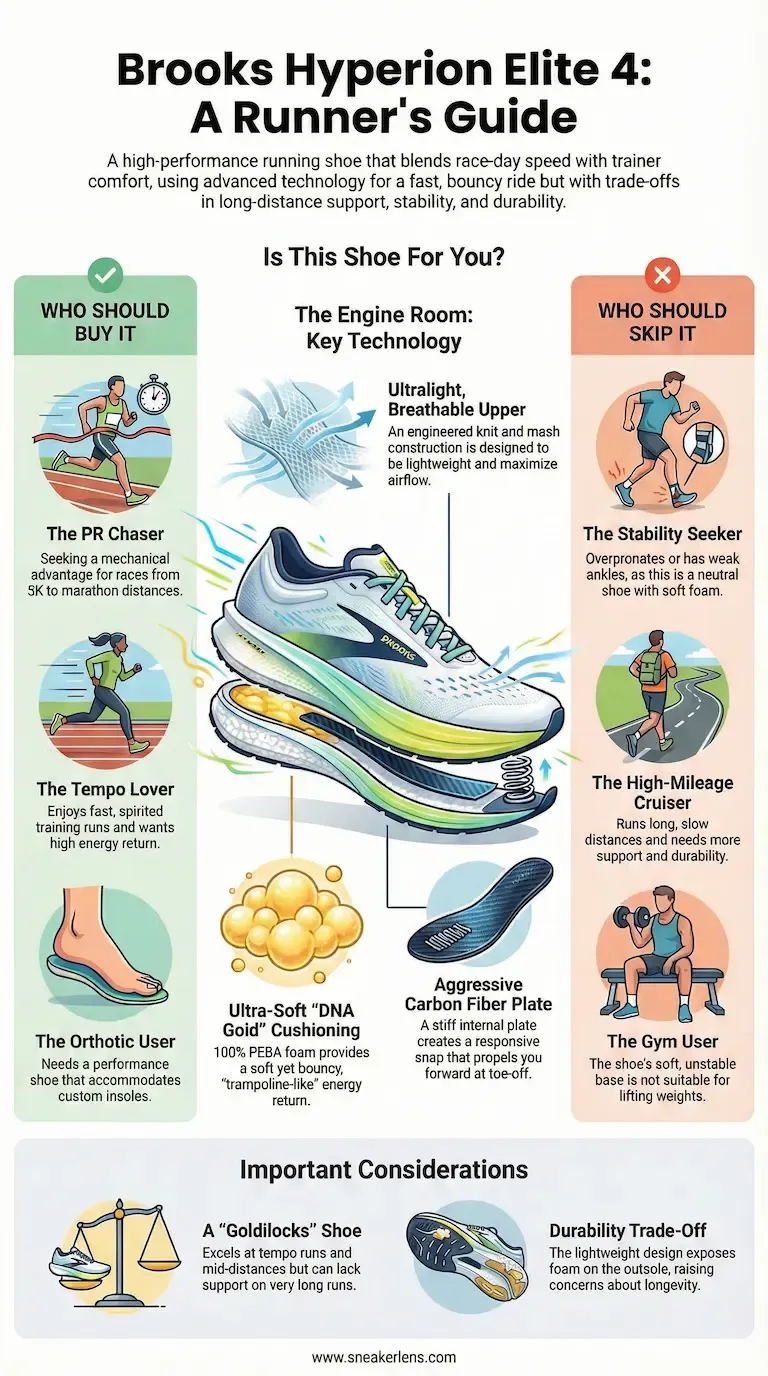
Visual Snapshot Summary
What Makes Brooks Hyperion Elite 4 Stand Out?
Honestly, the first thing that grabs you about the Hyperion Elite 4 is how bold the material choices are. Brooks didn't just tweak an old formula. They went all-in with DNA Gold cushioning, and we're talking 100% PEBA foam. If you're not a foam nerd, here's the short version: PEBA is basically the gold standard (pun intended) for energy return right now. It's the “super foam” that can make you feel like you're bouncing instead of grinding.
Here's what really separates it from the pack. Most carbon-plated shoes can feel like stiff boards strapped to your feet: fast, sure, but harsh. The Elite 4 pairs that aggressive carbon plate with a softness that's genuinely surprising. It's chasing that age-old runner problem: “How do I go fast without beating up my legs?” The result is a sensation of effortless speed that stands out in a crowded field. As one enthusiastic runner put it, the shoe feels like "someone turned the ground into a trampoline just for you!". That's a high bar, but for short to mid-distance efforts, it does seem to deliver that pop.
Real Customer Experiences
When you dig into what actual runners are saying, the vibe is generally positive, but it comes with some very specific grievances. It's not all sunshine and rainbows.
- The Comfort Factor: The overwhelming sentiment is that the step-in comfort is top-tier. People love the plush feel of the foam immediately.
- The "Goldilocks" Problem: There is a recurring theme where the shoe is perfect for tempo runs but falls apart (metaphorically) on the really long stuff.
- Fit Frustrations: A small but vocal minority struggles with the heel lock and midfoot fit, leading to stability concerns.
Here is what real runners are saying:
"The blister patches actually did pretty well. Didn't feel any hotspots."
"Good for short tempo runs but not for longer distances due to fit and pronation issues."
Design and Build Quality
Let's get into the nuts and bolts. The upper is an intricate composite of synthetic materials, engineered mesh, and what they call an "ultralight knit". It's meant to disappear on your foot. Breathability is a major focus, which makes sense because racing equals heat. The mesh panels are placed to move air well, but the trade-off is that the upper can feel a bit delicate to the touch.
Moving down to the engine room: the midsole. As I mentioned, it is that DNA Gold PEBA foam. It is nitrogen-infused, which is a fancy way of saying they injected gas into the foam to make it lighter and springier. Buried inside that foam is the carbon fiber plate. This plate is the spine of the shoe—it stiffens the ride to snap you forward at toe-off.
The outsole is where things get a little tricky. It is rubber, obviously, but to save weight, they haven't coated the entire bottom. It is placed in high-wear zones. While this keeps the shoe "ultralight", it exposes a lot of that soft foam to the road. It is a classic racing flat trade-off: weight vs. durability. You win some, you lose some.
Comfort and Fit
Okay, so how does it actually feel? Step-in comfort is high. The "orthotic friendly design" is a nice touch, meaning if you use custom insoles, you likely won't feel cramped. That's a big plus, because a lot of super shoes run super narrow.
The fit can be divisive, though. Many find it snug and secure, but there are reports of the heel not locking down perfectly for everyone. If you have a narrow heel, you might get a bit of slip unless you really crank the laces. Break-in is basically non-existent thanks to the soft foam; you can take them out of the box and run.
Regarding sizing, most users don't report major deviations, but because of the performance fit, it sits close to the foot. If you like your toes to splay wildly, this might feel a bit constricting at first.
"Shoe quality is good," one user noted, despite later mentioning the wear issues.
Style and Versatility
Style-wise, Brooks went for a "colorblock" look that's modern without going full spaceship, which helps if you want to wear them casually.
And that brings me to versatility. Brooks positions this as a "do-it-all" shoe, and for a certain type of person, it is. You can wear it for your morning intervals, and then—if you work in a relaxed office—keep them on with a pair of chinos. The sleek profile works for that "active lifestyle" look. But, and this is a big but, don't confuse "versatile" with "gym shoe." It is terrible for lifting weights because that soft foam makes you unstable. Keep it to running, walking, and maybe looking cool at the coffee shop.
Quality and Durability
This is the part where I have to be the bearer of realistic news. The upper build quality is solid and the materials feel premium, but outsole durability is a concern.
While the "shoe quality is good" generally, we have seen reports of the outsole rubber wearing down significantly after a year of use. Now, a year is a long time for a racing shoe, but for a daily trainer priced at $250, you might expect a bit more longevity. The exposed foam can also get chewed up if you run on anything rougher than pristine asphalt. It is a high-performance machine, and like high-performance cars, it might need maintenance (or replacement) sooner than your trusty old sedan.
Decision Matrix
Here is a quick way to see if this shoe fits your life:
| Scenario ↓ / Criterion → | Comfort | Breathability | Rain/Grip | Style |
|---|---|---|---|---|
| Daily Urban | ✓ | ✓ | ○ | ✓ |
| Office Casual | ✓ | ✓ | ○ | ✓ |
| Light Sport / Gym | ✓ | ✓ | ○ | ✕ |
Legend: ✓ = Good ○ = Average ✕ = Poor
Who Should Buy
Perfect For
- The PR Chaser: If you are training for a marathon or a 5K and you want every mechanical advantage possible, the carbon plate and PEBA foam are made for you.
- The Tempo Lover: Runners who enjoy fast, spirited training runs will love the energy return and the rocker shape that propels you forward.
- The Orthotic User: It is rare to find a super shoe that accommodates custom insoles well, but this one does.
- The Tech Enthusiast: If you just love trying the latest foam technology and want to feel what "100% PEBA" feels like, this is a great entry point.
Consider Alternatives If
- The High-Mileage Cruiser: If you run long, slow distance every day, the stiffness of the plate and the potential lack of support might leave your feet feeling beat up.
- The Stability Seeker: If you overpronate or have weak ankles, the neutral chassis and soft foam are going to be a nightmare for you.
- The Gym Rat: Do not squat in these. Seriously. The instability is real.
- The Budget Conscious: There are plenty of great daily trainers for half the price if you don't need the carbon plate.
Final Verdict
The Brooks Hyperion Elite 4 is a triumphant return to form for Brooks' racing lineup. It successfully addresses the shortcomings of its predecessors by delivering a stiffer, more responsive, and more aggressive ride. The SpeedVault Plate is a game-changer, providing a tangible propulsive feel that's been missing from the series. While the fit is unforgivingly narrow and the price is premium, the performance is undeniable. It's a true racing shoe for the serious runner.
Browse our full Brooks collection to find your perfect pair.
As an Amazon Associate we earn from qualifying purchases. This helps support our site so we can keep bringing you the best content!
Frequently Asked Questions
How many miles does the Brooks Hyperion Elite 4 last?
Is the Brooks Hyperion Elite 4 good for marathons?
What is new in the Brooks Hyperion Elite 4 compared to the Elite 3?
Related Reviews
Brooks Ghost Max 2 Review
An in-depth review of the Brooks Ghost Max 2, a max-cushioned running shoe ideal for comfort, stability, and walking. See if it's right for you.
Brooks Addiction Walker 2 Review
Brooks Addiction Walker 2 Review: Expert analysis of this APMA-approved motion control shoe. Is it the best choice for flat feet & plantar fasciitis?
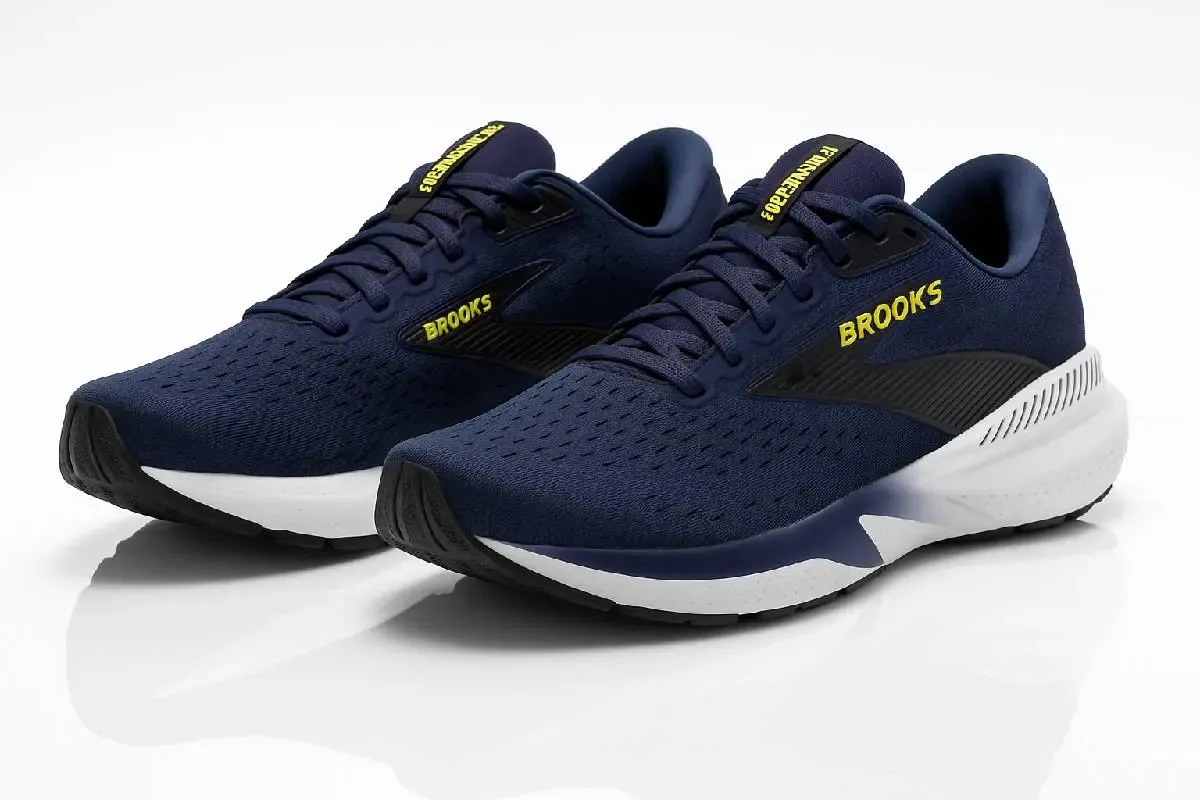
Brooks Adrenaline GTS 24 Review
In-depth review of the Brooks Adrenaline GTS 24. Learn about its DNA Loft v3 foam, GuideRails support, fit, and performance for overpronation.
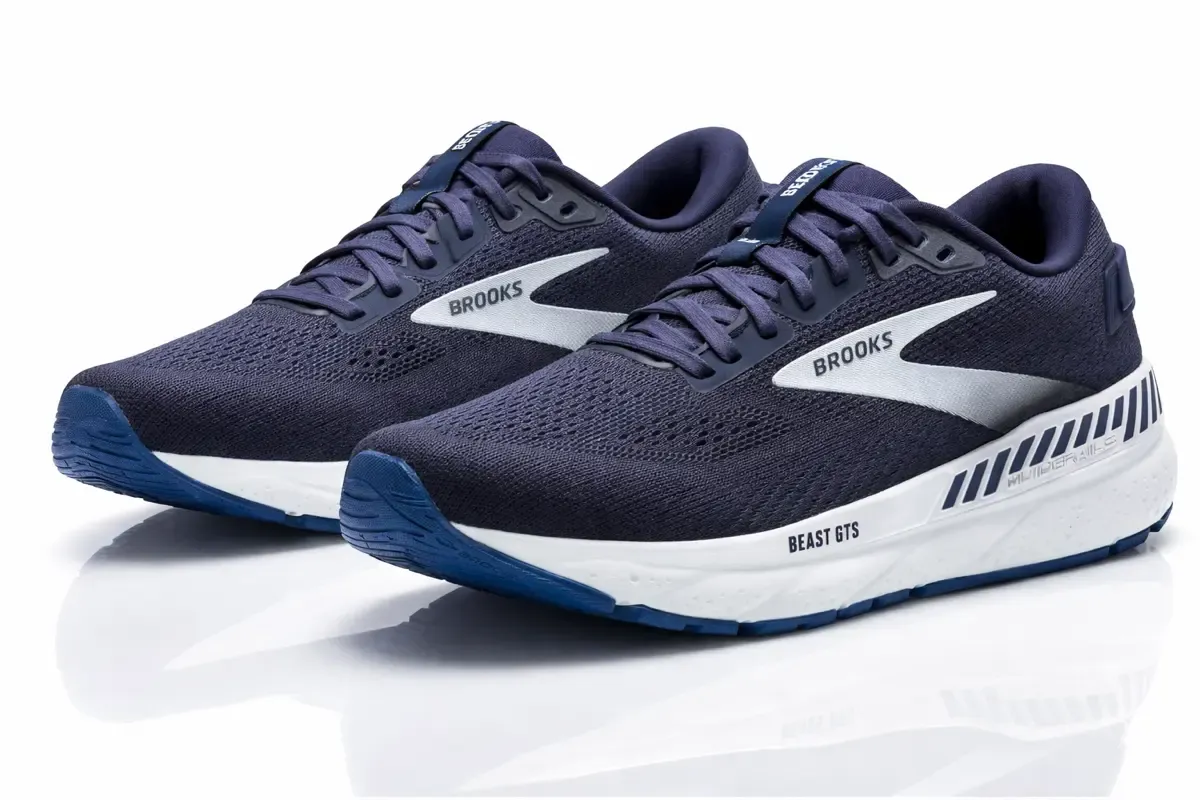
Brooks Beast GTS 24 Review
Brooks Beast GTS 24 Review: Max support running shoe for overpronation. 12.4oz, DNA LOFT v3 foam. Best for flat feet & heavy walkers.
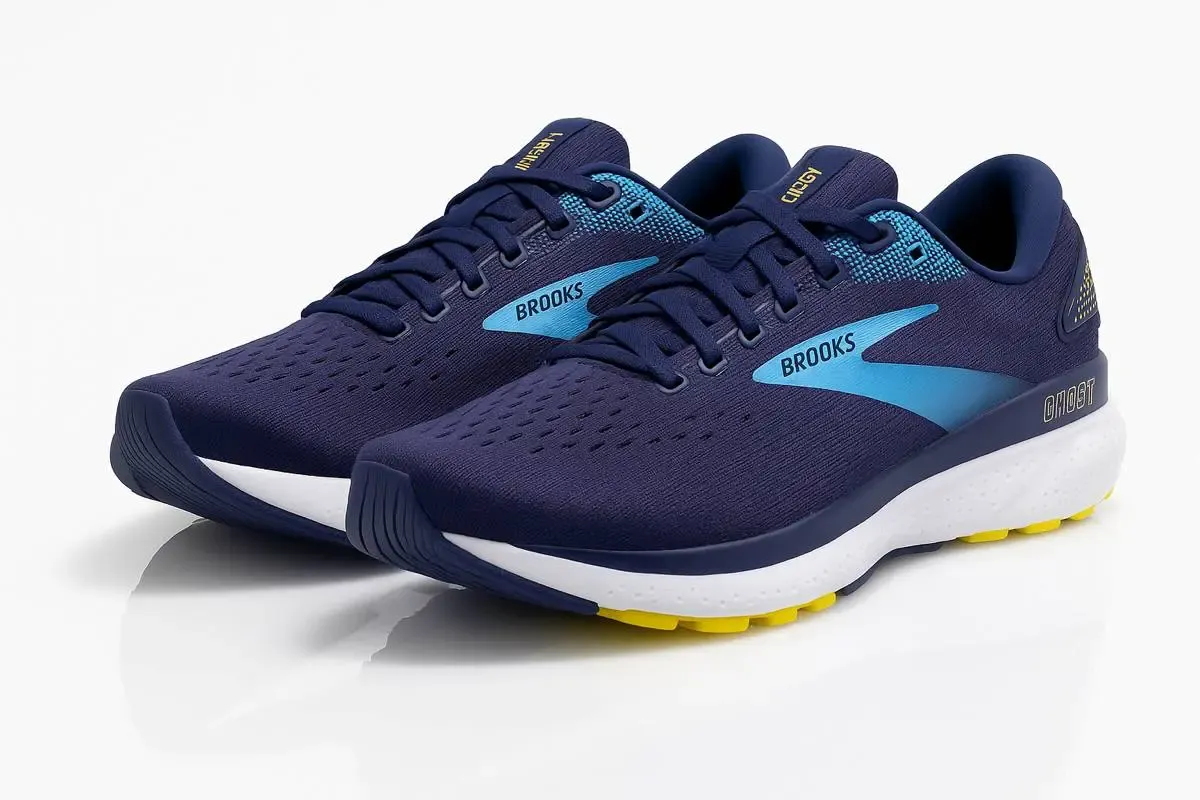
Brooks Ghost 16 Review
Expert review of the Brooks Ghost 16. We analyze comfort, durability, value, and who should buy this reliable neutral road running shoe, Brooks Ghost 16.
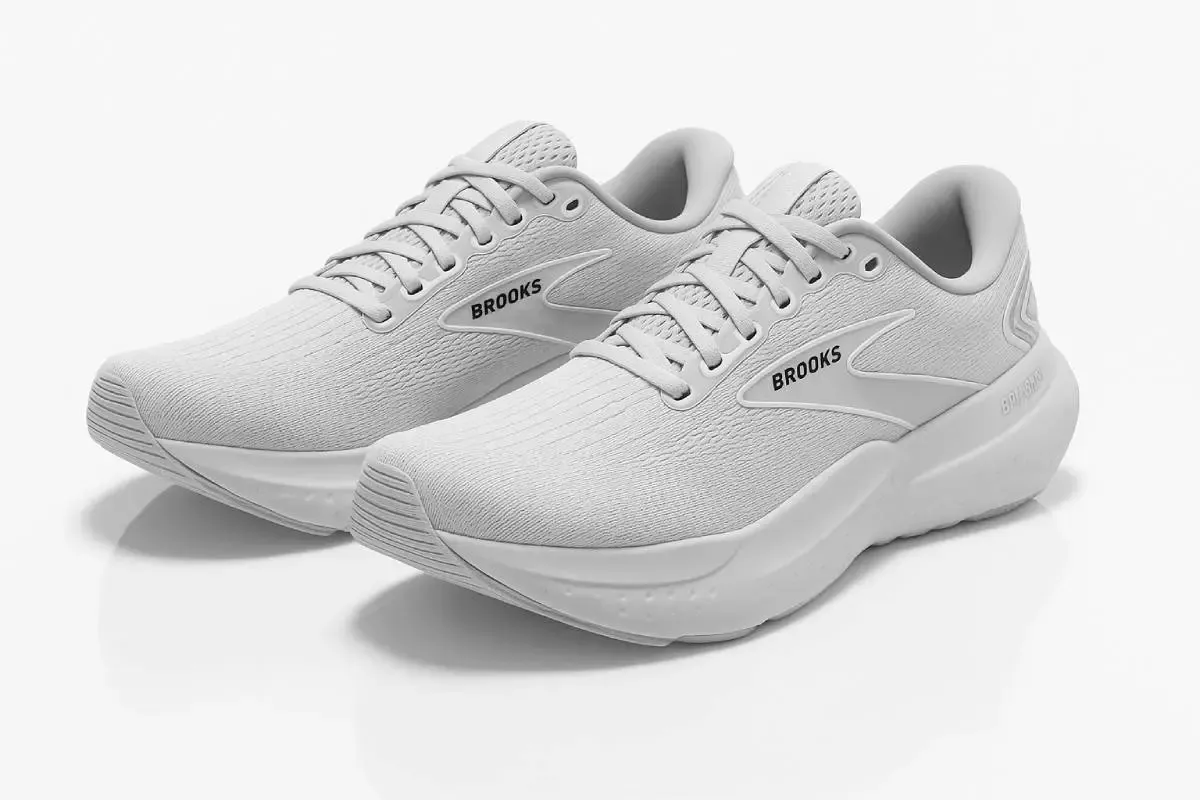
Brooks Glycerin 21 Review
In in-depth review of the Brooks Glycerin 21. Discover its plush DNA LOFT v3 cushioning, fit, durability, and if it's the right shoe for you.