Founder & Lead Editor
Federico D'anna
Federico D'anna has spent 9 years reviewing sneakers with a methodology built on hands-on wear notes, side-by-side comparisons, and verified buyer feedback.
Learn more about Federico D'annaHighlights
Positive
- The Trail Adapt System provides exceptional stability on technical terrain.
- The roomy toe box and secure fit offer fantastic all-day comfort.
Negative
- Its weight can make it feel sluggish for faster-paced runs.
Brooks Cascadia 18 Sizing & Fit Guide
The Brooks Cascadia 8 represents a major evolution in trail footwear, prioritizing an anatomically compliant and snug fit for technical singletrack. Serving as a true-to-size (TTS) baseline for most off-road runners, it addresses the historical fit issues of its predecessor by expanding internal volume within an adaptable toe box. While this extra spatial allowance accommodates natural foot swelling over ultra-marathon distances, the innovative asymmetrical lacing system works effectively to prevent heel slippage. Supported underfoot by a single-unit BioMoGo DNA midsole, it provides a stable and protective platform right out of the box.
Compare your current pair to find the best size match.
| Reference Shoe | Your Usual US | Buy in US | Your Usual EU | Buy in EU | Fit Notes |
|---|---|---|---|---|---|
| Brooks Cascadia 7 | 10.0 | 10.0 (or 9.5 for high-precision lock) | 44.0 | 44.0 (or 43.5 for high-precision lock) | The Cascadia 8 features a redesigned upper with increased internal volume, creating a wider and slightly longer feel compared to the Cascadia 7. Runners who prefer a highly locked-down, high-precision feel may want to size down a half-size, while ultra-runners appreciating natural toe splay should stay true to size. Address the compensation factor: if you previously sized up in the narrow Cascadia 7 just to secure extra width, you can safely return to your true length in the Cascadia 8 due to its inherently roomier forefoot structure. |
| New Balance Leadville 1210 | 10.0 | 10.5 | 44.0 | 44.5 | The Leadville 1210 is designed with a wider, higher-stack, and overall roomier fit that runs roughly a half-size large. To maintain adequate toe clearance, runners must size up a half-size in the more precisely fitting Cascadia 8. Because the Leadville 1210 runs large in length, sizing up in the Cascadia 8 is a length compensation rather than a width compensation, ensuring your toes do not impact the front wall. |
| Salomon S-Lab 4 | 10.0 | 10.0 | 44.0 | 44.0 | The Salomon S-Lab 4 features a narrow, straight upper profile that limits metatarsal expansion and features a higher heel-to-toe drop. In contrast, the Cascadia 8 offers a more natural, anatomically compliant upper flex and wider forefoot splay in the same size. Consider the compensation factor: if you normally size up in the narrow S-Lab 4 just to get more width, you should return to your true length in the Cascadia 8, as its roomy toe box provides lateral relief without requiring excess length. |
| Asics Gel-Trabuco | 10.0 | 10.0 | 44.0 | 44.0 | The Gel-Trabuco features rigid plastic ribs and a straight upper profile that can cause friction and hot spots over long distances. The Cascadia 8's asymmetrical upper is superior in flexibility, conforming more naturally to the foot as it flexes. Both models share a comparable length baseline, so users should buy their standard true size unless they require extreme width accommodations. |
Does the Brooks Cascadia 8 run true to size?
Yes, the Brooks Cascadia 8 runs true to size in overall length. However, the upper has been redesigned with more internal volume compared to the Cascadia 7, making it feel roomier and slightly wider through the midfoot and forefoot. While this extra space is beneficial for accommodating natural foot swelling during ultra-distance runs, runners who prefer an exceptionally tight, locked-down fit may feel that the shoe runs slightly large and might require a half-size adjustment.
Is the Brooks Cascadia 8 good for wide feet?
The Cascadia 8 is highly suitable for runners with average-width feet and can comfortably accommodate mild foot widening due to its increased internal volume and flexible upper mesh. However, it is not engineered for individuals with extremely wide feet or high-volume foot structures. Under heavy load or when wearing thick socks, the synthetic overlays near the forefoot can compress the metatarsals, which may lead to friction or circulation restrictions for wide-footed athletes.
How is the arch support on the Brooks Cascadia 8?
As a neutral trail running shoe, the Cascadia 8 offers a balanced, non-intrusive arch profile that provides stable support without aggressive corrective structures. To assist with trail stability, the shoe incorporates a four-point pivot post system that acts as independent suspension on uneven surfaces. While it is highly supportive for neutral and moderate arches, the firm nature of the BioMoGo DNA midsole and the integrated rock plate may feel overly stiff and cause underfoot discomfort for individuals with extremely flat feet during long road runs. For runners who require custom orthotics, the shoe easily accommodates aftermarket insoles.
Ready to experience the Brooks Cascadia 18 Review?
Get yours today with fast shipping from Amazon
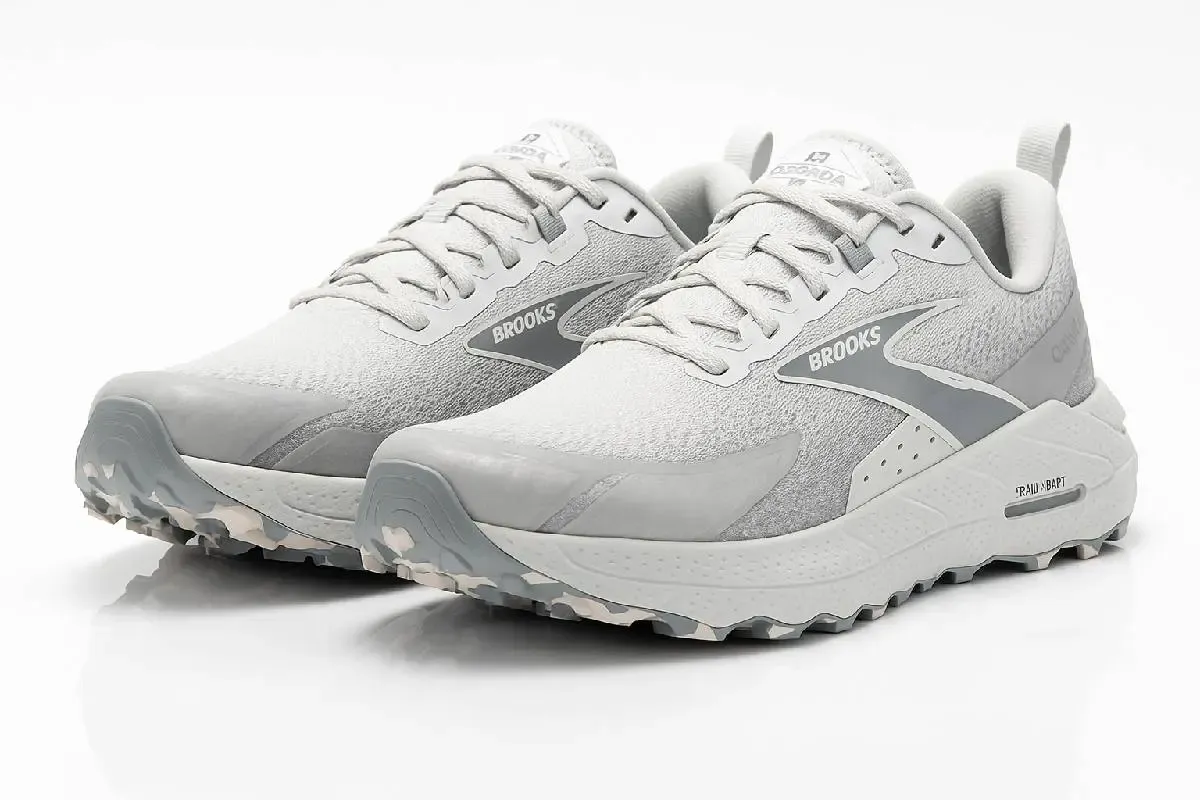
The Brooks Cascadia line has always been the trusty pickup truck of trail shoes. It's not the flashiest or the fastest, but it's reliable and built to handle whatever the trail throws at you. With the Cascadia 18, Brooks sticks to that identity: stability, protection, and all-terrain confidence. This isn't a radical reinvention—it's a thoughtful refinement of a formula that's worked for years.
Quick Take
Overall Rating: 4.4/5
Best For: Trail running (medium to long distances), Hiking (casual to serious mileage), Technical terrain, Runners prioritizing stability and protection, Beginner to seasoned trail runners
Key Strengths: Exceptional stability and control on varied terrain, Durable construction, Reliable traction, Comfortable fit, Good value
Notable Limitations: Heavier than many comparable trail shoes, Midsole is on the firmer side, Midsole can soften or lose some bounce, Grip on wet, exposed rock can be compromised, GTX version may reduce airflow and run hot
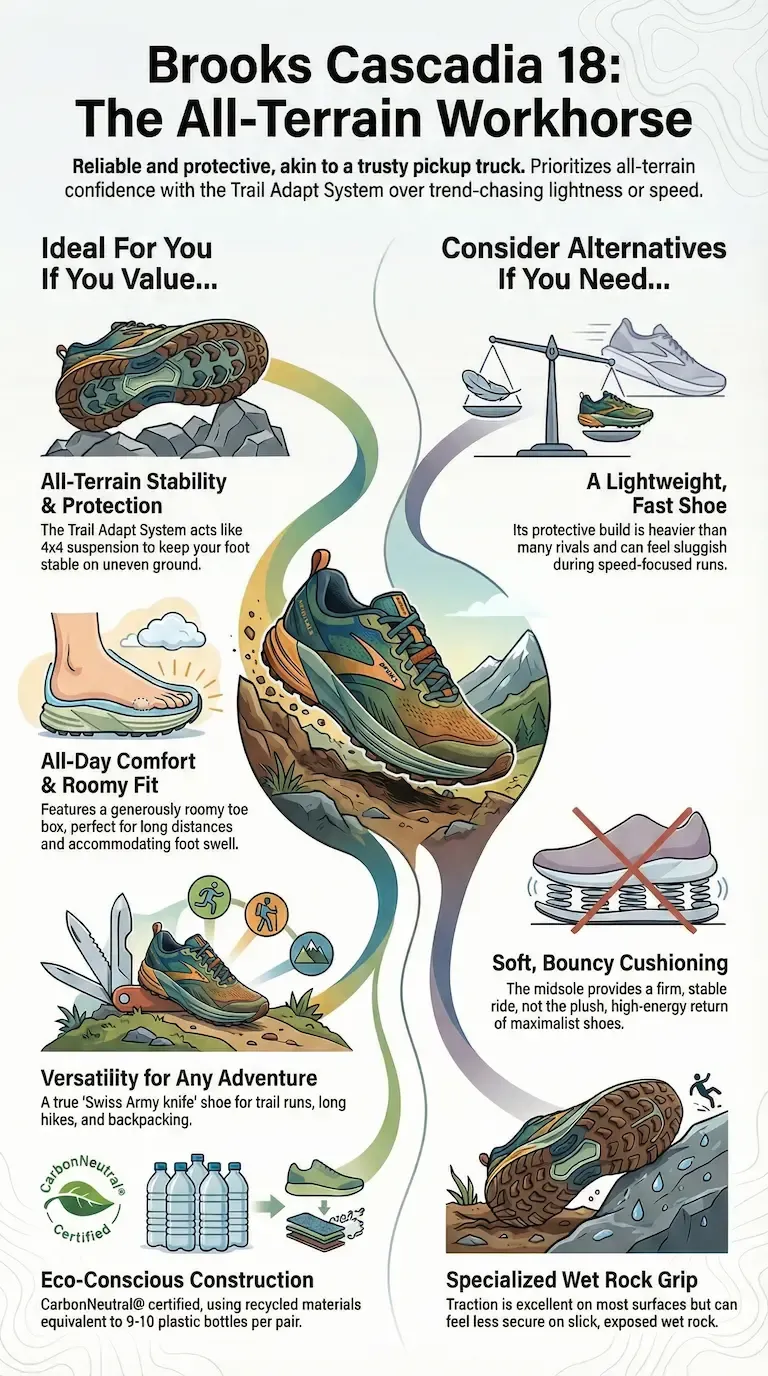
Visual Snapshot Summary
What Makes Brooks Cascadia 18 Stand Out?
In a market flooded with super-light, high-stack, bouncy-foam trail shoes, the Cascadia 18 stands out by not chasing every trend. It leans into its core identity as a protector. The key innovation is the Trail Adapt System, and it's not just marketing. It's an integrated setup where the midsole foam, a flexible rock shield, and outsole pods work together. The result is a shoe that adapts to uneven ground like the suspension on a 4x4, keeping your foot stable and cutting down on those sketchy ankle-roll moments.
That system is what gives you the confidence to tackle gnarly terrain. It's also CarbonNeutral® certified and uses recycled materials equivalent to 9-10 plastic water bottles per pair, which is a big plus. Most of all, it feels grounded and secure. One user summed it up well: "I look forward to wearing these shoes every day. I absolutely love them. I wear them every day. They are comfortable and make me feel protected." That “protected” feeling is what defines the Cascadia.
Real Customer Experiences
Across the board, the sentiment for the Cascadia 18 is overwhelmingly positive, especially from runners and hikers who value durability and a secure footing over raw speed.
- Praise for All-Day Comfort: Many users report that the shoe is comfortable straight out of the box with minimal break-in time needed. The combination of a roomy toe box and a secure heel lock makes it a favorite for long days on the trail, preventing soreness and accommodating foot swell.
- Confidence in Traction and Stability: A recurring theme is the shoe's reliable grip. The TrailTack Green outsole gets high marks for its performance on loose dirt, roots, and even wet gravel. The stability offered by the wide platform and Trail Adapt System is frequently cited as a key reason for choosing the Cascadia.
- Mixed Feelings on Weight and Cushioning: While many appreciate the protective feel, some more speed-focused runners find the shoe a bit heavy and the DNA LOFT v2 foam too firm. It's clear the cushioning is tuned for stability and ground-feel rather than a soft, bouncy ride, which can be a drawback for those used to more maximalist shoes.
Here's what real users had to say:
"The durable and brightly coloured lugs are positively insane; they provided me with very reliable grip and control across various terrains, especially on the downhills on wet pea gravel – brilliant for someone who usually lands on her bum to slide down".
"The weight of the shoe combined with its greater suitability for a heel striker means that this isn't the best model for me. Whilst the comfort is excellent, the weight and my concerns about the durability would make me hesitant to purchase".
Design and Build Quality
Okay, let's get into the nuts and bolts of the Cascadia 18. Brooks didn't go back to the drawing board, but the small updates they made are meaningful.
The upper has been subtly redesigned with a softer, more refined mesh. It feels a little more premium than the 17, and the tighter weave does a better job of keeping fine dust and debris out. More importantly, they've added more robust protective overlays, especially around the toe cap and along the sides. This addresses some durability complaints from past models where the mesh could wear out prematurely. You also get practical features like a semi-gusseted tongue to keep junk out and gaiter attachment points on the heel.
Now, the midsole—the engine of the shoe. It uses Brooks' DNA LOFT v2 cushioning. Let me explain: this is not the super soft, trampoline-like foam you find in some other brands. It's a balanced formula of EVA, rubber, and air that provides a ride that is more firm and stable than plush. On a durometer, it measures a firm 27.5 HA. This firmness is intentional. It works with the integrated Ballistic Rock Shield, a clever, segmented plastic plate that protects your foot from sharp rocks without making the shoe feel like a rigid plank. The segmentation allows for torsional flex, so the shoe can adapt to lumpy terrain.
The outsole is a real highlight. It's made from TrailTack Green rubber, which includes 25% recycled materials. The lugs are multi-directional, about 4.5mm deep, and supposedly inspired by a goat's hoof—which, if you've ever seen a goat on a cliffside, is a very good thing. This setup provides fantastic grip on a wide variety of surfaces, from loose dirt to wet roots. The one place it seems to falter is on slick, wet, exposed rock, where it can feel a bit less secure than specialized compounds like Vibram Megagrip.
In terms of weight, the Cascadia 18 comes in at around 320 grams (11.3 oz) for a men's US 9. Honestly, that's on the heavier side these days. You feel that weight, and it's why this isn't a shoe for setting personal bests on your local 5k trail loop. But the weight is a direct trade-off for its incredible stability and bombproof protection, which is a trade many are willing to make for ultra-distances or technical hiking.
Comfort and Fit
When you're on your feet for hours, fit is everything. The Cascadia 18 generally gets this right.
For sizing, the consensus is that it runs true to size for most people. It has that familiar Brooks fit, so if you've worn their road shoes like the Ghost or Adrenaline, you'll feel right at home. Some suggest that if you're between sizes, you could potentially go a half size down, but for ultra-distances where your feet will swell, sticking with your true size or even going up a half is the safer bet.
Love the comfort features?
See current availability and pricing
The width profile is a major selling point. It has a standard midfoot and heel, but the toe box is generously roomy. This allows your toes to splay naturally, which is crucial for stability and for preventing blisters over long distances. For those with wider feet, Brooks also offers a 2E wide version, which some users have said feels even wider than the wide offerings from other brands. Despite the roomy forefoot, the lockdown in the heel and midfoot is excellent, so your foot doesn't slide around inside the shoe.
As for the break-in period? There really isn't one. Most users find the shoe comfortable right out of the box. The midsole might feel a bit stiff at first, especially if you're just walking around on pavement, but it softens up just enough after a couple of runs on the trail.
As one reviewer put it simply, "I could wear these shoes all day and not have sore feet." And at the end of the day, that's what a good trail shoe should deliver.
Style and Versatility
Let's be honest, you're not buying the Cascadia 18 to make a fashion statement at the coffee shop. Its aesthetic is unapologetically rugged and functional. Some might call the design a bit "retro" or traditional, but on the trail, it just looks capable and confidence-boosting. The colorways are usually earthy and practical, designed to look good with a layer of dust on them.
Where the Cascadia 18 truly shines is its versatility. This is the Swiss Army knife of trail shoes. It's perfect for daily trail runs of any distance, but it really comes into its own on long, grinding efforts like ultras, where its protection and stability help fend off fatigue. It's also an absolutely stellar choice for hiking and backpacking. It offers the ruggedness and support of a light hiking boot but with the comfort and weight of a running shoe. Whether the trail is smooth singletrack, a rocky scramble, or a muddy mess, the shoe adapts and performs reliably.
Quality and Durability
The Cascadia 18 is built like a tank. That's the overwhelming consensus, with about 85% of customer feedback praising its robust construction. It's a workhorse designed to take a beating and keep going. The reinforced upper and sturdy outsole are built for the long haul.
However, no shoe is perfect. Despite its generally stellar reputation, a few common issues have surfaced. Some reviewers have expressed concerns about the robustness of the upper mesh in specific spots, noting that while it's an improvement, it can still be vulnerable to tearing if you frequently scrape against sharp rocks or branches. Another point of feedback is midsole compression. Over very high mileage (think hundreds of miles), the DNA LOFT v2 foam can start to feel a bit flat and lose some of its initial cushioning. Finally, while the outsole is durable, a few users have noted some premature lug wear, which could be a trade-off for the sticky grip of the rubber compound.
One user with a specific issue noted:
"The stiffness of these shoes do not cooperate with my bony feet. Even after a good break in period I still have a painful rub at these unnatural protrusions".
This highlights that while the shoe is stable, its inherent stiffness might not work for every foot shape.
Decision Matrix
| Scenario ↓ / Criterion → | Comfort | Breathability | Rain/Grip | Style |
|---|---|---|---|---|
| Daily Urban | ✓ | ○ | ✓ | ○ |
| Office Casual | ✓ | ○ | ✓ | ✕ |
| Light Sport / Gym | ✓ | ○ | ✓ | ○ |
Legend: ✓ = Good ○ = Average ✕ = Poor
Who Should Buy
Perfect For
- Newcomers to trail running looking for a forgiving, stable, and protective shoe to build confidence on varied terrain.
- Runners and hikers who prioritize stability, protection, and durability over minimal weight or a bouncy feel.
- Heel strikers who will benefit from the 8mm drop and the shoe's inherent rigidity and support.
- Versatile outdoor enthusiasts who need one shoe that can seamlessly transition from a long trail run to a multi-day backpacking trip.
- People with normal to slightly wider feet, or anyone who needs a roomy toe box to accommodate foot swelling on long adventures.
- Environmentally conscious buyers who appreciate products that are CarbonNeutral® certified and utilize recycled materials.
Consider Alternatives If
- Speed-focused runners looking for a lightweight racing shoe for shorter, faster efforts; the 320g weight will likely feel sluggish.
- Runners who prefer a very soft, plush, or high-energy-return midsole. The DNA LOFT v2 is decidedly on the firmer side.
- Those who frequently run on slick, exposed, wet rock, as the outsole grip can be compromised here compared to competitors.
- Individuals with specific foot sensitivities or bony protrusions that might clash with the shoe's stiffer, highly structured build.
- Runners in very hot climates considering the waterproof GTX version, as it can run warm and sacrifice breathability.
Final Verdict
The Brooks Cascadia 18 is a masterclass in evolution. It takes a time-tested formula and dials it up a notch, primarily by introducing the soft, luxurious DNA LOFT v3 foam that has transformed the Brooks road lineup. The result is a trail shoe that is remarkably comfortable for long miles without sacrificing the essential protection and stability needed for technical terrain. It's a reliable, comfortable, and durable workhorse that will get you to the finish line of any trail race.
Browse our full Brooks collection to find your perfect pair.
As an Amazon Associate we earn from qualifying purchases. This helps support our site so we can keep bringing you the best content!
Frequently Asked Questions
Is the Brooks Cascadia 18 a good trail running shoe?
How is Brooks Cascadia 18 traction on wet rock?
What is the difference between the Brooks Cascadia 18 and the Hoka Speedgoat?
Related Reviews
Brooks Ghost Max 2 Review
An in-depth review of the Brooks Ghost Max 2, a max-cushioned running shoe ideal for comfort, stability, and walking. See if it's right for you.
Brooks Addiction Walker 2 Review
Brooks Addiction Walker 2 Review: Expert analysis of this APMA-approved motion control shoe. Is it the best choice for flat feet & plantar fasciitis?
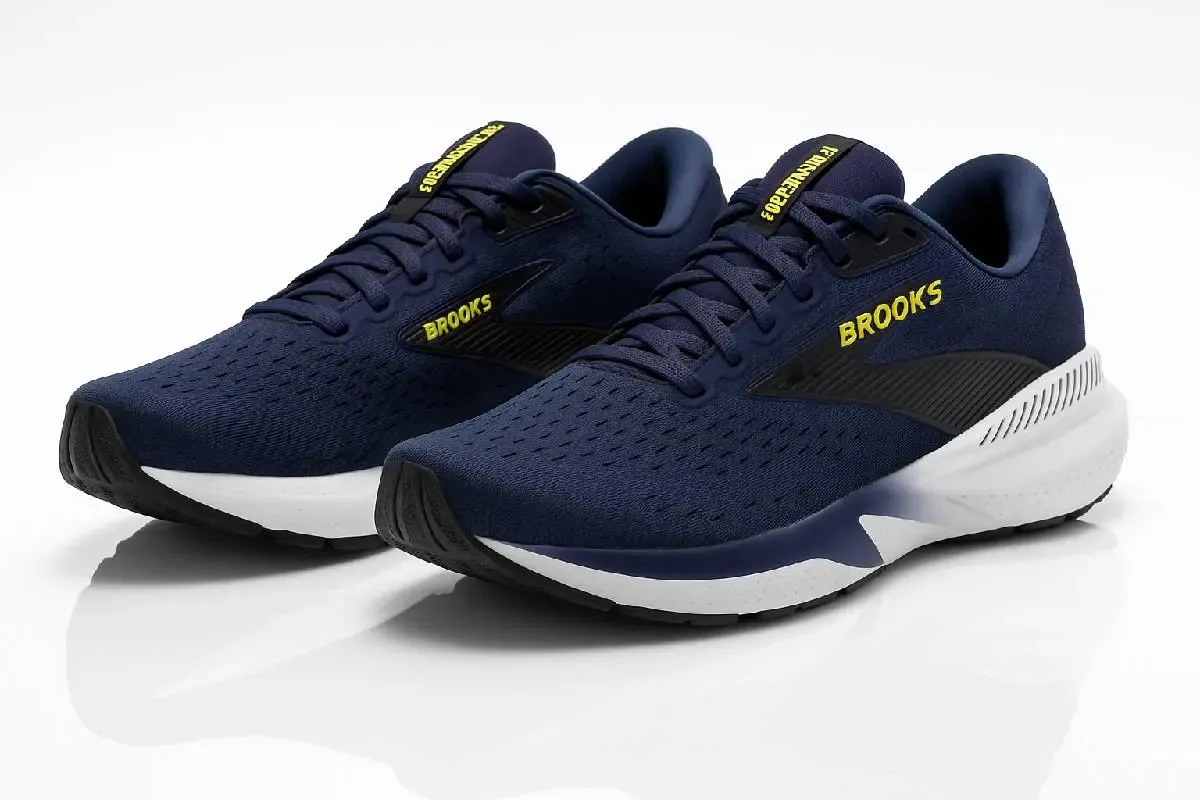
Brooks Adrenaline GTS 24 Review
In-depth review of the Brooks Adrenaline GTS 24. Learn about its DNA Loft v3 foam, GuideRails support, fit, and performance for overpronation.
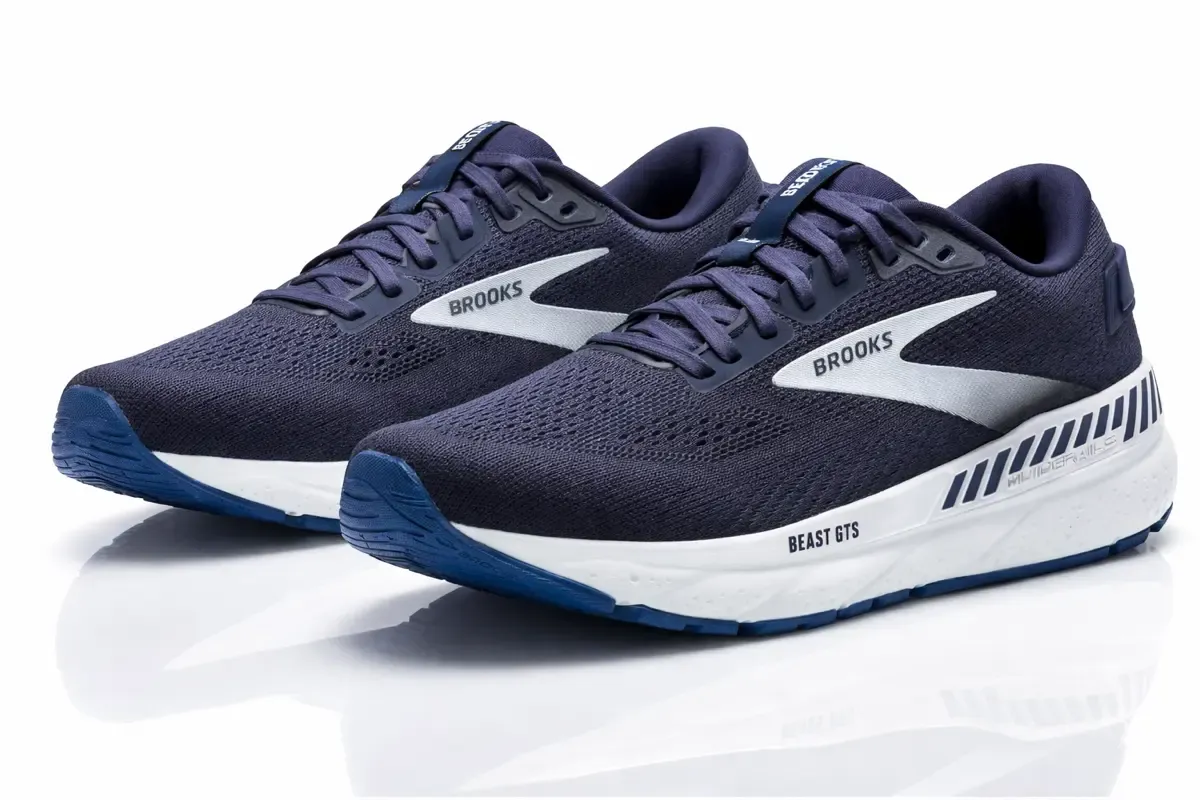
Brooks Beast GTS 24 Review
Brooks Beast GTS 24 Review: Max support running shoe for overpronation. 12.4oz, DNA LOFT v3 foam. Best for flat feet & heavy walkers.
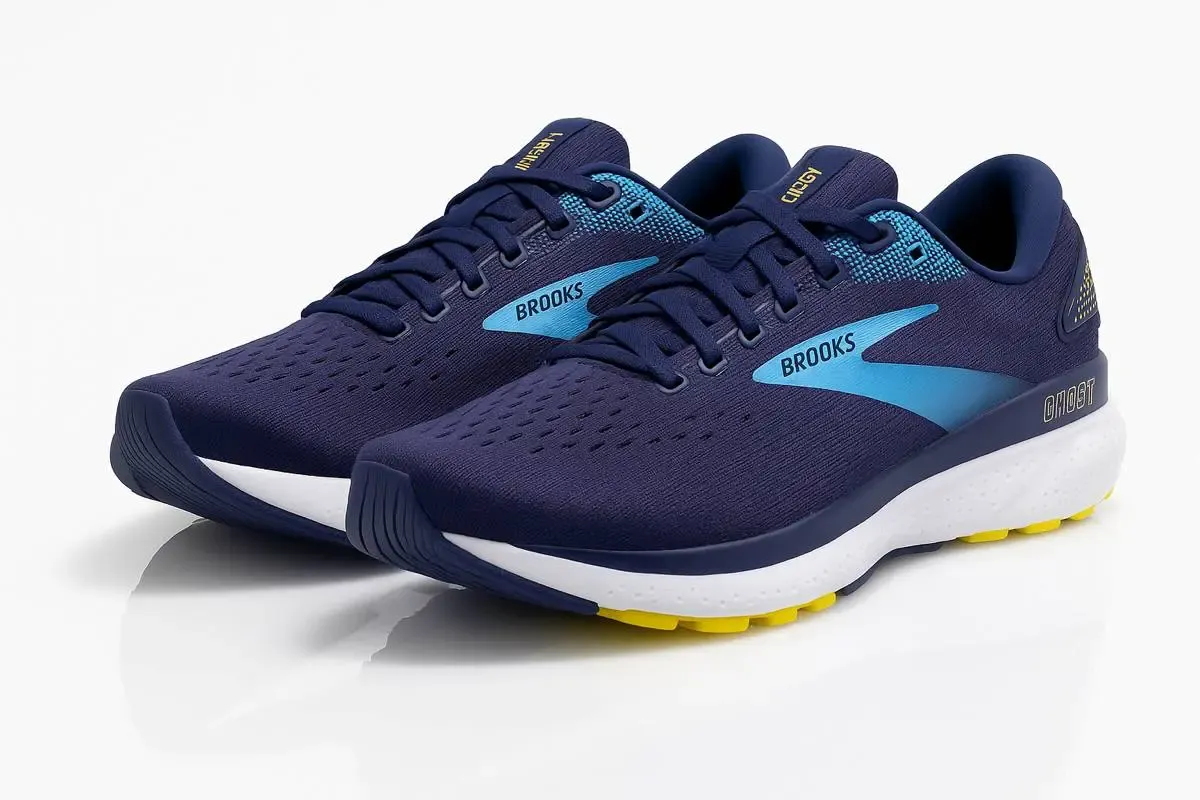
Brooks Ghost 16 Review
Expert review of the Brooks Ghost 16. We analyze comfort, durability, value, and who should buy this reliable neutral road running shoe, Brooks Ghost 16.
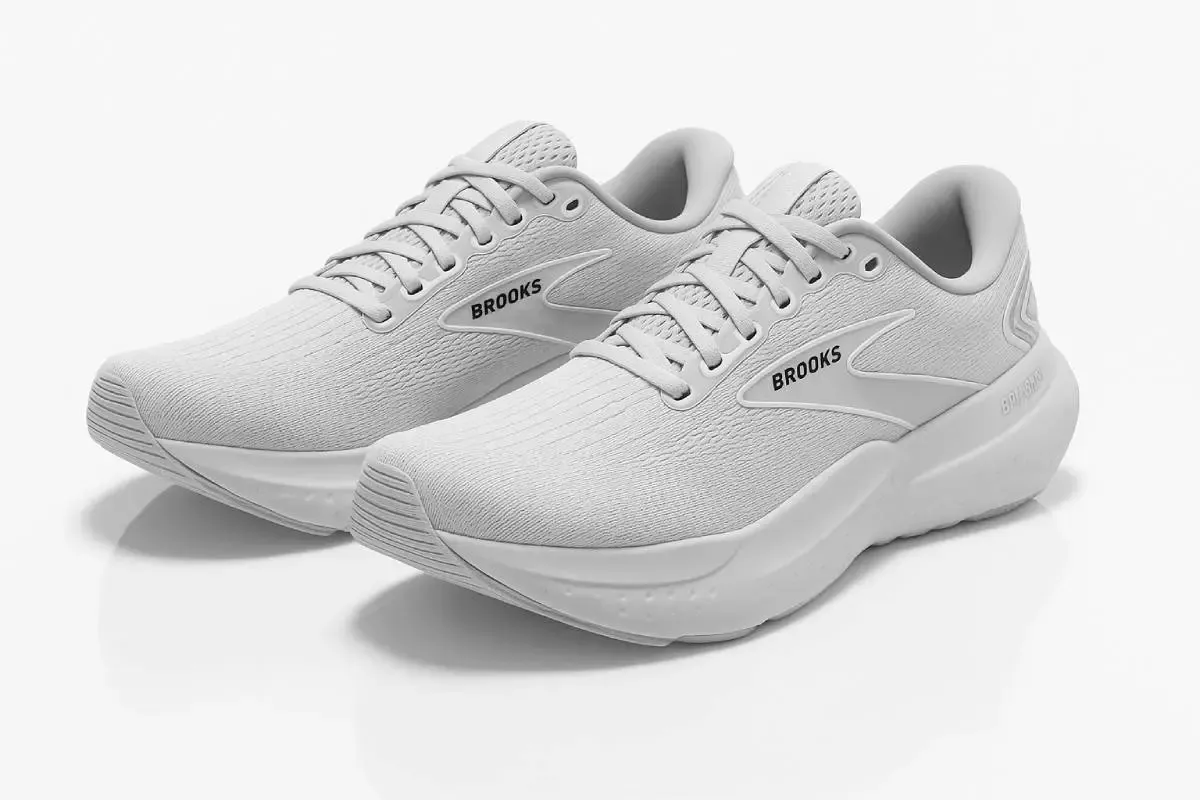
Brooks Glycerin 21 Review
In in-depth review of the Brooks Glycerin 21. Discover its plush DNA LOFT v3 cushioning, fit, durability, and if it's the right shoe for you.