Founder & Lead Editor
Federico D'anna
Federico D'anna has spent 9 years reviewing sneakers with a methodology built on hands-on wear notes, side-by-side comparisons, and verified buyer feedback.
Learn more about Federico D'annaHighlights
Positive
- Unmatched stability features make it a 'pain-killer' for plantar fasciitis and flat feet.
- New nitrogen-infused midsole sheds weight while maintaining necessary firmness for heavy walkers.
Negative
- Revised toe box is vertically tight and may crush toes, forcing many users to size up or switch brands.
Brooks Ariel GTS 24 Sizing & Fit Guide
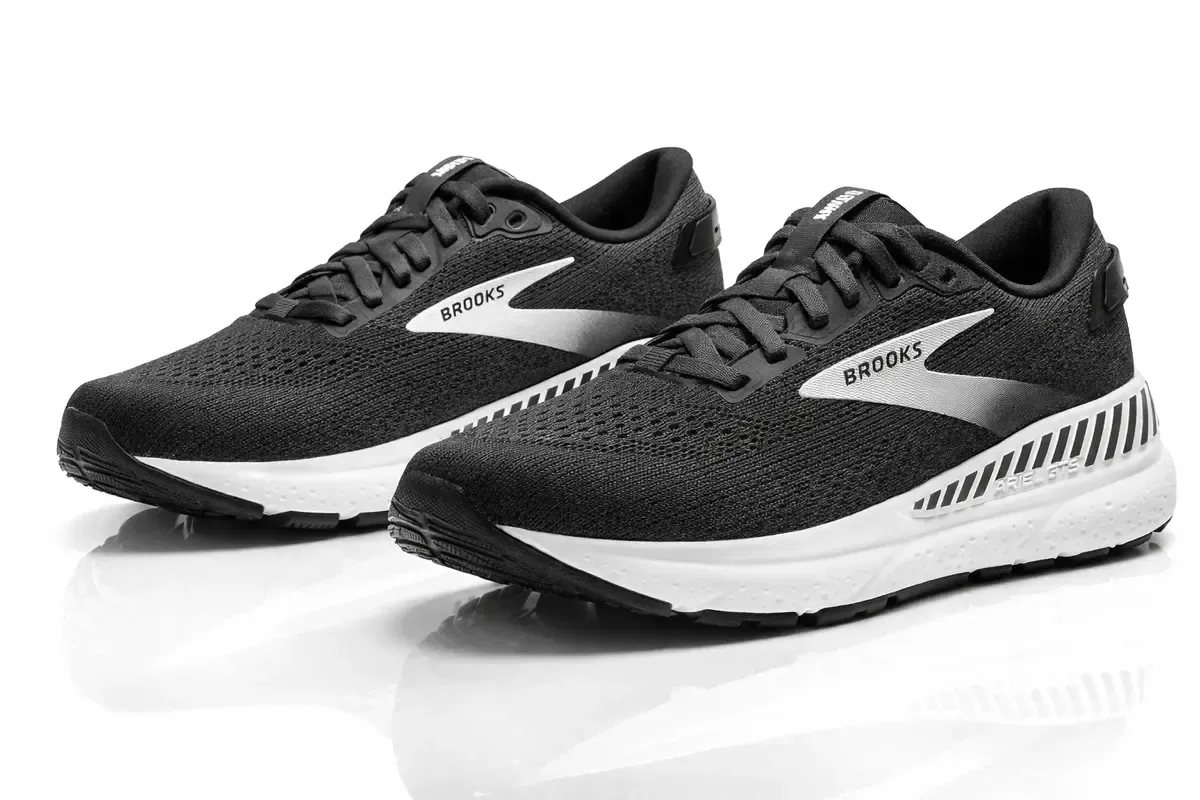
The Brooks Ariel GTS 24 establishes itself as a premier motion-control daily trainer engineered for maximum stability, flat feet, and severe overpronation. While the shoe generally runs true to size (TTS) in physical length for approximately 67% to 68% of wearers, its updated upper construction introduces a lower-volume geometry. Featuring engineered mesh and 3D Fit Print overlays, the updated upper creates a snug midfoot lockdown and reduced vertical clearance within the toe box. This low-profile toe box design can feel restrictive or short for runners with high-volume feet or upward-pointing toes, occasionally necessitating a half-size increase or wider width option to secure necessary lateral relief. Supported by the dynamic GuideRails holistic system and a balanced 12mm drop, the Ariel GTS 24 combines rigid motion control with nitrogen-infused DNA Loft v3 cushioning, making it an excellent platform for custom orthotic integration once broken in.
Compare your current pair to find the best size match.
| Reference Shoe | Your Usual US | Buy in US | Your Usual EU | Buy in EU | Fit Notes |
|---|---|---|---|---|---|
| Brooks Adrenaline GTS 24 (Women's) | 9.0 | 9.5 (Medium) or 9.0 (Wide) | 40.5 | 41.0 (Medium) or 40.5 (Wide) | The Adrenaline GTS 24 is a lighter, slimmer daily trainer. While both models feature a lower-volume toe box for this edition, the Ariel GTS 24 incorporates a significantly wider, stiffer base platform and rigid upper overlays. Transitioning to a half-size larger in length or opting for a wider width prevents lateral toe friction and accommodates the low-clearance vertical space of the Ariel's upper. |
| Brooks Beast GTS 24 (Men's) | 9.0 | 10.5 (Women's Wide) | 42.5 | 42.5 | The Beast GTS 24 is the direct men's counterpart to the Ariel GTS 24. For female runners requiring an exceptionally wide fit, converting to the men's model is an excellent sizing strategy. To match length properly, the size must be increased by 1.5 sizes on the women's scale, and a men's Medium (D) width corresponds directly to a women's Wide (D) for an identical volumetric match. |
| Hoka Gaviota 6 (Women's) | 9.0 | 9.5 (Medium) | 40.5 | 41.0 | Hoka's Gaviota 6 runs true to size but is built with a significantly wider, higher-volume toe box and a lower 6mm heel drop. In contrast, the Ariel GTS 24 features a narrower, lower-volume upper and a steep 12mm drop. Sizing up a half-size in the Ariel is necessary to compensate for the tighter vertical clearance and match the overall forefoot room of the Gaviota. |
| ASICS Gel-Kayano 32 (Women's) | 9.0 | 9.0 (Medium) | 40.5 | 40.5 | The ASICS Gel-Kayano 32 features a premium, plush, high-stack design with a slightly straighter and roomier toe box than traditional ASICS models. Because ASICS running models generally trend slightly narrow, a direct true-to-size match provides a comparable balance of length and width when transitioning into the Ariel GTS 24. |
Does the Brooks Ariel GTS 24 run true to size?
The Brooks Ariel GTS 24 generally runs true to size in length for approximately 67% to 68% of wearers. However, due to an updated, lower-volume upper and a lower toe box height, the shoe can feel snugger and shorter vertically compared to previous versions. To prevent the toes from rubbing against the structured toe guard, it is highly recommended to order a half-size larger than your standard casual or dress shoe size, or match your standard size in other technical running shoes.
Is the Brooks Ariel GTS 24 good for wide feet?
Yes, the Brooks Ariel GTS 24 is highly suitable for wide feet, provided the appropriate width is selected. Brooks offers the model in standard Medium (B), Wide (D), and Extra Wide (2E) options. Because the standard width features a snug, tapered forefoot with a low-volume mesh upper, individuals with broad feet, bunions, or high insteps should select the Wide (D) or Extra Wide (2E) options to allow for natural foot splay and avoid lateral toe friction.
How is the arch support on the Brooks Ariel GTS 24?
The Brooks Ariel GTS 24 provides robust, structured support that is highly beneficial for flat feet, low arches, and severe overpronation. The shoe utilizes the GuideRails support system, which centers the heel and controls excess lateral or medial rotation without the harsh, rigid feel of a traditional medial post. Additionally, the deep heel cup and 12mm drop work in tandem to stretch the Achilles tendon, relieving pressure on the plantar fascia and providing substantial relief from plantar fasciitis.
Ready to experience the Brooks Ariel GTS 24 Review?
Get yours today with fast shipping from Amazon
Let's be real for a second: the Brooks Ariel GTS 24 isn't trying to be the “cool” shoe at the run club. It's not a super-shoe built to shave seconds off your marathon time, and it's definitely not winning runway points. This is basically a medical device disguised as a sneaker. As the flagship motion control option in Brooks' lineup (the sister shoe to the men's Beast GTS 24), it serves a very specific, high-need group: severe overpronators, heavy walkers, and occupational athletes who spend 12 hours a day on concrete floors.
If you've been hunting for a shoe that acts like a tank for your feet—keeping your arches from collapsing and your knees from twisting—this is one of the most important releases of the year. But here's the catch: the engine under the hood has been modernized with nitrogen-infused foam, while the bodywork brings a few frustrating quirks longtime fans should know before dropping $160.
Quick Take
Overall Rating: 4.3/5
Best For: Severe overpronation, Plantar Fasciitis relief, standing all day, heavy walkers
Key Strengths: Unmatched stability, "pain-free" arch support, lighter feel than previous versions
Notable Limitations: Toe box is vertically tight, laces are ridiculously short, "Black" colorway looks blue
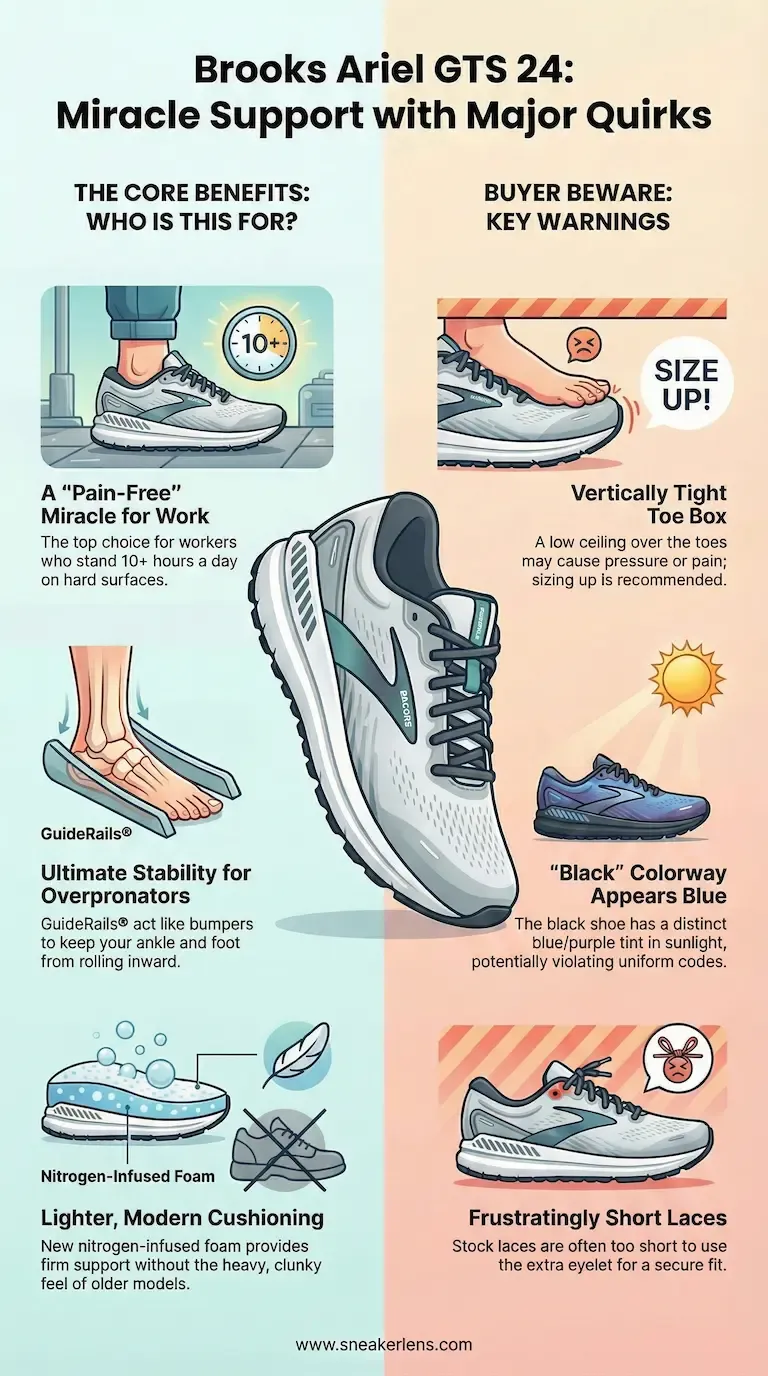
Visual Snapshot Summary
What Makes Brooks Ariel GTS 24 Stand Out?
The big shift here is from “correction” to “support.” For decades, shoes like the Ariel used a hard block of foam under the arch (a medial post) to physically force your foot outward. It worked, but it felt like running on a brick. With the GTS 24, Brooks has fully matured its GuideRails® system. Think of these as bumpers on a bowling lane: they don't force you into one path, but they catch you if your ankles roll inward (pronation) or outward.
Combined with the new DNA LOFT v3 midsole, a nitrogen-infused foam that is lighter and more durable than standard EVA, the shoe finally sheds some of its “clunky” reputation. It's still substantial, but it doesn't feel like you're dragging an anchor. As one user perfectly summarized: "The shoe is the only thing that has offered me relief from the pain. In my opinion it is even causing repair to the damage."
Real Customer Experiences
The reception has been passionate. It's a polarizing release where the mechanics get praise, but the fit creates real friction.
- The "Pain-Free" Miracle: A massive cluster of reviews comes from nurses and retail workers who claim this is the only shoe that lets them end a shift without back or foot pain.
- The Toe Box Squeeze: Longtime Ariel wearers are frustrated by the reduced vertical volume. The width is there, but the ceiling is lower, pressing down on toes.
- The "Blue" Black: Workers with strict "solid black" uniform codes are returning the shoe because the black colorway appears blue or purple in sunlight.
"I have purchased this same size and style for over a decade, but the current generation has major flaws... the toe box has been narrowed significantly to the point of causing bruising on my toes." — nicole l., Verified Buyer
"My podiatrist called [it] nerve damage between my metatarsals. The shoe is the only thing that has offered me relief from the pain." — Jessica L., Verified Buyer
Design and Build Quality
Let's pop the hood. The upper is an Engineered Air Mesh with 3D Fit Print overlays. These printed overlays are crucial: they fuse to the mesh to create a "saddle" that locks your midfoot down without the irritation of stitches. The volume management is aggressive, though. It holds the foot very securely, and for some people that crosses into “too much.”
The midsole uses nitrogen-infused DNA LOFT v3. Don't let the word “nitrogen” fool you into thinking “squishy.” This foam is tuned to be firm (approx. 30.1 HA hardness), which is necessary to support heavier loads without collapsing.
The outsole is a beast. It features a massive, broad waist (the middle part of the shoe) that creates a stable platform, reinforced with HPR (High Performance Rubber) in the heel. However, there have been murmurs on forums about sole separation, where the rubber peels from the foam, occurring around the 100-200 mile mark for some users, likely due to bonding issues with the new foam.
Comfort and Fit
Here is the most critical advice I can give you: Size up. The Ariel GTS 24 runs small, specifically in vertical volume. If you wear thick orthotics or have "tall" feet, the standard size will likely crush your toes. Go up a half size or opt for the Wide (D) or Extra Wide (2E) width even if you don't typically wear wides.
- Break-in: The sole is stiff torsionally (it resists twisting), so don't expect it to be flexible right out of the box. It breaks in slightly, but the "bucket seat" feel is permanent.
- Lace Warning: You might need to buy your own laces. The stock laces are often too short to use the extra "runner's loop" eyelet, which is a baffling oversight for a stability shoe.
"These are way too tight across the top of the foot... They actually put my toes to sleep." — Megan S., Verified Buyer
Style and Versatility
If you're buying the Ariel GTS 24 for style, you're in the wrong aisle. This is functional equipment. The aesthetic is "orthopedic chic"—chunky, substantial, and unapologetically technical.
- Aesthetic Note: Be warned, the "Ebony/Black" colorway has a distinct blue/purple tint in natural light. If your workplace demands strict all-black footwear, this might get you cited for a uniform violation.
- Ideal Scenarios: This is not a versatile daily driver for brunch. It is for 12-hour shifts on concrete, recovery walks, or running with severe pronation mechanics.
Quality and Durability
Quality control is a mixed bag this year. While 72% of reviews are positive, the 18% negative slice is loud and specific.
- The Good: The foam is resilient. Heavier runners report that the DNA LOFT v3 doesn't "pack out" or flatten as quickly as the old EVA foams.
- The Bad: The sole adhesion issue is a concern. While Brooks has a great warranty, having your outsole peel off at mile 150 is annoying.
- One Negative Take: "After paying $180... they completely fell apart on the sole... after only walking about 200 miles." — Reddit User ministerman
Value for Money
At $160 USD, the Ariel GTS 24 sits at the premium end of the market.
- Vs. Competitors: It's comparable to the Hoka Gaviota 5 ($175) but offers a higher drop (12mm vs 6mm) which is better for Achilles issues. It's more expensive than the New Balance 860v14, but offers significantly more structural control.
- Verdict: If you need this level of support, the price is irrelevant because the alternative is custom orthotics ($400+) or physical therapy. For the right person, it's a bargain. For a neutral runner, it's a waste of money.
Decision Matrix
| Scenario ↓ / Criterion → | Comfort | Breathability | Rain/Grip | Style |
|---|---|---|---|---|
| Standing All Day | ✓ | ○ | ✓ | ○ |
| Road Running | ○ | ○ | ✓ | ✕ |
| Casual Walk | ✓ | ○ | ✓ | ✕ |
Legend: ✓ = Good ○ = Average ✕ = Poor
Who Should Buy
Perfect For
- The Severe Overpronator: You have flat feet and your ankles roll in visibly when you walk. You need a "guard rail" for your joints.
- The Occupational Athlete: You are a nurse, warehouse worker, or cashier standing on hard surfaces for 10+ hours a day.
- The Heavy Walker: You want a shoe with a firm midsole that won't collapse under body weight after a month of use.
Consider Alternatives If
- The Neutral Runner: If you have high arches or a neutral gait, this shoe will feel like you are fighting against it.
- The "Tall" Foot: If you have a high instep or bulky orthotics, the reduced vertical space in the toe box will likely cause pain.
- The Aesthetic Purist: If you need a sleek, solid black shoe for a uniform, the "blue-ish" tint of the black model will be a dealbreaker.
Final Verdict
The Brooks Ariel GTS 24 remains the undisputed heavyweight champion of stability. By integrating nitrogen-infused foam, Brooks has successfully modernized the ride without sacrificing the fortress-like support that defines the series. It is a critical tool for those battling plantar fasciitis or posterior tibial tendonitis.
However, the execution of the upper leaves room for improvement. The tighter toe box and short laces are unforced errors that complicate the fit for the very people who need this shoe most. If you can dial in the sizing (definitely try before you buy or order two sizes), it is an unparalleled support system. If the fit is off, it's a frustratingly near-perfect miss.
Browse our full Brooks collection to find your perfect pair.
As an Amazon Associate we earn from qualifying purchases. This helps support our site so we can keep bringing you the best content!
Frequently Asked Questions
Is the Brooks Ariel GTS 24 good for plantar fasciitis?
What is Brooks GuideRails and how does it help with overpronation?
What is the difference between Brooks Ariel GTS 24 and Adrenaline GTS 24?
Related Reviews
Brooks Ghost Max 2 Review
An in-depth review of the Brooks Ghost Max 2, a max-cushioned running shoe ideal for comfort, stability, and walking. See if it's right for you.
Brooks Addiction Walker 2 Review
Brooks Addiction Walker 2 Review: Expert analysis of this APMA-approved motion control shoe. Is it the best choice for flat feet & plantar fasciitis?
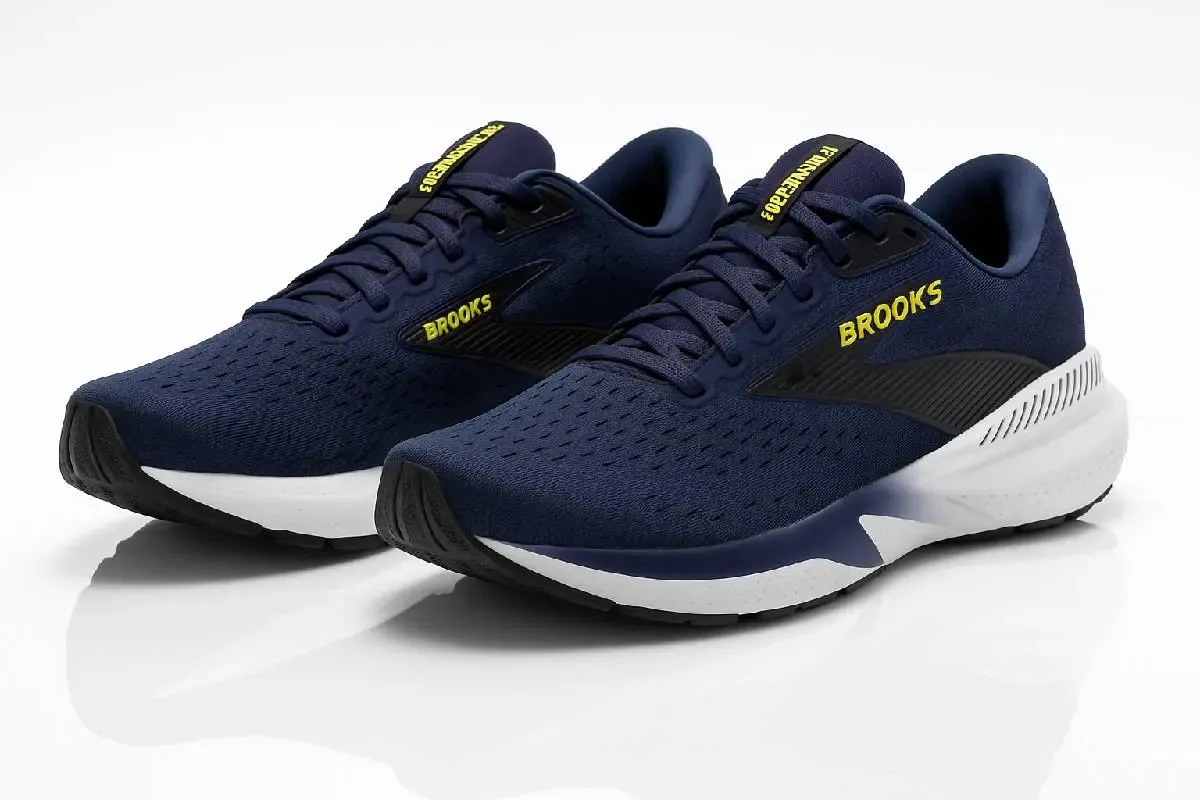
Brooks Adrenaline GTS 24 Review
In-depth review of the Brooks Adrenaline GTS 24. Learn about its DNA Loft v3 foam, GuideRails support, fit, and performance for overpronation.
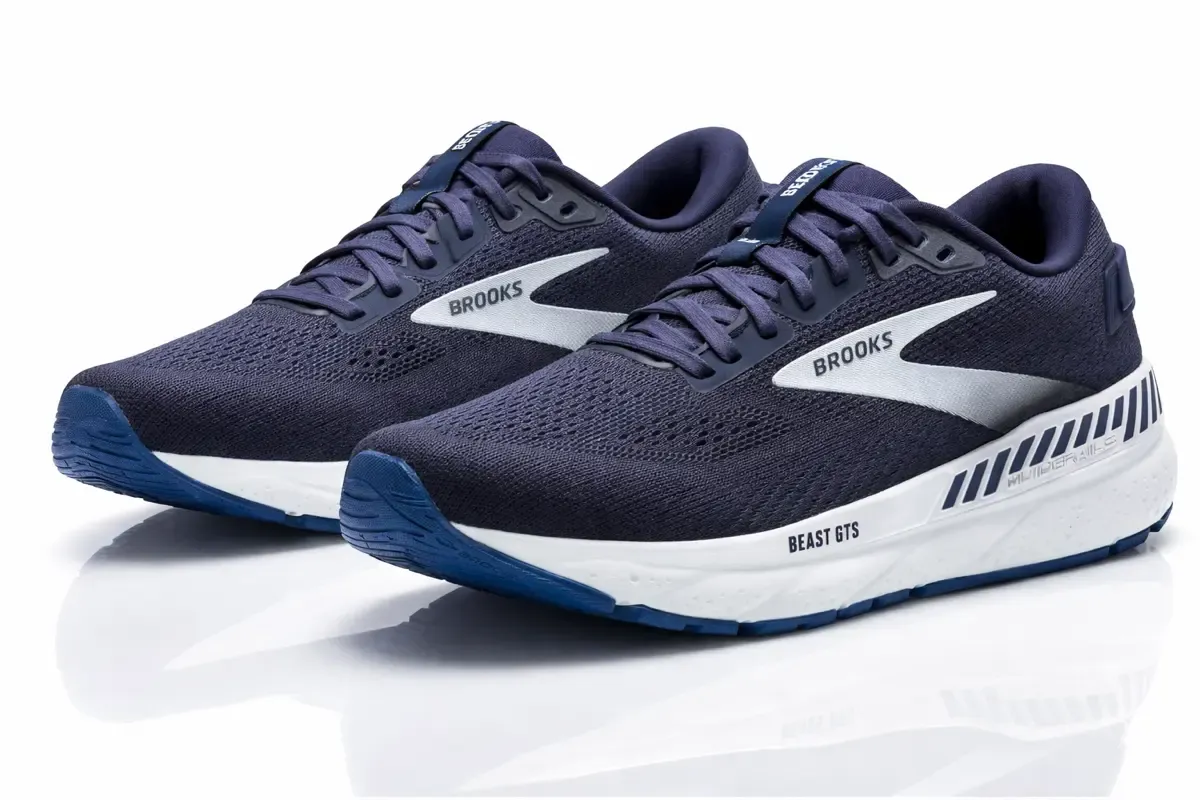
Brooks Beast GTS 24 Review
Brooks Beast GTS 24 Review: Max support running shoe for overpronation. 12.4oz, DNA LOFT v3 foam. Best for flat feet & heavy walkers.
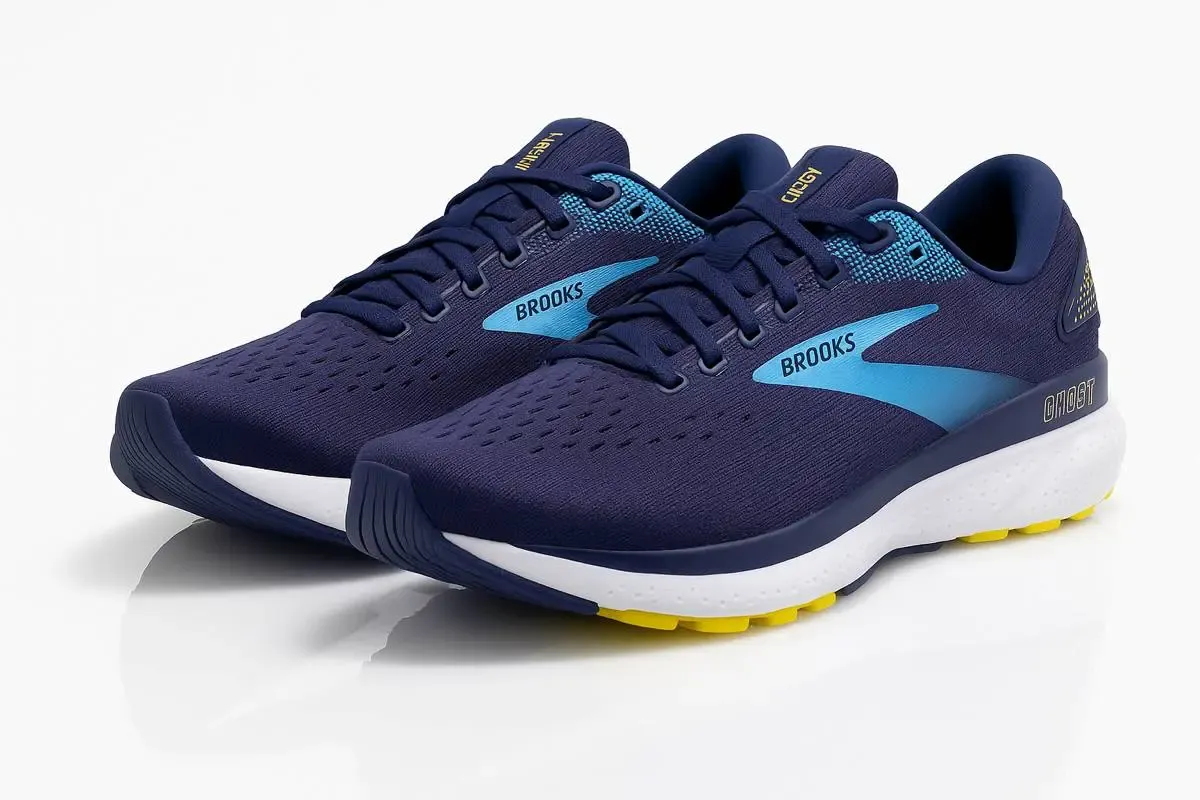
Brooks Ghost 16 Review
Expert review of the Brooks Ghost 16. We analyze comfort, durability, value, and who should buy this reliable neutral road running shoe, Brooks Ghost 16.
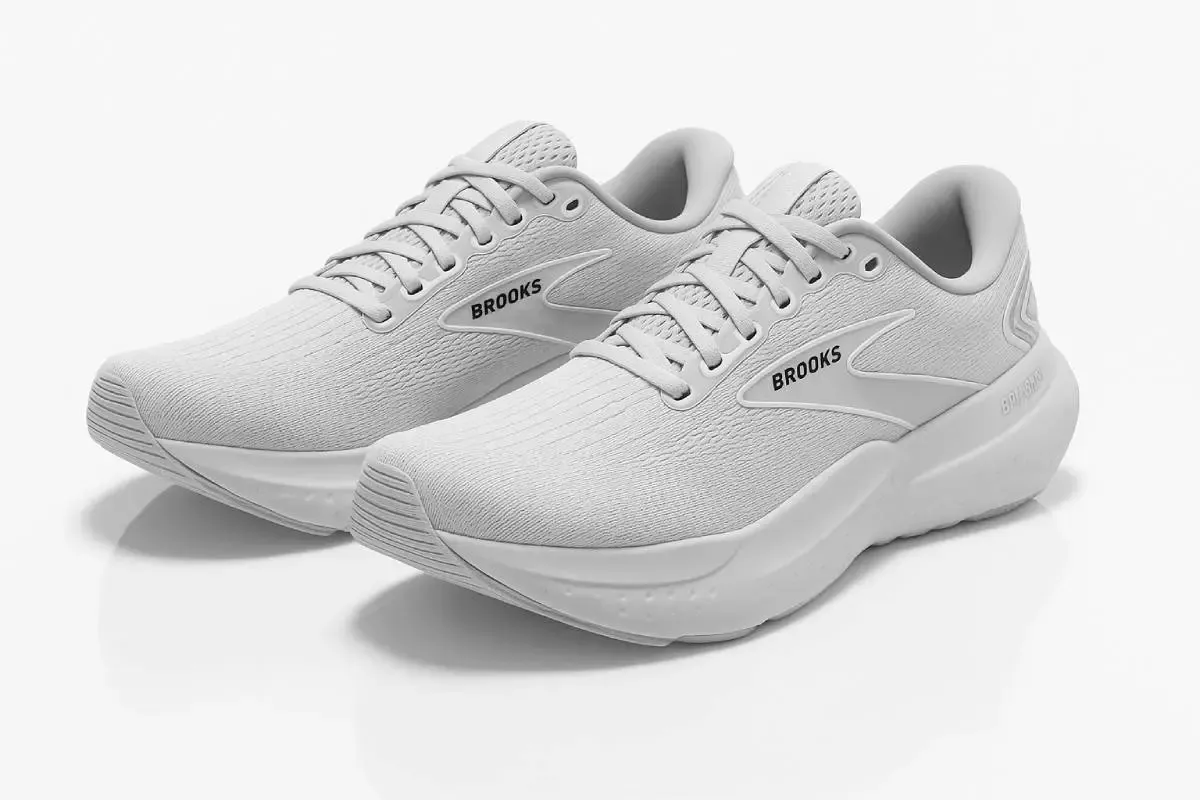
Brooks Glycerin 21 Review
In in-depth review of the Brooks Glycerin 21. Discover its plush DNA LOFT v3 cushioning, fit, durability, and if it's the right shoe for you.